
CyberPower OL2K2RTHD vs CyberPower OL2200RTXL2U: Specification Comparison
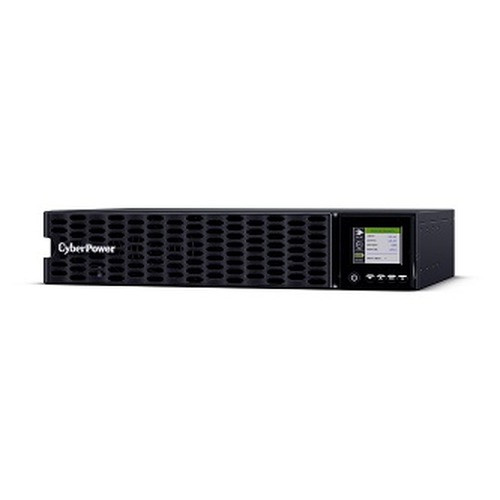
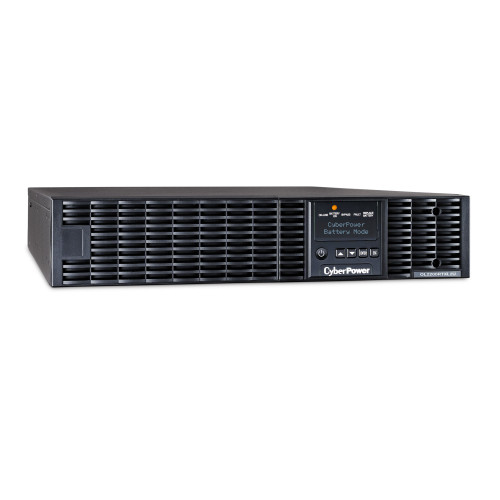
Both the CyberPower OL2K2RTHD and OL2200RTXL2U are 2200 VA / 1800 W, 2U rack-mount, online double-conversion UPS units targeting the same IT room and small data-center segment. Both share identical VA/W ratings, a pure sine-wave output, and a NEMA 5-20P input plug family. The key differentiators a buyer must weigh are runtime, battery architecture, input voltage flexibility, outlet count, form-factor versatility, and the financial protection backing the connected-equipment guarantee.
In This Guide
- Which model delivers more runtime and a more flexible battery architecture?
- How do input voltage range, output configurability, and outlet complement compare?
- What are the differences in remote management, physical footprint, and compliance credentials?
- Which should you choose: the OL2K2RTHD or the OL2200RTXL2U?
- Side-by-Side Specs
- FAQ
Which model delivers more runtime and a more flexible battery architecture?
The OL2200RTXL2U holds a substantial runtime advantage at identical load points. At full load (1800 W) it is rated for 8 minutes versus 3.1 minutes on the OL2K2RTHD — a 2.6× gap. At half load (900 W) the margin widens further: 21 minutes versus 10.3 minutes. These differences stem directly from battery capacity: the OL2200RTXL2U uses six 12 V / 9 Ah sealed lead-acid cells (hot-swappable and user-replaceable per spec) and supports up to 10 external battery modules for extended runtime. The OL2K2RTHD specifies three sealed lead-acid batteries with no hot-swap or external-module capability stated in its provided specs. For deployments where bridging a generator start-up or riding through extended utility interruptions matters, the OL2200RTXL2U's battery architecture is meaningfully stronger.
How do input voltage range, output configurability, and outlet complement compare?
Input voltage handling differs significantly. The OL2K2RTHD accepts 100–125 VAC with a frequency range of 40–70 Hz and a 20 A circuit breaker. The OL2200RTXL2U accepts 100–125 VAC nominally but tolerates a 60–150 VAC range (load-dependent per spec), providing a wider brown-out ride-through window. Output configurability is also exclusive to the OL2200RTXL2U: its output voltage is selectable among 100, 110, 115, 120, and 125 VAC ±2%, versus the OL2K2RTHD's fixed 100–125 VAC ±2% output. Outlet counts differ by one receptacle: the OL2K2RTHD provides 7 × NEMA 5-20R plus 1 × NEMA L5-20R for eight total outlets; the OL2200RTXL2U provides 6 × NEMA 5-20R plus 1 × L5-20R for seven total. The OL2K2RTHD's additional 5-20R outlet may matter in dense patch environments. Neither unit's spec lists outlet-level switching or load-segment control.
The OL2K2RTHD additionally specifies an ECO mode with greater than 96% efficiency and a corresponding thermal dissipation of 176 BTU/hr in that mode (versus 497 BTU/hr online). No ECO mode or equivalent efficiency figure is stated for the OL2200RTXL2U in the provided specifications.
What are the differences in remote management, physical footprint, and compliance credentials?
Management connectivity is broadly similar: both units offer USB and RS-232 serial ports and support the optional RMCARD205 network management card. The OL2K2RTHD additionally lists SNMP and EPO (Emergency Power Off) contacts in its spec sheet, and names PowerPanel Business Edition as the bundled management software. Neither of these is explicitly listed for the OL2200RTXL2U in the provided specifications, though absence in the spec data does not confirm absence on the product.
Physical form factor diverges in two respects. The OL2200RTXL2U is rated as rack/tower convertible per spec; the OL2K2RTHD is listed as rack-only (2U). Weight is a meaningful handling difference: the OL2200RTXL2U weighs 30.93 kg (68.2 lb) versus 17.5 kg (38.6 lb) for the OL2K2RTHD — a 76% weight premium, attributable to the larger battery complement. On compliance, both carry UL 1778, CSA C22.2 No.107.3, and FCC Part 15 Class A. The OL2200RTXL2U additionally lists RoHS compliance in its spec. Only the OL2200RTXL2U specifies a connected-equipment guarantee: $400,000 lifetime. No equivalent financial guarantee figure appears in the OL2K2RTHD's provided specifications.
Which should you choose: the OL2K2RTHD or the OL2200RTXL2U?
Our take: The OL2200RTXL2U is the stronger choice when runtime, battery serviceability, and input voltage resilience are the primary selection criteria. At full load it delivers 8 minutes versus 3.1 minutes — a 4.9-minute advantage that can be decisive during generator transfer sequences. Its 60–150 VAC input range provides wider brown-out tolerance compared to the OL2K2RTHD's 100–125 VAC window, and its six hot-swappable 12 V / 9 Ah cells with support for up to ten external battery modules make it the better platform for runtime extension without a UPS replacement. It also adds a $400,000 connected-equipment guarantee not stated for the OL2K2RTHD. The OL2K2RTHD is worth considering where total weight matters (17.5 kg versus 30.93 kg), where an eighth outlet is needed, where ECO mode efficiency (>96% specified) is an energy or thermal budget factor, or where PowerPanel Business Edition integration is already standardized in the environment.
Side-by-Side Comparison
Spec-for-spec, from manufacturer data.
| Specification | CyberPower OL2K2RTHD | CyberPower OL2200RTXL2U |
|---|---|---|
| Capacity (VA / W) | 2200 VA / 1800 W | 2200 VA / 1800 W |
| Topology | Online Double-Conversion | Double-Conversion (Online) |
| Output Waveform | Sine Wave | Pure Sine Wave |
| Input Voltage Range | 100–125 VAC | 100–125 VAC nominal; 60–150 VAC range |
| Output Voltage | 100–125 VAC ±2% (fixed) | 100/110/115/120/125 VAC ±2% (configurable) |
| Runtime @ Full Load | 3.1 minutes | 8 minutes |
| Runtime @ Half Load | 10.3 minutes | 21 minutes |
| Battery | 3× Sealed Lead-Acid (type/Ah not stated) | 6× 12V/9Ah Sealed Lead-Acid, hot-swappable |
| External Battery Module Support | — | Up to 10 modules |
| Total Outlets | 8 (7× 5-20R, 1× L5-20R) | 7 (6× 5-20R, 1× L5-20R) |
| Form Factor | 2U Rack | 2U Rack / Tower |
| Weight | 17.5 kg (38.6 lb) | 30.93 kg (68.2 lb) |
| Management Ports | USB, Serial, SNMP, EPO; opt. RMCARD205 | USB, Serial; opt. RMCARD205 |
| ECO Mode Efficiency | >96% | — |
| Connected-Equipment Guarantee | — | $400,000 (lifetime) |
| Compliance | UL1778, CSA C22.2 No.107.3, FCC Part 15 Class A | UL1778, CSA C22.2 No.107.3, FCC Part 15 Class A, RoHS |
| Warranty | Three-Year Limited | Three-Year Limited |
Frequently Asked Questions
Which should you choose: the OL2K2RTHD or the OL2200RTXL2U?
The OL2200RTXL2U is the stronger choice when runtime, battery serviceability, and input voltage resilience are the primary selection criteria. At full load it delivers 8 minutes versus 3.1 minutes — a 4.9-minute advantage that can be decisive during generator transfer sequences. Its 60–150 VAC input range provides wider brown-out tolerance compared to the OL2K2RTHD's 100–125 VAC window, and its six hot-swappable 12 V / 9 Ah cells with support for up to ten external battery modules make it the better platform for runtime extension without a UPS replacement. It also adds a $400,000 connected-equipment guarantee not stated for the OL2K2RTHD. The OL2K2RTHD is worth considering where total weight matters (17.5 kg versus 30.93 kg), where an eighth outlet is needed, where ECO mode efficiency (>96% specified) is an energy or thermal budget factor, or where PowerPanel Business Edition integration is already standardized in the environment.
Can either UPS support extended runtime with external battery packs?
Only the OL2200RTXL2U explicitly supports extended runtime via up to 10 external battery modules per its provided specifications. No external battery module support is stated in the OL2K2RTHD's spec sheet.
Is there a connected-equipment guarantee, and does it differ between these two models?
The OL2200RTXL2U carries a $400,000 lifetime connected-equipment guarantee per its provided specifications. No connected-equipment guarantee figure appears in the OL2K2RTHD's provided specifications.
Which model is easier to service batteries on without taking the UPS offline?
The OL2200RTXL2U specifies hot-swappable, user-replaceable batteries (six 12 V / 9 Ah cells), allowing battery replacement while the unit remains in service. The OL2K2RTHD's spec sheet does not state hot-swap or user-replaceable battery capability.
More UPS Comparisons
- CyberPower PR2200RTXL2UC vs APC by Schneider Electric SRT2200RMXLA
- CyberPower PR2200RTXL2UC vs APC by Schneider Electric SRT2200XLA
- CyberPower PR2200RTXL2UC vs APC by Schneider Electric SRT2200RMXLA-NC
- CyberPower PR2200RTXL2UC vs APC by Schneider Electric SMT2200I
- CyberPower PR2200RTXL2UC vs CyberPower OL2K2RTHD
- CyberPower PR2200RTXL2UC vs CyberPower OL2200RTXL2U
UPS Buying Guides
Get a Second Opinion on Your Camera Choice
Share your site layout, coverage goals, and budget. Our team will validate the camera selection, flag anything we would change, and recommend products that match the use case.