
CyberPower OL1000RTXL2U vs APC by Schneider Electric SMT1000J: Specification Comparison
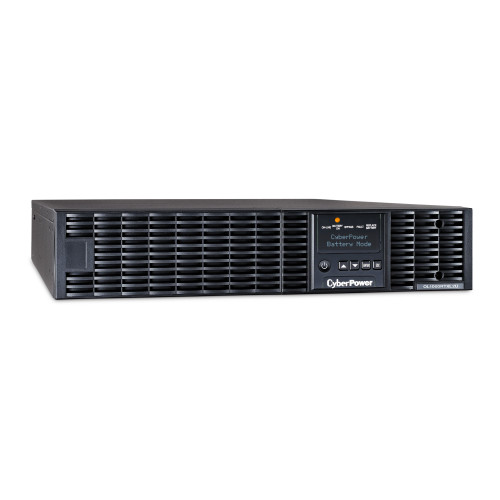
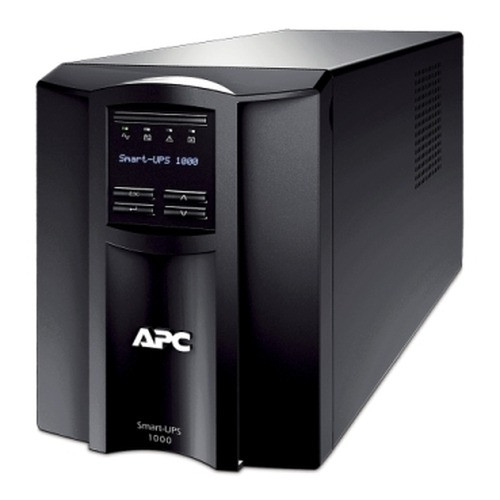
Both the CyberPower OL1000RTXL2U and the APC SMT1000J are 1000 VA uninterruptible power supplies targeting IT infrastructure protection, making them a legitimate cross-shop pairing for buyers evaluating 1000 VA UPS options. The comparison covers topology, real-world power delivery, runtime, connectivity, and form factor — the axes that most directly affect suitability for rack-mounted network and security equipment, edge servers, and NVR installations.
In This Guide
- Which UPS delivers cleaner power and stronger protection topology?
- Which UPS provides more usable runtime and how do battery management options compare?
- Which UPS better fits rack environments and offers broader remote management options?
- Which should you choose: the OL1000RTXL2U or the SMT1000J?
- Side-by-Side Specs
- FAQ
Which UPS delivers cleaner power and stronger protection topology?
The OL1000RTXL2U uses double-conversion online topology, meaning utility power is continuously converted to DC and back to AC, completely isolating connected equipment from the raw mains at all times. This yields zero transfer time during a utility event and eliminates sags, surges, and frequency deviations before they reach the load. The SMT1000J uses line-interactive topology, which passes conditioned utility power directly to the load and only switches to battery on a true outage — transfer time is measurable, and only voltage regulation (not waveform reconditioning) is applied during normal operation.
On waveform, the OL1000RTXL2U specifies Pure Sine Wave output at all times, consistent with its online topology. The SMT1000J spec lists 'Sinewave' output but does not explicitly confirm pure sine under all operating conditions, which is typical of line-interactive units that may produce stepped approximations during battery operation. Buyers powering active power-factor-corrected (PFC) power supplies — common in modern servers and NVRs — should note that pure sine wave output is the manufacturer-specified requirement for those loads.
The SMT1000J includes a surge energy rating of 459 joules, a spec not provided for the OL1000RTXL2U. Surge suppression is architecturally less critical in a double-conversion unit since the load is always isolated, but the absence of the published joule rating for the CyberPower model means direct numeric comparison on this point cannot be made from the available specifications.
Which UPS provides more usable runtime and how do battery management options compare?
At the 1000 VA nameplate, the OL1000RTXL2U delivers 900 W of real power capacity, yielding a power factor of 0.90. The SMT1000J delivers 670 W at 1000 VA, a power factor of 0.67. For loads that draw current close to or at the watt rating of connected equipment, this 230 W gap in real power delivery is significant: a 700 W server load that fits within the OL1000RTXL2U's capacity would exceed the SMT1000J's 670 W ceiling.
Runtime figures are provided only for the OL1000RTXL2U: 8 minutes at full load (900 W) and 21 minutes at half load (450 W), backed by three 12 V / 9 Ah sealed lead-acid batteries. The SMT1000J's runtime at any load point is not specified in the provided data. Both units specify a 4-hour recharge time, though the OL1000RTXL2U qualifies this as '4 hours to 90% capacity' while the SMT1000J's recharge spec is unqualified.
The OL1000RTXL2U specifies hot-swappable batteries, allowing battery replacement without powering down connected equipment. No hot-swap specification is stated for the SMT1000J in the provided data. The OL1000RTXL2U's battery chemistry and string (3 × 12 V / 9 Ah SLA) are explicitly documented; the SMT1000J lists only 'Lead acid' as battery type with no capacity or string detail provided.
Which UPS better fits rack environments and offers broader remote management options?
The OL1000RTXL2U is specified as a 2U rack/tower convertible unit with explicit dimensions of 17 × 3.5 × 16.9 in (432 × 89 × 429 mm) and a weight of 39.6 lb. The SMT1000J is localized for the Japan market (100 V nominal input, VCCI Class A compliance) and does not specify a rack form factor; its only listed dimension is 6.8 in with shipping dimensions provided separately. Buyers deploying in a standard EIA 19-inch rack should note the OL1000RTXL2U is explicitly rack-qualified while the SMT1000J's rack compatibility cannot be confirmed from the provided specifications.
For connectivity, the OL1000RTXL2U lists USB, Serial, and Network interfaces. The SMT1000J lists USB (1 × USB Type A) and adds one SmartSlot expansion bay — an APC proprietary slot that accepts optional network management, relay, or environmental monitoring cards. The OL1000RTXL2U's network interface is listed as a standard spec item; the SMT1000J's network management requires a separately purchased SmartSlot card, though the slot itself is included.
The OL1000RTXL2U includes an LCD control panel and specifies generator compatibility. The SMT1000J includes an LCD display and an audible alarm (45 dBA rated). Standards compliance differs: the OL1000RTXL2U carries UL 1778, FCC Part 15 Class B, CSA C22.2 No. 107.3, and RoHS; the SMT1000J carries UL 1449, VCCI Class A ITE, RoHS Exemption 7b, and REACH — differences consistent with the SMT1000J being a Japan-market SKU and the OL1000RTXL2U being a North American product.
Which should you choose: the OL1000RTXL2U or the SMT1000J?
Our take: The OL1000RTXL2U is the stronger choice when the deployment requires double-conversion protection, higher real-power capacity, and an explicit rack form factor. Its 900 W real-power rating versus the SMT1000J's 670 W means it supports 34% more watts of connected load within the same VA nameplate — a material difference for high-density or PFC-load installations. It also specifies hot-swappable batteries, a feature absent from the SMT1000J's provided data, reducing maintenance downtime. The SMT1000J is a Japan-market unit (100 V nominal, VCCI Class A) and is not specified for rack mounting, making it unsuitable for most North American rack deployments without confirming compatibility. Buyers in Japan evaluating a line-interactive unit with an APC SmartSlot ecosystem and 2-year limited warranty may find the SMT1000J appropriate for smaller, non-rack workloads where double-conversion isolation is not required.
Side-by-Side Comparison
Spec-for-spec, from manufacturer data.
| Specification | CyberPower OL1000RTXL2U | APC by Schneider Electric SMT1000J |
|---|---|---|
| UPS Topology | Double-Conversion Online | Line Interactive |
| Capacity (VA) | 1000 VA | 1000 VA |
| Capacity (Watts) | 900 W | 670 W |
| Power Factor | 0.90 | 0.67 |
| Output Waveform | Pure Sine Wave | Sinewave |
| Nominal Input Voltage | 100–125 VAC | 100 VAC (Japan market) |
| Input Voltage Range | 96–150 VAC (full load) | 80–123 VAC |
| Output Outlets | 8 × NEMA 5-15R (all battery-backed) | 8 × NEMA 5-15 |
| Battery Type | 3 × 12 V / 9 Ah Sealed Lead-Acid | Lead acid (capacity not specified) |
| Battery Hot-Swappable | Yes | Not specified |
| Runtime at Full Load | 8 min (900 W) | Not specified |
| Runtime at Half Load | 21 min (450 W) | Not specified |
| Recharge Time | 4 hrs to 90% | 4 hrs (qualifier not stated) |
| Form Factor | Rack/Tower 2U | Not specified as rack-mount |
| Connectivity / Management | USB, Serial, Network | USB; SmartSlot expansion bay (card sold separately) |
| Warranty | Manufacturer Warranty (duration not specified) | Limited warranty — 2 years |
| Compliance Standards | UL 1778, FCC Part 15 Class B, CSA C22.2, RoHS | UL 1449, VCCI Class A ITE, RoHS Exemption 7b, REACH |
| Surge Energy Rating | — | 459 joules |
| Weight | 39.6 lb (17.96 kg) | 50.2 lb |
Frequently Asked Questions
Which should you choose: the OL1000RTXL2U or the SMT1000J?
The OL1000RTXL2U is the stronger choice when the deployment requires double-conversion protection, higher real-power capacity, and an explicit rack form factor. Its 900 W real-power rating versus the SMT1000J's 670 W means it supports 34% more watts of connected load within the same VA nameplate — a material difference for high-density or PFC-load installations. It also specifies hot-swappable batteries, a feature absent from the SMT1000J's provided data, reducing maintenance downtime. The SMT1000J is a Japan-market unit (100 V nominal, VCCI Class A) and is not specified for rack mounting, making it unsuitable for most North American rack deployments without confirming compatibility. Buyers in Japan evaluating a line-interactive unit with an APC SmartSlot ecosystem and 2-year limited warranty may find the SMT1000J appropriate for smaller, non-rack workloads where double-conversion isolation is not required.
Does the OL1000RTXL2U or SMT1000J provide better protection against power anomalies like sags and frequency instability?
The OL1000RTXL2U uses double-conversion online topology, which fully isolates connected equipment from the utility at all times — eliminating transfer time and correcting voltage and frequency continuously. The SMT1000J uses line-interactive topology, which conditions voltage but passes utility power directly to the load during normal operation and switches to battery only on outage. For environments with chronic power quality issues, double-conversion as specified on the OL1000RTXL2U provides a higher level of isolation.
Can I replace the batteries on either UPS without shutting down my connected equipment?
The OL1000RTXL2U explicitly specifies hot-swappable batteries (3 × 12 V / 9 Ah SLA), allowing battery replacement without powering down the load. The SMT1000J's provided specifications do not include a hot-swap battery designation, so that capability cannot be confirmed from available data.
Is the SMT1000J compatible with North American rack environments and power infrastructure?
Based on the provided specifications, the SMT1000J is a Japan-market SKU with a nominal input voltage of 100 V AC (range 80–123 V AC) and VCCI Class A compliance — neither of which aligns with standard North American 120 V infrastructure or FCC Part 15 Class B requirements. Its form factor is not specified as rack-mountable in the provided data. The OL1000RTXL2U is explicitly rated for 100–125 V nominal North American input and is specified as a 2U rack/tower unit with UL 1778 and FCC Part 15 Class B compliance.
More UPS Comparisons
- CyberPower PR1000RTXL2UC vs APC by Schneider Electric SURT1000RMXLI
- CyberPower PR1000RTXL2UC vs APC by Schneider Electric SMT1000CUS
- CyberPower PR1000RTXL2UC vs Vertiv GXT5-1000LVRT2UXL
- CyberPower PR1000RTXL2UC vs APC by Schneider Electric SMT1000J
- CyberPower PR1000RTXL2UC vs CyberPower CP1000PFCLCD
- CyberPower PR1000RTXL2UC vs CyberPower PR1000LCD
UPS Buying Guides
Get a Second Opinion on Your Camera Choice
Share your site layout, coverage goals, and budget. Our team will validate the camera selection, flag anything we would change, and recommend products that match the use case.