
CyberPower CP2000PFCRM2U vs Panduit U02S12V: Specification Comparison
Both units are 2000VA, 2U, 19-inch rack-mount pure-sine-wave UPS systems targeting IT and security infrastructure environments. The CyberPower CP2000PFCRM2U is a 1200W line-interactive unit with an explicit watt rating, outlet complement, battery specs, and management interface suite. The Panduit U02S12V is a 2000VA SteadySine™ unit positioned for data center, edge, and enterprise MTDC deployments. This comparison evaluates power delivery and outlet availability, battery and runtime characteristics, and management and integration capabilities across the two platforms.
In This Guide
- How do these UPS units compare on usable power output, outlet configuration, and power quality?
- What battery configuration and runtime can each unit deliver, and how are batteries serviced?
- How do the two units differ in management interfaces, monitoring capabilities, and platform integration?
- Which should you choose: the CP2000PFCRM2U or the U02S12V?
- Side-by-Side Specs
- FAQ
How do these UPS units compare on usable power output, outlet configuration, and power quality?
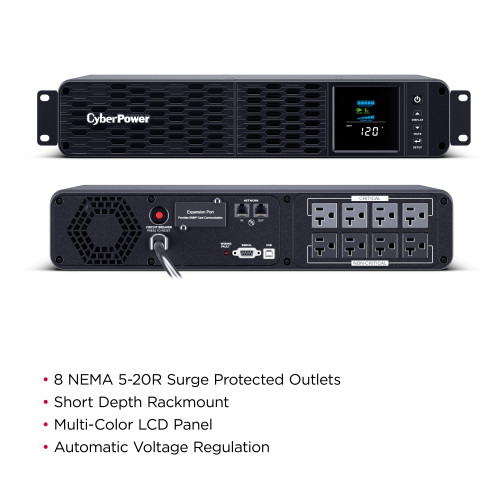
The CyberPower CP2000PFCRM2U is rated at 2000VA with a stated real-power output of 1200W, yielding an output power factor of 0.6. It delivers that load across 8 x NEMA 5-20R receptacles, all on battery backup with surge protection, and includes a 1500-joule surge suppression rating. Input is via a NEMA 5-20P plug over a 6-foot cord, accepting 82–144 VAC to accommodate browndown and swell conditions. Output is 120VAC ±5% at pure sine wave.
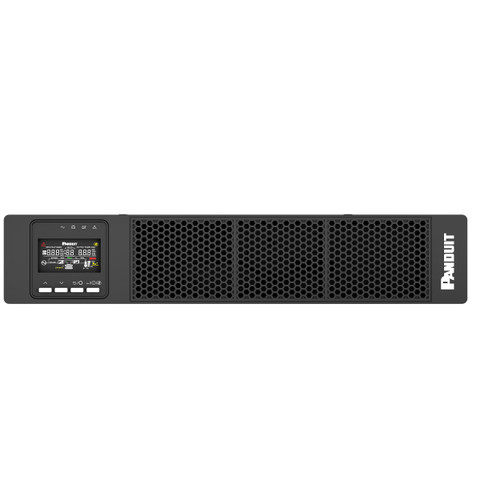
The Panduit U02S12V is rated at 2000VA; however, the provided specifications do not state a watt (real power) rating or output power factor, so actual usable wattage cannot be confirmed from available data. Outlet type, outlet count, and surge joule rating are not stated in the supplied specs. The unit does specify total harmonic distortion of less than 3% THD on output, a transfer time under 4ms, and frequency regulation of 60Hz ±0.1Hz — metrics the CyberPower spec sheet does not explicitly list. Both units claim pure sine wave output and automatic voltage regulation (AVR).
For buyers who need to know exactly how many watts of IT load a UPS can sustain, or who must wire specific NEMA receptacle types, the CP2000PFCRM2U provides that data directly. The U02S12V's THD and transfer-time figures are relevant for sensitive network and compute loads but must be weighed against the absence of a confirmed watt ceiling in the available spec set.
What battery configuration and runtime can each unit deliver, and how are batteries serviced?
The CP2000PFCRM2U uses two sealed lead-acid batteries at 12V/9Ah each (24V total string), providing a stated runtime of 9 minutes at half load (600W) and 2.2 minutes at full load (1200W). Batteries are hot-swappable and user-replaceable, meaning servicing can occur without powering down connected equipment or returning the unit to a depot.
The Panduit U02S12V spec sheet, as supplied, does not disclose battery chemistry, battery voltage or amp-hour rating, runtime figures at any load level, or battery serviceability method (hot-swap, user-replaceable, or depot return). These are significant data gaps for a UPS buying decision in which runtime under load and field-serviceability directly affect total cost of ownership and maintenance planning.
Buyers requiring confirmed runtime figures or a defined battery-replacement procedure should note that only the CP2000PFCRM2U supplies this information in the available spec data. The U02S12V's battery characteristics would need to be confirmed via Panduit's full datasheet or direct vendor inquiry before a runtime-sensitive deployment decision can be made.
How do the two units differ in management interfaces, monitoring capabilities, and platform integration?
The CP2000PFCRM2U includes a USB port, a serial DB9 interface with one dry-contact relay output, and an optional SNMP expansion slot for network card installation. A multifunction color LCD provides local status visibility. Data line protection is provided via RJ45 10/100/1000 Ethernet pass-through. The combination of USB, serial, dry-contact, and optional SNMP covers most enterprise and SMB monitoring frameworks and supports integration with software such as PowerPanel Business or third-party NMS platforms via SNMP trap.
The Panduit U02S12V spec sheet does not list any management ports, display type, SNMP capability, dry-contact outputs, or software compatibility. Given Panduit's stated target application — data center, edge, and enterprise MTDC — management interface details are critical for evaluating fit within a monitored infrastructure, but they are absent from the supplied specification set and cannot be confirmed from available data.
For installations where remote UPS monitoring, automated graceful shutdown, or NMS integration is a requirement, the CP2000PFCRM2U provides a documented path via its included ports and optional SNMP card. The U02S12V's management capabilities cannot be assessed from available specs and would require supplemental documentation from Panduit.
Which should you choose: the CP2000PFCRM2U or the U02S12V?
Our take: The CP2000PFCRM2U is the stronger choice when buyers require confirmed watt output, documented runtime, field-serviceable batteries, and a defined management interface suite from available specification data. Three concrete differentiators stand out: first, the CyberPower unit states 1200W real power output versus no watt rating disclosed for the U02S12V; second, it provides documented runtimes of 9 minutes at 600W and 2.2 minutes at 1200W with hot-swappable 12V/9Ah batteries, while the U02S12V discloses none of these figures; third, it ships with USB, serial DB9, dry-contact relay, and an SNMP expansion slot, whereas the U02S12V lists no management ports in available specs. The U02S12V's stated THD under 3% and sub-4ms transfer time are meaningful for sensitive loads, and its data-center and MTDC positioning may reflect capabilities not captured in the supplied spec set — buyers considering it for those deployments should obtain Panduit's full datasheet before deciding.
Side-by-Side Comparison
Spec-for-spec, from manufacturer data.
| Specification | CyberPower CP2000PFCRM2U | Panduit U02S12V |
|---|---|---|
| Device Type | Rack UPS | Rack UPS |
| Capacity (VA) | 2000 VA | 2000 VA |
| Real Power (W) | 1200 W | — |
| Output Power Factor | 0.6 | — |
| Output Waveform | Pure Sine Wave | Pure Sine Wave |
| Topology | Line Interactive with AVR | AVR (type not specified) |
| Form Factor | 2U, 19-in EIA Rack | 2U, 19-in EIA-310 Rack |
| Input Voltage Range | 82–144 VAC | — |
| Transfer Time | — | <4 ms |
| Output THD | — | <3% |
| Outlets | 8 × NEMA 5-20R | — |
| Surge Suppression | 1500 Joules | — |
| Battery | 2 × 12V/9Ah SLA, hot-swap | — |
| Runtime @ Half Load | 9 min (600 W) | — |
| Runtime @ Full Load | 2.2 min (1200 W) | — |
| Management Ports | USB, Serial DB9, SNMP slot (optional) | — |
| Display | Multifunction Color LCD | — |
| Certifications | UL1778, FCC Class B, RoHS, Energy Star | UL 1778, cUL |
| Weight | 28.68 lb | — |
| Dimensions (W × H × D in) | 17.05 × 3.39 × 10.79 | 17.3 × 3.4 × — |
Frequently Asked Questions
Which should you choose: the CP2000PFCRM2U or the U02S12V?
The CP2000PFCRM2U is the stronger choice when buyers require confirmed watt output, documented runtime, field-serviceable batteries, and a defined management interface suite from available specification data. Three concrete differentiators stand out: first, the CyberPower unit states 1200W real power output versus no watt rating disclosed for the U02S12V; second, it provides documented runtimes of 9 minutes at 600W and 2.2 minutes at 1200W with hot-swappable 12V/9Ah batteries, while the U02S12V discloses none of these figures; third, it ships with USB, serial DB9, dry-contact relay, and an SNMP expansion slot, whereas the U02S12V lists no management ports in available specs. The U02S12V's stated THD under 3% and sub-4ms transfer time are meaningful for sensitive loads, and its data-center and MTDC positioning may reflect capabilities not captured in the supplied spec set — buyers considering it for those deployments should obtain Panduit's full datasheet before deciding.
Which UPS gives me a confirmed wattage rating I can use for load planning — the CP2000PFCRM2U or the U02S12V?
Only the CyberPower CP2000PFCRM2U provides a stated real-power rating of 1200W in the available specifications. The Panduit U02S12V lists a 2000VA capacity but does not disclose a watt (real power) figure in the supplied spec data, so its usable watt ceiling cannot be confirmed without consulting additional Panduit documentation.
Can I replace the batteries myself in the field without shutting down connected equipment?
Yes, for the CP2000PFCRM2U: the spec sheet explicitly states hot-swappable, user-replaceable sealed lead-acid batteries (2 × 12V/9Ah). The Panduit U02S12V does not disclose battery type, configuration, or serviceability method in the available specifications, so field-replaceability cannot be confirmed for that unit.
Is either UPS compatible with SNMP-based network monitoring systems?
The CP2000PFCRM2U includes an optional SNMP expansion slot (card sold separately), plus USB and serial DB9 interfaces for software-based monitoring and graceful shutdown. The Panduit U02S12V does not list any management ports or SNMP capability in the provided specification data; buyers requiring SNMP integration should verify this directly with Panduit before selecting the U02S12V for a monitored deployment.
More UPS Comparisons
- APC by Schneider Electric SMX2000LV vs CyberPower PR2000RTXL2UC
- APC by Schneider Electric SMX2000LV vs CyberPower CP2000PFCRM2U
- APC by Schneider Electric SMX2000LV vs CyberPower PR2000RT2UCN
- APC by Schneider Electric SMX2000LV vs Middle Atlantic UPX-EXPANRUN-OL20
- APC by Schneider Electric SMX2000LV vs APC by Schneider Electric SMX2000LVNCUS
- APC by Schneider Electric SMX2000LV vs APC by Schneider Electric SMX2000RMLV2U
UPS Buying Guides
Get a Second Opinion on Your Camera Choice
Share your site layout, coverage goals, and budget. Our team will validate the camera selection, flag anything we would change, and recommend products that match the use case.