
CyberPower CP1000PFCLCD vs Vertiv GXT5-1000LVRT2UXL: Specification Comparison
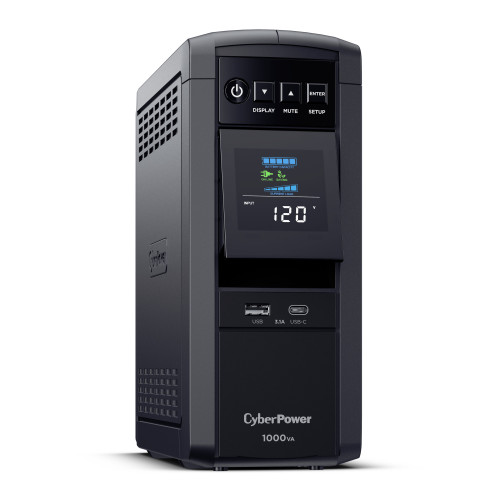
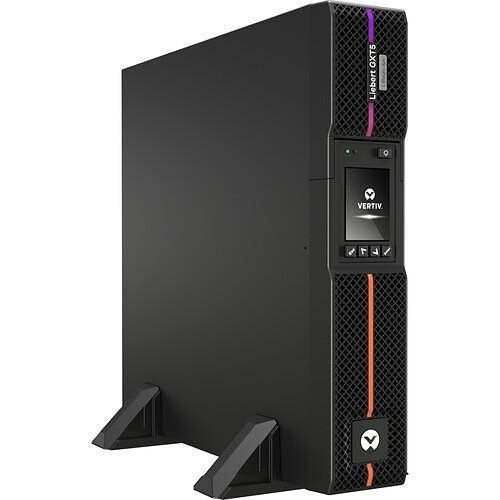
Both products are 1000VA single-phase 120VAC UPS units offering pure sine wave output and LCD monitoring, making them genuine cross-shop candidates for installers protecting IP cameras, NVRs, access control panels, or edge network gear. The comparison pits CyberPower's line-interactive CP1000PFCLCD mini-tower against Vertiv's online double-conversion GXT5-1000LVRT2UXL 2U rack/tower unit. The topology difference is the defining axis: one corrects voltage, the other continuously regenerates it. Capacity, runtime, form factor, and management depth follow as the remaining decision drivers.
In This Guide
- Which UPS topology and power quality specs better protect sensitive loads?
- How does usable power capacity and runtime compare, and can either unit scale?
- Which unit better fits rack environments, remote management needs, and compliance requirements?
- Which should you choose: the CP1000PFCLCD or the GXT5-1000LVRT2UXL?
- Side-by-Side Specs
- FAQ
Which UPS topology and power quality specs better protect sensitive loads?
The CP1000PFCLCD uses line-interactive topology with AVR (automatic voltage regulation via buck-boost transformer). It passes utility power through directly under normal conditions, switching to battery in 4 ms on outage. Output THD is rated below 3% at full load on battery. Input range is 88–144 VAC before transfer to battery.
The GXT5-1000LVRT2UXL uses online double-conversion topology, meaning AC input is continuously rectified to DC and re-inverted to AC regardless of utility condition. Transfer time is zero — there is no switching event. Output voltage is user-configurable (110/115/120/125 VAC) with ±3% regulation. Input range extends to 60–150 VAC before battery engagement. No output THD figure is specified in the provided specs.
For loads sensitive to micro-interruptions, frequency variation, or voltage distortion — such as rack servers, NVRs with spinning drives, or managed switches with precision clocking — the zero-transfer-time double-conversion architecture of the GXT5 eliminates the 4 ms window present in any line-interactive design. The CP1000PFCLCD's <3% THD and AVR are adequate for most IP security edge loads but do not match the continuous isolation of double-conversion.
How does usable power capacity and runtime compare, and can either unit scale?
The CP1000PFCLCD is rated 1000 VA / 600 W. Its power factor is 0.6 (600 W ÷ 1000 VA). Runtime is specified at 2 minutes at full load (600 W) and 6 minutes at half load (300 W). Battery is a sealed lead-acid 12V / 9Ah pack, user-replaceable (RB1270X2C). No external battery expansion is specified.
The GXT5-1000LVRT2UXL is rated 1000 VA / 1000 W, reflecting a unity (1.0) power factor. This means the full VA rating is available as real watts — 67% more usable wattage than the CP1000PFCLCD from the same VA rating. Runtime figures at specific load levels are not provided in the supplied specs. Battery is hot-swappable front-accessible VRLA, requiring no tools. The unit supports daisy-chained external battery cabinets — up to 3 additional units — for extended runtime.
For loads drawing close to 600 W, the CP1000PFCLCD is at its ceiling while the GXT5 has 400 W of headroom remaining. Security deployments with high-wattage PTZ cameras, PoE switches, or NVRs with multiple drives will reach the CyberPower's watt limit before its VA limit. The GXT5's hot-swap battery and scalable external cabinet option are operationally significant for installations requiring extended runtime or zero-downtime battery maintenance.
Which unit better fits rack environments, remote management needs, and compliance requirements?
The CP1000PFCLCD is a mini-tower measuring 3.94 × 9.7 × 10.24 in and weighing 15.39 lb. It is not rack-mountable per the provided specs. Management interfaces include USB (HID compliant) and serial (dry contact relay), with CyberPower PowerPanel software supporting Windows, macOS, and Linux. The LCD displays load, voltage, battery status, runtime, and faults. USB Type-A and Type-C charging ports are present. Network management is limited to RJ45 surge-protected pass-through (not SNMP/IP management). Certifications: UL1778, cUL 107.3, FCC Class B, RoHS, ENERGY STAR.
The GXT5-1000LVRT2UXL is a 2U rack-mount / tower-convertible unit measuring 16.9 × 15.7 × 3.4 in and weighing 37 lb. It fits directly into standard 19-inch racks. Management interfaces include USB and RS-232 serial standard, plus an optional Intellislot network card slot for IP/SNMP remote management (card not included per specs). The LCD displays load percentage, runtime, voltage, and status. No USB charging ports are specified. Noise level is rated below 45 dBA at 1 meter. Certifications: TAA compliant, Energy Star 2.0, cULus, FCC Class A, CE.
For rack-mounted security head-end closets or server rooms, the GXT5's 2U form factor is a direct fit. TAA compliance is a hard requirement for federal, state, and government-funded installations — the CP1000PFCLCD does not list TAA compliance in the provided specs. The GXT5's optional Intellislot network card enables remote SNMP monitoring relevant to enterprise IT management platforms; the CP1000PFCLCD's PowerPanel software covers local and USB-attached management only. The CyberPower unit's USB charging ports and lighter weight (15.39 lb vs 37 lb) are practical for desktop or wall-mount security panel installations.
Which should you choose: the CP1000PFCLCD or the GXT5-1000LVRT2UXL?
Our take: The GXT5-1000LVRT2UXL is the stronger choice when the installation demands zero-transfer-time power conditioning, rack-mount form factor, or TAA compliance. Its online double-conversion topology eliminates the 4 ms transfer window of the CP1000PFCLCD, and its unity power factor delivers 1000 W of usable capacity versus the CyberPower's 600 W ceiling — a 67% wattage advantage from the same VA rating. Hot-swappable, front-accessible batteries and support for up to three daisy-chained external battery cabinets add maintenance and runtime scalability absent from the CP1000PFCLCD. The CP1000PFCLCD is the appropriate choice for desktop or wall-mount deployments — edge camera stations, small access control panels, or workstation protection — where the mini-tower footprint, 15.39 lb weight, USB Type-A/C charging, and $500,000 connected equipment guarantee are valued, and where a 4 ms transfer time and 600 W capacity are sufficient for the protected load.
Side-by-Side Comparison
Spec-for-spec, from manufacturer data.
| Specification | CyberPower CP1000PFCLCD | Vertiv GXT5-1000LVRT2UXL |
|---|---|---|
| Topology | Line Interactive (AVR) | Online Double-Conversion |
| Capacity (VA) | 1000 VA | 1000 VA |
| Capacity (Watts) | 600 W | 1000 W |
| Power Factor | 0.6 | 1.0 (unity) |
| Output Waveform | Pure Sine Wave | Pure Sine Wave |
| Transfer Time | 4 ms | Zero (always-on) |
| Output THD | <3% at full load | Not specified |
| Input Voltage Range | 88–144 VAC | 60–150 VAC |
| Output Voltage | 120 VAC ±5% | 110/115/120/125 VAC (configurable), ±3% |
| Outlets | 10 × NEMA 5-15R (5 battery + 5 surge) | 6 × NEMA 5-15R (programmable groups) |
| Form Factor | Mini-Tower | 2U Rack/Tower Convertible |
| Weight | 15.39 lb | 37 lb |
| Battery | SLA 12V / 9Ah, user-replaceable | VRLA, hot-swappable, no tools, front-access |
| Runtime Scalability | Internal only; not specified as expandable | Internal + up to 3 external battery cabinets |
| Management | USB (HID), Serial, PowerPanel software | USB, RS-232, optional Intellislot network card |
| Certifications | UL1778, cUL 107.3, FCC Class B, RoHS, ENERGY STAR | TAA, Energy Star 2.0, cULus, FCC Class A, CE |
| Warranty | 3-Year Limited | 3-Year Advanced Replacement (batteries included) |
| Connected Equipment Policy | $500,000 | Not specified |
Frequently Asked Questions
Which should you choose: the CP1000PFCLCD or the GXT5-1000LVRT2UXL?
The GXT5-1000LVRT2UXL is the stronger choice when the installation demands zero-transfer-time power conditioning, rack-mount form factor, or TAA compliance. Its online double-conversion topology eliminates the 4 ms transfer window of the CP1000PFCLCD, and its unity power factor delivers 1000 W of usable capacity versus the CyberPower's 600 W ceiling — a 67% wattage advantage from the same VA rating. Hot-swappable, front-accessible batteries and support for up to three daisy-chained external battery cabinets add maintenance and runtime scalability absent from the CP1000PFCLCD. The CP1000PFCLCD is the appropriate choice for desktop or wall-mount deployments — edge camera stations, small access control panels, or workstation protection — where the mini-tower footprint, 15.39 lb weight, USB Type-A/C charging, and $500,000 connected equipment guarantee are valued, and where a 4 ms transfer time and 600 W capacity are sufficient for the protected load.
Can either the CP1000PFCLCD or GXT5-1000LVRT2UXL be mounted in a standard 19-inch equipment rack?
Only the GXT5-1000LVRT2UXL is rack-mountable. Its specs describe a 2U rack-mount / tower-convertible form factor (16.9 × 15.7 × 3.4 in). The CP1000PFCLCD is specified as a mini-tower only; no rack-mount kit or rail compatibility is listed in its provided specs.
Which unit is better suited for government or federally funded security projects requiring TAA compliance?
The GXT5-1000LVRT2UXL lists TAA compliance in its certifications. The CP1000PFCLCD's provided specs do not include TAA compliance. For installations subject to Trade Agreements Act requirements — federal, state, or government-funded projects — the GXT5-1000LVRT2UXL meets that requirement as specified; the CP1000PFCLCD does not per available data.
Is the CP1000PFCLCD or GXT5-1000LVRT2UXL better for powering a high-wattage NVR with multiple drives and a PoE switch simultaneously?
The GXT5-1000LVRT2UXL is better suited for high-wattage combinations. Its unity power factor rating means all 1000 VA is available as 1000 W of real power. The CP1000PFCLCD is rated at 600 W maximum (power factor 0.6), so a combined NVR-plus-switch load approaching or exceeding 600 W would overload it. If runtime beyond the internal battery is needed, the GXT5 also supports up to three external battery cabinets — a feature not available on the CP1000PFCLCD per its provided specs.
More UPS Comparisons
- CyberPower PR1000RTXL2UC vs APC by Schneider Electric SURT1000RMXLI
- CyberPower PR1000RTXL2UC vs APC by Schneider Electric SMT1000CUS
- CyberPower PR1000RTXL2UC vs Vertiv GXT5-1000LVRT2UXL
- CyberPower PR1000RTXL2UC vs APC by Schneider Electric SMT1000J
- CyberPower PR1000RTXL2UC vs CyberPower CP1000PFCLCD
- CyberPower PR1000RTXL2UC vs CyberPower PR1000LCD
UPS Buying Guides
Get a Second Opinion on Your Camera Choice
Share your site layout, coverage goals, and budget. Our team will validate the camera selection, flag anything we would change, and recommend products that match the use case.