
CyberPower CP1000PFCLCD vs APC by Schneider Electric SMT1000J: Specification Comparison
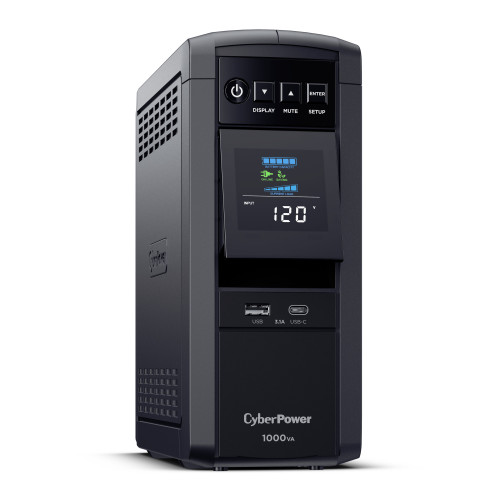
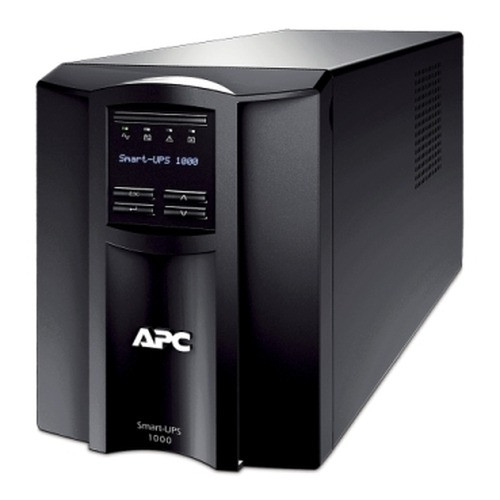
Both the CyberPower CP1000PFCLCD and the APC SMT1000J are 1000VA line-interactive UPS units targeting small office, workstation, and network-closet loads in the 1000VA class. The CyberPower is rated and sold for the North American 120V market; the APC unit is a Japan-localized 100V model. Despite the shared VA rating, the two differ meaningfully in watt capacity, surge rating, outlet count, expansion capability, waveform detail, and warranty terms — dimensions that matter for load planning, equipment protection, and long-term serviceability.
In This Guide
- Which UPS delivers more usable power and better output protection for connected equipment?
- How long will each UPS run connected loads, and how flexible is the outlet and charging configuration?
- What management interfaces, certifications, and support commitments does each UPS provide?
- Which should you choose: the CP1000PFCLCD or the SMT1000J?
- Side-by-Side Specs
- FAQ
Which UPS delivers more usable power and better output protection for connected equipment?
The CP1000PFCLCD is rated at 1000VA / 600W, giving a power factor of 0.60. The SMT1000J is rated at 1000VA / 670W, a power factor of 0.67 — meaning it can support a heavier resistive load at the same VA rating. Buyers sizing for watts rather than VA will find the SMT1000J provides 70W more headroom at identical VA.
On surge protection, the gap is significant: the CP1000PFCLCD is rated at 1020 joules, while the SMT1000J is rated at 459 joules — less than half. For sites with frequent transients or sensitive equipment, the CyberPower's higher joule rating provides a substantially larger energy-absorption buffer.
Output waveform is listed as 'Pure Sine Wave' for the CP1000PFCLCD (with <3% THD at full load specified). The SMT1000J spec lists 'Sinewave' without a THD figure or distortion ceiling. Buyers powering active-PFC power supplies or medical/AV equipment should note this distinction — the CyberPower spec is more precisely quantified.
Input voltage range also differs: the CP1000PFCLCD operates from 88–144 VAC (120V nominal), while the SMT1000J operates from 80–123 VAC (100V nominal, adjustable down to 70V). The APC unit is explicitly localized for Japan and is not spec'd for 120V North American mains.
How long will each UPS run connected loads, and how flexible is the outlet and charging configuration?
The CP1000PFCLCD specifies runtime explicitly: 2 minutes at full load (600W) and 6 minutes at half load (300W), backed by a 12V / 9Ah sealed lead-acid battery. The SMT1000J spec does not include runtime figures at any specific load level; the only battery data provided is a 4-hour recharge time and the lead-acid type declaration.
The CP1000PFCLCD provides 10 NEMA 5-15R outlets — 5 with battery backup plus surge, and 5 with surge only. The SMT1000J provides 8 NEMA 5-15R outlets; the spec does not break down how many are battery-backed versus surge-only. For installations requiring more simultaneously protected outlets, the CyberPower offers two additional receptacles.
The CP1000PFCLCD includes dedicated USB charging ports (Type-A and Type-C), a feature absent from the SMT1000J spec. The APC unit includes a SmartSlot expansion bay (1 free), which enables optional network management cards — a feature not present on the CyberPower. Neither spec lists hot-swap battery capability; the CyberPower specifies user-replaceable batteries (model RB1270X2C).
What management interfaces, certifications, and support commitments does each UPS provide?
The CP1000PFCLCD offers USB (HID-compliant) and serial (dry-contact relay) management interfaces, a multifunction color LCD showing load, voltage, battery status, runtime, and fault conditions, and PowerPanel software for Windows, macOS, and Linux. It also enables automatic battery self-tests every two weeks and manual tests via LCD or software. The SMT1000J provides USB (Type-A) management and an LCD display; the spec does not detail software compatibility or self-test scheduling.
The SMT1000J includes a SmartSlot expansion bay, enabling optional APC network management cards (SNMP/web) for remote monitoring — a meaningful differentiator for managed IT environments. The CP1000PFCLCD has no equivalent expansion slot; its remote management is limited to what the USB/serial connection and PowerPanel software provide.
On certifications, the CP1000PFCLCD carries UL1778, cUL 107.3, FCC DOC Class B, RoHS, and ENERGY STAR. The SMT1000J carries UL 1449, VCCI Class A ITE (Japan), RoHS Exemption 7b, and REACH. The APC unit's VCCI Class A rating is a Japanese regulatory mark; it is not certified to UL1778 per the provided spec. The CP1000PFCLCD warranty is 3 years with a $500,000 connected equipment policy. The SMT1000J warranty is 2 years; no connected equipment policy is stated in the spec.
Which should you choose: the CP1000PFCLCD or the SMT1000J?
Our take: The CP1000PFCLCD is the stronger choice for North American 120V installations where surge protection margin, outlet count, and warranty coverage are priorities. Its 1020-joule surge rating is 2.2× the SMT1000J's 459 joules, it provides 10 outlets versus 8, carries a 3-year warranty versus 2 years, and includes a $500,000 connected equipment policy not documented for the APC. The SMT1000J edges ahead on watt capacity (670W vs 600W) and offers a SmartSlot for optional network management cards — a meaningful advantage in managed enterprise environments. However, the SMT1000J is a Japan-localized 100V unit (VCCI-certified, 100V nominal input), making it a geographic mismatch for North American deployments. Buyers in Japan needing APC's SmartSlot ecosystem should evaluate the SMT1000J on its own merits; North American buyers running 120V infrastructure will find the CP1000PFCLCD the appropriate, better-protected, and longer-warranted option.
Side-by-Side Comparison
Spec-for-spec, from manufacturer data.
| Specification | CyberPower CP1000PFCLCD | APC by Schneider Electric SMT1000J |
|---|---|---|
| Topology | Line Interactive | Line Interactive |
| Capacity (VA) | 1000 VA | 1000 VA |
| Capacity (Watts) | 600 W | 670 W |
| Output Waveform | Pure Sine Wave (<3% THD at full load) | Sinewave (THD not specified) |
| Input Voltage (Nominal) | 120 VAC | 100 VAC (Japan-localized) |
| Input Voltage Range | 88–144 VAC | 80–123 VAC (adjustable to 70V) |
| Total Outlets | 10 × NEMA 5-15R | 8 × NEMA 5-15R |
| Battery-Backed Outlets | 5 × NEMA 5-15R | Not specified |
| Surge Energy Rating | 1020 joules | 459 joules |
| Battery (Type / Capacity) | SLA 12V / 9Ah | Lead acid (capacity not specified) |
| Runtime at Half Load | 6 min at 300W | Not specified |
| Battery Recharge Time | Not specified | 4 hours |
| Management Interfaces | USB (HID), Serial (dry contact) | USB Type-A, SmartSlot (expansion) |
| LCD Display | Yes (color multifunction) | Yes |
| USB Charging Ports | Type-A and Type-C | — |
| Certifications | UL1778, cUL 107.3, FCC Class B, RoHS, ENERGY STAR | UL 1449, VCCI Class A ITE, RoHS Exemption 7b, REACH |
| Warranty | 3 Years | 2 Years |
| Connected Equipment Policy | $500,000 | Not specified |
| Weight | 15.39 lb | 50.2 lb |
Frequently Asked Questions
Which should you choose: the CP1000PFCLCD or the SMT1000J?
The CP1000PFCLCD is the stronger choice for North American 120V installations where surge protection margin, outlet count, and warranty coverage are priorities. Its 1020-joule surge rating is 2.2× the SMT1000J's 459 joules, it provides 10 outlets versus 8, carries a 3-year warranty versus 2 years, and includes a $500,000 connected equipment policy not documented for the APC. The SMT1000J edges ahead on watt capacity (670W vs 600W) and offers a SmartSlot for optional network management cards — a meaningful advantage in managed enterprise environments. However, the SMT1000J is a Japan-localized 100V unit (VCCI-certified, 100V nominal input), making it a geographic mismatch for North American deployments. Buyers in Japan needing APC's SmartSlot ecosystem should evaluate the SMT1000J on its own merits; North American buyers running 120V infrastructure will find the CP1000PFCLCD the appropriate, better-protected, and longer-warranted option.
Can I use the APC SMT1000J in the United States on 120V power?
Based on the provided specs, the SMT1000J is explicitly localized for Japan, with a 100V nominal input voltage, an operating range of 80–123 VAC, and VCCI Class A ITE certification rather than UL1778. The spec does not list it as compatible with 120V North American mains. Buyers in the US should verify compatibility directly with APC before purchasing; the CP1000PFCLCD is spec'd and certified for 120V North American use.
Which UPS gives better protection against power surges — the CP1000PFCLCD or the SMT1000J?
Per the provided specifications, the CP1000PFCLCD is rated at 1020 joules of surge protection versus the SMT1000J's 459 joules. That is more than double the energy-absorption rating. For installations with frequent voltage transients or high-value connected equipment, the CyberPower's surge rating provides a substantially larger protective buffer based on published specs.
Which unit is better suited for a managed IT environment requiring remote monitoring?
The SMT1000J includes a SmartSlot expansion bay, which accepts optional APC network management cards enabling SNMP and web-based remote monitoring. The CP1000PFCLCD does not include an equivalent expansion slot; its management is limited to USB, serial dry-contact, and the included PowerPanel software. For IT teams requiring card-based network management integration, the SMT1000J's SmartSlot is a documented advantage the CyberPower does not offer.
More UPS Comparisons
- CyberPower PR1000RTXL2UC vs APC by Schneider Electric SURT1000RMXLI
- CyberPower PR1000RTXL2UC vs APC by Schneider Electric SMT1000CUS
- CyberPower PR1000RTXL2UC vs Vertiv GXT5-1000LVRT2UXL
- CyberPower PR1000RTXL2UC vs APC by Schneider Electric SMT1000J
- CyberPower PR1000RTXL2UC vs CyberPower CP1000PFCLCD
- CyberPower PR1000RTXL2UC vs CyberPower PR1000LCD
UPS Buying Guides
Get a Second Opinion on Your Camera Choice
Share your site layout, coverage goals, and budget. Our team will validate the camera selection, flag anything we would change, and recommend products that match the use case.