
Comelit KCA2071A vs Comelit PL6701: Specification Comparison
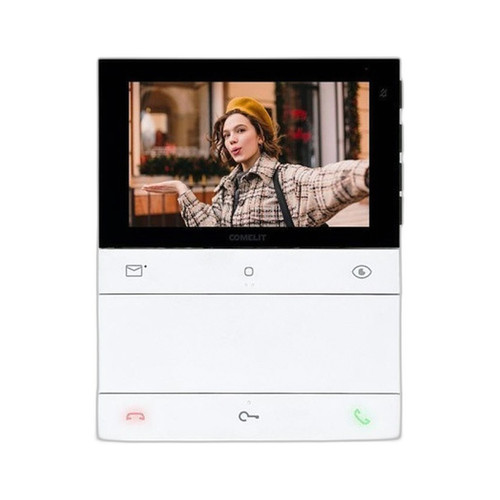
Both products are Comelit indoor video intercom monitors designed for residential and light-commercial door-entry systems running the SimpleBus 2 protocol — a category buyers typically cross-shop when selecting the indoor station for a new or retrofit intercom installation. The KCA2071A is a hands-free wall-mounted unit with a 4MP camera sensor and PoE+ power input, while the PL6701 is a People Series color video door-entry monitor powered by the local bus and equipped with a physical handset. This comparison evaluates image quality and display, audio and power architecture, and system compatibility and physical integration.

In This Guide
- Which unit delivers better image quality and display for visitor identification?
- How do the two units differ in audio design and power supply requirements?
- Are both units compatible with the same Comelit systems, and how do their physical profiles compare?
- Which should you choose: the KCA2071A or the PL6701?
- Side-by-Side Specs
- FAQ
Which unit delivers better image quality and display for visitor identification?
The KCA2071A is specified with 2560×1440 (4MP) resolution, providing high-definition capture of visitors at typical entry distances. No display panel is listed in its specifications — as a hands-free unit it functions as a monitor-side terminal whose video output is not further described in the provided data.
The PL6701 is specified with a 4.3-inch color display at 186×180 resolution. That pixel count is the panel's native resolution for rendering the incoming video stream; it is a lower-resolution display than the 2560×1440 capture resolution cited for the KCA2071A. No camera or sensor resolution is listed for the PL6701 itself, as it is a monitor/handset terminal rather than a door station with an integrated camera.
For installers prioritizing image fidelity at the indoor station, the KCA2071A's 4MP sensor specification is a concrete advantage over the PL6701's 186×180 display. However, buyers should note that the display size and panel resolution of the KCA2071A are not stated in the provided specifications.
How do the two units differ in audio design and power supply requirements?
The KCA2071A uses a hands-free audio architecture with a built-in microphone, eliminating the need for a physical handset. Power is sourced entirely via PoE+ (IEEE 802.3at), meaning a single Ethernet cable carries both data and power. This simplifies wiring in retrofit or new-construction scenarios where a PoE+ switch or injector is already present, and removes the need for a separate 12 V or 24 V local power supply.
The PL6701 uses a two-way handset for audio, delivering a traditional telephone-style conversation between visitor and resident. No PoE capability is listed for the PL6701; its power source is not explicitly stated in the provided specifications beyond its integration with the Comelit SimpleBus 2 bus, which implies bus-derived power. Installers should verify the PL6701's power input requirements against the Comelit datasheet before specifying.
The choice between hands-free and handset audio is an end-user preference decision as much as a technical one. The KCA2071A's PoE+ dependency is a specific infrastructure requirement — the installation must include a 802.3at-capable switch or injector — whereas the PL6701's power architecture remains unspecified in the data provided here.
Are both units compatible with the same Comelit systems, and how do their physical profiles compare?
Both units explicitly list Comelit SimpleBus 2 compatibility: the KCA2071A covers 'Comelit CIAO & SimpleBus 2' and the PL6701 lists 'Comelit Simplebus 2' under VMS compatibility. The PL6701 additionally notes compatibility with 'Comelit intercom and access control systems' in its system description, and its application field lists 'residential and commercial access control,' suggesting a broader stated deployment scope.
Both units are wall-mounted. The KCA2071A is specified at 105×105×20 mm (note: the raw spec string reads '105" x 105" x 20"' which appears to be a unit-labeling error in the source data — likely millimeters given the form factor). The PL6701 is specified at 7.32 inches wide × 7.09 inches tall × 1.38 inches deep, which converts to approximately 185.9×180.1×35.1 mm. The PL6701 is physically larger and deeper than the KCA2071A based on these figures.
The KCA2071A carries an IK08 impact rating, indicating resistance to 5-joule mechanical impact — a relevant specification for semi-public or high-traffic corridors. No impact rating is listed for the PL6701. Both units share a 2-year warranty and white housing.
Which should you choose: the KCA2071A or the PL6701?
Our take: The KCA2071A is the stronger choice when the installation prioritizes high-resolution visitor capture, hands-free convenience, and PoE+ infrastructure integration in a compact, impact-rated enclosure. Its 2560×1440 (4MP) sensor resolution is a concrete step above the PL6701's 186×180 display panel, its PoE+ (802.3at) power input eliminates a separate supply run, and its IK08 impact rating — absent on the PL6701 — provides documented mechanical protection the PL6701 cannot claim. The PL6701 is the appropriate selection when end users require a traditional handset-based conversation interface, or when the existing infrastructure does not include a PoE+ switch or injector. Both units are verified SimpleBus 2 compatible, so neither imposes a platform switching cost in a Comelit environment. Specifiers should confirm the PL6701's bus power requirements from the Comelit datasheet, as that data is not present in the specifications provided.
Side-by-Side Comparison
Spec-for-spec, from manufacturer data.
| Specification | Comelit KCA2071A | Comelit PL6701 |
|---|---|---|
| SKU | KCA2071A | PL6701 |
| Product Series | CIAO Kit SimpleBus 2 | People Series |
| Device Type | Hands-Free Video Intercom | Color Video Door Entry Monitor |
| Form Factor | Hands-Free Wall-Mounted Unit | Video Door Entry Monitor |
| Housing Color | White | White |
| Display Resolution | — | 186×180 px (4.3-in color panel) |
| Camera / Sensor Resolution | 2560×1440 (4MP) | — |
| Audio Design | Hands-free (integrated microphone) | Two-way handset |
| Power Input | PoE+ (IEEE 802.3at) | Not specified in provided data |
| System Compatibility | Comelit CIAO & SimpleBus 2 | Comelit SimpleBus 2; Comelit intercom & access control |
| Application | — | Residential and commercial access control |
| Mount Type | Wall mount | Wall (surface mount) |
| Dimensions (W×H×D) | 105×105×20 mm (per source data) | 7.32×7.09×1.38 in (≈186×180×35 mm) |
| Impact Rating | IK08 | — |
| Warranty | 2-Year | 2-Year |
| Datasheet | /content/product-datasheets/KCA2071A.pdf | /content/product-datasheets/PL6701.pdf |
Frequently Asked Questions
Which should you choose: the KCA2071A or the PL6701?
The KCA2071A is the stronger choice when the installation prioritizes high-resolution visitor capture, hands-free convenience, and PoE+ infrastructure integration in a compact, impact-rated enclosure. Its 2560×1440 (4MP) sensor resolution is a concrete step above the PL6701's 186×180 display panel, its PoE+ (802.3at) power input eliminates a separate supply run, and its IK08 impact rating — absent on the PL6701 — provides documented mechanical protection the PL6701 cannot claim. The PL6701 is the appropriate selection when end users require a traditional handset-based conversation interface, or when the existing infrastructure does not include a PoE+ switch or injector. Both units are verified SimpleBus 2 compatible, so neither imposes a platform switching cost in a Comelit environment. Specifiers should confirm the PL6701's bus power requirements from the Comelit datasheet, as that data is not present in the specifications provided.
Do I need a PoE+ switch to install the KCA2071A, and does the PL6701 have the same requirement?
Yes — the KCA2071A is powered exclusively via PoE+ (IEEE 802.3at), so the installation requires a PoE+-capable switch port or a standalone 802.3at injector. No PoE capability is listed for the PL6701; it appears to draw power from the Comelit SimpleBus 2 bus, but its power input is not fully specified in the data provided. Verify the PL6701's supply requirements in the Comelit datasheet before finalizing the design.
Is the KCA2071A or PL6701 better suited for a semi-public hallway where vandalism is a concern?
The KCA2071A is the documented choice for impact-resistance: it carries an IK08 rating, corresponding to resistance against a 5-joule impact. The PL6701 has no impact rating listed in the specifications provided, so no equivalent claim can be made for it. For deployments in multi-tenant corridors, lobby areas, or other locations with elevated vandalism risk, the KCA2071A's IK08 rating is a relevant, verifiable differentiator.
Can either unit replace the other in an existing Comelit SimpleBus 2 system without a system upgrade?
Both units list Comelit SimpleBus 2 as a compatible protocol, so either should integrate with an existing SimpleBus 2 infrastructure at the protocol level. However, the KCA2071A additionally requires a PoE+ network drop at the terminal location, which may not exist in a legacy installation wired solely for SimpleBus 2. The PL6701 uses a handset versus the KCA2071A's hands-free design — end-user workflow will differ. Confirm wiring infrastructure and power availability at the terminal location before selecting a replacement.
More Intercom Comparisons
- Hanwha TID-600R vs Aiphone IX-EA
- Hanwha TID-600R vs Axis A8207-VE
- Hanwha TID-600R vs Aiphone IX-DVF-6
- Hanwha TID-600R vs Aiphone JOS-1FW
- Aiphone IX-EA vs Axis A8207-VE
- Aiphone IX-EA vs 2N 01273-001
Intercom Buying Guides
Get a Second Opinion on Your Camera Choice
Share your site layout, coverage goals, and budget. Our team will validate the camera selection, flag anything we would change, and recommend products that match the use case.