
Code Blue SLNP0048 vs TP-Link ES205GP: Specification Comparison
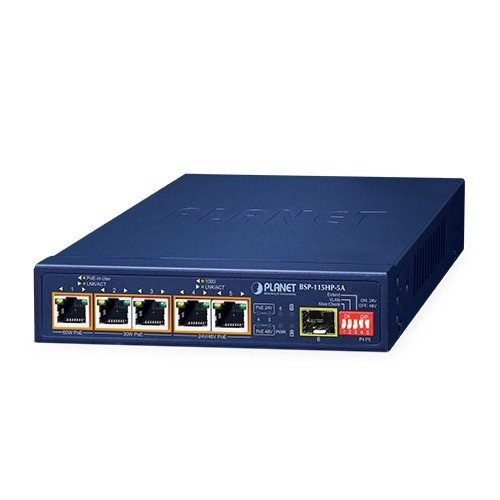
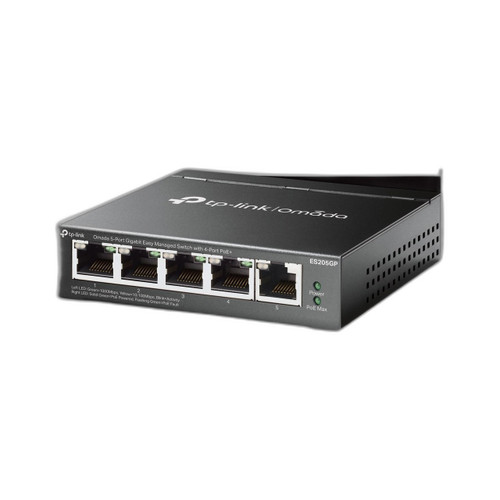
Both the Code Blue SLNP0048 and the TP-Link ES205GP are 5-port PoE+ switches intended for edge deployments where powered endpoints — cameras, intercoms, access readers — must receive data and power from a single compact unit. The SLNP0048 is purpose-built for Code Blue emergency-communication clusters in hardened physical-security environments, while the ES205GP is a general-purpose gigabit managed switch with Omada SDN support. This comparison evaluates port capability and throughput, power budget and physical installation, and management and ecosystem compatibility.
In This Guide
- Which switch delivers more usable port speed and network throughput?
- How do the two switches compare on PoE power budget, input power, and operating environment?
- Which switch offers broader management capability and ecosystem compatibility?
- Which should you choose: the SLNP0048 or the ES205GP?
- Side-by-Side Specs
- FAQ
Which switch delivers more usable port speed and network throughput?
The TP-Link ES205GP specifies five 10/100/1000 Mbps (gigabit) RJ45 ports with a switching capacity of 10 Gbps and a packet-forwarding rate of 7.4 Mpps. It also documents a 64 Mbit Flash memory store, an 8K MAC address table, and a 4 Mbit packet buffer — figures relevant to installers sizing VLANs or managing traffic across multiple camera streams.
The Code Blue SLNP0048 lists no port-speed rating, no switching capacity figure, and no forwarding rate in the provided specifications. Its connectivity is described only as 'PoE' with 'PoE+' power delivery. Buyers requiring a confirmed gigabit backplane for high-resolution IP camera streams cannot verify that capability from the available SLNP0048 spec data.
How do the two switches compare on PoE power budget, input power, and operating environment?
The ES205GP carries a documented 65W total PoE budget with a maximum of 30W per port (802.3at/af), powered by a 53.5 VDC / 1.31A supply. Operating temperature is specified as 0°C to 40°C (32°F to 104°F). Physical dimensions are 99.8 × 98 × 25 mm. Maximum PoE cable reach is stated as 250m.
The SLNP0048 specifies PoE+ power delivery but provides no total PoE watt budget, no per-port watt ceiling, and no operating temperature range in the supplied data. Its power section references a 12–24V DC input associated with a paging-amplifier component change, but no consolidated power-input spec for the switch itself is given. The absence of a documented watt budget makes it impossible to confirm how many simultaneous PoE+ endpoints the unit can power from spec alone.
Which switch offers broader management capability and ecosystem compatibility?
The ES205GP is classified as a managed switch under the TP-Link Omada SDN platform. Documented management features include DHCP Client support and integration into the broader Omada controller ecosystem, which supports VLAN configuration, QoS, and centralized multi-site management — relevant for IT teams managing mixed camera, AP, and intercom deployments.
The SLNP0048 is explicitly designed to deliver PoE+ power and data to Code Blue emergency-communication endpoints. Its three card bullets describe cluster consolidation — eliminating multiple PoE injectors in tower, wall-mount, and refuge-area installations — and it supports wall, pole, recessed, and rack mounting. No management software, VLAN support, SNMP, or CLI interface is listed in the provided specifications. It is positioned as infrastructure within a proprietary Code Blue deployment rather than as a general-purpose managed network device.
Which should you choose: the SLNP0048 or the ES205GP?
Our take: The SLNP0048 is the stronger choice when deploying dedicated Code Blue emergency-communication endpoint clusters that require a self-contained PoE+ concentrator with flexible enclosure mounting — wall, pole, recessed, or rack — in a single-vendor physical-security stack. The ES205GP is the stronger choice for general-purpose edge switching: it documents a confirmed 10 Gbps switching capacity and 7.4 Mpps forwarding rate versus no published throughput figures for the SLNP0048; it specifies a 65W PoE budget with 30W per-port versus no documented watt budget for the SLNP0048; and it provides an operating temperature range (0–40°C) plus Omada SDN management versus no published thermal spec or management platform for the SLNP0048. Buyers integrating mixed IP cameras, APs, and intercoms on a managed network should specify the ES205GP; installers standardizing on Code Blue emergency-call infrastructure should specify the SLNP0048.
Side-by-Side Comparison
Spec-for-spec, from manufacturer data.
| Specification | Code Blue SLNP0048 | TP-Link ES205GP |
|---|---|---|
| Brand | Code Blue | TP-Link |
| MPN | SLNP0048 | ES205GP |
| Total Ports | 5 | 5 |
| PoE Standard | PoE+ | 802.3af/at (PoE+) |
| Total PoE Budget | — | 65W |
| Max PoE Per Port | — | 30W |
| Port Speed | — | 10/100/1000 Mbps (Gigabit) |
| Switching Capacity | — | 10 Gbps |
| Packet Forwarding Rate | — | 7.4 Mpps |
| Management | — | Managed (Omada SDN) |
| Operating Temperature | — | 0°C to 40°C (32°F to 104°F) |
| Power Input | 12–24V DC (partial ref.) | 53.5 VDC / 1.31A |
| Max PoE Range | — | 250m |
| Flash Memory | — | 64 Mbit |
| MAC Address Table | — | 8K |
| Mount Types | Wall; Pole; Recessed; Rack | Wall; Rack |
Frequently Asked Questions
Which should you choose: the SLNP0048 or the ES205GP?
The SLNP0048 is the stronger choice when deploying dedicated Code Blue emergency-communication endpoint clusters that require a self-contained PoE+ concentrator with flexible enclosure mounting — wall, pole, recessed, or rack — in a single-vendor physical-security stack. The ES205GP is the stronger choice for general-purpose edge switching: it documents a confirmed 10 Gbps switching capacity and 7.4 Mpps forwarding rate versus no published throughput figures for the SLNP0048; it specifies a 65W PoE budget with 30W per-port versus no documented watt budget for the SLNP0048; and it provides an operating temperature range (0–40°C) plus Omada SDN management versus no published thermal spec or management platform for the SLNP0048. Buyers integrating mixed IP cameras, APs, and intercoms on a managed network should specify the ES205GP; installers standardizing on Code Blue emergency-call infrastructure should specify the SLNP0048.
Can I use the SLNP0048 to power non-Code Blue cameras or access control readers?
The provided specifications do not confirm compatibility with third-party PoE endpoints — the SLNP0048 is described as delivering power and data specifically to Code Blue endpoints. No interoperability claims with non-Code Blue devices appear in the available spec data. Verify with Code Blue directly before specifying it for mixed-brand deployments.
Does the ES205GP support VLAN or QoS for separating camera traffic from other LAN traffic?
The ES205GP is classified as a managed switch under the Omada SDN platform, which supports VLAN and QoS configuration via the Omada controller. However, the specific feature set visible in the provided specs lists only DHCP Client under management. Confirm full VLAN and QoS capability against the TP-Link ES205GP datasheet at the path noted in the spec data.
Which switch is better suited for outdoor or harsh-environment enclosures?
Neither unit documents an outdoor or extended-temperature rating in the provided specifications. The ES205GP is rated 0–40°C. No operating temperature is listed for the SLNP0048. Neither carries a documented IP or NEMA ingress-protection rating in the supplied data. Confirm environmental ratings with each manufacturer before deploying in uncontrolled or outdoor enclosures.
More Network Switch Comparisons
- TP-Link ES205GP vs Ubiquiti USW-FLEX
- TP-Link ES205GP vs Ubiquiti USW-FLEX-MINI
- TP-Link ES205GP vs Ubiquiti USW-FLEX-3
- TP-Link ES205GP vs Ubiquiti USW-FLEX-MINI-3
- TP-Link ES205GP vs TP-Link SG105PP-M2
- TP-Link SG105PP-M2 vs Ubiquiti USW-FLEX
Network Switch Buying Guides
Get a Second Opinion on Your Camera Choice
Share your site layout, coverage goals, and budget. Our team will validate the camera selection, flag anything we would change, and recommend products that match the use case.