
Brother TD4410D vs Sato WT212-404CW-EX1-2: Specification Comparison
Both the Brother TD4410D and Sato WT212-404CW-EX1-2 are direct thermal desktop label printers targeting warehouse, logistics, retail, and clinical labeling environments. This comparison evaluates them across print performance and media handling, connectivity and integration, and physical characteristics and memory resources — the three dimensions that drive purchasing decisions in desktop thermal printer deployments. Both units share 203 dpi resolution and desktop form factors, making them genuine cross-shop candidates for buyers evaluating mid-range 4-inch class label printers.
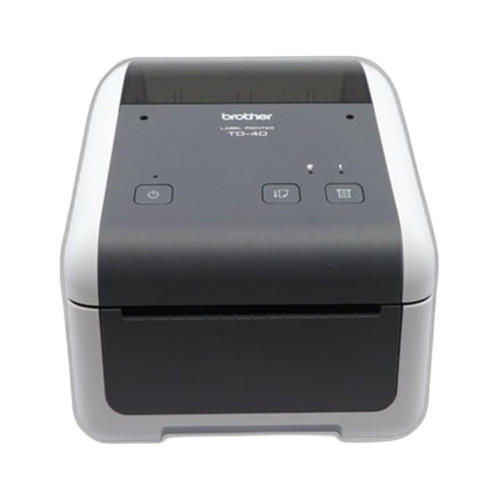
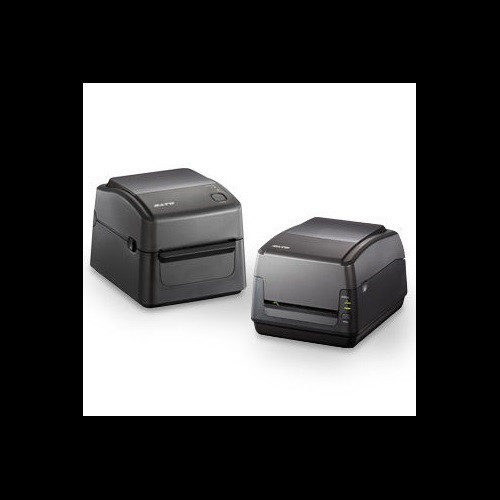
In This Guide
- Which printer delivers faster throughput and broader media flexibility?
- Which printer integrates more readily into enterprise and mixed-platform environments?
- How do these printers compare on memory resources, physical footprint, and operating environment?
- Which should you choose: the TD4410D or the WT212-404CW-EX1-2?
- Side-by-Side Specs
- FAQ
Which printer delivers faster throughput and broader media flexibility?
The Brother TD4410D prints at 8 ips versus the Sato WT212-404CW-EX1-2's 6 ips — a 33% speed advantage in favor of the Brother unit at identical 203 dpi resolution. For high-volume label runs, this difference is operationally significant.
On print width, the TD4410D offers a 4.27" maximum print width versus the WT212-404CW-EX1-2's 4.09" maximum — a modest but real difference for buyers printing wide-format labels or barcodes near the media edge.
Both printers handle media from approximately 1" to 4.65" in width. The WT212-404CW-EX1-2 adds thermal transfer capability (supporting ribbon-based printing up to 984 ft / 300 m ribbon length) alongside direct thermal, giving it the ability to print on non-heat-sensitive media such as synthetic or polyester labels. The TD4410D is direct thermal only — no ribbon support is specified.
The WT212-404CW-EX1-2 includes a built-in automatic cutter and LCD display as standard hardware features. No cutter or LCD is listed in the TD4410D's specifications.
Which printer integrates more readily into enterprise and mixed-platform environments?
The Sato WT212-404CW-EX1-2 ships with Ethernet, Wi-Fi, Bluetooth, and USB 2.0 connectivity. This native network and wireless stack allows shared-printer deployments, wireless cart or mobile station use, and Bluetooth pairing without add-on hardware.
The Brother TD4410D provides USB and Serial (9-pin) ports. No Ethernet, Wi-Fi, or Bluetooth connectivity is listed in its specifications. The Serial port is a meaningful differentiator for legacy POS, industrial control, and older WMS integrations that still use RS-232.
On programming language support, the TD4410D explicitly lists ZPL II, CPCL, Raster Graphics, and ESC/P (Text/Template mode). ZPL II and CPCL are the dominant languages in mixed label printer fleets, enabling drop-in compatibility with Zebra-designed label formats and many logistics platforms. The WT212-404CW-EX1-2's supported programming languages are not specified in the provided specifications.
The TD4410D supports LPR (Line Printer Remote) per its listed analytics/protocol field, enabling standard TCP/IP print queue integration on networks where a host PC or print server bridges the USB/Serial connection. The WT212-404CW-EX1-2 also lists LPR support.
How do these printers compare on memory resources, physical footprint, and operating environment?
Memory is a significant differentiator. The TD4410D ships with 64 MB Flash (40 MB allocated for templates and databases) and 256 MB SDRAM. The WT212-404CW-EX1-2 provides 16 MB Flash, 32 MB SDRAM, and 16 MB user storage. The Brother unit offers 4× the Flash and 8× the SDRAM — relevant for storing large template libraries, font sets, and graphics locally on the printer.
Physically, the TD4410D measures 7.08" W × 8.82" D × 6.10" H and weighs 4.58 lbs. The WT212-404CW-EX1-2 is larger at 8.69" W × 10.96" D × 7.38" H and heavier at 5.46 lbs. The Brother unit requires a meaningfully smaller footprint on space-constrained workstations or packing benches.
The WT212-404CW-EX1-2 specifies an operating temperature range of 41°F to 104°F (5°C to 40°C). No operating temperature range is listed for the TD4410D in the provided specifications.
The TD4410D lists a general manufacturer warranty; the WT212-404CW-EX1-2 specifies a 1-year warranty. The TD4410D warranty duration is not stated in the provided specifications.
Which should you choose: the TD4410D or the WT212-404CW-EX1-2?
Our take: The TD4410D is the stronger choice when print speed, on-printer memory, label language compatibility, and compact footprint are the primary requirements. It prints 33% faster (8 ips vs. 6 ips), carries 4× more Flash and 8× more SDRAM, and explicitly supports ZPL II and CPCL — two critical factors for mixed-fleet label environments. Its 9-pin Serial port also serves legacy POS and industrial stacks the Sato cannot natively reach. However, the WT212-404CW-EX1-2 holds clear advantages where network flexibility and media versatility matter: its native Ethernet, Wi-Fi, and Bluetooth eliminate the need for a print server in shared or wireless deployments, and its dual-mode direct thermal / thermal transfer capability supports durable synthetic labels the TD4410D cannot print. The built-in cutter on the Sato unit is also unmatched by any listed TD4410D feature. Buyers deploying shared, networked, or wireless print stations with durable-label requirements should favor the WT212-404CW-EX1-2; buyers needing speed, legacy serial integration, and rich local template storage should favor the TD4410D.
Side-by-Side Comparison
Spec-for-spec, from manufacturer data.
| Specification | Brother TD4410D | Sato WT212-404CW-EX1-2 |
|---|---|---|
| Print Method | Direct Thermal only | Direct Thermal / Thermal Transfer |
| Print Speed | 8 ips | 6 ips |
| Print Resolution | 203 dpi | 203 dpi |
| Max Print Width | 4.27" | 4.09" |
| Media Width Range | 0.75" – 4.65" | 1" – 4.65" |
| Connectivity | USB, Serial (9-pin) | USB 2.0, Ethernet, Wi-Fi, Bluetooth |
| Programming Languages | ZPL II, CPCL, Raster Graphics, ESC/P | — |
| Flash Memory | 64 MB (40 MB user) | 16 MB |
| SDRAM | 256 MB | 32 MB |
| User Storage | — | 16 MB |
| Built-in Cutter | — | Yes |
| LCD Display | — | Yes |
| Max Ribbon Length | — | 984 ft (300 m) |
| Dimensions (W × D × H) | 7.08" × 8.82" × 6.10" | 8.69" × 10.96" × 7.38" |
| Weight | 4.58 lbs | 5.46 lbs |
| Operating Temperature | — | 41°F – 104°F (5°C – 40°C) |
| Warranty | Manufacturer Warranty (duration not specified) | 1-year |
Frequently Asked Questions
Which should you choose: the TD4410D or the WT212-404CW-EX1-2?
The TD4410D is the stronger choice when print speed, on-printer memory, label language compatibility, and compact footprint are the primary requirements. It prints 33% faster (8 ips vs. 6 ips), carries 4× more Flash and 8× more SDRAM, and explicitly supports ZPL II and CPCL — two critical factors for mixed-fleet label environments. Its 9-pin Serial port also serves legacy POS and industrial stacks the Sato cannot natively reach. However, the WT212-404CW-EX1-2 holds clear advantages where network flexibility and media versatility matter: its native Ethernet, Wi-Fi, and Bluetooth eliminate the need for a print server in shared or wireless deployments, and its dual-mode direct thermal / thermal transfer capability supports durable synthetic labels the TD4410D cannot print. The built-in cutter on the Sato unit is also unmatched by any listed TD4410D feature. Buyers deploying shared, networked, or wireless print stations with durable-label requirements should favor the WT212-404CW-EX1-2; buyers needing speed, legacy serial integration, and rich local template storage should favor the TD4410D.
Can the TD4410D or WT212-404CW-EX1-2 connect directly to a network without a PC?
The Sato WT212-404CW-EX1-2 includes built-in Ethernet and Wi-Fi, enabling direct network connection and shared printing without a dedicated host PC or print server. The Brother TD4410D's listed connectivity is USB and Serial only — no wired or wireless network interface is specified, so network printing would require an external print server or host PC.
Which printer supports thermal transfer ribbon printing for durable labels?
The Sato WT212-404CW-EX1-2 supports both direct thermal and thermal transfer printing, with a maximum ribbon length of 984 ft (300 m) specified. Thermal transfer allows printing on polyester, polypropylene, and other heat-resistant synthetic label stocks. The Brother TD4410D is specified as direct thermal only — no ribbon or thermal transfer capability is listed in its specifications.
Is the TD4410D or WT212-404CW-EX1-2 better suited for high-volume label runs?
Based on the provided specifications, the Brother TD4410D prints at 8 ips compared to the Sato WT212-404CW-EX1-2's 6 ips — a 33% throughput advantage at the same 203 dpi resolution. The TD4410D also carries substantially more SDRAM (256 MB vs. 32 MB) and Flash (64 MB vs. 16 MB), supporting larger on-device template and database libraries. For sustained high-volume direct thermal label runs, the TD4410D's speed and memory specifications are more favorable. The WT212-404CW-EX1-2's built-in cutter may, however, reduce manual handling time in cut-label workflows.
More Label Printer Comparisons
- Brother TD4550DNWB vs Sato WWCT04241-WCN
- Brother TD4550DNWB vs Sato WWCT04241-NDR
- Brother TD4550DNWB vs Sato WT212-404CW-EX1-2
- Brother TD4550DNWB vs Sato WWCT04441-WDR
- Brother TD4550DNWB vs Brother TD4420DNC
- Brother TD4550DNWB vs Brother TD4410D
Label Printer Buying Guides
Get a Second Opinion on Your Camera Choice
Share your site layout, coverage goals, and budget. Our team will validate the camera selection, flag anything we would change, and recommend products that match the use case.