
Axis T8524 vs Ubiquiti USW-ENTERPRISE-24-POE: Specification Comparison
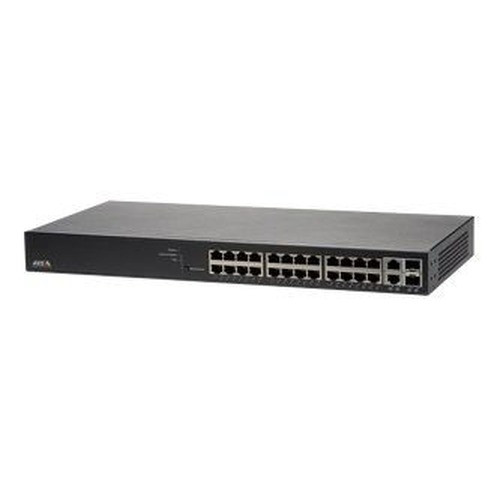
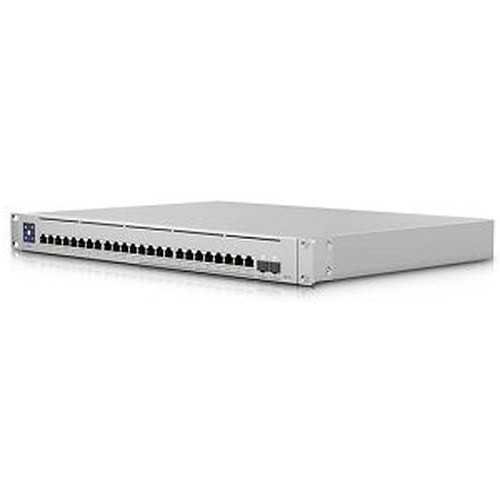
The Axis T8524 and Ubiquiti USW-Enterprise-24-PoE are both 24-port PoE+ managed switches in 1U rack-mount form factors, targeting physical security and enterprise LAN deployments. The T8524 is purpose-built for IP surveillance infrastructure with deep integration into the Axis ecosystem, while the USW-Enterprise-24-PoE is a general-purpose Layer 3 managed switch offering higher per-port speeds and greater aggregate capacity. This comparison evaluates both on switching performance, power delivery, and feature depth using only manufacturer-provided specifications.
In This Guide
- How do the two switches compare in switching capacity, throughput, and port speed?
- How do the two switches compare in PoE power budget, power supply design, and operating environment?
- How do the two switches compare in security features, VLAN support, management software, and certifications?
- Which should you choose: the T8524 or the USW-ENTERPRISE-24-POE?
- Side-by-Side Specs
- FAQ
How do the two switches compare in switching capacity, throughput, and port speed?
The Ubiquiti USW-Enterprise-24-PoE delivers substantially higher raw switching performance: 124 Gbps aggregate (62 Gbps non-blocking) versus 52 Gbps on the Axis T8524, and a forwarding rate of 92 Mpps versus 38.7 Mpps. In practice, this means the Ubiquiti can sustain higher simultaneous traffic loads before experiencing congestion.
Port speed is also a meaningful differentiator. The Ubiquiti provides 2.5G access ports on all 24 PoE+ ports and 10G SFP+ uplinks, while the Axis T8524 operates at 1G on its access ports with RJ45/SFP combo uplinks whose speed is not explicitly specified. For installations requiring multi-gigabit edge connectivity — such as high-resolution multi-sensor cameras or access points — the Ubiquiti's 2.5G access ports offer headroom the T8524 does not.
Both switches support jumbo frames; the Axis T8524 specifies a 9,216-byte jumbo frame size. The Ubiquiti's jumbo frame support is not stated in the provided specifications. The T8524 documents an 8K MAC address table; the Ubiquiti's MAC table size is not specified.
How do the two switches compare in PoE power budget, power supply design, and operating environment?
The Ubiquiti USW-Enterprise-24-PoE provides a 400W PoE budget backed by an internal 550W AC/DC power supply, delivering 30W more total PoE capacity than the Axis T8524's 370W budget. Both switches source power from 100–240V AC inputs and comply with IEEE 802.3at (PoE+), providing up to 30W per port. The Ubiquiti additionally lists IEEE 802.3af compliance. The Ubiquiti's switch-only consumption is documented at 60W.
Surge protection is an important consideration in physical security environments. The Axis T8524 specifies 6kV surge protection on all network ports and AC lines — a notable safety margin in installations with long cable runs or outdoor-adjacent endpoints. The Ubiquiti USW-Enterprise-24-PoE does not specify surge protection ratings in the provided specs.
Operating temperature range differs between models. The T8524 is rated from 0°C to 50°C, while the Ubiquiti is rated from -5°C to 40°C. The Ubiquiti's lower floor is marginally better for cool environments, but the T8524's upper ceiling of 50°C provides greater tolerance for warm equipment rooms. The Ubiquiti's environment rating (indoor/outdoor) is not specified; the T8524 is rated explicitly for indoor use. Storage conditions for the T8524 are documented at -10°C to 70°C at 5–95% RH non-condensing; the Ubiquiti's storage conditions are not specified.
How do the two switches compare in security features, VLAN support, management software, and certifications?
The Axis T8524 provides a documented set of network security features: password protection, IP address filtering, HTTPS, IEEE 802.1X NAC, ACLs, Private VLANs, and DHCP Snooping. It supports a broad protocol stack including IPv4, IPv6, SNMP, SSH, HTTP/HTTPS, DHCP, NTP, and DNS, as well as STP/RSTP/MSTP and LLDP-MED. VLAN support is confirmed but the maximum VLAN count is not specified. Security features for the Ubiquiti USW-Enterprise-24-PoE are not detailed in the provided specifications.
VLAN depth is one area where the Ubiquiti has a documented advantage: it supports up to 1,000 VLANs, which is significant for segmented multi-tenant or multi-zone deployments. The T8524's VLAN count is not stated. The Ubiquiti is designated a Layer 3 managed switch, implying routing capabilities; the T8524's layer designation is not explicitly stated in the provided specs.
On management and integration, the T8524 is designed for physical security ecosystems: it is managed via AXIS Device Manager and is compatible with Milestone, Genetec, and ONVIF-compliant platforms. ONVIF support is confirmed. The Ubiquiti's management platform and ONVIF compatibility are not stated in the provided specifications. Certification profiles differ: the T8524 carries EMC EN 55032/55035, FCC Part 15B, VCCI, RCM, and IEC 62368-1 safety certification, along with a documented 5-year warranty. The Ubiquiti holds CE, FCC, IC, and Anatel certifications and is noted as NDAA compliant; its warranty duration is not specified.
Which should you choose: the T8524 or the USW-ENTERPRISE-24-POE?
Our take: The T8524 is the stronger choice when deploying a dedicated IP surveillance infrastructure that requires documented network security controls, surge protection, and native integration with Axis Device Manager, Milestone, or Genetec VMS platforms. The Ubiquiti USW-Enterprise-24-PoE is the stronger choice when raw switching capacity, multi-gigabit access port speeds, or high VLAN density are the primary requirements: its 124 Gbps aggregate capacity is 2.4× the T8524's 52 Gbps, its 2.5G access ports versus the T8524's 1G access ports provide meaningful per-camera bandwidth headroom, and its 1,000-VLAN support versus the T8524's unspecified count suits complex network segmentation. The T8524's 6kV surge protection, explicit 802.1X NAC, ACL, and DHCP Snooping documentation, 5-year warranty, and ONVIF compatibility make it the lower-risk selection for security-focused integrators. Buyers standardizing on Axis infrastructure or requiring a fully documented security feature set should favor the T8524; those building multi-gigabit or multi-tenant LAN environments should evaluate the Ubiquiti.
Side-by-Side Comparison
Spec-for-spec, from manufacturer data.
| Specification | Axis T8524 | Ubiquiti USW-ENTERPRISE-24-POE |
|---|---|---|
| Switching Capacity | 52 Gbps | 124 Gbps aggregate (62 Gbps non-blocking) |
| Forwarding Rate | 38.7 Mpps | 92 Mpps |
| PoE Access Port Speed | 1G | 2.5G / 1G |
| Uplink Ports | 2x RJ45/SFP combo | 2x 10G SFP+ |
| PoE Standard | IEEE 802.3at | IEEE 802.3af/at |
| PoE Budget | 370W | 400W |
| Internal Power Supply | — | 550W AC/DC |
| VLAN Count | — | 1,000 |
| MAC Table | 8K | — |
| Jumbo Frames | 9,216 bytes | — |
| Surge Protection | 6kV (all ports + AC) | — |
| 802.1X NAC | Yes | — |
| DHCP Snooping | Yes | — |
| ONVIF Compatible | Yes | — |
| Operating Temp | 0°C to 50°C | -5°C to 40°C |
| NDAA Compliant | — | Yes |
| Warranty | 5 years | Not specified |
| Weight | 3.2 kg (7.05 lb) | 5.1 kg (11.3 lb) |
| Dimensions (mm) | 442 x 211 x 44 | 442 x 325 x 44 |
Frequently Asked Questions
Which should you choose: the T8524 or the USW-ENTERPRISE-24-POE?
The T8524 is the stronger choice when deploying a dedicated IP surveillance infrastructure that requires documented network security controls, surge protection, and native integration with Axis Device Manager, Milestone, or Genetec VMS platforms. The Ubiquiti USW-Enterprise-24-PoE is the stronger choice when raw switching capacity, multi-gigabit access port speeds, or high VLAN density are the primary requirements: its 124 Gbps aggregate capacity is 2.4× the T8524's 52 Gbps, its 2.5G access ports versus the T8524's 1G access ports provide meaningful per-camera bandwidth headroom, and its 1,000-VLAN support versus the T8524's unspecified count suits complex network segmentation. The T8524's 6kV surge protection, explicit 802.1X NAC, ACL, and DHCP Snooping documentation, 5-year warranty, and ONVIF compatibility make it the lower-risk selection for security-focused integrators. Buyers standardizing on Axis infrastructure or requiring a fully documented security feature set should favor the T8524; those building multi-gigabit or multi-tenant LAN environments should evaluate the Ubiquiti.
Which switch gives me more PoE wattage to power cameras and access points?
The Ubiquiti USW-Enterprise-24-PoE provides a 400W PoE budget compared to the Axis T8524's 370W, a difference of 30W. Both deliver up to 30W per port under IEEE 802.3at. If you are populating all 24 ports with high-draw devices, the Ubiquiti offers slightly more total headroom.
Does either switch work with Milestone or Genetec VMS platforms?
The Axis T8524 is documented as compatible with Milestone, Genetec, and ONVIF-compliant platforms, and is managed via AXIS Device Manager. The Ubiquiti USW-Enterprise-24-PoE's management platform and ONVIF compatibility are not stated in the provided specifications, so compatibility with those VMS platforms cannot be confirmed from the available data.
Which switch is better suited for environments with electrical surge risk, such as long outdoor cable runs terminating indoors?
The Axis T8524 specifies 6kV surge protection on all network ports and AC lines, which is a meaningful specification for installations with long cable runs or exposure to electrical transients. The Ubiquiti USW-Enterprise-24-PoE does not state a surge protection rating in its provided specifications, so a direct comparison cannot be made on this dimension.
More Network Switch Comparisons
- Vivotek GEV-288A-370 vs Axis T8524
- Vivotek GEV-288A-370 vs Cradlepoint SW2400P-GN
- Vivotek GEV-288A-370 vs Allied Telesis AT-x530L-28GPX-901
- Vivotek GEV-288A-370 vs Ubiquiti USW-ENTERPRISE-24-POE
- Axis T8524 vs Cradlepoint SW2400P-GN
- Axis T8524 vs Allied Telesis AT-x530L-28GPX-901
Network Switch Buying Guides
Get a Second Opinion on Your Camera Choice
Share your site layout, coverage goals, and budget. Our team will validate the camera selection, flag anything we would change, and recommend products that match the use case.