
Vivotek GEV-288A-370 vs Ubiquiti USW-ENTERPRISE-24-POE: Specification Comparison
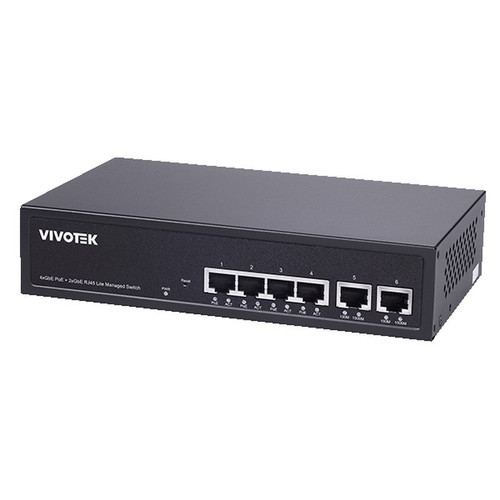
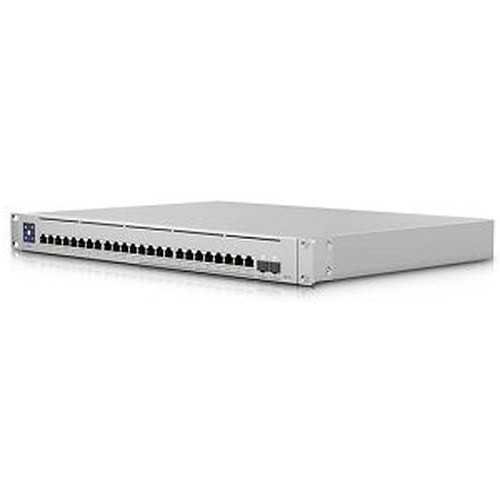
Both the Vivotek AW-GEV-288A-370 and the Ubiquiti USW-ENTERPRISE-24-POE are 24-port rack-mount managed PoE switches targeted at physical security and enterprise LAN deployments. The Vivotek unit is purpose-built for surveillance networks with native Vivotek device management, while the Ubiquiti unit is a general-purpose Layer 3 enterprise switch with higher aggregate throughput and a larger PoE budget. This comparison examines PoE capacity and port architecture, switching performance and physical build, and management depth and integration features.
In This Guide
- Which switch delivers more PoE headroom and how is power distributed across ports?
- How do the two switches compare on throughput, forwarding rate, and physical operating environment?
- Which switch offers deeper management capabilities and better integration for its target deployment?
- Which should you choose: the GEV-288A-370 or the USW-ENTERPRISE-24-POE?
- Side-by-Side Specs
- FAQ
Which switch delivers more PoE headroom and how is power distributed across ports?
The Ubiquiti USW-ENTERPRISE-24-POE provides a 400W total PoE budget across all 24 ports at 802.3at (PoE+) maximum 30W per port, fed by an internal 550W AC/DC supply. The Vivotek AW-GEV-288A-370 offers a 370W total PoE budget but with a tiered per-port allocation: ports 1–20 deliver up to 30W (802.3af/at), while ports 21–24 deliver up to 90W each via 802.3bt (PoE++), supporting high-draw devices such as PTZ cameras with heaters or thermal imagers. The Ubiquiti unit carries a 30W ceiling on every port with no high-power PoE++ tier specified. Installers powering a mix of standard IP cameras and high-wattage PTZ or multi-sensor units will find the Vivotek's four 90W ports directly useful; deployments consisting entirely of standard APs or 30W-class cameras will see the Ubiquiti's 400W flat budget as a marginal advantage in aggregate headroom.
How do the two switches compare on throughput, forwarding rate, and physical operating environment?
The Ubiquiti USW-ENTERPRISE-24-POE leads significantly on raw switching metrics: 124 Gbps switching capacity (62 Gbps non-blocking throughput) versus the Vivotek's 56 Gbps switching bandwidth, and a forwarding rate of 92 Mpps versus 41.7 Mpps. The Ubiquiti also offers dual 10G SFP+ uplinks for backbone connectivity, whereas the Vivotek provides 4 combo Gigabit ports rather than dedicated 10G uplinks. Port speed on the Ubiquiti reaches 2.5G per PoE port; the Vivotek is capped at 1G per port. On physical build, the Ubiquiti uses an SGCC steel enclosure and weighs 5.1 kg; the Vivotek weighs 3.2 kg with no enclosure material specified. The Vivotek has a wider thermal operating range of -10°C to 50°C versus the Ubiquiti's -5°C to 40°C, a meaningful difference for installations in unconditioned closets or outdoor-adjacent enclosures.
Which switch offers deeper management capabilities and better integration for its target deployment?
The Vivotek AW-GEV-288A-370 includes a dedicated surveillance management layer: auto-discovery of up to 256 Vivotek devices, device grouping, PoE reboot and alive-checking per port, PoE scheduling, non-stop PoE, extended PoE mode (up to 250m at 10 Mbps), topology/floor/Google Map views, and configuration file export for Vivotek cameras. Network-layer management covers SNMP v1/v2c/v3, RMON groups 1/2/3/9, RADIUS/TACACS+, 802.1X, DHCP snooping, IP source guard, IGMP snooping v1/v2, MLD v1/v2, 4096 VLAN IDs, Q-in-Q, MVR, 8 hardware QoS queues, DSCP, S-Flow, LLDP-MED, cable diagnostics, and a DHCP server function. The Ubiquiti supports up to 1,000 VLANs and is managed via Ethernet; the provided specs do not enumerate protocol-level features such as SNMP version, RADIUS/TACACS+, IGMP snooping, or QoS queue depth. The Vivotek ships with a 24-month stated warranty; the Ubiquiti lists only 'Manufacturer Warranty' without a specific duration. The Ubiquiti is NDAA compliant per its spec sheet; no NDAA claim is made for the Vivotek.
Which should you choose: the GEV-288A-370 or the USW-ENTERPRISE-24-POE?
Our take: The AW-GEV-288A-370 is the stronger choice when the deployment is primarily Vivotek IP cameras requiring centralized PoE management, high-wattage PTZ or thermal devices, or installation in environments outside 0–40°C. Its four 90W PoE++ ports, -10°C to 50°C operating range, and built-in surveillance management layer (auto-discovery of 256 Vivotek devices, PoE scheduling, floor/topology views) are directly spec-derived advantages. The USW-ENTERPRISE-24-POE leads where raw switching performance matters: 124 Gbps switching capacity versus 56 Gbps, 92 Mpps versus 41.7 Mpps forwarding rate, and 2.5G per-port speed versus 1G. Its 400W flat PoE budget and dual 10G SFP+ uplinks suit high-density AP deployments or enterprise core uplinks. NDAA compliance is confirmed only for the Ubiquiti. Buyers running a mixed or vendor-neutral camera estate on a high-throughput backbone should favor the Ubiquiti; Vivotek-centric surveillance installers needing PoE++ and surveillance-native management should favor the Vivotek.
Side-by-Side Comparison
Spec-for-spec, from manufacturer data.
| Specification | Vivotek GEV-288A-370 | Ubiquiti USW-ENTERPRISE-24-POE |
|---|---|---|
| Total PoE Ports | 24 | 24 |
| PoE Standard | 802.3af/at (ports 1–20), 802.3bt (ports 21–24) | 802.3af/at (PoE+) |
| Max Per-Port PoE Power | 90W (ports 21–24), 30W (ports 1–20) | 30W |
| Total PoE Budget | 370W | 400W |
| Switching Capacity | 56 Gbps | 124 Gbps |
| Non-Blocking Throughput | 56 Gbps (spec states switching bandwidth) | 62 Gbps |
| Forwarding Rate | 41.7 Mpps | 92 Mpps |
| PoE Port Speed | 1 Gbps | 2.5 Gbps |
| Uplink Ports | 4 × Combo Gigabit | 2 × 10G SFP+ |
| VLAN IDs Supported | 4096 | 1,000 |
| Operating Temperature | -10°C to 50°C | -5°C to 40°C |
| NDAA Compliant | — | Yes |
| Vivotek Device Auto-Discovery | Up to 256 devices | — |
| PoE++ (802.3bt) Support | Yes (ports 21–24) | — |
| Warranty | 24 months | Manufacturer Warranty (duration not specified) |
| Weight | 3.2 kg | 5.1 kg |
Frequently Asked Questions
Which should you choose: the GEV-288A-370 or the USW-ENTERPRISE-24-POE?
The AW-GEV-288A-370 is the stronger choice when the deployment is primarily Vivotek IP cameras requiring centralized PoE management, high-wattage PTZ or thermal devices, or installation in environments outside 0–40°C. Its four 90W PoE++ ports, -10°C to 50°C operating range, and built-in surveillance management layer (auto-discovery of 256 Vivotek devices, PoE scheduling, floor/topology views) are directly spec-derived advantages. The USW-ENTERPRISE-24-POE leads where raw switching performance matters: 124 Gbps switching capacity versus 56 Gbps, 92 Mpps versus 41.7 Mpps forwarding rate, and 2.5G per-port speed versus 1G. Its 400W flat PoE budget and dual 10G SFP+ uplinks suit high-density AP deployments or enterprise core uplinks. NDAA compliance is confirmed only for the Ubiquiti. Buyers running a mixed or vendor-neutral camera estate on a high-throughput backbone should favor the Ubiquiti; Vivotek-centric surveillance installers needing PoE++ and surveillance-native management should favor the Vivotek.
Can either switch power high-wattage PTZ cameras or thermal imagers that draw more than 30W?
Yes, but only the Vivotek AW-GEV-288A-370 explicitly supports this. Ports 21–24 deliver up to 90W each via 802.3bt (PoE++), making them suitable for PTZ cameras with integrated heaters, thermal imagers, or other high-draw devices. The Ubiquiti USW-ENTERPRISE-24-POE is specified at 802.3at (PoE+) with a maximum of 30W per port; no 802.3bt capability is listed in its provided specs.
Which switch is the better fit if I need to connect to a 10G core or aggregation layer?
The Ubiquiti USW-ENTERPRISE-24-POE is the better fit here. Its spec sheet lists dual 10G SFP+ uplink ports, which provide direct high-speed backbone connectivity. The Vivotek AW-GEV-288A-370 offers 4 combo Gigabit ports; no 10G uplink capability is listed in its provided specifications.
Is the Vivotek AW-GEV-288A-370 or the Ubiquiti USW-ENTERPRISE-24-POE the right choice for a federally regulated or NDAA-sensitive project?
Based solely on the provided specifications, NDAA compliance is confirmed only for the Ubiquiti USW-ENTERPRISE-24-POE, which explicitly lists 'NDAA Compliant: Yes.' The Vivotek AW-GEV-288A-370 specifications do not include an NDAA compliance statement. Buyers with federal, DoD, or NDAA Section 889 requirements should verify Vivotek's compliance status directly with the manufacturer before specifying it.
More Network Switch Comparisons
- Vivotek GEV-288A-370 vs Axis T8524
- Vivotek GEV-288A-370 vs Cradlepoint SW2400P-GN
- Vivotek GEV-288A-370 vs Allied Telesis AT-x530L-28GPX-901
- Axis T8524 vs Cradlepoint SW2400P-GN
- Axis T8524 vs Allied Telesis AT-x530L-28GPX-901
- Axis T8524 vs Ubiquiti USW-ENTERPRISE-24-POE
Network Switch Buying Guides
Get a Second Opinion on Your Camera Choice
Share your site layout, coverage goals, and budget. Our team will validate the camera selection, flag anything we would change, and recommend products that match the use case.