
Vivotek GEV-288A-370 vs Axis T8524: Specification Comparison
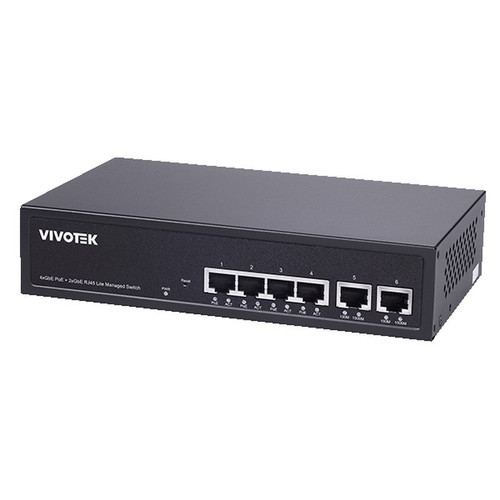
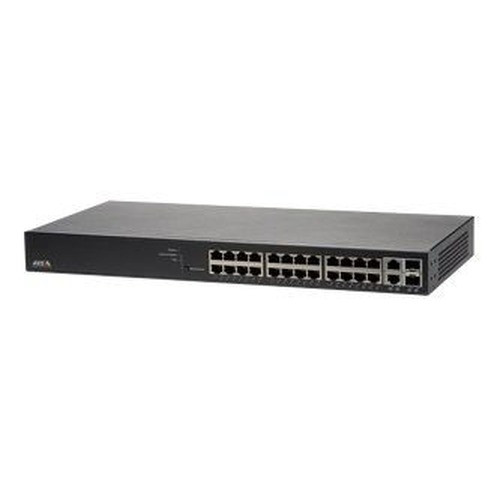
Both the Vivotek AW-GEV-288A-370 and the Axis T8524 are 24-port Gigabit PoE managed switches in 1U rack-mount form factors, targeting IP surveillance deployments. Both share a 370 W PoE budget and identical physical dimensions, making them direct cross-shop candidates for integrators building camera infrastructure. The comparison turns on PoE tier mix, switching performance, vendor-ecosystem tooling, physical resilience features such as surge protection, and warranty duration.
In This Guide
- How do the PoE port mix and power delivery compare between the GEV-288A-370 and the T8524?
- Which switch offers higher throughput, and how do the environmental and physical protection specs differ?
- How do the management software ecosystems and security feature sets compare?
- Which should you choose: the GEV-288A-370 or the T8524?
- Side-by-Side Specs
- FAQ
How do the PoE port mix and power delivery compare between the GEV-288A-370 and the T8524?
The Vivotek AW-GEV-288A-370 delivers a tiered PoE architecture: ports 1–20 are IEEE 802.3at PoE+ at up to 30 W each, while ports 21–24 are IEEE 802.3bt (PoE++) at up to 90 W each, with a total budget of 370 W. This means a single port can power high-draw devices such as PTZ cameras with heaters or multi-sensor thermal units without an external injector. The switch is also rated for extended PoE mode up to 250 m at 10 Mbps.
The Axis T8524 provides 24 ports of IEEE 802.3at PoE+ uniformly, each capped at 30 W, with the same 370 W aggregate budget. There are no 802.3bt (90 W) ports. Uplink connectivity on the T8524 is provided by 2× RJ45/SFP combo ports, whereas the Vivotek offers 4× combo ports, giving more flexible uplink or fiber backbone options. Neither model's specs state any extended-reach PoE mode for the T8524.
Which switch offers higher throughput, and how do the environmental and physical protection specs differ?
On raw switching performance, the AW-GEV-288A-370 is specified at 56 Gbps switching bandwidth and 41.7 Mpps forwarding capacity. The Axis T8524 is specified at 52 Gbps switching capacity and 38.7 Mpps throughput. The Vivotek unit therefore edges out the T8524 on both metrics by approximately 7–8%.
The Axis T8524 specifies 6 kV surge protection on all network ports and AC lines — a concrete, numbered protection figure. The Vivotek AW-GEV-288A-370 specs do not state a surge protection rating. On operating temperature, the Vivotek is rated −10 °C to 50 °C, giving it a 10-degree cold-end advantage over the T8524's 0 °C to 50 °C floor — relevant for unheated IDF closets or outdoor enclosures. Storage temperature differs similarly: Vivotek −20 °C to 70 °C vs. Axis −10 °C to 70 °C. Both units are 442 × 211 × 44 mm and 3.2 kg.
How do the management software ecosystems and security feature sets compare?
The Vivotek AW-GEV-288A-370 includes a purpose-built surveillance management layer: auto-discovery of up to 256 Vivotek devices, topology/floor/Google Map views, per-device reboot and restore-default, VLAN grouping by device, configuration file export/import, and PoE scheduling with alive-checking and non-stop PoE. VLAN support covers 4,096 IDs with tag-based, port-based, private, MAC-based, protocol-based, IP-subnet-based, voice, Q-in-Q, and MVR modes. Security includes RADIUS, TACACS+, 802.1X, IP Source Guard, DHCP Snooping, storm control, and ACLs up to 384 entries. SNMP v1/v2c/v3 and RMON groups 1, 2, 3, and 9 are supported.
The Axis T8524 is managed via AXIS Device Manager and is listed as compatible with Milestone, Genetec, and ONVIF-conformant VMS platforms — integrations the Vivotek specs do not explicitly list. Its security stack covers IEEE 802.1X, DHCP Snooping, Private VLANs, ACLs, password protection, IP address filtering, and HTTPS encryption. SNMP, SSH, HTTP/HTTPS, NTP, DNS, and TCP/UDP protocols are supported. The T8524 does not list TACACS+, RMON, S-Flow, or LLDP-MED in its provided specs. The Axis warranty is 5 years versus Vivotek's 24 months.
Which should you choose: the GEV-288A-370 or the T8524?
Our take: The AW-GEV-288A-370 is the stronger choice when the deployment is Vivotek-centric and includes high-draw devices requiring 802.3bt (90 W) ports. Specifically: four ports deliver up to 90 W each versus zero on the T8524, which is limited to 30 W per port regardless of device need; the Vivotek switching bandwidth is 56 Gbps versus 52 Gbps; and its operating-temperature floor is −10 °C versus 0 °C, suiting colder or less-conditioned spaces. Conversely, the Axis T8524 is the better fit for multi-vendor surveillance environments using Milestone or Genetec VMS, where AXIS Device Manager integration and a documented 6 kV surge protection rating matter — no surge figure is provided for the Vivotek. The T8524's 5-year warranty also outpaces the Vivotek's 24-month term, a meaningful total-cost factor on long-cycle infrastructure.
Side-by-Side Comparison
Spec-for-spec, from manufacturer data.
| Specification | Vivotek GEV-288A-370 | Axis T8524 |
|---|---|---|
| PoE Standard | 802.3af/at/bt (ports 1-20: 30W, ports 21-24: 90W) | 802.3at PoE+ (all ports: 30W max) |
| Total PoE Budget | 370 W | 370 W |
| PoE Port Count | 24 | 24 |
| Max Per-Port PoE Output | 90 W (ports 21-24) | 30 W |
| Uplink/Combo Ports | 4x Gigabit Combo (RJ45/SFP) | 2x RJ45/SFP Combo |
| Total Port Count | 28 (24 PoE + 4 combo) | 26 (24 PoE + 2 combo) |
| Switching Bandwidth | 56 Gbps | 52 Gbps |
| Forwarding Capacity | 41.7 Mpps | 38.7 Mpps |
| MAC Address Table | 8K | 8K |
| Jumbo Frames | 9216 Bytes | 9216 Bytes |
| Operating Temperature | -10°C to 50°C | 0°C to 50°C |
| Storage Temperature | -20°C to 70°C | -10°C to 70°C |
| Surge Protection | Not specified | 6 kV (all network ports and AC lines) |
| Extended PoE Reach | Up to 250 m at 10 Mbps | Not specified |
| Management Platform | Built-in Vivotek surveillance UI (up to 256 devices) | AXIS Device Manager; Milestone; Genetec; ONVIF |
| Warranty | 24 months | 5 years |
Frequently Asked Questions
Which should you choose: the GEV-288A-370 or the T8524?
The AW-GEV-288A-370 is the stronger choice when the deployment is Vivotek-centric and includes high-draw devices requiring 802.3bt (90 W) ports. Specifically: four ports deliver up to 90 W each versus zero on the T8524, which is limited to 30 W per port regardless of device need; the Vivotek switching bandwidth is 56 Gbps versus 52 Gbps; and its operating-temperature floor is −10 °C versus 0 °C, suiting colder or less-conditioned spaces. Conversely, the Axis T8524 is the better fit for multi-vendor surveillance environments using Milestone or Genetec VMS, where AXIS Device Manager integration and a documented 6 kV surge protection rating matter — no surge figure is provided for the Vivotek. The T8524's 5-year warranty also outpaces the Vivotek's 24-month term, a meaningful total-cost factor on long-cycle infrastructure.
Can either switch power PTZ cameras or thermal units that require more than 30 W on a single port?
Only the Vivotek AW-GEV-288A-370 can do this natively. Its ports 21–24 are IEEE 802.3bt-compliant and deliver up to 90 W each. The Axis T8524 is IEEE 802.3at (PoE+) only, capping every port at 30 W; devices requiring more than 30 W would need a separate mid-span injector on the T8524.
Which switch is better protected against electrical surges on a camera network?
The Axis T8524 specifies 6 kV surge protection on all network ports and AC lines. The Vivotek AW-GEV-288A-370 specs provided do not include a surge protection rating. If surge tolerance is a formal site requirement or a design criterion, the T8524 provides a verifiable number; the Vivotek cannot be compared on this point from available specs.
Does either switch work with third-party VMS platforms like Milestone or Genetec?
The Axis T8524 explicitly lists compatibility with Milestone, Genetec, and ONVIF-conformant systems in its provided specs. The Vivotek AW-GEV-288A-370 specs do not reference third-party VMS compatibility; its built-in management layer is designed around Vivotek device discovery and control. Buyers running a multi-vendor VMS environment should factor this into the selection.
More Network Switch Comparisons
- Vivotek GEV-288A-370 vs Cradlepoint SW2400P-GN
- Vivotek GEV-288A-370 vs Allied Telesis AT-x530L-28GPX-901
- Vivotek GEV-288A-370 vs Ubiquiti USW-ENTERPRISE-24-POE
- Axis T8524 vs Cradlepoint SW2400P-GN
- Axis T8524 vs Allied Telesis AT-x530L-28GPX-901
- Axis T8524 vs Ubiquiti USW-ENTERPRISE-24-POE
Network Switch Buying Guides
Get a Second Opinion on Your Camera Choice
Share your site layout, coverage goals, and budget. Our team will validate the camera selection, flag anything we would change, and recommend products that match the use case.