
Axis D8004 vs Ubiquiti N-SW: Specification Comparison
Both the Axis D8004 and the Ubiquiti N-SW are unmanaged 4-port Gigabit PoE switches designed to power and connect IP cameras or similar edge devices from a single uplink. The D8004 targets indoor, structured-cabling installations with AC mains input and an 802.3af/at PoE budget, while the N-SW is built for outdoor, pole- or wall-mounted deployments powered by passive 24 V PoE passthrough. The comparison covers port capacity and power budget, operating environment and build, and PoE standard compatibility.

In This Guide
- Which switch delivers more PoE power across its downstream ports?
- Which unit is better suited for harsh or outdoor installation conditions?
- Which switch is more compatible with standard 802.3af/at PoE cameras and managed infrastructure?
- Which should you choose: the D8004 or the N-SW?
- Side-by-Side Specs
- FAQ
Which switch delivers more PoE power across its downstream ports?
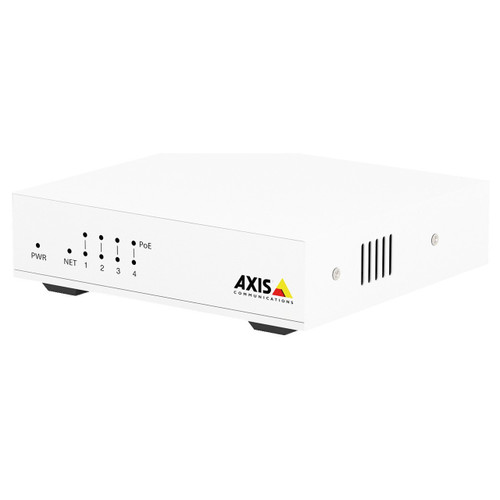
The Axis D8004 provides four downstream PoE ports (802.3af/at) with a combined output budget of 60 W, allowing individual ports to deliver up to 30 W each under 802.3at (PoE+). It draws up to 62.4 W from a 100–240 V AC supply. The uplink is a fifth RJ45 port (10BASE-T/100BASE-TX), keeping all four PoE ports exclusively for downstream devices.
The Ubiquiti N-SW offers a 24 W total passthrough budget split across three downstream PoE output ports, with one port reserved as the PoE power input. Per-port current is rated at 1 A. The power source is a passive 24 V, 2-pair PoE injector (sold separately; Ubiquiti POE-24-30W-G-W noted in specs). The switch's own consumption is listed as 1.5 W typical.
For camera deployments where devices require 802.3at (PoE+) power—such as PTZ cameras, multi-sensor units, or cameras with built-in heaters—the D8004's 60 W budget and standards-based PoE+ output is a decisive advantage. The N-SW's 24 W total across three ports limits connected devices to roughly 8 W average, suitable only for low-draw 802.3af-class endpoints.
Which unit is better suited for harsh or outdoor installation conditions?
The Axis D8004 is rated for indoor use only, with an operating temperature range of 0 °C to 50 °C and storage down to −10 °C. Its metal casing weighs 172 g (0.38 lb) and measures 90 × 80 × 21 mm. Approvals include CE, FCC Part 15 Class B, RoHS, and WEEE. No ingress protection (IP) rating is stated in the provided specifications.
The Ubiquiti N-SW is explicitly rated for outdoor deployment with an operating temperature range of −30 °C to 70 °C—a 30-degree wider cold margin and a 20-degree wider heat margin than the D8004. Its polycarbonate enclosure is described as weatherproof, and humidity tolerance is 5–95% non-condensing. ESD/EMP protection is rated at ±24 kV (air and contact). Certifications listed are CE, FCC, and IC. Mount options include wall and pole.
For any outdoor or temperature-extreme application, the N-SW's −30 to 70 °C rating and weatherproof enclosure are clear differentiators. The D8004 is not rated for outdoor use and should not be deployed in environments outside its 0–50 °C window without additional enclosure protection.
Which switch is more compatible with standard 802.3af/at PoE cameras and managed infrastructure?
The Axis D8004 uses IEEE 802.3af/at standards-based PoE, which is universally supported by IP cameras, VoIP phones, access control readers, and other 802.3-compliant endpoints from any manufacturer. Because it is an unmanaged switch, there is no CLI, SNMP, or web interface—configuration is zero-touch. It ships with an installation guide, power cord, adapter, mounting feet, and brackets.
The Ubiquiti N-SW uses passive 24 V, 2-pair PoE—a proprietary voltage scheme that does not conform to 802.3af or 802.3at. Devices must explicitly support passive 24 V PoE input to operate safely; connecting a device that does not support passive PoE risks damage to the endpoint. The N-SW carries a PoE (802.3af) label in one spec field, but the detailed specs consistently describe passive 24 V input and output—buyers should verify endpoint compatibility before deployment.
For mixed-vendor or standards-compliant camera ecosystems, the D8004's 802.3af/at output removes compatibility risk. The N-SW is best matched to Ubiquiti's own UISP/airMAX product line, which natively accepts passive 24 V PoE. Neither unit offers managed features; both are unmanaged by design.
Which should you choose: the D8004 or the N-SW?
Our take: The D8004 is the stronger choice when powering standards-based 802.3af/at cameras in an indoor, structured-cabling environment. Its 60 W PoE budget is 2.5× the N-SW's 24 W total, it supports 802.3at (PoE+) per port versus the N-SW's passive 24 V scheme, and its 802.3af/at compliance eliminates endpoint compatibility risk across multi-vendor camera deployments. The N-SW is the correct choice for outdoor pole or wall-mounted installations requiring a −30 to 70 °C operating range and weatherproof enclosure—conditions the D8004 is not rated for—provided connected devices accept passive 24 V PoE. Buyers should note the N-SW ships without a power supply and is primarily matched to Ubiquiti's own UISP/airMAX ecosystem. If the deployment is indoors with mixed-brand cameras, choose the D8004; if it is outdoors with Ubiquiti passive-PoE devices, the N-SW is the appropriate fit.
Side-by-Side Comparison
Spec-for-spec, from manufacturer data.
| Specification | Axis D8004 | Ubiquiti N-SW |
|---|---|---|
| Product SKU | 02101-004 | N-SW |
| Downstream PoE Ports | 4 | 3 (1 port is PoE input) |
| Uplink / Input Port | 1× RJ45 10BASE-T/100BASE-TX (AC-powered) | 1× RJ45 PoE input (passive 24 V) |
| Total PoE Output Budget | 60 W | 24 W |
| PoE Standard | 802.3af / 802.3at (PoE+) | Passive 24 V, 2-pair (non-802.3) |
| Throughput | — | 4 Gbps non-blocking |
| Port Speed | 10/100 (RJ45 spec listed) | 1 Gbps |
| Power Input | 100–240 V AC, 50–60 Hz | Passive PoE 21.6–30 V (injector not included) |
| Max Power Draw | 62.4 W | 30 W (per power consumption field) |
| Operating Temperature | 0 °C to 50 °C | −30 °C to 70 °C |
| Environment Rating | Indoor | Outdoor |
| Enclosure Material | Metal | Polycarbonate (weatherproof) |
| ESD/EMP Protection | — | ±24 kV (air/contact) |
| Weight | 172 g (0.38 lb) | 1.200 lb (approx. 544 g) |
| Certifications | CE, FCC Part 15 Class B, RoHS, WEEE | CE, FCC, IC |
| Warranty | 3-year | Manufacturer warranty (duration not specified in provided specs) |
Frequently Asked Questions
Which should you choose: the D8004 or the N-SW?
The D8004 is the stronger choice when powering standards-based 802.3af/at cameras in an indoor, structured-cabling environment. Its 60 W PoE budget is 2.5× the N-SW's 24 W total, it supports 802.3at (PoE+) per port versus the N-SW's passive 24 V scheme, and its 802.3af/at compliance eliminates endpoint compatibility risk across multi-vendor camera deployments. The N-SW is the correct choice for outdoor pole or wall-mounted installations requiring a −30 to 70 °C operating range and weatherproof enclosure—conditions the D8004 is not rated for—provided connected devices accept passive 24 V PoE. Buyers should note the N-SW ships without a power supply and is primarily matched to Ubiquiti's own UISP/airMAX ecosystem. If the deployment is indoors with mixed-brand cameras, choose the D8004; if it is outdoors with Ubiquiti passive-PoE devices, the N-SW is the appropriate fit.
Can I use the Ubiquiti N-SW to power standard IP cameras from Axis, Hanwha, or other brands?
Caution is warranted. The N-SW outputs passive 24 V PoE, not IEEE 802.3af/at. Most IP cameras from Axis, Hanwha, and other mainstream brands require 802.3af/at. Connecting an 802.3af/at-only camera to a passive 24 V output can damage the camera. Verify that any endpoint explicitly lists passive 24 V PoE support before deploying with the N-SW.
Is the Axis D8004 or N-SW better for a rooftop or parking-lot camera installation?
The N-SW is the spec-supported choice for outdoor locations. It is rated −30 to 70 °C with a weatherproof polycarbonate enclosure and ±24 kV ESD/EMP protection, and it supports wall and pole mounting. The D8004 is rated for indoor use only (0–50 °C) with no stated outdoor enclosure rating, so it would require a separate weatherproof cabinet for any outdoor deployment.
How many 30 W PoE+ cameras can each switch power simultaneously?
The Axis D8004 has a 60 W total PoE budget with 802.3at support, so it can power two 30 W PoE+ cameras simultaneously (or up to four 15 W 802.3af devices). The N-SW provides 24 W total across three output ports at 1 A per port (approximately 24 V × 1 A = 24 W per port maximum, but total budget is 24 W), so it cannot simultaneously power even a single 30 W device across the full budget. The N-SW is suitable only for low-draw devices.
More Network Switch Comparisons
- Vivotek GET-083A-120 vs TP-Link SG1005P
- Vivotek GET-083A-120 vs Axis T8504-E
- Vivotek GET-083A-120 vs Axis D8004
- Vivotek GET-083A-120 vs Ubiquiti N-SW
- TP-Link SG1005P vs Axis T8504-E
- TP-Link SG1005P vs Axis D8004
Network Switch Buying Guides
Get a Second Opinion on Your Camera Choice
Share your site layout, coverage goals, and budget. Our team will validate the camera selection, flag anything we would change, and recommend products that match the use case.