
Axis A8207-VE vs Aiphone IX-DVF-6: Specification Comparison
Both the Axis A8207-VE Mk II and the Aiphone IX-DVF-6 are IP-networked video door stations designed for building entry control — a buyer would legitimately cross-shop them when selecting a PoE-powered outdoor intercom with two-way audio and video. The Axis unit emphasizes wide-angle surveillance-grade imaging and deep access-control integration, while the Aiphone unit is purpose-built for multi-tenant directory calling with SIP compatibility. This comparison evaluates imaging and audio capability, physical installation and environmental resilience, and protocol/integration support.
In This Guide
- Which unit delivers better video quality and audio performance at the door?
- How do these units compare for outdoor installation, vandal resistance, and power requirements?
- Which unit integrates more broadly with access control platforms and IP communication infrastructure?
- Which should you choose: the A8207-VE or the IX-DVF-6?
- Side-by-Side Specs
- FAQ
Which unit delivers better video quality and audio performance at the door?
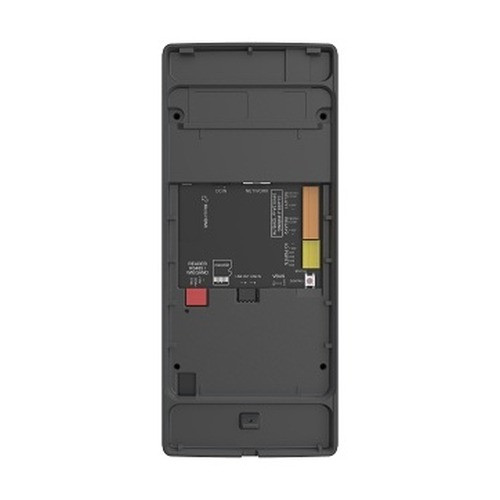
The Axis A8207-VE Mk II captures at 3MP (approximately 2048×1536) with Forensic WDR to handle severe backlighting common at exterior entries. Its 180° horizontal field of view eliminates blind spots across wide vestibules. Compression is H.264. Audio capability is listed as 'microphone supported'; no codec or full-duplex spec is provided in the supplied data.
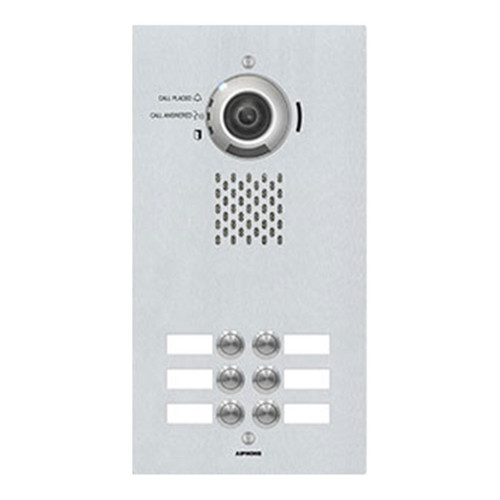
The Aiphone IX-DVF-6 captures at 1.23MP with a mechanically adjustable tilt angle (+15°, 0°, or −8°) and a minimum illumination of 5 lux supplemented by a white LED. It supports H.264/AVC and Motion JPEG video codecs, and audio codecs G.711 and G.722 — both codecs are explicitly specified, with G.722 providing wideband voice clarity. No WDR specification is provided for the IX-DVF-6.
On raw resolution and dynamic range handling, the Axis unit has a clear advantage (3MP vs 1.23MP; Forensic WDR vs no WDR spec). On audio codec transparency and low-light LED illumination, the Aiphone unit provides more explicit specification data.
How do these units compare for outdoor installation, vandal resistance, and power requirements?
The Axis A8207-VE Mk II is rated IP66 (dust-tight, protected against powerful water jets) and IK08 (vandal-resistant to 5 joules of impact). It operates from −40°C to +55°C. Power is PoE+ (802.3at); no DC power alternative is listed in the provided specs. Housing is white. Mounting details and physical dimensions are not provided in the supplied data.
The Aiphone IX-DVF-6 is rated IP65 (dust-tight, protected against water jets) and IK08 (matching the Axis on vandal resistance). Its operating temperature range is −40°F to 140°F (−40°C to 60°C), giving it a slightly higher upper thermal limit. Power accepts PoE (802.3af Class 0) at 5.28W or 24V DC — the DC alternative offers installation flexibility where network cabling is impractical. Dimensions are 13-11/16″ H × 7-3/16″ W; flush-mount installation is specified.
Both units share IK08 vandal resistance. The Axis carries a higher water-ingress rating (IP66 vs IP65). The Aiphone has a marginally higher maximum operating temperature (60°C vs 55°C) and adds a 24V DC power option. The Aiphone's flush-mount profile and published dimensions simplify rough-in planning; comparable mounting data is absent for the Axis unit.
Which unit integrates more broadly with access control platforms and IP communication infrastructure?
The Axis A8207-VE Mk II provides 4 alarm inputs, 2 relays, and 2 video outputs, reflecting a design oriented toward integration with traditional access control panels and video management systems. Storage is via microSD. The unit carries a 3-year warranty. No SIP, ONVIF, or specific VMS compatibility is listed in the supplied spec data.
The Aiphone IX-DVF-6 is explicitly compliant with SIP and ONVIF Profile S, enabling direct registration with SIP PBX platforms and interoperability with ONVIF-compatible VMS and door controllers. It supports an extensive protocol list: IPv4, IPv6, TCP, UDP, SIP, HTTP, HTTPS, RTSP, RTP, RTCP, IGMP, MLD, SMTP, SFTP, DHCP, NTP, and DNS. Port security is handled via IEEE 802.1x. It provides 2 contact outputs and 6 individual call buttons with directory functionality. Storage is via microSD. No warranty term is specified in the supplied data.
The Aiphone unit's explicit SIP and ONVIF Profile S compliance, combined with its broad protocol stack and IEEE 802.1x port security, makes it measurably more documented for open-platform integration. The Axis unit's 4 alarm inputs and 2 relays give it a hardware edge for hardwired access control panel tie-ins, but its software integration surface is not specified in the provided data.
Which should you choose: the A8207-VE or the IX-DVF-6?
Our take: The A8207-VE Mk II is the stronger choice when high-resolution surveillance-grade imaging, wide-angle coverage, and hardwired access control integration are the primary requirements. Its 3MP sensor with Forensic WDR outresolves the Aiphone's 1.23MP camera and handles challenging lighting without a comparable WDR spec on the Aiphone side; its 4 alarm inputs and 2 relays support richer panel integration than the Aiphone's 2 contact outputs. The IX-DVF-6, however, is the clearer fit for multi-tenant SIP-based deployments: its 6 individual call buttons with directory, explicit ONVIF Profile S and SIP compliance, G.722 wideband audio codec, dual power options (PoE 802.3af or 24V DC), and 802.1x port security are all specified — none of those features are confirmed in the Axis supplied data. Buyers on Axis VMS or access control ecosystems favoring analog panel integration should lean toward the A8207-VE; buyers deploying a SIP PBX or ONVIF-centric platform with multiple tenants should favor the IX-DVF-6.
Side-by-Side Comparison
Spec-for-spec, from manufacturer data.
| Specification | Axis A8207-VE | Aiphone IX-DVF-6 |
|---|---|---|
| Product Type | Video Door Station | Video Door Station |
| Camera Resolution | 3MP | 1.23MP |
| Wide Dynamic Range | Forensic WDR | — |
| Field of View | 180° horizontal | — |
| Min Illumination | — | 5 lux (white LED) |
| Video Codec | H.264 | H.264/AVC, Motion JPEG |
| Audio Codec | — | G.711, G.722 |
| Call Buttons | — | 6 |
| SIP / ONVIF | — | SIP; ONVIF Profile S |
| Alarm Inputs | 4 | — |
| Relays / Contact Outputs | 2 relays | 2 contact outputs |
| Power | PoE+ (802.3at) | PoE 802.3af Class 0 or 24V DC |
| Power Draw | — | 5.28W |
| IP Rating | IP66 | IP65 |
| Vandal Rating | IK08 | IK08 |
| Operating Temperature | −40°C to +55°C | −40°C to +60°C |
| Port Security | — | IEEE 802.1x |
| Local Storage | microSD | microSD |
| Warranty | 3 years | — |
| Mounting | — | Flush-mount |
Frequently Asked Questions
Which should you choose: the A8207-VE or the IX-DVF-6?
The A8207-VE Mk II is the stronger choice when high-resolution surveillance-grade imaging, wide-angle coverage, and hardwired access control integration are the primary requirements. Its 3MP sensor with Forensic WDR outresolves the Aiphone's 1.23MP camera and handles challenging lighting without a comparable WDR spec on the Aiphone side; its 4 alarm inputs and 2 relays support richer panel integration than the Aiphone's 2 contact outputs. The IX-DVF-6, however, is the clearer fit for multi-tenant SIP-based deployments: its 6 individual call buttons with directory, explicit ONVIF Profile S and SIP compliance, G.722 wideband audio codec, dual power options (PoE 802.3af or 24V DC), and 802.1x port security are all specified — none of those features are confirmed in the Axis supplied data. Buyers on Axis VMS or access control ecosystems favoring analog panel integration should lean toward the A8207-VE; buyers deploying a SIP PBX or ONVIF-centric platform with multiple tenants should favor the IX-DVF-6.
Is the A8207-VE or IX-DVF-6 better for a multi-tenant apartment building with individual unit directories?
The IX-DVF-6 is purpose-built for this use case. It provides 6 individual call buttons with directory functionality and is explicitly SIP-compliant, allowing direct registration with a hosted or on-premise PBX so each button can ring a separate extension or unit. The A8207-VE's supplied specifications do not include call-button count, directory features, or SIP support, so it cannot be confirmed for this deployment type from the available data.
Which door station handles harsh outdoor lighting better — the Axis A8207-VE or the Aiphone IX-DVF-6?
The Axis A8207-VE Mk II specifies Forensic WDR, which is Axis's designation for wide dynamic range processing designed to recover detail in simultaneous bright and shadowed zones — a common condition at exterior entries with direct sun or artificial backlighting. The Aiphone IX-DVF-6 supplies a minimum illumination rating of 5 lux with white LED assistance but does not specify a WDR feature in the provided data. For environments with significant backlight or mixed lighting, the Axis unit has a documented advantage.
Can either unit be powered without running a new network cable?
The Aiphone IX-DVF-6 accepts 24V DC as an alternative to PoE (802.3af), which allows installation using an existing low-voltage DC run rather than a Cat-5e/6 network cable. The Axis A8207-VE Mk II's supplied specifications list only PoE+ (802.3at) as a power source; no DC input alternative is specified. If cabling constraints favor a non-Ethernet power path, only the Aiphone's power flexibility is confirmed in the available data.
More Intercom Comparisons
- Hanwha TID-600R vs Aiphone IX-EA
- Hanwha TID-600R vs Axis A8207-VE
- Hanwha TID-600R vs Aiphone IX-DVF-6
- Hanwha TID-600R vs Aiphone JOS-1FW
- Aiphone IX-EA vs Axis A8207-VE
- Aiphone IX-EA vs 2N 01273-001
Intercom Buying Guides
Get a Second Opinion on Your Camera Choice
Share your site layout, coverage goals, and budget. Our team will validate the camera selection, flag anything we would change, and recommend products that match the use case.