
APC by Schneider Electric SUVTP20KH2B4S vs Vertiv GXT5-20KMVRT11UXLN: Specification Comparison
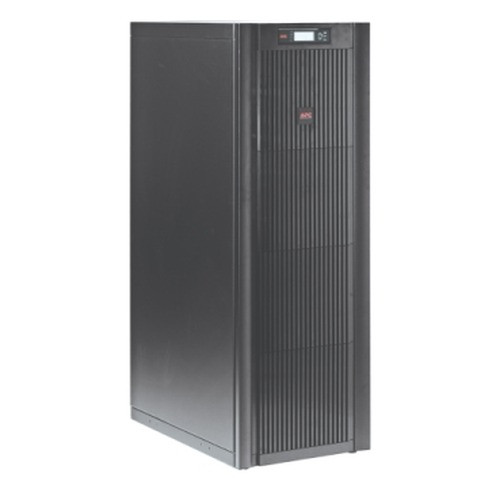
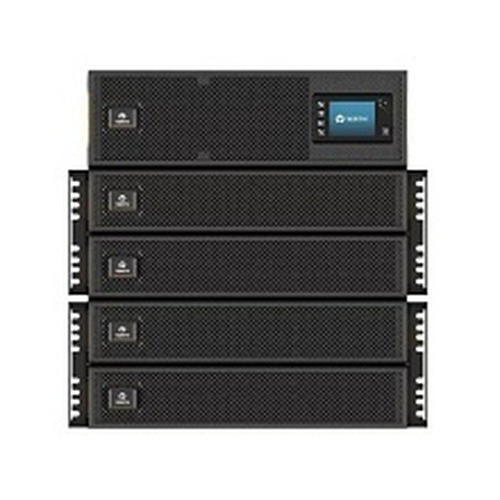
Both the APC by Schneider Electric SUVTP20KH2B4S and the Vertiv Liebert GXT5-20KMVRT11UXLN are 20 kVA online double-conversion three-phase UPS systems aimed at data center and critical infrastructure deployments. This comparison evaluates them across power architecture and efficiency, runtime and battery characteristics, and management and integration capabilities — the three axes most relevant to enterprise UPS procurement decisions. Buyers should note that these units serve different regional voltage standards: the APC targets 400V three-phase (European/international), while the Vertiv targets 208/120V AC (North American).
In This Guide
- How do the power architecture, output ratings, and efficiency compare between the SUVTP20KH2B4S and GXT5-20KMVRT11UXLN?
- What do the runtime and battery specifications reveal about backup depth and field serviceability?
- How do the management interfaces, certifications, and physical integration options differ between the two units?
- Which should you choose: the SUVTP20KH2B4S or the GXT5-20KMVRT11UXLN?
- Side-by-Side Specs
- FAQ
How do the power architecture, output ratings, and efficiency compare between the SUVTP20KH2B4S and GXT5-20KMVRT11UXLN?
The SUVTP20KH2B4S is rated at 20 kVA / 16,000 W, yielding a power factor of 0.80. It operates on a 400V three-phase input and delivers 400V three-phase output at up to 27 A maximum current. No efficiency rating is provided in the supplied specifications.
The GXT5-20KMVRT11UXLN is rated at 20,000 VA / 20,000 W, yielding a unity (1.0) power factor. It accepts a typical input of 208 VAC with a range of 176–280 VAC and delivers 208/120 VAC output (user-configurable). Efficiency is specified at up to 98% in Active ECO Mode and up to 95% in standard online mode.
The power factor difference is material: the Vertiv delivers 4,000 W more usable power at the same kVA rating. The APC's three-phase 400V architecture suits European and international facilities, while the Vertiv's single-phase 208/120V architecture targets North American rack environments. Efficiency figures are absent for the APC, so no direct comparison is possible on that dimension.
What do the runtime and battery specifications reveal about backup depth and field serviceability?
The SUVTP20KH2B4S specifies a typical backup time of 5.5 minutes at full load and 18.3 minutes at half load, with a battery recharge time of 4 hours. Hot-swap battery replacement is supported, enabling service without a maintenance bypass.
The GXT5-20KMVRT11UXLN provides no backup time or battery recharge time figures in the supplied specifications. The interface listing references an external battery connector, indicating external battery cabinet (EBC) expandability, but no runtime data is available to compare.
For buyers who need to validate runtime against a critical load, the APC provides concrete numbers while the Vertiv does not — at least within the specifications provided here. The APC's documented hot-swap capability is a confirmed field serviceability advantage; the Vertiv's serviceability under load is not addressed in the supplied data.
How do the management interfaces, certifications, and physical integration options differ between the two units?
The SUVTP20KH2B4S includes LED indicators, an audible alarm, and an Emergency Power Off (EPO) input. Certifications listed are CE and ISO. No network management card, protocol support, or control panel description is provided in the supplied specifications.
The GXT5-20KMVRT11UXLN ships with a factory pre-installed Vertiv RDU101 SNMP/Webcard, plus USB, RS485, RS232, a terminal block, and an EPO connector. It supports SNMP and web management out of the box, with serial for out-of-band management. The control panel is a full-color graphic LCD with gravity-sensing orientation. Certifications include ENERGY STAR 2.0, UL1778, c-UL, RoHS2, and REACH. Wiring is hardwired in/out with optional Power Distribution units (PODs).
The Vertiv carries a substantially richer management stack at the factory level — SNMP/web monitoring is included without an add-on card purchase. The APC's management capabilities beyond EPO and LED indicators are not described in the supplied specifications, so no equivalence can be assumed. Certification scope also favors the Vertiv for North American compliance requirements (UL1778, ENERGY STAR 2.0).
Which should you choose: the SUVTP20KH2B4S or the GXT5-20KMVRT11UXLN?
Our take: The GXT5-20KMVRT11UXLN is the stronger choice when the deployment is a North American facility requiring unity power factor, factory-included SNMP management, and broad compliance certifications. The Vertiv's 20,000 W output versus the APC's 16,000 W represents a 25% usable-power advantage at the same kVA rating, its factory-installed RDU101 card eliminates a separate management-card procurement step, and its ENERGY STAR 2.0 / UL1778 / c-UL certifications directly address North American regulatory and incentive requirements. The SUVTP20KH2B4S is the correct selection for 400V three-phase infrastructure — European data centers, international industrial facilities, or any site where the local grid is 400V 3PH — where the Vertiv's 208V single-phase architecture is simply incompatible. Runtime data (5.5 min full / 18.3 min half load) is available only for the APC, which aids load planning; the Vertiv's runtime must be sourced from its datasheet separately.
Side-by-Side Comparison
Spec-for-spec, from manufacturer data.
| Specification | APC by Schneider Electric SUVTP20KH2B4S | Vertiv GXT5-20KMVRT11UXLN |
|---|---|---|
| Power Rating (kVA) | 20 kVA | 20,000 VA |
| Power Rating (Watts) | 16,000 W | 20,000 W |
| Power Factor | 0.80 | 1.0 |
| Input Voltage | 400V 3-phase | 208 VAC (176–280 VAC range) |
| Output Voltage | 400V 3-phase | 208/120 VAC (user-configurable) |
| Maximum Output Current | 27 A | — |
| Topology | — | Online double conversion |
| Efficiency | — | Up to 98% ECO / 95% online |
| Runtime at Full Load | 5.5 min | — |
| Runtime at Half Load | 18.3 min | — |
| Battery Recharge Time | 4 h | — |
| Hot-Swap Battery | Yes | — |
| EPO | Yes | Yes |
| Network Management | — | Factory RDU101 SNMP/Webcard (included) |
| Additional Interfaces | — | USB, RS485, RS232, terminal block |
| Certifications | CE, ISO | ENERGY STAR 2.0, UL1778, c-UL, RoHS2, REACH |
| Operating Temperature | 0–40 °C | 0–40 °C (32–104 °F) |
| Weight | 415 kg | 396.6 lbs (approx. 179.9 kg) |
| Noise Level | 64 dB | — |
| Product Color | Black | — |
Frequently Asked Questions
Which should you choose: the SUVTP20KH2B4S or the GXT5-20KMVRT11UXLN?
The GXT5-20KMVRT11UXLN is the stronger choice when the deployment is a North American facility requiring unity power factor, factory-included SNMP management, and broad compliance certifications. The Vertiv's 20,000 W output versus the APC's 16,000 W represents a 25% usable-power advantage at the same kVA rating, its factory-installed RDU101 card eliminates a separate management-card procurement step, and its ENERGY STAR 2.0 / UL1778 / c-UL certifications directly address North American regulatory and incentive requirements. The SUVTP20KH2B4S is the correct selection for 400V three-phase infrastructure — European data centers, international industrial facilities, or any site where the local grid is 400V 3PH — where the Vertiv's 208V single-phase architecture is simply incompatible. Runtime data (5.5 min full / 18.3 min half load) is available only for the APC, which aids load planning; the Vertiv's runtime must be sourced from its datasheet separately.
Is the SUVTP20KH2B4S or GXT5-20KMVRT11UXLN better for a North American data center?
The GXT5-20KMVRT11UXLN is designed for North American voltage standards (208/120 VAC input/output) and carries UL1778 and c-UL listings required in the US and Canada. The SUVTP20KH2B4S is built for 400V three-phase infrastructure common in Europe and internationally. Deploying the APC unit in a standard North American facility would require transformer infrastructure not implied by its specifications, making the Vertiv the appropriate choice for that environment.
Which UPS delivers more usable watts at 20 kVA — the SUVTP20KH2B4S or the GXT5-20KMVRT11UXLN?
The GXT5-20KMVRT11UXLN delivers 20,000 W at 20,000 VA (unity power factor of 1.0). The SUVTP20KH2B4S delivers 16,000 W at 20 kVA (power factor of 0.80). That is a 4,000 W difference in actual load capacity. Buyers sizing UPS capacity against a watt-based load budget will find the Vertiv supports 25% more load at the same kVA rating.
Does either UPS include network management out of the box, or is a separate card required?
The GXT5-20KMVRT11UXLN ships with a factory pre-installed Vertiv RDU101 SNMP/Webcard, enabling SNMP and web-based monitoring without any additional purchase. The SUVTP20KH2B4S specifications list only LED indicators and an audible alarm; no network management card or protocol support is described in the supplied specifications, so buyers should verify separately whether a management card is included or must be purchased as an option.
More UPS Comparisons
- Panduit U20N32V vs APC by Schneider Electric SURT20KRMXLT-1TF10K
- Panduit U20N32V vs APC by Schneider Electric E3SUPS20KFBS
- Panduit U20N32V vs APC by Schneider Electric SUVTP20KH2B4S
- Panduit U20N32V vs Vertiv GXT5-20KMVRT11UXLN
- APC by Schneider Electric SURT20KRMXLT-1TF10K vs Vertiv GXT5-20KMVRT11UXLN
- APC by Schneider Electric SURT20KRMXLT-1TF10K vs APC by Schneider Electric E3SUPS20KFBS
UPS Buying Guides
Get a Second Opinion on Your Camera Choice
Share your site layout, coverage goals, and budget. Our team will validate the camera selection, flag anything we would change, and recommend products that match the use case.