
APC by Schneider Electric SURT1000RMXLI vs CyberPower BRG1000AVRLCD: Specification Comparison
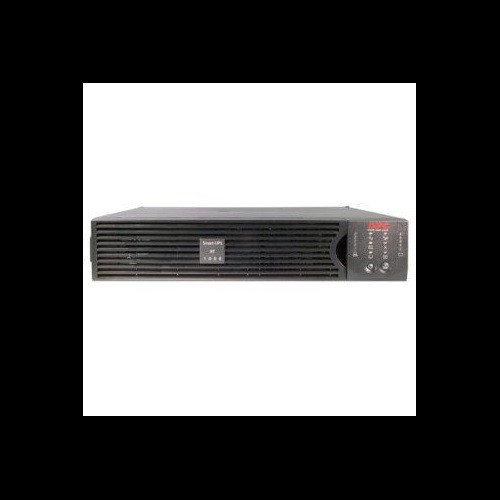
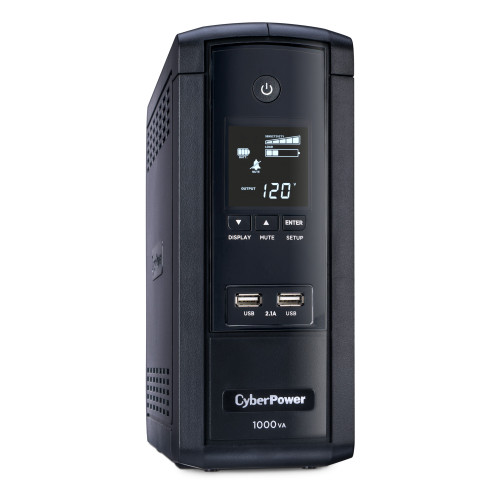
Both the APC Smart-UPS RT SURT1000RMXLI and the CyberPower BRG1000AVRLCD are 1000VA uninterruptible power supplies, but they target distinctly different deployment contexts. The APC is a 230V, 2U rack-mounted double-conversion online unit rated at 700W, while the CyberPower is a 120V mini-tower line-interactive unit rated at 600W. Buyers comparing these are typically weighing infrastructure-grade rack UPS protection against a cost-accessible desktop/tower alternative for North American office or light IT environments.
In This Guide
- Which UPS topology and runtime performance actually protect your load?
- What power capacity, output connections, and surge protection does each unit deliver?
- How do form factor, management interfaces, and certifications compare for your installation?
- Which should you choose: the SURT1000RMXLI or the BRG1000AVRLCD?
- Side-by-Side Specs
- FAQ
Which UPS topology and runtime performance actually protect your load?
The SURT1000RMXLI uses double-conversion online topology, meaning the load always runs from the inverter — utility power never feeds the output directly. This eliminates transfer time entirely and delivers true sine-wave output with less than 3% harmonic distortion and a 3:1 crest factor, making it suitable for sensitive electronics and servers. The BRG1000AVRLCD uses line-interactive topology with AVR (single boost, single buck), which corrects voltage sags and surges without switching to battery but does incur a transfer time to battery when utility fails; its output is simulated sine wave, not true sine wave.
On runtime, the BRG1000AVRLCD specifies 9 minutes at 50% load (500W) and 1 minute at 100% load (600W) from its 12V/9Ah sealed lead-acid battery. The SURT1000RMXLI does not provide runtime tables in the supplied specs; its battery recharge time is rated at 3 hours and charger power at 109W rated. The BRG1000AVRLCD's battery is explicitly user-replaceable; the SURT1000RMXLI spec does not state this, though its battery life is rated at 3–5 years.
What power capacity, output connections, and surge protection does each unit deliver?
Both units are rated at 1000VA, but their watt ratings differ: the SURT1000RMXLI delivers 700W, while the BRG1000AVRLCD delivers 600W — a 100W delta that matters when calculating actual load headroom. The SURT1000RMXLI operates at 230V (also accepting 220V and 240V) with an IEC 60320 C14 input and provides 6 IEC 60320 output receptacles plus 2 IEC jumper outputs, suited to rack-mounted IT equipment in 230V markets. The BRG1000AVRLCD operates at 120V nominal (90–148VAC range) with 10 NEMA 5-15R outlets — 5 with battery backup and surge, 5 with surge only — plus 2 USB-A charge ports (2.1A shared) and RJ45/RG6 data line protection. These outlet types are entirely incompatible with each other; a buyer must match the unit to their local voltage standard.
Surge energy absorption is 420J on the SURT1000RMXLI (with full-time multi-pole noise filtering, IEEE let-through of zero, and clamping response meeting UL 1449) versus 1080J on the BRG1000AVRLCD. The BRG1000AVRLCD also carries a $350,000 connected equipment guarantee; no equivalent guarantee is stated in the SURT1000RMXLI spec.
How do form factor, management interfaces, and certifications compare for your installation?
The SURT1000RMXLI is a 2U rack-mount unit measuring 8.5 × 43.2 × 48.3 cm and weighing 23 kg, with 1 free management slot for optional network or SNMP cards. It carries certifications including CE, VDE, C-Tick, GOST, UK PSTI, and complies with EN/IEC 62040-1:2019/A11:2021 and EN/IEC 62040-2:2006/2018 — appropriate for 230V regulated markets. Its acoustic level is rated at 50 dBA and heat dissipation at 324 Btu/h; IP degree of protection is IP20.
The BRG1000AVRLCD is a mini-tower measuring 99 × 246 × 259 mm and weighing 6.8 kg — significantly smaller and lighter, with no rack-mount capability per the supplied specs. It features a multifunction LCD display, USB HID-compliant and DB9 serial management interfaces, and certifications including UL1778, cUL 107.5, FCC Class B, RoHS, and ENERGY STAR. No acoustic level or heat dissipation figures are provided in the BRG1000AVRLCD spec. The BRG1000AVRLCD carries a 5-year limited warranty; the SURT1000RMXLI warranty duration is not stated in the supplied specs.
Which should you choose: the SURT1000RMXLI or the BRG1000AVRLCD?
Our take: The SURT1000RMXLI is the stronger choice when protecting rack-mounted 230V infrastructure that demands zero-transfer-time power conditioning — its double-conversion online topology, true sine-wave output with under 3% THD, 700W capacity, and expandable management slot make it an infrastructure-grade solution for servers and sensitive equipment in international markets. The BRG1000AVRLCD, by contrast, delivers 600W in a 120V mini-tower form factor with line-interactive AVR, simulated sine wave, 10 NEMA outlets, a specified 9-minute runtime at half load, 1080J surge absorption (versus 420J), a $350,000 connected equipment guarantee, and a 5-year stated warranty. These units are not direct substitutes: the SURT1000RMXLI targets 230V rack environments where power quality is paramount; the BRG1000AVRLCD targets North American desktop and light IT applications where outlet count, display visibility, and lower acquisition cost matter more than topology class.
Side-by-Side Comparison
Spec-for-spec, from manufacturer data.
| Specification | APC by Schneider Electric SURT1000RMXLI | CyberPower BRG1000AVRLCD |
|---|---|---|
| UPS Topology | Double-conversion online | Line interactive with AVR |
| Rated Capacity (VA) | 1000 VA | 1000 VA |
| Rated Capacity (W) | 700 W | 600 W |
| Output Waveform | Sine wave | Simulated sine wave |
| Form Factor | 2U Rack-mount | Mini-tower |
| Input Voltage (Nominal) | 230 V | 120 VAC |
| Input Voltage Range | 160–280 V | 90–148 VAC |
| Output Connections | 6x IEC 60320 + 2x IEC Jumpers | 10x NEMA 5-15R (5 battery+surge, 5 surge) |
| Surge Energy Absorption | 420 J | 1080 J |
| Harmonic Distortion (THD) | < 3% | — |
| Runtime at 50% Load | — | 9 minutes |
| Runtime at 100% Load | — | 1 minute |
| Battery Recharge Time | 3 hours | — |
| Battery Life (Rated) | 3–5 years | — |
| Battery Specification | Lead-acid (charger: 109W rated) | 12V/9Ah Sealed Lead-Acid, user replaceable |
| Management Interface | 1 free expansion slot | USB HID, DB9 Serial, Multifunction LCD |
| Acoustic Level | 50 dBA | — |
| Heat Dissipation | 324 Btu/h | — |
| Weight | 23 kg | 6.8 kg (15 lb) |
| Dimensions | 8.5 x 43.2 x 48.3 cm | 99 x 246 x 259 mm |
| Certifications | CE, VDE, C-Tick, GOST, UK PSTI | UL1778, cUL 107.5, FCC Class B, RoHS, ENERGY STAR |
| Connected Equipment Guarantee | — | $350,000 |
| Warranty | — | 5-year limited |
Frequently Asked Questions
Which should you choose: the SURT1000RMXLI or the BRG1000AVRLCD?
The SURT1000RMXLI is the stronger choice when protecting rack-mounted 230V infrastructure that demands zero-transfer-time power conditioning — its double-conversion online topology, true sine-wave output with under 3% THD, 700W capacity, and expandable management slot make it an infrastructure-grade solution for servers and sensitive equipment in international markets. The BRG1000AVRLCD, by contrast, delivers 600W in a 120V mini-tower form factor with line-interactive AVR, simulated sine wave, 10 NEMA outlets, a specified 9-minute runtime at half load, 1080J surge absorption (versus 420J), a $350,000 connected equipment guarantee, and a 5-year stated warranty. These units are not direct substitutes: the SURT1000RMXLI targets 230V rack environments where power quality is paramount; the BRG1000AVRLCD targets North American desktop and light IT applications where outlet count, display visibility, and lower acquisition cost matter more than topology class.
Is the SURT1000RMXLI or BRG1000AVRLCD better for protecting a server rack?
The SURT1000RMXLI is purpose-built for rack environments — it occupies 2U, weighs 23 kg, provides IEC 60320 outputs standard in rack power strips, and uses double-conversion online topology with zero transfer time and true sine-wave output, which is what most servers and network equipment require. The BRG1000AVRLCD is a mini-tower with NEMA 5-15R outlets and simulated sine wave; it has no rack-mount form factor per the supplied specs and is better suited to desktop or small-office deployments.
Which unit offers better surge protection — the SURT1000RMXLI or the BRG1000AVRLCD?
On rated surge energy absorption, the BRG1000AVRLCD specifies 1080J versus the SURT1000RMXLI's 420J. The SURT1000RMXLI, however, specifies full-time multi-pole noise filtering, IEEE surge let-through of zero, and clamping response meeting UL 1449 — metrics the BRG1000AVRLCD spec does not address in equivalent detail. The BRG1000AVRLCD also includes a $350,000 connected equipment guarantee; no comparable guarantee is stated for the SURT1000RMXLI.
Can I use the SURT1000RMXLI or BRG1000AVRLCD in a North American 120V installation?
No — these units are designed for different voltage markets. The SURT1000RMXLI operates at 230V (range 160–280V) with IEC 60320 C14 input and is intended for 230V markets such as Europe, Australia, and the Middle East. The BRG1000AVRLCD operates at 120V nominal (90–148VAC range) with NEMA 5-15R outlets and is designed for North American use. Using either unit outside its rated voltage range would be outside spec and is not supported by the supplied specifications.
More UPS Comparisons
- CyberPower PR1000RTXL2UC vs APC by Schneider Electric SURT1000RMXLI
- CyberPower PR1000RTXL2UC vs APC by Schneider Electric SMT1000CUS
- CyberPower PR1000RTXL2UC vs Vertiv GXT5-1000LVRT2UXL
- CyberPower PR1000RTXL2UC vs APC by Schneider Electric SMT1000J
- CyberPower PR1000RTXL2UC vs CyberPower CP1000PFCLCD
- CyberPower PR1000RTXL2UC vs CyberPower PR1000LCD
UPS Buying Guides
Get a Second Opinion on Your Camera Choice
Share your site layout, coverage goals, and budget. Our team will validate the camera selection, flag anything we would change, and recommend products that match the use case.