
APC by Schneider Electric SUA5000RMT5U vs APC by Schneider Electric SRT5KRMXLIM: Specification Comparison
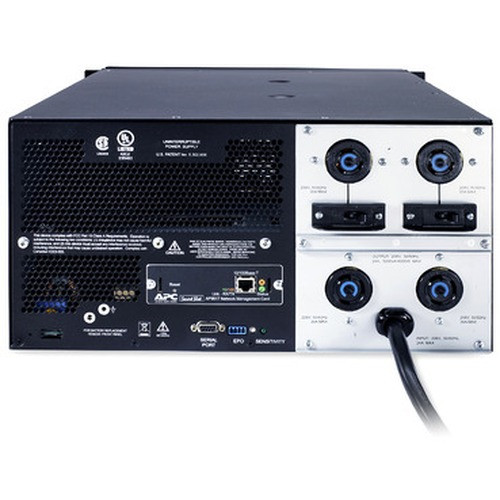
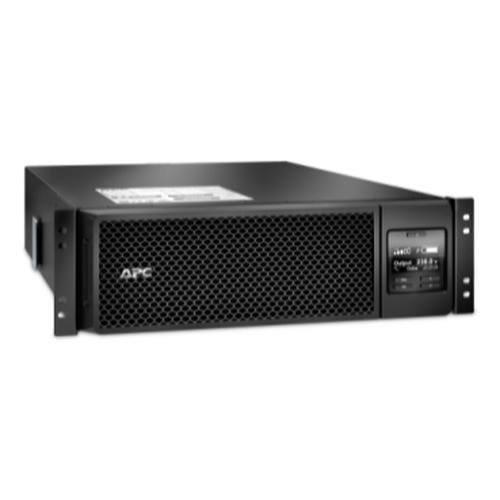
Both the SUA5000RMT5U and SRT5KRMXLIM are APC Smart-UPS rackmount units rated at 5000VA, placing them in the same capacity tier for protecting critical IT and industrial loads. The comparison pits a line-interactive topology (SUA5000RMT5U) against a double-conversion online topology (SRT5KRMXLIM), a distinction that drives meaningful differences in power conditioning quality, runtime delivery, input voltage tolerance, and environmental suitability. Buyers evaluating both are typically specifying UPS infrastructure for server rooms, network closets, or marine/harsh-environment installations requiring clean, regulated power.
In This Guide
- Which UPS delivers cleaner, more tightly regulated output power?
- Which unit provides longer runtime and more useful battery management features?
- Which unit is better suited to unstable input power and demanding installation environments?
- Which should you choose: the SUA5000RMT5U or the SRT5KRMXLIM?
- Side-by-Side Specs
- FAQ
Which UPS delivers cleaner, more tightly regulated output power?
The SRT5KRMXLIM uses double-conversion (online) topology, meaning all output power is continuously regenerated through the inverter regardless of input conditions. This yields a pure sine wave output with a stated Total Harmonic Distortion (THD) of 3% and a crest factor of 3:1, providing tightly regulated output between 220 V and 230 V. The surge energy rating is specified at 480 J, and surge protection is explicitly listed as a feature.
The SUA5000RMT5U is line-interactive, meaning it passes utility power directly to the load under normal conditions and only switches to battery when voltage falls outside acceptable limits. Its output waveform type, THD, crest factor, output voltage regulation range, and surge energy rating are not specified in the provided data. For loads sensitive to power quality—such as high-density servers or precision industrial equipment—the SRT5KRMXLIM's double-conversion architecture provides a measurably stronger guarantee of clean power delivery.
Which unit provides longer runtime and more useful battery management features?
The SUA5000RMT5U provides specified runtime data: 9.4 minutes at full load and 26.7 minutes at half load, with a battery recharge time of 3 hours. It explicitly supports hot-swap batteries, allowing replacement without powering down the load. Battery technology is Sealed Lead Acid (VRLA).
The SRT5KRMXLIM does not include runtime figures, recharge time, battery technology type, or hot-swap capability in the provided specifications. Buyers who need to size runtime for a defined load window or plan field battery maintenance must treat the SUA5000RMT5U as the only model with quantified runtime data in this comparison. However, the SRT5KRMXLIM delivers 4500 W of output power versus 4000 W for the SUA5000RMT5U, so at equivalent wattage loads, its higher power headroom could benefit load sharing in certain configurations.
Which unit is better suited to unstable input power and demanding installation environments?
The SRT5KRMXLIM specifies an input operating voltage range of 160 V to 275 V and an input frequency range of 45 to 65 Hz—a wide window that accommodates severe voltage sag and frequency deviation without switching to battery. This is particularly relevant for the unit's marine designation ('XLIM'), which implies suitability for shipboard or offshore environments where shore power quality is variable. Temperature voltage compensation is also specified for the SRT5KRMXLIM.
The SUA5000RMT5U specifies an input frequency of 50/60 Hz (nominal) but does not provide minimum/maximum input voltage operating limits in the available data. Its environmental envelope is documented: operating temperature 0–40 °C, storage temperature -15–45 °C, operating altitude 0–3000 m, and non-operating altitude 0–15,000 m. These figures are absent for the SRT5KRMXLIM. Both units support EPO. The SRT5KRMXLIM is rated at 55 dB acoustic noise versus 53 dB for the SUA5000RMT5U—a minor but measurable difference in noise-sensitive installations.
Which should you choose: the SUA5000RMT5U or the SRT5KRMXLIM?
Our take: The SRT5KRMXLIM is the stronger choice when power quality, input tolerance, and harsh-environment suitability are the primary requirements. Its double-conversion topology continuously regenerates output at 3% THD with a pure sine wave, whereas the SUA5000RMT5U's line-interactive design provides no specified output THD or waveform quality guarantee. The SRT5KRMXLIM also delivers 4500 W versus 4000 W (a 12.5% higher watt rating) and accepts input voltages from 160 V to 275 V, versus unspecified input tolerance on the SUA5000RMT5U. Conversely, the SUA5000RMT5U is the only model with documented runtime (9.4 min full load / 26.7 min half load), recharge time (3 h), hot-swap battery support, and full environmental ratings. Buyers in standard data center or IT closet deployments who need quantified runtime and battery serviceability should favor the SUA5000RMT5U; buyers protecting sensitive loads in variable-power or marine environments should favor the SRT5KRMXLIM.
Side-by-Side Comparison
Spec-for-spec, from manufacturer data.
| Specification | APC by Schneider Electric SUA5000RMT5U | APC by Schneider Electric SRT5KRMXLIM |
|---|---|---|
| UPS topology | Line-interactive | Double-conversion (online) |
| Output power capacity | 5 kVA | 5 kVA |
| Output power (watts) | 4000 W | 4500 W |
| Waveform | — | Pure sine |
| Output voltage THD | — | 3% |
| Crest factor | — | 3:1 |
| Input voltage range | — | 160 V – 275 V |
| Input frequency | 50/60 Hz | 45/65 Hz |
| Output voltage range | — | 220 V – 230 V |
| Surge energy rating | — | 480 J |
| Surge protection | — | Yes |
| Runtime at full load | 9.4 min | — |
| Runtime at half load | 26.7 min | — |
| Battery recharge time | 3 h | — |
| Hot-swap battery | Yes | — |
| Battery technology | Sealed Lead Acid (VRLA) | — |
| Emergency Power Off (EPO) | Yes | Yes |
| Noise level | 53 dB | 55 dB |
| Operating temperature | 0 – 40 °C | — |
| Operating altitude | 0 – 3000 m | — |
| Temperature voltage compensation | — | Yes |
| Product colour | Black | — |
Frequently Asked Questions
Which should you choose: the SUA5000RMT5U or the SRT5KRMXLIM?
The SRT5KRMXLIM is the stronger choice when power quality, input tolerance, and harsh-environment suitability are the primary requirements. Its double-conversion topology continuously regenerates output at 3% THD with a pure sine wave, whereas the SUA5000RMT5U's line-interactive design provides no specified output THD or waveform quality guarantee. The SRT5KRMXLIM also delivers 4500 W versus 4000 W (a 12.5% higher watt rating) and accepts input voltages from 160 V to 275 V, versus unspecified input tolerance on the SUA5000RMT5U. Conversely, the SUA5000RMT5U is the only model with documented runtime (9.4 min full load / 26.7 min half load), recharge time (3 h), hot-swap battery support, and full environmental ratings. Buyers in standard data center or IT closet deployments who need quantified runtime and battery serviceability should favor the SUA5000RMT5U; buyers protecting sensitive loads in variable-power or marine environments should favor the SRT5KRMXLIM.
Is the SUA5000RMT5U or SRT5KRMXLIM better for protecting sensitive servers and network equipment from power quality issues?
Based on the provided specifications, the SRT5KRMXLIM is better suited for power-quality-sensitive loads. Its double-conversion (online) topology continuously regenerates output power, delivering a pure sine wave with a stated output THD of 3% and a crest factor of 3:1. The SUA5000RMT5U is line-interactive, and no output THD, waveform type, or surge energy rating is specified in its available data.
Which model has longer battery runtime, and can the batteries be swapped in the field without downtime?
The SUA5000RMT5U is the only model with specified runtime figures: 9.4 minutes at full load and 26.7 minutes at half load, with a 3-hour recharge time. It also explicitly supports hot-swap batteries. The SRT5KRMXLIM does not include runtime, recharge time, or hot-swap battery data in the provided specifications.
Which unit handles unstable or wide-range input power better, such as in a marine or generator-fed installation?
The SRT5KRMXLIM specifies an input voltage range of 160 V to 275 V and an input frequency range of 45 to 65 Hz, and it carries a marine designation ('XLIM') with temperature voltage compensation. This makes it explicitly suited for variable shore power or generator environments. The SUA5000RMT5U does not specify minimum/maximum input voltage operating limits in the available data.
More UPS Comparisons
- APC by Schneider Electric SRT5KRMXLIM vs Vertiv GXT5LI-5000MVRT3UXLN
- APC by Schneider Electric SRT5KRMXLIM vs CyberPower PR5000LCDRTXL5U
- APC by Schneider Electric SRT5KRMXLIM vs Vertiv GXT5LI-5KL630RT3UXLN
- APC by Schneider Electric SRT5KRMXLIM vs APC by Schneider Electric SRT5KRMXLT-IEC
- APC by Schneider Electric SRT5KRMXLIM vs APC by Schneider Electric SRT5KXLT-IEC
- APC by Schneider Electric SRT5KRMXLT-IEC vs Vertiv GXT5LI-5000MVRT3UXLN
UPS Buying Guides
Get a Second Opinion on Your Camera Choice
Share your site layout, coverage goals, and budget. Our team will validate the camera selection, flag anything we would change, and recommend products that match the use case.