
APC by Schneider Electric SUA3000RMXLI3U vs Vertiv GXT5-3000LVRT2UXL: Specification Comparison
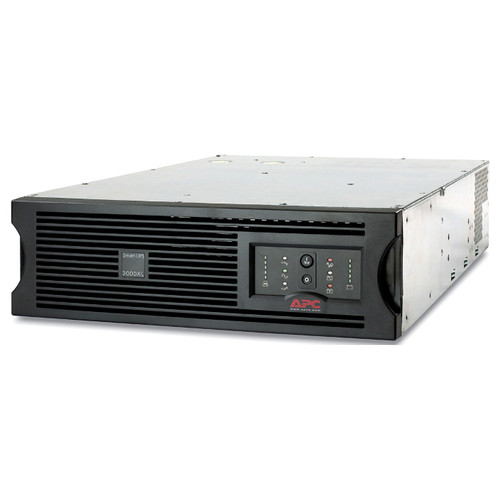
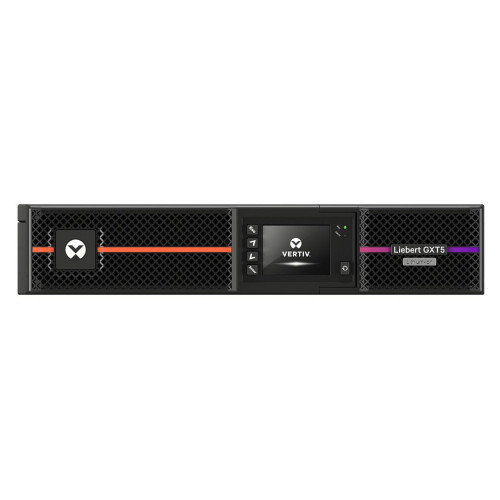
The APC Smart-UPS XL SUA3000RMXLI3U and the Vertiv Liebert GXT5-3000LVRT2UXL are both rack-mountable 3000VA / 2700W uninterruptible power supplies targeting server rooms, network closets, and critical infrastructure installations. Both share the same VA/W capacity rating and offer RS-232 and USB connectivity, but they differ fundamentally in UPS topology, input voltage, form factor, and feature depth — dimensions that directly affect suitability for a given site and load profile.
In This Guide
- Which UPS topology and output power quality is right for your critical load?
- How do rack space, weight, input/output connections, and operating environment compare?
- How do battery runtime, expandability, management options, and warranty compare?
- Which should you choose: the SUA3000RMXLI3U or the GXT5-3000LVRT2UXL?
- Side-by-Side Specs
- FAQ
Which UPS topology and output power quality is right for your critical load?
The SUA3000RMXLI3U uses line-interactive topology with AVR, meaning utility power passes through to the load with voltage regulation, and the inverter engages only on full power loss or out-of-tolerance conditions. Transfer time on power loss is not specified in the provided specs. Output waveform is sinewave at AC 220/230/240 V ±5%, with a surge energy rating of 480 joules and circuit-breaker protection. Input voltage range is AC 160–286 V (adjustable to 151–302 V).
The GXT5-3000LVRT2UXL uses online double-conversion topology: utility power is continuously rectified to DC and then re-inverted to AC, so the load is always running from the inverter. This yields zero transfer time on power loss and tightly regulated output: 110/115/120/125 VAC user-configurable, ±3%, at 50/60 Hz ±0.1 Hz in battery mode. Surge protection meets ANSI C62.41 Category B. Efficiency is specified at up to 94% in double-conversion mode and 98%+ in ECO mode. EMI/RFI filtering is included. The online topology provides superior isolation from utility power anomalies — harmonics, sags, surges, and frequency deviations — compared to line-interactive designs.
How do rack space, weight, input/output connections, and operating environment compare?
The SUA3000RMXLI3U occupies 3U of rack space and is specified at 19 in width (standard rack). Shipping weight is 139.33 lbs; installed weight is not separately stated but is implied to be comparable. Input connectors include IEC 60320 C20, BS 1363, and CEE 7/7 — a 230 V European/international connector set. Output provides 1× IEC 60320 C19 and 8× IEC 60320 C13. Operating temperature maximum is 104°F; humidity range is 0–95%. Sound emission is 53 dBA. The unit requires a 230 V AC supply (220/230/240 V range).
The GXT5-3000LVRT2UXL occupies 2U and is convertible between rack and tower form factors. Installed weight is 66 lbs — less than half of the APC unit. Input connection is NEMA L5-30P at 120 V AC (range 60–150 V), making it a North American 120 V product. Output connections are 1× NEMA L5-30R and 6× NEMA 5-20R (7 outlets total, 6 programmable). Operating temperature range is 32–104°F; humidity is 0–95% non-condensing; altitude rating is up to 10,000 ft with derating. Audible noise is specified at less than 45 dBA at 1 meter — 8 dBA quieter than the APC unit per spec. Variable-speed fan cooling is noted.
A critical installation note: the SUA3000RMXLI3U requires a 220/230/240 V AC supply (IEC connectors, international standards), while the GXT5-3000LVRT2UXL requires a 120 V AC supply (NEMA L5-30P, North American standard). These two units are not interchangeable on the same branch circuit and serve different regional electrical infrastructures.
How do battery runtime, expandability, management options, and warranty compare?
The SUA3000RMXLI3U specifies runtime of 5.4 minutes at full load with internal batteries; recharge time is 3 hours. Battery type is lead acid, internal. An expansion SmartSlot (1 total, 1 free) is provided for optional management cards. Management interfaces are RS-232 (DB-9) and USB. Compliant standards include C-Tick, GOST, UL 1449, VDE, EN 50091-2, and EN 50091-1. Software included is listed as Drivers & Utilities. Warranty is a limited 2-year warranty.
The GXT5-3000LVRT2UXL specifies VRLA hot-swappable batteries with runtime described as scalable via external battery cabinets (EBCs); a specific full-load runtime figure is not provided in the supplied specs. Recharge time is typically 3 hours to 90%. Battery monitoring includes temperature-compensated charging and end-of-life detection. Management interfaces are USB and RS-232, with optional Intellislot cards supporting SNMP, Modbus, and BACnet. An LCD front panel provides status and configuration. Internal automatic bypass and an external maintenance bypass are included, as is an Emergency Power Off (EPO) input. Load segmentation allows programmable outlet group control. Compatible management software includes Vertiv Environet and NUT. Certifications include TAA Compliant, Energy Star 2.0, UL 1778, FCC Part 15 Class A, and CE. MTBF is specified at greater than 200,000 hours. Warranty is 3 years advanced replacement. The GXT5-3000LVRT2UXL's hot-swap batteries, EBC scalability, maintenance bypass, and EPO input represent a broader set of serviceability and continuity features than the SUA3000RMXLI3U's spec sheet documents.
Which should you choose: the SUA3000RMXLI3U or the GXT5-3000LVRT2UXL?
Our take: The GXT5-3000LVRT2UXL is the stronger choice when load isolation, serviceability, and management depth are the primary requirements — particularly for North American 120 V environments. Its online double-conversion topology eliminates transfer time and delivers output regulated to ±3% versus the SUA3000RMXLI3U's ±5% line-interactive output; its hot-swappable VRLA batteries and included maintenance bypass reduce planned-downtime risk; and its 3-year advanced-replacement warranty exceeds the APC's 2-year limited warranty. It also weighs 66 lbs versus the APC's 139.33 lbs, a meaningful factor in rack density planning. The SUA3000RMXLI3U is the appropriate choice for 220/230/240 V AC sites (Europe, Middle East, Asia-Pacific) where IEC C13/C19 outlets and international compliance marks (VDE, GOST, C-Tick) are required — the GXT5-3000LVRT2UXL is a 120 V North American product and cannot substitute on 230 V circuits. Buyers operating international installations should note these units serve different electrical standards and are not cross-regional alternatives.
Side-by-Side Comparison
Spec-for-spec, from manufacturer data.
| Specification | APC by Schneider Electric SUA3000RMXLI3U | Vertiv GXT5-3000LVRT2UXL |
|---|---|---|
| UPS Topology | Line Interactive | Online Double-Conversion |
| Capacity (VA / W) | 3000 VA / 2700 W | 3000 VA / 2700 W |
| Power Factor | — | 0.9 |
| Input Voltage | AC 220/230/240 V | 120 V AC (range 60–150 V) |
| Input Connector | IEC 60320 C20 / BS 1363 / CEE 7/7 | NEMA L5-30P |
| Output Voltage | AC 220/230/240 V ±5% | 110/115/120/125 VAC ±3% (configurable) |
| Output Waveform | Sinewave | Pure Sinewave |
| Output Connectors | 1× C19, 8× C13 (9 total) | 1× NEMA L5-30R, 6× NEMA 5-20R (7 total) |
| Transfer Time | Not specified | Zero (online topology) |
| Battery Type | Lead acid, internal | VRLA, hot-swappable, scalable via EBCs |
| Runtime at Full Load | 5.4 min (internal battery) | Not specified (scalable with EBCs) |
| Recharge Time | 3 hours | ~3 hours to 90% |
| Form Factor / Rack Height | Rack, 3U | Rack/Tower convertible, 2U |
| Weight | 139.33 lbs | 66 lbs |
| Audible Noise | 53 dBA | <45 dBA at 1 m |
| Management / Connectivity | RS-232 (DB-9), USB, 1× SmartSlot | RS-232, USB, optional Intellislot (SNMP/Modbus/BACnet), LCD display |
| Maintenance Bypass | — | Internal automatic + external maintenance bypass |
| EPO Input | — | Yes |
| Efficiency | — | Up to 94% (double-conversion), 98%+ (ECO mode) |
| Certifications | C-Tick, GOST, UL 1449, VDE, EN 50091-2, EN 50091-1 | TAA, Energy Star 2.0, UL 1778, FCC Part 15 Class A, CE |
| MTBF | — | >200,000 hours |
| Warranty | 2-year limited | 3-year advanced replacement |
| Surge Protection | 480 joules | ANSI C62.41 Category B |
Frequently Asked Questions
Which should you choose: the SUA3000RMXLI3U or the GXT5-3000LVRT2UXL?
The GXT5-3000LVRT2UXL is the stronger choice when load isolation, serviceability, and management depth are the primary requirements — particularly for North American 120 V environments. Its online double-conversion topology eliminates transfer time and delivers output regulated to ±3% versus the SUA3000RMXLI3U's ±5% line-interactive output; its hot-swappable VRLA batteries and included maintenance bypass reduce planned-downtime risk; and its 3-year advanced-replacement warranty exceeds the APC's 2-year limited warranty. It also weighs 66 lbs versus the APC's 139.33 lbs, a meaningful factor in rack density planning. The SUA3000RMXLI3U is the appropriate choice for 220/230/240 V AC sites (Europe, Middle East, Asia-Pacific) where IEC C13/C19 outlets and international compliance marks (VDE, GOST, C-Tick) are required — the GXT5-3000LVRT2UXL is a 120 V North American product and cannot substitute on 230 V circuits. Buyers operating international installations should note these units serve different electrical standards and are not cross-regional alternatives.
Is the SUA3000RMXLI3U or the GXT5-3000LVRT2UXL better for server rooms that need zero transfer time to battery?
The GXT5-3000LVRT2UXL is the better choice for zero transfer time. Its online double-conversion topology means the load always runs from the inverter — there is no transfer event when utility power fails. The SUA3000RMXLI3U uses line-interactive topology, which does involve a transfer to battery on power loss; no transfer time figure is provided in its specifications. For sensitive loads that cannot tolerate any power interruption, online double-conversion is the preferred topology.
Can I expand the runtime on either of these UPS units with external battery cabinets?
Only the GXT5-3000LVRT2UXL explicitly supports runtime scalability via external battery cabinets (EBCs) per its specifications. The SUA3000RMXLI3U's provided specs describe only its internal battery with a stated 5.4-minute runtime at full load; no external battery expansion is documented in the supplied specification data. Buyers requiring scalable runtime should verify EBC compatibility and availability with the manufacturer for whichever unit they select.
Which unit is easier to service without taking the load offline?
The GXT5-3000LVRT2UXL has a stronger serviceability profile per its specs: it offers hot-swappable VRLA batteries (replaceable without powering down), an internal automatic bypass, and an external maintenance bypass input — all of which allow battery replacement or unit servicing while keeping the load energized. The SUA3000RMXLI3U's specifications do not document hot-swap battery capability, a maintenance bypass, or an automatic internal bypass. Installers prioritizing in-service maintainability should weigh these differences carefully.
More UPS Comparisons
- APC by Schneider Electric SMT3000RMI2U vs Vertiv GXT5-3000LVRT2UXL
- APC by Schneider Electric SMT3000RMI2U vs Panduit U03N11L
- APC by Schneider Electric SMT3000RMI2U vs Panduit U03N12L
- APC by Schneider Electric SMT3000RMI2U vs Panduit U03S12V
- APC by Schneider Electric SMT3000RMI2U vs APC by Schneider Electric SRT3000XLT
- APC by Schneider Electric SMT3000RMI2U vs APC by Schneider Electric SRT3000XLW-IEC
UPS Buying Guides
Get a Second Opinion on Your Camera Choice
Share your site layout, coverage goals, and budget. Our team will validate the camera selection, flag anything we would change, and recommend products that match the use case.