
APC by Schneider Electric SMT3000RMI2U vs Panduit U03N12L: Specification Comparison
Both the APC by Schneider Electric SMT3000RMI2U and the Panduit SteadySine U03N12L are 3000VA / 2700W line-interactive, 2U rack-mount uninterruptible power supplies producing a sine-wave output from sealed lead-acid batteries — a classic cross-shop pairing for IT closets, edge deployments, and light data-center rows. The comparison below evaluates power protection quality, battery and runtime serviceability, and management integration capability entirely from the published specifications of each unit.
In This Guide
- How does each UPS protect connected equipment during utility disturbances?
- Which unit offers better battery management and serviceability in the field?
- What remote monitoring and management capabilities does each unit provide?
- Which should you choose: the SMT3000RMI2U or the U03N12L?
- Side-by-Side Specs
- FAQ
How does each UPS protect connected equipment during utility disturbances?
Both units share the same 3000VA / 2700W capacity and produce a sine-wave output, making them equally suitable for active-PFC power supplies. The most significant divergence is transfer time: the SMT3000RMI2U specifies a typical 4 ms and a maximum 8 ms transfer to battery, while the U03N12L specifies less than 1 ms — a meaningful difference for load types sensitive to even brief interruptions.
On input voltage tolerance, the U03N12L accepts 160–290V AC through its AVR stage, and the SMT3000RMI2U lists an adjustable range of 151–302V (wide) or 160–286V (narrow), bracketing a similar window. The U03N12L also specifies a power factor correction of 0.99 (typical) and total harmonic distortion of less than 3% at full load — neither figure is stated in the SMT3000RMI2U spec sheet. The SMT3000RMI2U carries a 320 J surge energy rating; no equivalent figure is listed for the U03N12L.
Topology is line-interactive for the SMT3000RMI2U; the U03N12L spec does not explicitly state its topology, though its sub-1 ms transfer time is consistent with online double-conversion architecture — buyers should verify this directly from the U03N12L datasheet before assuming topology.
Which unit offers better battery management and serviceability in the field?
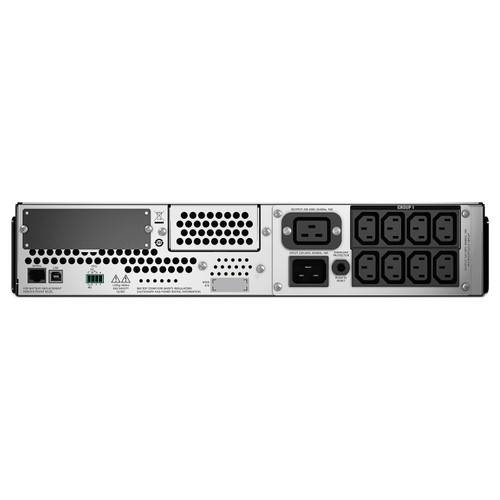
The U03N12L specifies hot-swappable sealed lead-acid batteries, meaning the battery pack can be replaced under load without powering down attached equipment — a critical capability for 24/7 environments. The SMT3000RMI2U does not list hot-swap capability in its specifications; its battery is identified as a single RBC43 lead-acid module.
The SMT3000RMI2U provides explicit battery lifecycle data: a rated 3–5 year service life, a 3-hour typical recharge time, and 182W rated charging power. It also includes a battery replacement indicator on its LED control panel and configurable low-battery alarms. The U03N12L spec does not state battery life expectancy, recharge time, or alarm behavior.
Runtime figures are not stated in absolute terms for either unit — the SMT3000RMI2U directs buyers to a runtime graph, and the U03N12L spec is silent on runtime. Neither product's listed specs allow a direct runtime comparison.
What remote monitoring and management capabilities does each unit provide?
The SMT3000RMI2U includes a serial (RS-232) port, a USB port, and one expansion slot for an optional network management card, plus a temperature probe in the box. Its LED control panel shows on-line, on-battery, replace-battery, and overload status. The provided accessories include a USB cable and RS-232 cable.
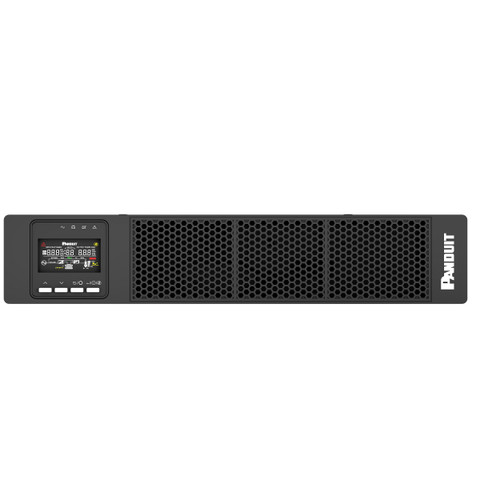
The U03N12L lists a dedicated network management card slot with SNMP support as a core spec, and an LCD front-panel display showing real-time load and runtime. The spec does not clarify whether the network card is included or sold separately. No serial port is mentioned for the U03N12L.
For integration into DCIM or BMS platforms, the U03N12L's SNMP slot and LCD runtime readout provide an edge in visibility at the rack level. The SMT3000RMI2U's USB/serial ports allow direct host-based management via APC PowerChute software (not mentioned in the provided spec but a known APC ecosystem feature — buyers should confirm separately), while the expansion slot adds optional network management parity.
Which should you choose: the SMT3000RMI2U or the U03N12L?
Our take: The U03N12L is the stronger choice when sub-millisecond transfer time and hot-swappable batteries under load are non-negotiable — its less-than-1 ms transfer versus the SMT3000RMI2U's 4 ms typical / 8 ms maximum is decisive for sensitive active-PFC loads, and hot-swap serviceability eliminates planned downtime for battery replacement. The SMT3000RMI2U counters with a broader, explicitly documented spec set: a 320 J surge rating (no equivalent listed for the U03N12L), a stated 3–5 year battery life and 3-hour recharge time (absent from U03N12L specs), multi-region input connections, and full environmental ratings including storage altitude to 15,240 m and acoustic output of 55 dBA. Choose the SMT3000RMI2U for a well-documented, ecosystem-managed deployment where APC PowerChute integration and detailed environmental specs matter. Choose the U03N12L for a high-availability data-center or enterprise edge row where near-zero transfer time and in-service battery swap are the priority.
Side-by-Side Comparison
Spec-for-spec, from manufacturer data.
| Specification | APC by Schneider Electric SMT3000RMI2U | Panduit U03N12L |
|---|---|---|
| Capacity (VA / W) | 3000 VA / 2700 W | 3000 VA / 2700 W |
| Form Factor | 2U Rackmount | 2U Rackmount |
| Output Waveform | Sine Wave | Pure Sine Wave |
| Topology | Line Interactive | Not stated in spec |
| Transfer Time | 4 ms typical / 8 ms maximum | <1 ms |
| Input Voltage Range | 151–302 V (wide) / 160–286 V (narrow) | 160–290 V |
| Power Factor Correction | — | 0.99 (typical) |
| Total Harmonic Distortion | — | <3% at full load |
| Surge Energy Rating | 320 J | — |
| Battery Type | Sealed lead-acid (RBC43) | Hot-swappable sealed lead-acid |
| Hot-Swap Battery | Not stated | Yes |
| Battery Life | 3–5 years | — |
| Typical Recharge Time | 3 hours | — |
| Management Interfaces | USB, Serial (RS-232), expansion slot | SNMP network management card slot |
| Front Panel Display | LED (on-line / on-battery / replace / overload) | LCD with real-time load and runtime |
| Weight | 44.28 kg | — |
Frequently Asked Questions
Which should you choose: the SMT3000RMI2U or the U03N12L?
The U03N12L is the stronger choice when sub-millisecond transfer time and hot-swappable batteries under load are non-negotiable — its less-than-1 ms transfer versus the SMT3000RMI2U's 4 ms typical / 8 ms maximum is decisive for sensitive active-PFC loads, and hot-swap serviceability eliminates planned downtime for battery replacement. The SMT3000RMI2U counters with a broader, explicitly documented spec set: a 320 J surge rating (no equivalent listed for the U03N12L), a stated 3–5 year battery life and 3-hour recharge time (absent from U03N12L specs), multi-region input connections, and full environmental ratings including storage altitude to 15,240 m and acoustic output of 55 dBA. Choose the SMT3000RMI2U for a well-documented, ecosystem-managed deployment where APC PowerChute integration and detailed environmental specs matter. Choose the U03N12L for a high-availability data-center or enterprise edge row where near-zero transfer time and in-service battery swap are the priority.
Which UPS is better for servers running active-PFC power supplies?
Both units produce a sine-wave output, which is required by active-PFC server power supplies. Neither unit is disqualified on waveform grounds. However, the U03N12L's less-than-1 ms transfer time is preferable for loads that are particularly sensitive to even brief power interruptions, while the SMT3000RMI2U's 4 ms typical transfer is within the tolerance of most modern server PSUs.
Can I replace the battery without shutting down connected equipment?
The U03N12L explicitly specifies hot-swappable batteries, allowing replacement under load. The SMT3000RMI2U specifications do not list hot-swap capability — the RBC43 battery replacement process should be confirmed with APC documentation before assuming in-service swap is supported.
Which unit integrates more easily into an existing network monitoring system?
The U03N12L lists a dedicated SNMP network management card slot as a core specification, directly enabling integration into SNMP-based monitoring platforms. The SMT3000RMI2U includes a USB port, serial port, and an optional expansion slot for a network management card (sold separately). If SNMP monitoring is required out of the box, verify whether the U03N12L's network card is included or an add-on purchase.
More UPS Comparisons
- APC by Schneider Electric SMT3000RMI2U vs Vertiv GXT5-3000LVRT2UXL
- APC by Schneider Electric SMT3000RMI2U vs Panduit U03N11L
- APC by Schneider Electric SMT3000RMI2U vs Panduit U03S12V
- APC by Schneider Electric SMT3000RMI2U vs APC by Schneider Electric SRT3000XLT
- APC by Schneider Electric SMT3000RMI2U vs APC by Schneider Electric SRT3000XLW-IEC
- Vertiv GXT5-3000LVRT2UXL vs APC by Schneider Electric SRT3000XLT
UPS Buying Guides
Get a Second Opinion on Your Camera Choice
Share your site layout, coverage goals, and budget. Our team will validate the camera selection, flag anything we would change, and recommend products that match the use case.