
Vertiv GXT5-3000LVRT2UXL vs APC by Schneider Electric SRT3000XLT: Specification Comparison
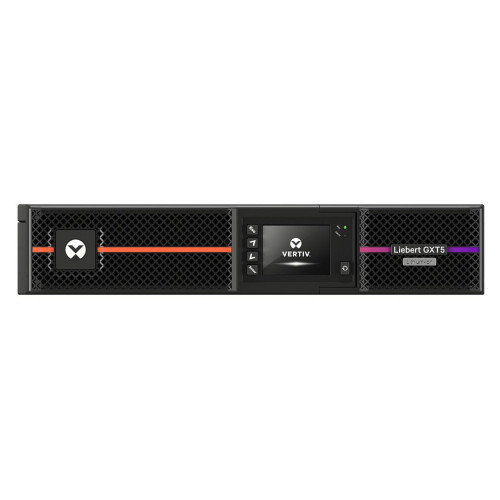
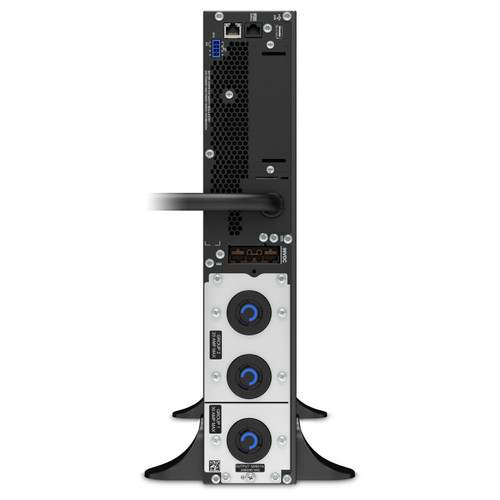
Both the Vertiv Liebert GXT5-3000LVRT2UXL and the APC Smart-UPS On-Line SRT3000XLT are 3000VA / 2700W online double-conversion rack-mount UPS units targeting server rooms, network closets, and IT infrastructure requiring zero-transfer-time power protection. While they share the same VA/W rating and topology, they diverge significantly on input/output voltage (120V vs. 208V), outlet configurations, noise levels, and management ecosystems — making this a meaningful side-by-side for buyers whose facility voltage and integration requirements differ.
In This Guide
- How do the input/output voltage, outlet mix, and power quality specs compare?
- How do battery architecture, runtime extensibility, and recharge specs differ?
- What connectivity, network management, and environmental monitoring capabilities does each unit offer?
- Which should you choose: the GXT5-3000LVRT2UXL or the SRT3000XLT?
- Side-by-Side Specs
- FAQ
How do the input/output voltage, outlet mix, and power quality specs compare?
The Vertiv GXT5-3000LVRT2UXL is designed for 120V AC infrastructure. Its NEMA L5-30P input accepts 60–150V AC and its seven outlets — one NEMA L5-30R twist-lock and six NEMA 5-20R standard receptacles — serve standard North American 120V equipment directly. Output voltage is user-configurable at 110, 115, 120, or 125 VAC ±3%, and output frequency in battery mode is held to ±0.1 Hz. Power factor is 0.9, matching the 3000VA / 2700W rating.
The APC SRT3000XLT operates on 208V AC infrastructure, with a NEMA L6-20P input that also accepts 240V. Its output — two NEMA L6-20R receptacles and one NEMA L6-30R — is configurable for 208V or 240V nominal. It shares the same 3000VA / 2700W capacity and online double-conversion topology. Harmonic distortion is specified at less than 2%; crest factor is rated 3:1. Output frequency synchronizes to mains at ±3 Hz.
These two units are not interchangeable on voltage: the GXT5-3000LVRT2UXL is a 120V product and the SRT3000XLT is a 208/240V product. Buyers must match the UPS to their facility's branch circuit voltage. The Vertiv offers more outlet count (7 vs. 3) and finer frequency regulation in battery mode (±0.1 Hz vs. ±3 Hz sync-to-mains), while the APC specifies explicit harmonic distortion (<2%) — a figure not provided in the Vertiv spec sheet.
How do battery architecture, runtime extensibility, and recharge specs differ?
Both units use valve-regulated lead-acid (VRLA) batteries and advertise approximately 3 hours to recharge. The Vertiv GXT5-3000LVRT2UXL uses hot-swappable VRLA batteries and supports runtime scaling through external battery cabinets (EBCs). It includes temperature-compensated charging and end-of-life battery detection. Specific internal battery voltage and VAh capacity are not listed in the provided specifications.
The APC SRT3000XLT ships with one included battery module at 96V / 497 VAh and supports up to ten SRT96BP external battery packs, scaling total runtime capacity to a documented maximum of 10,437 VAh. Battery life is estimated at 3–5 years, and the replacement battery is identified as APCRBC152 / SRT96RMBPUS. Battery charge power is rated at 165W.
The APC provides significantly more granular runtime extensibility data — eight documented expansion steps with specific VAh values per pack — giving buyers precise runtime planning capability. The Vertiv's EBC scalability is confirmed but not quantified in the provided spec sheet. Both offer hot-swap capability; the Vertiv explicitly states this, while the APC's modular battery architecture implies it. Buyers requiring documented, pre-engineered runtime tables will find the APC spec more immediately useful for project design.
What connectivity, network management, and environmental monitoring capabilities does each unit offer?
The Vertiv GXT5-3000LVRT2UXL provides USB and RS-232 serial ports as standard interfaces. Network management is available via optional Intellislot expansion cards supporting SNMP, Modbus, and BACnet — protocols relevant to IT network management, building automation, and industrial control environments respectively. The unit includes a front-panel LCD for local status and configuration. Management software compatibility includes Vertiv Environet and the open-source NUT (Network UPS Tools). Load segmentation is available through programmable outlet groups with independent control. An Emergency Power Off (EPO) input is included.
The APC SRT3000XLT specification as provided does not enumerate USB, serial, or network management card slots beyond noting one free expansion slot. Audible and visible alarms with severity prioritization are specified. The IP protection rating is IP20. Specific management software compatibility, SNMP card options, or EPO provisions are not listed in the provided specifications.
Based on the specifications provided, the Vertiv carries a more fully documented management stack: named expansion card protocols (SNMP, Modbus, BACnet), named software platforms, programmable outlet group control, and an EPO input. The APC's one free expansion slot suggests network card compatibility consistent with the broader Smart-UPS On-Line SRT platform, but those details are absent from the provided spec data and cannot be assumed for this comparison.
Which should you choose: the GXT5-3000LVRT2UXL or the SRT3000XLT?
Our take: The GXT5-3000LVRT2UXL is the stronger choice when the installation runs on 120V AC branch circuits and requires granular management protocol support — specifically SNMP, Modbus, or BACnet via Intellislot — along with programmable outlet group control and an EPO input. Key spec deltas: the Vertiv operates at 120V with 7 outlets (vs. the APC's 208/240V with 3 outlets), its battery-mode frequency regulation is tighter at ±0.1 Hz versus the APC's ±3 Hz sync-to-mains, and its audible noise is rated at less than 45 dBA versus the APC's 55 dBA. The SRT3000XLT is the appropriate selection for 208/240V three-phase-derived or high-density data center circuits, and its eight documented SRT96BP expansion steps provide quantified runtime planning the Vertiv spec sheet does not match. Choose the Vertiv for 120V IT closets with building-automation or open-source NMS requirements; choose the APC for 208V data center rows requiring documented, scalable runtime tables.
Side-by-Side Comparison
Spec-for-spec, from manufacturer data.
| Specification | Vertiv GXT5-3000LVRT2UXL | APC by Schneider Electric SRT3000XLT |
|---|---|---|
| UPS Topology | Online Double-Conversion | Online Double-Conversion |
| Capacity (VA / W) | 3000VA / 2700W | 3000VA / 2700W |
| Power Factor | 0.9 | Not specified |
| Input Voltage | 120V AC (range 60–150V) | 208V AC (also accepts 240V) |
| Input Connection | NEMA L5-30P | NEMA L6-20P |
| Output Voltage | 110/115/120/125 VAC (configurable) ±3% | 208V or 240V (configurable) |
| Output Connections | 1× NEMA L5-30R, 6× NEMA 5-20R | 2× NEMA L6-20R, 1× NEMA L6-30R |
| Total Outlets | 7 | 3 |
| Output Freq. Regulation (Battery) | ±0.1 Hz | ±3 Hz (sync to mains) |
| Harmonic Distortion | Not specified | <2% |
| Battery Type | VRLA, hot-swappable | Lead-Acid (modular) |
| Typical Recharge Time | ~3 hours to 90% | ~3 hours |
| Runtime Extensibility | External Battery Cabinets (EBCs); capacity not quantified in spec | Up to 10× SRT96BP packs; max 10,437 VAh documented |
| Audible Noise | <45 dBA at 1 m | 55 dBA |
| Form Factor / Rack Height | Rack/Tower convertible, 2U | Rack-mounted with kit (rack height not specified in provided data) |
| Weight | 66 lbs (30 kg) | 69 lbs (31.3 kg) |
| Management Interfaces | USB, RS-232; optional Intellislot (SNMP, Modbus, BACnet) | 1 free expansion slot; specific protocols not listed in provided spec |
| Certifications / Compliance | TAA, Energy Star 2.0, UL 1778, FCC Part 15 Class A, CE | Not specified in provided data |
| Warranty | 3-year advanced replacement | Not specified in provided data |
| EPO Input | Yes | Not specified in provided data |
Frequently Asked Questions
Which should you choose: the GXT5-3000LVRT2UXL or the SRT3000XLT?
The GXT5-3000LVRT2UXL is the stronger choice when the installation runs on 120V AC branch circuits and requires granular management protocol support — specifically SNMP, Modbus, or BACnet via Intellislot — along with programmable outlet group control and an EPO input. Key spec deltas: the Vertiv operates at 120V with 7 outlets (vs. the APC's 208/240V with 3 outlets), its battery-mode frequency regulation is tighter at ±0.1 Hz versus the APC's ±3 Hz sync-to-mains, and its audible noise is rated at less than 45 dBA versus the APC's 55 dBA. The SRT3000XLT is the appropriate selection for 208/240V three-phase-derived or high-density data center circuits, and its eight documented SRT96BP expansion steps provide quantified runtime planning the Vertiv spec sheet does not match. Choose the Vertiv for 120V IT closets with building-automation or open-source NMS requirements; choose the APC for 208V data center rows requiring documented, scalable runtime tables.
Can I use either of these UPS units on a standard 120V office circuit?
Only the Vertiv GXT5-3000LVRT2UXL is rated for 120V AC input (range 60–150V, NEMA L5-30P plug). The APC SRT3000XLT requires a 208V or 240V input circuit (NEMA L6-20P plug) and is not compatible with standard 120V branch circuits.
Which unit gives me better options for extending battery runtime for longer outages?
The APC SRT3000XLT provides eight documented external battery pack configurations (SRT96BP × 1–10) with specific VAh values per step, reaching up to 10,437 VAh. The Vertiv GXT5-3000LVRT2UXL supports runtime extension via external battery cabinets (EBCs), but the provided specifications do not list the number of supported EBCs or their VAh ratings. Buyers who need pre-engineered runtime tables for project design will find the APC's published expansion data more immediately usable.
Which UPS integrates better with network management systems and building automation?
Based on the provided specifications, the Vertiv GXT5-3000LVRT2UXL has a more fully documented management ecosystem: optional Intellislot cards cover SNMP, Modbus, and BACnet, and the unit is named-compatible with Vertiv Environet and open-source NUT. The APC SRT3000XLT specification as provided notes one free expansion slot but does not detail supported protocols or named software platforms for this SKU, so a direct comparison on that dimension cannot be made from the available data.
More UPS Comparisons
- APC by Schneider Electric SMT3000RMI2U vs Vertiv GXT5-3000LVRT2UXL
- APC by Schneider Electric SMT3000RMI2U vs Panduit U03N11L
- APC by Schneider Electric SMT3000RMI2U vs Panduit U03N12L
- APC by Schneider Electric SMT3000RMI2U vs Panduit U03S12V
- APC by Schneider Electric SMT3000RMI2U vs APC by Schneider Electric SRT3000XLT
- APC by Schneider Electric SMT3000RMI2U vs APC by Schneider Electric SRT3000XLW-IEC
UPS Buying Guides
Get a Second Opinion on Your Camera Choice
Share your site layout, coverage goals, and budget. Our team will validate the camera selection, flag anything we would change, and recommend products that match the use case.