
APC by Schneider Electric SUA3000RMXLI3U vs Panduit U03N12L: Specification Comparison
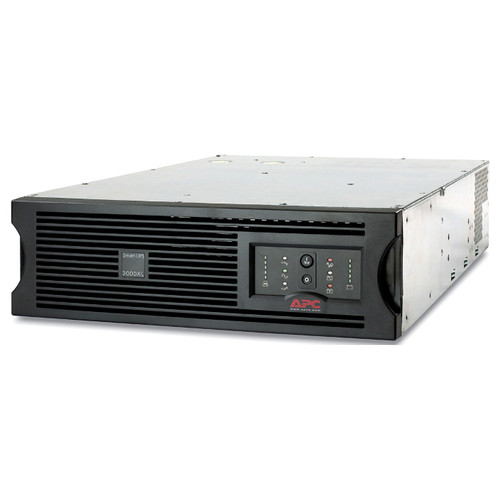
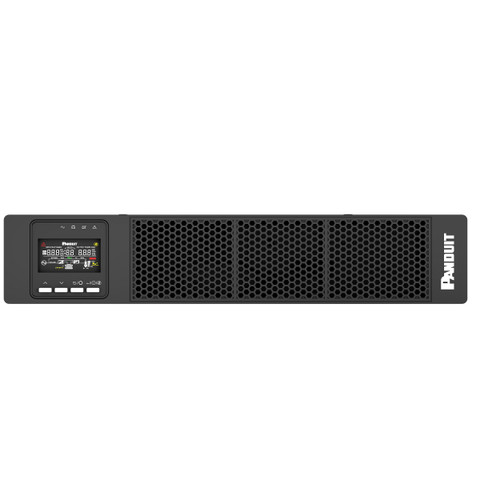
Both the APC Smart-UPS XL SUA3000RMXLI3U and the Panduit SteadySine U03N12L are 3000VA / 2700W rackmount uninterruptible power supplies targeting IT infrastructure and data-center environments. They share the same VA/watt rating and both deliver sine-wave output, making them genuine cross-shop candidates for buyers evaluating protected power at this capacity tier. The comparison examines runtime and battery design, output quality and electrical characteristics, and management and integration capabilities — the three axes most consequential to a rack-power purchasing decision.
In This Guide
- Which UPS offers better runtime flexibility and battery serviceability?
- How do the two units compare on output quality, transfer speed, and input tolerance?
- Which unit provides more capable remote monitoring and integration options?
- Which should you choose: the SUA3000RMXLI3U or the U03N12L?
- Side-by-Side Specs
- FAQ
Which UPS offers better runtime flexibility and battery serviceability?
The SUA3000RMXLI3U specifies a documented full-load runtime of 5.4 minutes and a recharge time of 3 hours, with an internal sealed lead-acid battery and a 3U chassis. APC does not specify hot-swap capability in the provided specs; the battery enclosure type is listed as internal with no hot-swap notation.
The U03N12L specifies a hot-swappable sealed lead-acid battery, which allows battery replacement without powering down the connected load — a meaningful operational advantage in environments that cannot tolerate planned downtime. Panduit does not provide a rated full-load runtime figure or a recharge time in the supplied specifications, so direct runtime comparison is not possible from the data provided.
For environments where continuous uptime during battery maintenance is critical, the U03N12L's documented hot-swap capability is a concrete differentiator. For environments where exact runtime at full load must be contractually specified or pre-planned, the APC's 5.4-minute figure provides that certainty while the Panduit's runtime remains unspecified in these specs.
How do the two units compare on output quality, transfer speed, and input tolerance?
Both units deliver 3000VA / 2700W at identical real power output. Output waveform terminology differs: APC lists 'Sinewave' while Panduit specifies 'Pure Sine Wave' and adds a Total Harmonic Distortion figure of less than 3% at full load. APC does not provide a THD figure in the supplied specs.
Transfer time is a critical electrical characteristic for sensitive loads. The U03N12L specifies a transfer time of less than 1 millisecond. APC does not provide a transfer time figure in the supplied specifications — buyers with sub-millisecond transfer requirements must verify this independently for the SUA3000RMXLI3U.
Input voltage range for AVR operation is nearly identical: APC specifies 160–286 V (with an adjustable range of 151–302 V), while Panduit specifies 160–290 V. The U03N12L also documents a power factor correction of 0.99 (typical), which reduces reactive current draw on upstream circuits. APC does not state an input power factor figure. APC specifies a surge energy rating of 480 joules and circuit breaker protection; Panduit provides no surge joule rating in the supplied specs.
Which unit provides more capable remote monitoring and integration options?
The SUA3000RMXLI3U provides two local management interfaces — RS-232 (DB-9) and USB — plus one SmartSlot expansion bay that accepts optional APC management cards. Bundled cables include serial and USB. Software utilities are included. The unit also supports audible alarms and LED indicators for local status awareness. Sound emission is rated at 53 dBA.
The U03N12L includes a network management card slot supporting SNMP, enabling direct network-based monitoring without an add-on card purchase — SNMP capability is built into the slot design as specified. It also provides an LCD front panel displaying real-time load and runtime. Panduit does not specify local RS-232 or USB ports, bundled cables, or software utilities in the provided specs.
For IT environments already running SNMP-based network management platforms (NMS, DCIM), the U03N12L's network card slot is a meaningful integration point. For environments standardized on APC's PowerChute software ecosystem or requiring RS-232 serial access, the SUA3000RMXLI3U's native RS-232 and SmartSlot ecosystem are directly relevant. Neither unit's network management card is included in-box based on the specs as provided — both require separate card procurement for full network management.
Which should you choose: the SUA3000RMXLI3U or the U03N12L?
Our take: The SUA3000RMXLI3U is the stronger choice when documented runtime figures, RS-232/USB local management, and integration into APC's PowerChute and SmartSlot ecosystem are required. It specifies a confirmed 5.4-minute full-load runtime, a 480-joule surge rating, and two native management interfaces versus no documented runtime or surge joule rating from Panduit. Conversely, the U03N12L is preferable when battery serviceability under load is non-negotiable: its hot-swap battery is a concrete operational advantage the APC does not claim. The U03N12L also specifies a sub-1ms transfer time and less than 3% THD — metrics absent from the APC spec sheet — which matter for sensitive switching or high-efficiency PSU loads. The U03N12L also saves 1U of rack space at 2U versus 3U. Buyers on APC-standardized sites or needing contractual runtime data favor the SUA3000RMXLI3U; data center and enterprise edge deployments prioritizing zero-downtime battery service and SNMP-native management favor the U03N12L.
Side-by-Side Comparison
Spec-for-spec, from manufacturer data.
| Specification | APC by Schneider Electric SUA3000RMXLI3U | Panduit U03N12L |
|---|---|---|
| VA / Watt Rating | 3000VA / 2700W | 3000VA / 2700W |
| Rack Height | 3U | 2U |
| UPS Technology | Line interactive | Not specified in provided specs |
| Output Waveform | Sinewave | Pure Sine Wave |
| Total Harmonic Distortion | — | <3% at full load |
| Transfer Time | — | <1ms |
| Input Voltage Range (AVR) | 160–286V (adj. 151–302V) | 160–290V |
| Input Power Factor Correction | — | 0.99 (typical) |
| Battery Type | Internal sealed lead-acid | Hot-swappable sealed lead-acid |
| Full-Load Runtime | 5.4 min | — |
| Battery Recharge Time | 3 hours | — |
| Surge Energy Rating | 480 joules | — |
| Circuit Protection | Circuit breaker | — |
| Local Management Interfaces | RS-232 (DB-9), USB | — |
| Network / Remote Management | SmartSlot (optional card) | Network management card slot (SNMP) |
| Front Panel Display | LED indicators | LCD (real-time load and runtime) |
| Expansion Slot | 1x SmartSlot | Network management card slot |
| Warranty | Limited – 2 years | — |
| Sound Emission | 53 dBA | — |
| Output Connectors | 1x IEC C19, 8x IEC C13 | — |
| Operating Temperature (Max) | 104°F | — |
| Operating Humidity | 0–95% | — |
Frequently Asked Questions
Which should you choose: the SUA3000RMXLI3U or the U03N12L?
The SUA3000RMXLI3U is the stronger choice when documented runtime figures, RS-232/USB local management, and integration into APC's PowerChute and SmartSlot ecosystem are required. It specifies a confirmed 5.4-minute full-load runtime, a 480-joule surge rating, and two native management interfaces versus no documented runtime or surge joule rating from Panduit. Conversely, the U03N12L is preferable when battery serviceability under load is non-negotiable: its hot-swap battery is a concrete operational advantage the APC does not claim. The U03N12L also specifies a sub-1ms transfer time and less than 3% THD — metrics absent from the APC spec sheet — which matter for sensitive switching or high-efficiency PSU loads. The U03N12L also saves 1U of rack space at 2U versus 3U. Buyers on APC-standardized sites or needing contractual runtime data favor the SUA3000RMXLI3U; data center and enterprise edge deployments prioritizing zero-downtime battery service and SNMP-native management favor the U03N12L.
Can I replace the battery without shutting down my equipment?
Only the Panduit U03N12L explicitly specifies a hot-swappable battery in the provided specifications, meaning battery replacement can be performed without powering down connected equipment. The APC SUA3000RMXLI3U lists an internal battery with no hot-swap notation in its supplied specs — buyers requiring confirmed hot-swap capability should verify this with APC directly before purchasing.
Which unit integrates better with an existing SNMP network management system?
The Panduit U03N12L includes a network management card slot with SNMP support as a specified feature, enabling integration with SNMP-based NMS or DCIM platforms via that slot. The APC SUA3000RMXLI3U provides RS-232 and USB interfaces natively, plus a SmartSlot that can accept optional APC network management cards — SNMP capability on the APC unit requires purchasing a separate SmartSlot card, which is not included per the supplied specs.
How much rack space does each unit consume, and does that matter for my deployment?
The APC SUA3000RMXLI3U occupies 3U of rack space; the Panduit U03N12L occupies 2U. In a densely populated rack or a deployment with many UPS units, the 1U difference per unit is meaningful. Both units are 3000VA / 2700W, so the Panduit delivers the same rated power output in a smaller rack footprint based on the specifications provided.
More UPS Comparisons
- APC by Schneider Electric SMT3000RMI2U vs Vertiv GXT5-3000LVRT2UXL
- APC by Schneider Electric SMT3000RMI2U vs Panduit U03N11L
- APC by Schneider Electric SMT3000RMI2U vs Panduit U03N12L
- APC by Schneider Electric SMT3000RMI2U vs Panduit U03S12V
- APC by Schneider Electric SMT3000RMI2U vs APC by Schneider Electric SRT3000XLT
- APC by Schneider Electric SMT3000RMI2U vs APC by Schneider Electric SRT3000XLW-IEC
UPS Buying Guides
Get a Second Opinion on Your Camera Choice
Share your site layout, coverage goals, and budget. Our team will validate the camera selection, flag anything we would change, and recommend products that match the use case.