
APC by Schneider Electric SUA3000RMXLI3U vs Panduit U03N11L: Specification Comparison
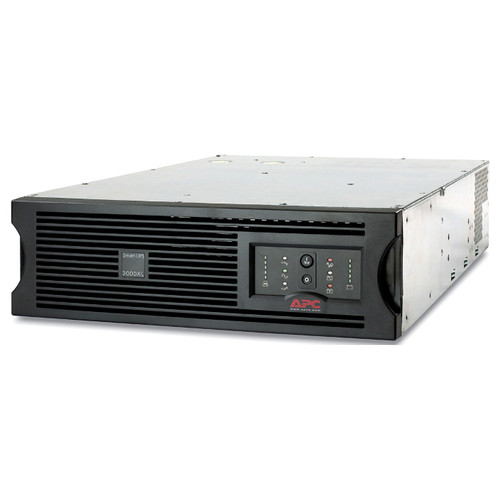
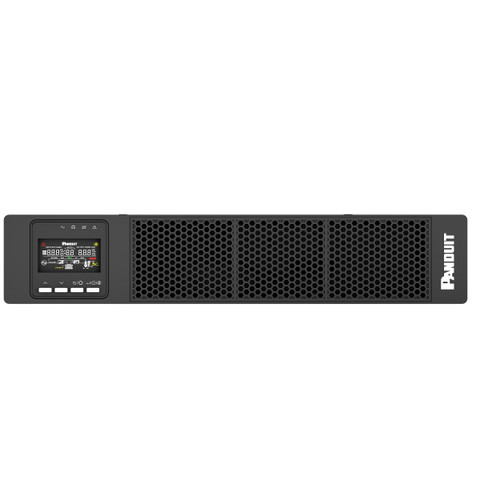
Both the APC Smart-UPS XL SUA3000RMXLI3U and the Panduit SteadyPulse U03N11L are rack-mount, line-interactive UPS units rated at 3000VA/2700W, placing them squarely in the same power-protection class for small server rooms, network closets, and surveillance head-end equipment. This comparison evaluates the three dimensions most critical to a systems integrator choosing between them: power delivery and output compatibility, physical integration and battery serviceability, and remote management capability.
In This Guide
- Which UPS delivers the right output voltage, waveform, and protection for your equipment?
- How do rack footprint, battery runtime, and field serviceability compare?
- Which unit offers better remote monitoring, alerting, and integration options?
- Which should you choose: the SUA3000RMXLI3U or the U03N11L?
- Side-by-Side Specs
- FAQ
Which UPS delivers the right output voltage, waveform, and protection for your equipment?
The SUA3000RMXLI3U is rated for 230V AC output (220/230/240V ± 5%) and accepts a wide input range of 160–286V (adjustable 151–302V), making it purpose-built for international/European power infrastructure. Its output waveform is a true sinewave, which is required for active-PFC power supplies common in servers and network appliances. It provides nine output receptacles: one IEC 60320 C19 (20A) and eight IEC 60320 C13 (15A), and its surge energy rating is a specified 480 joules.
The U03N11L is rated for 120V AC input (typical), with an input connection of NEMA L5-30P or hardwire—a North American power infrastructure standard incompatible with the APC's 230V environment. Output receptacles are IEC C13 (quantity unspecified in the provided specs). Surge protection is listed as 480–600J per bank (typical range, not a fixed datasheet value). Output waveform is not specified in the provided specs. This voltage incompatibility is the single most critical differentiator: these two units cannot be interchanged on the same branch circuit.
How do rack footprint, battery runtime, and field serviceability compare?
The SUA3000RMXLI3U occupies 3U of rack space in a standard 19-inch rack and weighs 139.33 lbs. Battery is internal (non-hot-swap per the provided specs) and recharges in 3 hours. At full load, runtime is specified at 5.4 minutes—typical for an internal-battery-only configuration; extended runtime requires external battery packs. The unit ships with a rack mounting kit included.
The U03N11L occupies 2U at 3.4 inches tall and 17.3 inches wide, offering a one-rack-unit space advantage over the APC. A key differentiator is its hot-swappable, front-access battery, which allows battery replacement without powering down connected equipment—a meaningful serviceability advantage in always-on environments. Runtime figures are not specified in the provided specs. The 1U rack-space savings may matter in dense installations.
Which unit offers better remote monitoring, alerting, and integration options?
The SUA3000RMXLI3U provides RS-232 (DB-9) and USB management interfaces as standard, included out of the box. It also features one SmartSlot expansion bay, which accepts APC's proprietary network management cards (SNMP, HTTP, environmental monitoring) sold separately. Software included covers drivers and utilities. The unit has audible alarms and LED indicators for local status. Sound emission is specified at 53 dBA.
The U03N11L includes a front-panel LCD display showing voltage, load, runtime, and faults—a local status advantage the APC lacks. Network management (SNMP/HTTP) is available via an optional card slot, comparable in concept to APC's SmartSlot but not cross-compatible. Standard RS-232 or USB management ports are not explicitly confirmed in the provided specs. Compliance is listed as cULus Listed and FCC Part 15 Class A; the APC carries C-Tick, GOST, UL 1449, VDE, EN 50091-1, and EN 50091-2.
Which should you choose: the SUA3000RMXLI3U or the U03N11L?
Our take: The SUA3000RMXLI3U is the stronger choice when the installation is on a 230V AC infrastructure and requires certified international compliance. The voltage mismatch is disqualifying: the APC outputs 220/230/240V AC while the Panduit U03N11L is configured for 120V AC—these units serve different regional power grids and cannot substitute for each other. Beyond voltage, the APC specifies a true sinewave output (critical for active-PFC loads), a defined 480J surge rating, and a factory-specified 5.4-minute full-load runtime, whereas the Panduit's surge rating is a typical range (480–600J) and runtime is unspecified. Conversely, the U03N11L's hot-swappable front-access battery and front-panel LCD give it a serviceability and local-visibility edge, and it saves 1U of rack space. Platform qualifier: specify the APC for 230V European/international deployments; specify the Panduit for 120V North American installations where battery hot-swap and LCD status are priorities.
Side-by-Side Comparison
Spec-for-spec, from manufacturer data.
| Specification | APC by Schneider Electric SUA3000RMXLI3U | Panduit U03N11L |
|---|---|---|
| Rated Capacity | 3000VA / 2700W | 3000VA / 2700W |
| UPS Topology | Line-Interactive | Line-Interactive with AVR |
| Input Voltage | AC 220/230/240V | 120V AC (typical) |
| Input Voltage Range | AC 160–286V (adj. 151–302V) | Not specified |
| Output Voltage | AC 220/230/240V ± 5% | Not specified |
| Output Waveform | Sinewave | Not specified |
| Form Factor | 3U Rack-Mount | 2U Rack-Mount |
| Output Receptacles | 1x C19, 8x C13 | IEC C13 (qty not specified) |
| Surge Energy Rating | 480J | 480–600J per bank (typical) |
| Battery Type | Internal Lead-Acid | Sealed Lead-Acid, Hot-Swappable |
| Runtime at Full Load | 5.4 min | Not specified |
| Recharge Time | 3 hours | Not specified |
| Local Management | RS-232 (DB-9), USB | Front-Panel LCD; RS-232/USB not confirmed |
| Network Management | Optional via SmartSlot | Optional via card slot |
| Compliance | C-Tick, GOST, UL 1449, VDE, EN 50091-1/2 | cULus Listed, FCC Part 15 Class A |
| Warranty | Limited — 2 years | Manufacturer warranty (duration not specified) |
Frequently Asked Questions
Which should you choose: the SUA3000RMXLI3U or the U03N11L?
The SUA3000RMXLI3U is the stronger choice when the installation is on a 230V AC infrastructure and requires certified international compliance. The voltage mismatch is disqualifying: the APC outputs 220/230/240V AC while the Panduit U03N11L is configured for 120V AC—these units serve different regional power grids and cannot substitute for each other. Beyond voltage, the APC specifies a true sinewave output (critical for active-PFC loads), a defined 480J surge rating, and a factory-specified 5.4-minute full-load runtime, whereas the Panduit's surge rating is a typical range (480–600J) and runtime is unspecified. Conversely, the U03N11L's hot-swappable front-access battery and front-panel LCD give it a serviceability and local-visibility edge, and it saves 1U of rack space. Platform qualifier: specify the APC for 230V European/international deployments; specify the Panduit for 120V North American installations where battery hot-swap and LCD status are priorities.
Can I use either the SUA3000RMXLI3U or the U03N11L on the same 120V US power circuit?
No. The SUA3000RMXLI3U is designed for 220/230/240V AC input and output—it is not rated for 120V North American circuits per its specifications. The U03N11L is configured for 120V AC with a NEMA L5-30P or hardwire input, making it the correct choice for standard US installations. Using the wrong unit on the wrong voltage infrastructure risks equipment damage and voids compliance.
Which UPS is easier to service in a live rack without downtime?
The Panduit U03N11L specifies a hot-swappable, front-access battery, meaning batteries can be replaced without shutting down connected equipment. The APC SUA3000RMXLI3U's provided specifications describe an internal battery enclosure with no mention of hot-swap capability. For environments where battery maintenance without downtime is a requirement, the U03N11L has a documented advantage on this point.
Does either UPS include network management out of the box, or do I need to budget for an add-on card?
Neither unit includes a network management card as standard. The SUA3000RMXLI3U includes RS-232 and USB local management interfaces and one SmartSlot bay for an optional APC network card. The U03N11L provides an optional network card slot for SNMP/HTTP management. Both require a separately purchased card for remote SNMP/web monitoring. The APC does include RS-232 and USB connectivity as standard; equivalent local ports are not explicitly confirmed in the Panduit's provided specifications.
More UPS Comparisons
- APC by Schneider Electric SMT3000RMI2U vs Vertiv GXT5-3000LVRT2UXL
- APC by Schneider Electric SMT3000RMI2U vs Panduit U03N11L
- APC by Schneider Electric SMT3000RMI2U vs Panduit U03N12L
- APC by Schneider Electric SMT3000RMI2U vs Panduit U03S12V
- APC by Schneider Electric SMT3000RMI2U vs APC by Schneider Electric SRT3000XLT
- APC by Schneider Electric SMT3000RMI2U vs APC by Schneider Electric SRT3000XLW-IEC
UPS Buying Guides
Get a Second Opinion on Your Camera Choice
Share your site layout, coverage goals, and budget. Our team will validate the camera selection, flag anything we would change, and recommend products that match the use case.