
APC by Schneider Electric SRT6KXLT-5KTF vs Vertiv GXT5LI-6000MVRT3UXLN: Specification Comparison
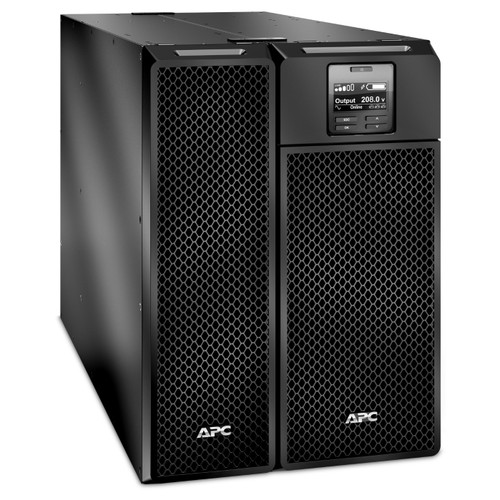
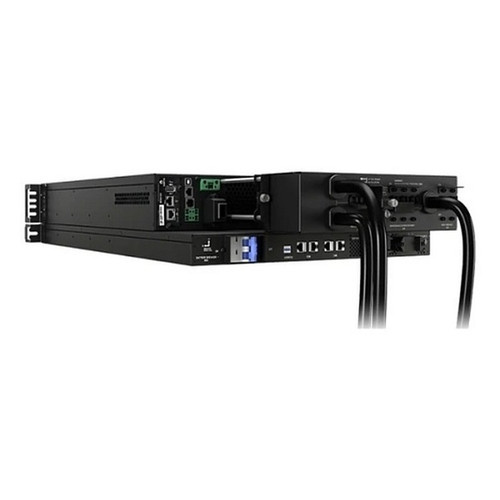
Both units are 6000VA double-conversion online UPS systems designed for rack/tower deployments in data center, telecom, and critical infrastructure environments. The APC Smart-UPS SRT SRT6KXLT-5KTF pairs its 6000VA/6000W capacity with an integrated 208/240V-to-120V step-down transformer, while the Vertiv GXT5 GXT5LI-6000MVRT3UXLN is a lithium-ion-based 6000VA/6000W unit with hardwired input and user-configurable output voltage. Installers and IT buyers evaluating either model will weigh power handling, battery chemistry and environmental specs, and management/integration capabilities.
In This Guide
- How do the SRT6KXLT-5KTF and GXT5LI-6000MVRT3UXLN compare on power capacity, voltage flexibility, and input tolerance?
- What do the battery chemistry, physical footprint, and operating environment specs reveal about deployment suitability?
- How do the two units differ in management interfaces, certifications, and site-integration features?
- Which should you choose: the SRT6KXLT-5KTF or the GXT5LI-6000MVRT3UXLN?
- Side-by-Side Specs
- FAQ
How do the SRT6KXLT-5KTF and GXT5LI-6000MVRT3UXLN compare on power capacity, voltage flexibility, and input tolerance?
Both units deliver identical nameplate capacity: 6000VA and 6000W, yielding a unity power factor (1.0) on both. The APC SRT6KXLT-5KTF accepts input from 100V to 275V across a 40–70 Hz frequency range, offering unusually wide input voltage tolerance that suits sites with unstable utility feeds or international equipment. Its output covers 120V to 240V. The integrated step-down transformer is a key differentiator: the SRT6KXLT-5KTF allows 208/240V input circuits to feed 120V loads without a separate transformer, simplifying deployments in mixed-voltage data halls.
The Vertiv GXT5LI-6000MVRT3UXLN accepts 120V or 240V input (hardwired, L1/L2/N/G) and provides 120V/208V output, with the output voltage user-configurable to 120V/240V. Input voltage range extremes and accepted frequency band are not specified in the provided Vertiv data. Surge energy rating is specified for the APC at 480 joules with active surge protection; no surge energy figure is provided for the Vertiv. The APC additionally lists a 3:1 crest factor and 2% input current THD, neither of which is documented in the Vertiv specifications provided.
What do the battery chemistry, physical footprint, and operating environment specs reveal about deployment suitability?
Battery chemistry is a major differentiator. The Vertiv GXT5LI-6000MVRT3UXLN uses lithium-ion (Li-Ion) cells and pack, as evidenced by its UL 1642 and UL 1973 certifications for Li-Ion components. Li-Ion chemistry typically offers longer service life, lower weight-per-capacity, and faster recharge versus traditional VRLA. The APC SRT6KXLT-5KTF battery chemistry is not stated in the provided specifications.
Physically, the Vertiv's dimensions are documented: 5.2 in H × 16.9 in W × 35 in D, weight 100 lbs, in a 3U rack/tower form factor (per SKU suffix MVRT3U). The APC's physical dimensions and weight are not provided in the supplied spec data. Operating temperature for the Vertiv is 32°F–104°F (0°C–40°C), with a 10% derating note at 50°C; the APC's operating temperature range is not specified. The APC does document a 55 dB noise level; no acoustic rating is provided for the Vertiv.
How do the two units differ in management interfaces, certifications, and site-integration features?
The APC SRT6KXLT-5KTF includes web-based management, audible alarms, auto-restart, and Emergency Power Off (EPO) — all confirmed in the provided specs. EPO is a critical requirement for NEC 645.11-compliant IT room installations. Web-based management enables direct SNMP/browser monitoring without an add-on card, though the specific network interface type is not listed in the provided data.
The Vertiv GXT5LI-6000MVRT3UXLN lists Serial Port, USB, and Network RJ-45 (via optional RDU101 card) as interface options. Certifications are extensively documented: UL 1778, c-UL, CSA 22.2 No. 107.3, FCC Part 15 Class A, and Energy Star 2.0. Whether the Vertiv includes EPO, audible alarms, web-based management as standard (without the RDU101), or auto-restart is not stated in the provided specifications. The APC carries no equivalent certification list in the provided data, so direct compliance comparison is not possible from specs alone.
Which should you choose: the SRT6KXLT-5KTF or the GXT5LI-6000MVRT3UXLN?
Our take: The SRT6KXLT-5KTF is the stronger choice when input voltage flexibility, integrated step-down transformation, and documented EPO compliance are required. Its 100–275V input range and 40–70Hz frequency window cover a wider set of utility and generator conditions than the Vertiv's spec sheet addresses; its built-in 208/240V-to-120V transformer eliminates a separate device cost in mixed-voltage racks; and its confirmed EPO and 2% input THD support strict data-center wiring standards. The GXT5LI-6000MVRT3UXLN counters with Li-Ion battery chemistry — delivering longer cell life and typically faster recharge — plus an Energy Star 2.0 rating and documented 3U physical footprint (5.2 in H, 35 in D, 100 lbs) useful for rack-space planning. Buyers prioritizing battery longevity, energy efficiency certification, or hardwired 208V input with configurable output should evaluate the Vertiv; those needing transformer-integrated 120V output and the widest input tolerance should favor the APC.
Side-by-Side Comparison
Spec-for-spec, from manufacturer data.
| Specification | APC by Schneider Electric SRT6KXLT-5KTF | Vertiv GXT5LI-6000MVRT3UXLN |
|---|---|---|
| UPS Topology | Double-conversion (Online) | Double-Conversion Online |
| Output Capacity (VA) | 6000 VA | 6000 VA |
| Output Power (W) | 6000 W | 6000 W |
| Power Factor | 1.0 (6000W / 6000VA) | 1.0 (6000W / 6000VA) |
| Battery Chemistry | — | Lithium-Ion (Li-Ion) |
| Input Voltage Range | 100 V – 275 V | 120V or 240V (hardwired) |
| Input Frequency | 40 – 70 Hz | — |
| Output Voltage Range | 120 V – 240 V | 120V/208V (user-configurable to 120V/240V) |
| Integrated Step-Down Transformer | Yes (208/240V to 120V) | — |
| Wiring / Connection | — | Hardwired (L1, L2, N, G) |
| Surge Energy Rating | 480 J | — |
| Input Current THD | 2% | — |
| Crest Factor | 3:1 | — |
| Emergency Power Off (EPO) | Yes | — |
| Management Interfaces | Web-based (built-in) | Serial, USB, Network RJ-45 (RDU101) |
| Noise Level | 55 dB | — |
| Operating Temperature | — | 32°F – 104°F (0°C – 40°C); derate 10% at 50°C |
| Dimensions (H × W × D) | — | 5.2 in × 16.9 in × 35 in |
| Weight | — | 100 lbs |
| Certifications | — | UL 1778, UL 1642, UL 1973, CSA 22.2 No. 107.3, FCC Part 15 Class A, Energy Star 2.0 |
| Audible Alarms | Yes | — |
| Auto-Restart | Yes | — |
| Waveform | Sine | — |
Frequently Asked Questions
Which should you choose: the SRT6KXLT-5KTF or the GXT5LI-6000MVRT3UXLN?
The SRT6KXLT-5KTF is the stronger choice when input voltage flexibility, integrated step-down transformation, and documented EPO compliance are required. Its 100–275V input range and 40–70Hz frequency window cover a wider set of utility and generator conditions than the Vertiv's spec sheet addresses; its built-in 208/240V-to-120V transformer eliminates a separate device cost in mixed-voltage racks; and its confirmed EPO and 2% input THD support strict data-center wiring standards. The GXT5LI-6000MVRT3UXLN counters with Li-Ion battery chemistry — delivering longer cell life and typically faster recharge — plus an Energy Star 2.0 rating and documented 3U physical footprint (5.2 in H, 35 in D, 100 lbs) useful for rack-space planning. Buyers prioritizing battery longevity, energy efficiency certification, or hardwired 208V input with configurable output should evaluate the Vertiv; those needing transformer-integrated 120V output and the widest input tolerance should favor the APC.
Is the SRT6KXLT-5KTF or GXT5LI-6000MVRT3UXLN better for a mixed-voltage data center with both 208V circuits and 120V loads?
Based on the provided specs, the SRT6KXLT-5KTF has a built-in 208/240V-to-120V step-down transformer, making it purpose-built for exactly that scenario — no external transformer required. The GXT5LI-6000MVRT3UXLN accepts 120V or 240V input and provides 120V/208V output (user-configurable to 120V/240V), but does not include an integrated step-down transformer per the provided specifications.
Does either UPS use lithium-ion batteries, and does it matter for a long-term deployment?
Yes — the Vertiv GXT5LI-6000MVRT3UXLN is certified under UL 1642 and UL 1973 for Li-Ion battery cells and pack, confirming lithium-ion chemistry. Li-Ion typically offers a longer service life and faster recharge than traditional VRLA batteries. The APC SRT6KXLT-5KTF's battery chemistry is not stated in the provided specifications, so a direct chemistry comparison cannot be made from the data supplied.
Which unit is easier to integrate with a building management system or data center infrastructure management (DCIM) platform?
The APC SRT6KXLT-5KTF confirms web-based management and EPO as standard features per the provided specs, with no mention of a required add-on card. The Vertiv GXT5LI-6000MVRT3UXLN lists Serial, USB, and Network RJ-45 interfaces, but the RJ-45 network option is tied to the optional RDU101 module. Whether native web management is included without that module is not stated in the provided Vertiv specifications. Buyers requiring out-of-box network management should verify with Vertiv whether the RDU101 is bundled with this SKU.
More UPS Comparisons
- APC by Schneider Electric SRT6KXLT vs Vertiv GXT5-6000RT208
- APC by Schneider Electric SRT6KXLT vs Vertiv GXT5LI-6000MVRT3UXLN
- APC by Schneider Electric SRT6KXLT vs Vertiv GXT5LI-6000GVRT3UXLN
- APC by Schneider Electric SRT6KXLT vs APC by Schneider Electric SRT6KRMXLI
- APC by Schneider Electric SRT6KXLT vs APC by Schneider Electric SRT6KRMXLIM
- APC by Schneider Electric SRT6KRMXLI vs Vertiv GXT5-6000RT208
UPS Buying Guides
Get a Second Opinion on Your Camera Choice
Share your site layout, coverage goals, and budget. Our team will validate the camera selection, flag anything we would change, and recommend products that match the use case.