
APC by Schneider Electric SRT6KXLT vs APC by Schneider Electric SRT6KRMXLIM: Specification Comparison
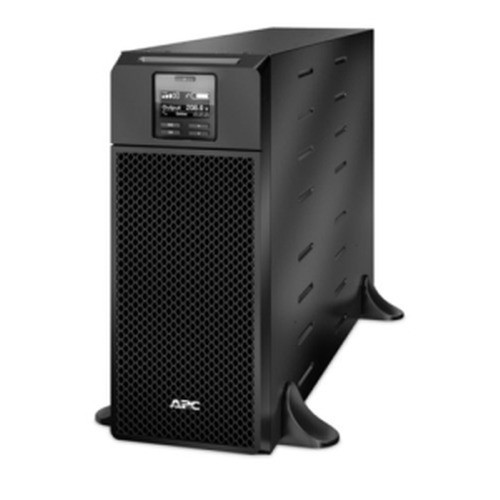
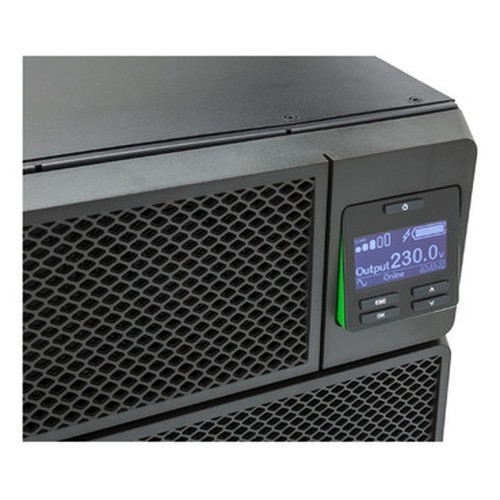
Both the SRT6KXLT and SRT6KRMXLIM are APC Smart-UPS On-Line double-conversion UPS units rated at 6000 VA / 6000 W, placing them in the same high-availability power protection class. The SRT6KXLT is a tower-form unit targeting 208 V North American installations with an embedded network management card, while the SRT6KRMXLIM is a rackmount marine-certified unit designed for 230 V international and marine environments. Both share the same online topology and waveform type, making them genuine cross-shop candidates for buyers evaluating input voltage compatibility, form factor, and environmental certification.
In This Guide
- Which model matches your site's input voltage and output requirements?
- How do form factor, environmental ratings, and certifications differ between these two units?
- Which unit offers better runtime extensibility, battery management, and remote monitoring?
- Which should you choose: the SRT6KXLT or the SRT6KRMXLIM?
- Side-by-Side Specs
- FAQ
Which model matches your site's input voltage and output requirements?
The SRT6KXLT accepts 208 V AC (1-phase) or 240 V AC (1-phase) input via a hard-wire 3-wire (2PH + G) connection and delivers 208 V or 240 V output through the same hard-wire connection type. Its input frequency range is 40–70 Hz with auto-sensing, and its output frequency is 50/60 Hz ±3 Hz synchronized to mains. This positions it squarely for North American 208 V facilities such as data centers, server rooms, or industrial panels wired for that standard.
The SRT6KRMXLIM accepts input voltages from 160 V to 275 V, providing a notably wider operational voltage window than the SRT6KXLT. Its output voltage range is specified as 220 V to 240 V, making it suited for European, international, and marine 230 V environments. Input frequency is likewise 40–70 Hz. The wider input window (160–275 V vs. a fixed 208/240 V selection on the SRT6KXLT) offers greater tolerance for voltage instability, which is especially relevant in marine or developing-market grid conditions.
Buyers must match the unit to their facility voltage: the SRT6KXLT is the correct choice for 208 V North American infrastructure, while the SRT6KRMXLIM is specified for 230 V international and marine deployments. Output connection type for the SRT6KRMXLIM is not stated in the provided specs.
How do form factor, environmental ratings, and certifications differ between these two units?
The SRT6KXLT is specified as a tower unit with an included rack-conversion kit, mounted vertically, with dimensions of 17.008 in (432 mm) stated (only one dimension provided in specs). It weighs 134.99 lb (61.23 kg) net / 142.00 lb (64.41 kg) packaged. Its IP protection rating is IP20. Certifications listed are ENERGY STAR V2.0 (USA), FCC Part 15 Class A, NOM, and UL 1778. Operating altitude is 0–10,000 ft, storage altitude 0–50,000 ft. Operating and storage relative humidity is 0–95% non-condensing. Storage temperature range is 5–113 °F (−15–45 °C). Acoustic output is 55 dBA.
The SRT6KRMXLIM is described as a rackmount (RM) model, with 'Marine' in its product name indicating suitability for marine-certified installations — a significant differentiator for shipboard or offshore deployments. However, the provided specs do not list its physical dimensions, weight, IP rating, specific marine certification bodies (e.g., DNV, Lloyd's), operating temperature range, altitude rating, or humidity tolerance. Noise level is stated as 55 dB.
The SRT6KRMXLIM's marine designation implies environmental hardening beyond the SRT6KXLT, but the specific certifications, ingress protection class, and environmental envelope cannot be confirmed from the provided specifications. Buyers targeting marine applications should obtain the full certification list from APC before specifying the SRT6KRMXLIM.
Which unit offers better runtime extensibility, battery management, and remote monitoring?
The SRT6KXLT ships with a preinstalled Network Management Card 3 (NMC3) with environmental monitoring, plus one free expansion slot for an additional card. Connectivity options include a serial port, USB port, and the embedded NMC3. The unit also includes a temperature probe and a Web/SNMP Management Card in its provided equipment list. This means remote SNMP/web management is available out of the box with no additional card purchase required.
The SRT6KXLT uses a 192 V lead-acid battery pack with a replacement unit of APCRBC140. Typical recharge time is 1.5 hours, battery life is rated at 3–5 years, and battery charging power is 579 W. The unit is flagged as runtime-extendable (Extendable Runtime: 1), though the number of battery extension modules and their compatibility are not enumerated in the provided specs. Heat dissipation is 1,402 Btu/h and harmonic distortion is less than 2%.
The SRT6KRMXLIM's provided specifications do not detail connectivity options, management card inclusion, battery voltage, replacement battery part number, recharge time, battery life, runtime extensibility, or heat dissipation. It does list Emergency Power Off (EPO) capability and auto-restart — neither of which is explicitly called out in the SRT6KXLT specs — and states output THD at 3% versus the SRT6KXLT's less-than-2%. Buyers who require integrated SNMP/web management without additional hardware cost have a clear documented advantage with the SRT6KXLT.
Which should you choose: the SRT6KXLT or the SRT6KRMXLIM?
Our take: The SRT6KXLT is the stronger choice when deploying in a North American 208 V facility that requires integrated remote management and documented runtime extensibility. It ships with an embedded NMC3 management card (no add-on purchase needed), specifies a 192 V / 579 W battery system with a 1.5-hour recharge time and 3–5 year battery life, and carries UL 1778, ENERGY STAR V2.0, and FCC Part 15 Class A certifications relevant to US installations. The SRT6KRMXLIM, by contrast, is the only specified option for 230 V marine or international environments, with a wider 160–275 V input window that tolerates unstable grid conditions; it also explicitly lists EPO and auto-restart. However, the SRT6KRMXLIM's specs as provided are materially incomplete — physical dimensions, weight, IP rating, marine certification bodies, battery details, and management connectivity are all absent — so specifiers must request the full datasheet before committing.
Side-by-Side Comparison
Spec-for-spec, from manufacturer data.
| Specification | APC by Schneider Electric SRT6KXLT | APC by Schneider Electric SRT6KRMXLIM |
|---|---|---|
| UPS Topology | Double-conversion (On-Line) | Double-conversion (Online) |
| Rated Power (VA) | 6000 VA | 6000 VA |
| Rated Power (W) | 6000 W | 6000 W |
| Input Voltage | 208 V / 240 V AC (1-phase) | 160–275 V |
| Output Voltage | 208 V / 240 V (1-phase) | 220–240 V |
| Input Frequency | 40–70 Hz auto-sensing | 40–70 Hz |
| Output Frequency | 50/60 Hz ±3 Hz sync to mains | 50/60 Hz |
| Waveform | Sine wave | Sine |
| Output THD | Less than 2% | 3% |
| Crest Factor | 3:1 | 3:1 |
| Surge Energy Rating | 480 J | 480 J |
| Battery Type | Lead-Acid, 192 V, APCRBC140 | — |
| Typical Recharge Time | 1.5 h | — |
| Battery Life | 3–5 years | — |
| Included Management Card | NMC3 with environmental monitoring (preinstalled) | — |
| Emergency Power Off (EPO) | — | Yes |
| Form Factor / Mounting | Tower (rack-convertible) | Rackmount (Marine) |
| Weight (Net) | 134.99 lb (61.23 kg) | — |
| Noise Level | 55 dBA | 55 dB |
| IP Protection | IP20 | — |
| Certifications | UL 1778, ENERGY STAR V2.0, FCC Part 15 Class A, NOM | Marine (specific bodies not listed in provided specs) |
| Runtime Extendable | Yes | — |
| Heat Dissipation | 1402 Btu/h | — |
Frequently Asked Questions
Which should you choose: the SRT6KXLT or the SRT6KRMXLIM?
The SRT6KXLT is the stronger choice when deploying in a North American 208 V facility that requires integrated remote management and documented runtime extensibility. It ships with an embedded NMC3 management card (no add-on purchase needed), specifies a 192 V / 579 W battery system with a 1.5-hour recharge time and 3–5 year battery life, and carries UL 1778, ENERGY STAR V2.0, and FCC Part 15 Class A certifications relevant to US installations. The SRT6KRMXLIM, by contrast, is the only specified option for 230 V marine or international environments, with a wider 160–275 V input window that tolerates unstable grid conditions; it also explicitly lists EPO and auto-restart. However, the SRT6KRMXLIM's specs as provided are materially incomplete — physical dimensions, weight, IP rating, marine certification bodies, battery details, and management connectivity are all absent — so specifiers must request the full datasheet before committing.
Can I use the SRT6KXLT or SRT6KRMXLIM on a standard 230 V European or marine grid?
Based on the provided specs, only the SRT6KRMXLIM is specified for 230 V operation (output 220–240 V, input 160–275 V) and carries a marine designation. The SRT6KXLT is specified for 208 V / 240 V North American input and output; it is not documented for 230 V European or marine use.
Does either unit include a network management card in the box, or do I need to buy one separately?
The SRT6KXLT explicitly lists a preinstalled Network Management Card 3 with environmental monitoring as included equipment, along with one free expansion slot. The SRT6KRMXLIM's provided specifications do not mention a management card, so its inclusion or absence cannot be confirmed from the available data.
Which unit supports runtime extension with external battery modules?
The SRT6KXLT is flagged as runtime-extendable in its specifications, uses replacement battery APCRBC140, and has a 192 V / 579 W battery system. The SRT6KRMXLIM's provided specifications do not include any information about runtime extensibility, battery voltage, or compatible external battery modules.
More UPS Comparisons
- APC by Schneider Electric SRT6KXLT vs Vertiv GXT5-6000RT208
- APC by Schneider Electric SRT6KXLT vs Vertiv GXT5LI-6000MVRT3UXLN
- APC by Schneider Electric SRT6KXLT vs Vertiv GXT5LI-6000GVRT3UXLN
- APC by Schneider Electric SRT6KXLT vs APC by Schneider Electric SRT6KRMXLI
- APC by Schneider Electric SRT6KRMXLI vs Vertiv GXT5-6000RT208
- APC by Schneider Electric SRT6KRMXLI vs Vertiv GXT5LI-6000MVRT3UXLN
UPS Buying Guides
Get a Second Opinion on Your Camera Choice
Share your site layout, coverage goals, and budget. Our team will validate the camera selection, flag anything we would change, and recommend products that match the use case.