
APC by Schneider Electric SRT6KXLI vs APC by Schneider Electric SRT6KXLT: Specification Comparison
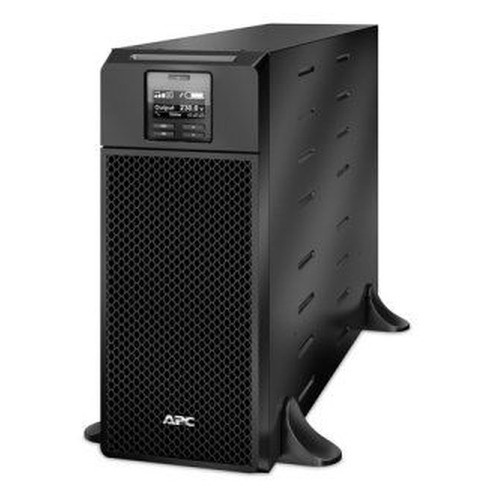
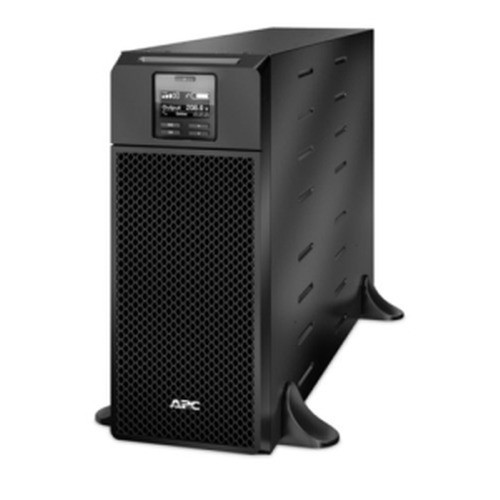
Both the SRT6KXLI and SRT6KXLT are APC Smart-UPS Online double-conversion units rated at 6000 VA / 6000 W, designed for critical IT and industrial loads requiring clean, uninterrupted sine-wave power. The key differences lie in their input/output voltage configurations — the SRT6KXLI targets 230 V single-phase environments common outside North America, while the SRT6KXLT is configured for 208 V / 240 V two-phase North American infrastructure. This comparison covers power architecture, runtime and battery characteristics, and connectivity and management capabilities.
In This Guide
- How do the input/output voltage and efficiency specs differ between the SRT6KXLI and SRT6KXLT?
- What do the battery and runtime specs reveal about each unit's backup endurance?
- How do the connectivity, management, and included accessories compare between the two models?
- Which should you choose: the SRT6KXLI or the SRT6KXLT?
- Side-by-Side Specs
- FAQ
How do the input/output voltage and efficiency specs differ between the SRT6KXLI and SRT6KXLT?
Both units share the same 6000 VA / 6000 W output capacity, double-conversion (online) topology, sine-wave output, and a 40–70 Hz auto-sensing input frequency range. Their power architecture diverges at the voltage level. The SRT6KXLI accepts input voltages from 100 V to 275 V and delivers output at 220–240 V on a single-phase (L + N + G) basis — suited for international 230 V infrastructure. The SRT6KXLT accepts 208 V or 240 V AC (single-phase, specified as 2PH + G hard-wire) and delivers output at 208 V or 240 V, targeting North American two-phase distribution panels.
On efficiency, the SRT6KXLI specifies a rated efficiency of 94.4% at full load. The SRT6KXLT lists its efficiency as 'View Efficiency Graph,' meaning no discrete percentage is available in the provided specifications. Both units share a crest factor of 3:1 and an output frequency of 50/60 Hz synchronized to mains. The SRT6KXLI specifies output voltage THD of 3%; the SRT6KXLT specifies harmonic distortion of less than 2%, suggesting a tighter output waveform quality, though the measurement methodology is not stated identically across both spec sheets.
The SRT6KXLI input connection type is not specified in the provided data. The SRT6KXLT specifies a hard-wire 3-wire (2PH + G) input and output connection with an internal bypass — both automatic and manual. The SRT6KXLI confirms Emergency Power Off (EPO) capability; the SRT6KXLT does not explicitly list EPO in the provided specifications.
What do the battery and runtime specs reveal about each unit's backup endurance?
The SRT6KXLT provides substantially more detailed battery specifications. It uses a lead-acid battery at 192 V battery voltage, with a typical recharge time of 1.5 hours, a rated battery charging power of 579 W, and a stated battery life of 3–5 years. It includes 1 RBC (replacement battery cartridge, part APCRBC140) and supports extendable runtime via external battery modules. Heat dissipation is rated at 1402 Btu/h.
The SRT6KXLI's provided specifications do not include battery voltage, recharge time, battery life, RBC part number, heat dissipation, or explicit runtime data. Both units list runtime as either unstated or reference a graph, so no discrete runtime minutes can be compared from the provided specs. Buyers requiring extended runtime should note that the SRT6KXLT explicitly confirms extendable runtime support; this capability is not confirmed or denied in the SRT6KXLI spec set provided.
The SRT6KXLT's weight of 134.99 lb (61.23 kg) and physical dimensions (432 mm wide) are documented. The SRT6KXLI does not provide weight or physical dimensions in the supplied specifications. Both models appear to be tower-mount form factors based on available data; the SRT6KXLT confirms tower mounting with an included kit.
How do the connectivity, management, and included accessories compare between the two models?
The SRT6KXLT ships with a preinstalled Network Management Card 3 (NMC3) with environmental monitoring, providing out-of-box SNMP/web-based remote management, embedded network visibility, and an available expansion slot for additional cards. Connectivity ports listed include serial, USB, and the embedded NMC3. It also ships with a temperature probe, USB cable, installation guide, user manual, warranty card, and software CD.
The SRT6KXLI's provided specifications do not mention a preinstalled network management card, available expansion slots, or included accessories. Connectivity details for the SRT6KXLI are absent from the provided spec data. Buyers who require remote monitoring and SNMP integration out of box will find the SRT6KXLT's NMC3 inclusion directly relevant; for the SRT6KXLI, whether comparable management capability is available would need to be verified against APC's full datasheet.
The SRT6KXLT specifies alarm behavior (audible and visible, prioritized by severity), IP20 ingress protection, an operating altitude of 0–10,000 ft, storage altitude up to 50,000 ft, operating relative humidity of 0–95% non-condensing, and certifications including ENERGY STAR V2.0, FCC Part 15 Class A, NOM, and UL 1778. None of these environmental or certification details are present in the SRT6KXLI's provided specifications.
Which should you choose: the SRT6KXLI or the SRT6KXLT?
Our take: The SRT6KXLT is the stronger choice for North American 208 V / 240 V two-phase data center or IT closet deployments where out-of-box remote management and detailed environmental specifications matter. The SRT6KXLT ships with a preinstalled NMC3 network management card — not present or confirmed in the SRT6KXLI spec set — and documents a 1.5-hour recharge time, 192 V battery voltage, APCRBC140 replacement cartridge, and ENERGY STAR V2.0 / UL 1778 certifications. Its harmonic distortion spec is stated as less than 2% versus the SRT6KXLI's 3% THD. Conversely, the SRT6KXLI specifies a broad 100–275 V input range and a discrete 94.4% full-load efficiency figure — neither of which the SRT6KXLT's provided specs confirm numerically. The SRT6KXLI is the correct selection for international 230 V single-phase grids. Neither product should be substituted for the other across voltage regions.
Side-by-Side Comparison
Spec-for-spec, from manufacturer data.
| Specification | APC by Schneider Electric SRT6KXLI | APC by Schneider Electric SRT6KXLT |
|---|---|---|
| UPS Topology | Double-conversion (Online) | On-Line (Double-conversion) |
| Output Capacity (VA) | 6000 VA | 6000 VA |
| Output Power (W) | 6000 W | 6000 W |
| Waveform | Sine | Sine wave |
| Input Voltage Range | 100–275 V | 208 V / 240 V AC |
| Input Connection | — | Hard Wire 3-wire (2PH + G) |
| Output Voltage | 220–240 V | 208 V / 240 V |
| Input Frequency | 40–70 Hz | 40–70 Hz auto-sensing |
| Output Frequency | 50/60 Hz | 50/60 Hz ±3 Hz sync to mains |
| Efficiency (Full Load) | 94.4% | — |
| Output THD / Harmonic Distortion | 3% | Less than 2% |
| Crest Factor | 3:1 | 3:1 |
| Surge Energy Rating | 480 J | 480 J |
| Preinstalled Network Mgmt Card | — | NMC3 with environmental monitoring |
| Battery Recharge Time | — | 1.5 h typical |
| Weight | — | 134.99 lb (61.23 kg) |
Frequently Asked Questions
Which should you choose: the SRT6KXLI or the SRT6KXLT?
The SRT6KXLT is the stronger choice for North American 208 V / 240 V two-phase data center or IT closet deployments where out-of-box remote management and detailed environmental specifications matter. The SRT6KXLT ships with a preinstalled NMC3 network management card — not present or confirmed in the SRT6KXLI spec set — and documents a 1.5-hour recharge time, 192 V battery voltage, APCRBC140 replacement cartridge, and ENERGY STAR V2.0 / UL 1778 certifications. Its harmonic distortion spec is stated as less than 2% versus the SRT6KXLI's 3% THD. Conversely, the SRT6KXLI specifies a broad 100–275 V input range and a discrete 94.4% full-load efficiency figure — neither of which the SRT6KXLT's provided specs confirm numerically. The SRT6KXLI is the correct selection for international 230 V single-phase grids. Neither product should be substituted for the other across voltage regions.
Can I use the SRT6KXLT on a standard 230 V single-phase circuit outside North America?
Based on the provided specifications, the SRT6KXLT is rated for 208 V or 240 V AC input via a hard-wire 2PH + G connection, which is a North American two-phase configuration. The SRT6KXLI is the model specified for international 230 V single-phase environments, with an input range of 100–275 V. Using the SRT6KXLT outside its rated input voltage and connection type is not supported by the provided specs.
Does either model include a network management card in the box?
Yes — the SRT6KXLT's provided specifications list a preinstalled Network Management Card 3 (NMC3) with environmental monitoring as included equipment. The SRT6KXLI's provided specifications make no mention of a preinstalled NMC or network management capability; buyers should consult APC's full datasheet to determine whether an NMC is included or available as an add-on.
Which model has a better-documented runtime extension capability?
The SRT6KXLT explicitly confirms extendable runtime support in its provided specifications, along with a rated battery charging power of 579 W and a 1.5-hour typical recharge time. The SRT6KXLI's provided specifications do not address runtime extension, battery charging rate, or recharge time. For sites requiring documented extended-runtime capability, the SRT6KXLT provides the necessary spec confirmation; the SRT6KXLI would require verification against APC's full published datasheet.
More UPS Comparisons
- APC by Schneider Electric SRT6KXLT vs Vertiv GXT5-6000RT208
- APC by Schneider Electric SRT6KXLT vs Vertiv GXT5LI-6000MVRT3UXLN
- APC by Schneider Electric SRT6KXLT vs Vertiv GXT5LI-6000GVRT3UXLN
- APC by Schneider Electric SRT6KXLT vs APC by Schneider Electric SRT6KRMXLI
- APC by Schneider Electric SRT6KXLT vs APC by Schneider Electric SRT6KRMXLIM
- APC by Schneider Electric SRT6KRMXLI vs Vertiv GXT5-6000RT208
UPS Buying Guides
Get a Second Opinion on Your Camera Choice
Share your site layout, coverage goals, and budget. Our team will validate the camera selection, flag anything we would change, and recommend products that match the use case.