
APC by Schneider Electric SRT6KRMXLT-IEC vs APC by Schneider Electric SRT6KXLT: Specification Comparison
Both products are 6000VA / 6000W double-conversion (online) sine-wave UPS units from APC's Smart-UPS On-Line SRT family, targeting rack-mount or tower installations in data centers, server rooms, and critical infrastructure environments running 208V equipment. The SRT6KRMXLT-IEC is a rack-mount model with IEC output connections, while the SRT6KXLT is a tower-convertible extended-runtime model with hardwired output. Buyers cross-shopping these units are typically evaluating form factor, connectivity and management depth, and battery/runtime expandability against their specific installation constraints.
In This Guide
- How do the input voltage range, output configuration, and power quality specs compare?
- Which model offers more battery flexibility, runtime expandability, and recharge performance?
- How do the two units differ in management capabilities, connectivity options, and physical installation?
- Which should you choose: the SRT6KRMXLT-IEC or the SRT6KXLT?
- Side-by-Side Specs
- FAQ
How do the input voltage range, output configuration, and power quality specs compare?
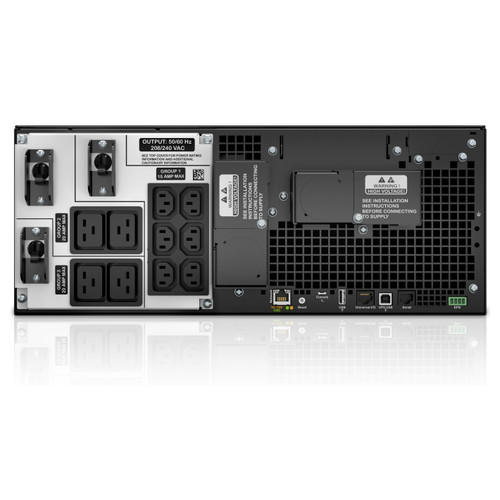
Both units share a 6000VA / 6000W output rating, a 40–70 Hz input frequency range, a 3:1 crest factor, less-than-2% output voltage THD, a 480 J surge energy rating, and 50/60 Hz output frequency. Input voltage range is where a meaningful difference appears: the SRT6KRMXLT-IEC is specified with an input operating range of 100–275 V, while the SRT6KXLT lists its input range as 100–275 V adjustable (noted under efficiency at half load), with a primary input of 208 V AC or 240 V AC single phase via a 3-wire hard-wire connection. The SRT6KRMXLT-IEC supports both 208 V and 240 V output; the SRT6KXLT likewise provides 208 V and 240 V output, but exclusively through a hard-wire 3-wire connection rather than IEC receptacles.
The SRT6KXLT specifies an internal bypass — both automatic and manual — explicitly in its specs. The SRT6KRMXLT-IEC does not list bypass type in the provided specifications. The SRT6KXLT also documents heat dissipation at 1402 Btu/h and an IP20 protection rating; neither figure is provided for the SRT6KRMXLT-IEC.
Which model offers more battery flexibility, runtime expandability, and recharge performance?
The SRT6KXLT provides substantially more documented battery detail. It specifies a 192 V battery voltage, lead-acid battery chemistry, a replacement battery unit of APCRBC140, a typical recharge time of 1.5 hours at 579 W charging power, and a rated battery life of 3–5 years. The extendable runtime flag is set to 1 (true), confirming that external battery modules can be added to extend runtime beyond the internal pack. The number of included battery modules is listed as 0 (batteries are external/separate for the extended-runtime configuration), and the empty battery slot count is 0.
The SRT6KRMXLT-IEC does not provide battery voltage, chemistry, replacement battery part number, recharge time, battery life estimate, or explicit runtime-extensibility confirmation in the supplied specifications. Buyers for whom runtime expandability and battery lifecycle planning are decision criteria will find the SRT6KXLT's spec sheet materially more informative on these dimensions.
How do the two units differ in management capabilities, connectivity options, and physical installation?
The SRT6KXLT ships with a preinstalled Network Management Card 3 with environmental monitoring and documents its connectivity as: serial port, USB port, embedded NMC3, and one available expansion slot. Provided accessories include a temperature probe, USB cable, CD with software, and documentation. The SRT6KRMXLT-IEC lists web-based management as 'Yes' but does not specify whether a network management card is preinstalled or which card generation is included.
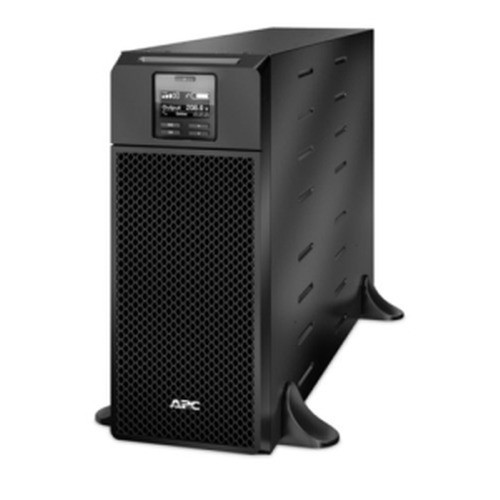
For physical installation, the SRT6KXLT weighs 134.99 lb (61.23 kg), has a listed dimension of 432 mm (17.008 in) on one axis, mounts as a tower with an included kit, and specifies vertical mounting position — it does not list rack-unit height or two-post rack compatibility (two-post mountable: 0). The SRT6KRMXLT-IEC is described as a rack-mount unit (RM in model name, IEC output designation), but rack-unit height, weight, and physical dimensions are not present in the provided specifications. Both units are listed at 55 dB(A) acoustic level.
Which should you choose: the SRT6KRMXLT-IEC or the SRT6KXLT?
Our take: The SRT6KXLT is the stronger choice when management depth, battery lifecycle visibility, and runtime expandability are primary requirements. First, it ships with a preinstalled NMC3 card with environmental monitoring and a temperature probe, while the SRT6KRMXLT-IEC only confirms 'web-based management: Yes' without specifying card inclusion. Second, the SRT6KXLT documents a 1.5-hour recharge time at 579 W, a 3–5 year battery life estimate, and confirmed runtime extensibility — none of these figures appear in the SRT6KRMXLT-IEC spec sheet. Third, the SRT6KXLT explicitly lists internal automatic and manual bypass, which is absent from the SRT6KRMXLT-IEC's provided data. Conversely, the SRT6KRMXLT-IEC is the appropriate selection for rack-mount installations requiring IEC output receptacles — a hard-wire-only output is a non-starter in many colocation or multi-device rack environments. Buyers in tower or floor-mount scenarios with SNMP monitoring requirements should favor the SRT6KXLT; rack-dense environments with IEC-cabled loads should evaluate the SRT6KRMXLT-IEC.
Side-by-Side Comparison
Spec-for-spec, from manufacturer data.
| Specification | APC by Schneider Electric SRT6KRMXLT-IEC | APC by Schneider Electric SRT6KXLT |
|---|---|---|
| UPS Topology | Double-conversion (Online) | On-Line |
| Output Power Capacity | 6000 VA | 6000 VA |
| Output Power (Watts) | 6000 W | 6000 W |
| Waveform | Sine | Sine wave |
| Input Voltage Range | 100–275 V | 100–275 V adjustable |
| Input Frequency | 40–70 Hz | 40–70 Hz auto-sensing |
| Output Voltage | 208–240 V | 208 V / 240 V |
| Output Frequency | 50/60 Hz | 50/60 Hz ±3 Hz sync to mains |
| Crest Factor | 3:1 | 3:1 |
| Output Voltage THD | 2% | Less than 2% |
| Surge Energy Rating | 480 J | 480 J |
| Bypass | — | Internal (Automatic and Manual) |
| Preinstalled NMC | — | NMC3 with environmental monitoring |
| Battery Recharge Time | — | 1.5 h |
| Battery Life | — | 3–5 years |
| Noise Level | 55 dB | 55 dBA |
| Form Factor / Mounting | Rack-mount (RM) | Tower with included kit |
| Output Connection Type | IEC receptacles | Hard Wire 3-wire (2PH + G) |
| Weight | — | 134.99 lb (61.23 kg) |
| Heat Dissipation | — | 1402 Btu/h |
| Web-Based Management | Yes | Yes (NMC3 embedded) |
| Replacement Battery | — | APCRBC140 |
Frequently Asked Questions
Which should you choose: the SRT6KRMXLT-IEC or the SRT6KXLT?
The SRT6KXLT is the stronger choice when management depth, battery lifecycle visibility, and runtime expandability are primary requirements. First, it ships with a preinstalled NMC3 card with environmental monitoring and a temperature probe, while the SRT6KRMXLT-IEC only confirms 'web-based management: Yes' without specifying card inclusion. Second, the SRT6KXLT documents a 1.5-hour recharge time at 579 W, a 3–5 year battery life estimate, and confirmed runtime extensibility — none of these figures appear in the SRT6KRMXLT-IEC spec sheet. Third, the SRT6KXLT explicitly lists internal automatic and manual bypass, which is absent from the SRT6KRMXLT-IEC's provided data. Conversely, the SRT6KRMXLT-IEC is the appropriate selection for rack-mount installations requiring IEC output receptacles — a hard-wire-only output is a non-starter in many colocation or multi-device rack environments. Buyers in tower or floor-mount scenarios with SNMP monitoring requirements should favor the SRT6KXLT; rack-dense environments with IEC-cabled loads should evaluate the SRT6KRMXLT-IEC.
Does the SRT6KXLT or the SRT6KRMXLT-IEC come with a network management card included?
Based on the provided specifications, the SRT6KXLT ships with a preinstalled Network Management Card 3 (NMC3) with environmental monitoring and includes a temperature probe. The SRT6KRMXLT-IEC lists 'web-based management: Yes' but the supplied specifications do not confirm whether a network management card is preinstalled or which generation is included.
Can I add external battery modules to extend runtime on either unit?
The SRT6KXLT's specifications explicitly flag extendable runtime as supported (flag value: 1), indicating external battery modules can be connected. The SRT6KRMXLT-IEC's provided specifications do not include an extendable runtime flag or any statement about external battery module compatibility — buyers requiring confirmed runtime extensibility should verify this directly with APC for the SRT6KRMXLT-IEC.
Which model is better suited for a rack-mount installation with IEC-cabled servers?
The SRT6KRMXLT-IEC is the rack-mount model in this comparison, as indicated by 'RM' in its model name and the IEC designation, which points to IEC-format output receptacles. The SRT6KXLT's provided specifications list its output connection as hard-wire 3-wire only and its mounting mode as tower with an included kit, with two-post rack mountability listed as 0. For IEC-cabled rack loads, the SRT6KRMXLT-IEC is the appropriate form factor.
More UPS Comparisons
- APC by Schneider Electric SRT6KXLT vs Vertiv GXT5-6000RT208
- APC by Schneider Electric SRT6KXLT vs Vertiv GXT5LI-6000MVRT3UXLN
- APC by Schneider Electric SRT6KXLT vs Vertiv GXT5LI-6000GVRT3UXLN
- APC by Schneider Electric SRT6KXLT vs APC by Schneider Electric SRT6KRMXLI
- APC by Schneider Electric SRT6KXLT vs APC by Schneider Electric SRT6KRMXLIM
- APC by Schneider Electric SRT6KRMXLI vs Vertiv GXT5-6000RT208
UPS Buying Guides
Get a Second Opinion on Your Camera Choice
Share your site layout, coverage goals, and budget. Our team will validate the camera selection, flag anything we would change, and recommend products that match the use case.