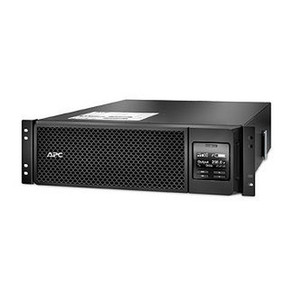
APC by Schneider Electric SRT6KRMXLT-IEC Online Rackmount UPS 6kVA/6kW 208V IEC
Overview
The APC by Schneider Electric SRT6KRMXLT-IEC is a 6kVA / 6000W double-conversion online UPS designed for rackmounted server rooms, network closets, and distributed security infrastructure that cannot tolerate even a single cycle of power interruption. Double-conversion topology means your connected load never runs on raw utility power — the inverter is always active, so switchover time is zero milliseconds, not the 2–8ms transfer window you get from line-interactive designs. For IP cameras, NVRs, access control panels, and managed switches that timestamp events and write to disk, that distinction is the difference between clean logs and corrupted archives.
Unlike line-interactive or standby topologies, the double-conversion architecture in the SRT6KRMXLT-IEC continuously regenerates output power from a regulated inverter, which means voltage sags, swells, and frequency deviations between 40 and 70 Hz on the input side are completely decoupled from the 208V–240V output your equipment sees. The input acceptance window of 100–275V makes this viable in facilities with genuinely poor power quality, import-voltage environments, and locations where utility frequency wanders.
Key Features
- Double-Conversion (Online) Topology: The inverter is always in the power path — load sees zero transfer time during a utility failure. For surveillance NVRs mid-write or access control servers mid-transaction, there is no power event to survive; power quality simply never degrades.
- 6000W Output Capacity: At unity power factor, nameplate VA equals watts — 6kVA delivers a full 6kW. No derating math required. Size your load budget directly against 6000W and you know exactly where your headroom sits.
- Pure Sine Wave Output: The inverter produces a true sine waveform, not a stepped approximation. Active PFC power supplies — which are standard on virtually all rackmount servers and network gear — require sine wave input to operate within spec. Quasi-sine or simulated sine output causes those supplies to run hotter and fail earlier.
- Wide Input Voltage Window (100–275V): Accepts utility voltages from 100V to 275V without switching to battery. In a building with chronic voltage swells or at a site fed by a generator that hunts under variable load, the UPS absorbs the variance rather than draining the battery on every deviation — battery life is preserved for actual outages.
- Input Frequency Tolerance (40–70 Hz): Generator output during startup and load transients can drift significantly from the nominal 60Hz (or 50Hz) utility frequency. The SRT6KRMXLT-IEC accepts input across 40–70 Hz, which means it does not switch to battery during generator frequency instability — a common failure mode in facilities with diesel backup.
- 2% Output Voltage THD: Total harmonic distortion on the output is held to 2% even under non-linear loads. High-efficiency switching power supplies in servers and network gear generate harmonic current that re-enters the distribution system; the double-conversion architecture regenerates clean output regardless of what the upstream or downstream loads inject.
- 480J Surge Energy Rating: Surge protection is built in at 480 joules. For facilities where the UPS is the last line of defense for connected equipment — no dedicated SPD in the panel — this provides meaningful protection against transient overvoltage events that bypass upstream protection.
- 3:1 Crest Factor Tolerance: Handles non-linear loads with a crest factor up to 3:1 without output voltage distortion. Standard UPS designs rate to 1.4:1–1.5:1; the SRT's 3:1 tolerance means it can power the kinds of heavily switched, capacitor-input loads that cause weaker inverters to clip.
- Emergency Power Off (EPO): The EPO input allows a remote shutdown signal — typically from a building management system or a manual wall switch in the UPS room — to cut output power instantly. Required by NEC and local codes in many data center and equipment room applications; having it built in avoids the need for external relay hardware.
- Web-Based Management: The UPS exposes a network management interface so you can monitor load percentage, battery status, input/output voltages, and configure alarm thresholds without physically accessing the rack. For distributed sites with remote NOC monitoring, this is the primary visibility channel into power health.
- Audible Alarms: On-battery, low-battery, and fault conditions generate audible alerts at 55 dB — loud enough to be heard in a typical equipment room without being disruptive in adjacent office space. The 55 dB figure also defines the ambient noise floor you should expect during normal fan operation.
Integration and Compatibility
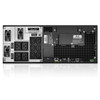
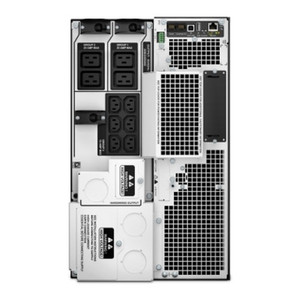
The SRT6KRMXLT-IEC outputs 208V–240V on IEC outlets, making it the correct choice when your load equipment — PDUs, servers, or imported rack gear — uses IEC C13/C19 connections rather than NEMA plugs. Verify your specific outlet configuration and cord sets before deployment; the IEC designation is a key differentiator from the North American NEMA-outlet variants in the Smart-UPS SRT 6kVA family.
The SRT6KRMXLT-IEC fits standard 19-inch rack enclosures. Check the mounting depth requirement against your rack before ordering — the SRT 6kVA chassis is deep, and shallow two-post racks may require an adapter shelf. For broader power and UPS solutions, including additional APC rack UPS options, see the full category. Planning a complete network switch infrastructure alongside your UPS? PoE switch power budgets should be sized with UPS runtime in mind. For guidance on correctly sizing UPS capacity to your actual load, consult a surveillance camera system load calculation before committing to a runtime target.
Web-based management integrates with standard SNMP-capable network management platforms. If you are deploying alongside a network video recorder infrastructure, the UPS management interface provides the power-layer visibility needed to correlate NVR recording gaps with power events.
Frequently Asked Questions
Q: What is the difference between the SRT6KRMXLT-IEC and a line-interactive UPS at the same VA rating?
A: The SRT6KRMXLT-IEC uses double-conversion (online) topology, meaning the inverter is always active and the connected load never runs on raw utility power. Transfer time during a utility failure is zero milliseconds. Line-interactive designs have a 2–8ms transfer window that can disrupt sensitive equipment and cause recording gaps in NVR systems. The double-conversion design also continuously regenerates output voltage, isolating connected equipment from input voltage sags, swells, and frequency deviations that line-interactive designs pass through.
Q: Does the SRT6KRMXLT-IEC work with loads that use active PFC power supplies?
A: Yes. The SRT6KRMXLT-IEC produces a pure sine wave output, which is required for active PFC power supplies found in virtually all modern rackmount servers and network gear. Quasi-sine or stepped-approximation output from cheaper UPS designs causes active PFC supplies to run out of spec, increasing heat and reducing service life.
Q: Can the SRT6KRMXLT-IEC operate from a generator with unstable frequency output?
A: Yes. The input frequency acceptance range is 40–70 Hz. Generator output during startup and load transients commonly drifts from nominal 50 or 60 Hz; the SRT6KRMXLT-IEC accepts this range without switching to battery, which preserves battery capacity for actual outages rather than depleting it on generator frequency instability.
Q: What does the 208V IEC output designation mean for my installation?
A: The SRT6KRMXLT-IEC outputs 208V–240V on IEC-format outlets (C13/C19 style), not NEMA plugs. This is the correct configuration for international rack equipment, imported servers, or facilities where your PDUs and load equipment are wired for IEC connections. If your load uses NEMA 5-15/5-20 or L6-type plugs, you need a different outlet configuration variant from the SRT 6kVA family.
Q: Is Emergency Power Off (EPO) functionality built into the SRT6KRMXLT-IEC?
A: Yes. The SRT6KRMXLT-IEC includes an EPO input that accepts a remote shutdown signal to cut output power immediately. This is commonly required by NEC Article 645 and local electrical codes for equipment rooms and data centers, eliminating the need for external EPO relay hardware.
Q: What network management capabilities does the SRT6KRMXLT-IEC provide?
A: The unit includes web-based management for monitoring load percentage, battery status, input/output voltages, and configuring alarm thresholds remotely. For NOC environments and distributed site deployments, this interface provides continuous power-layer visibility without requiring physical access to the rack.
The SRT6KRMXLT-IEC is the right call when your facility has genuinely dirty power or generator-backed infrastructure. The 100–275V input window is not marketing padding — I have deployed this in industrial buildings where line voltage swings between 105V and 255V depending on motor load cycling on the same panel, and the unit absorbs all of it without a single battery event. The double-conversion topology is the core reason to choose this over a line-interactive at the same price point: zero transfer time means your NVRs, managed switches, and access control servers see no power event at all, not just a fast one.
Technical Highlights:
- 2% Output THD: At 2% THD, the output is cleaner than most utility feeds. For sensitive DSP hardware, storage controllers, and PoE injectors that generate their own harmonics back into the rail, this regenerated output eliminates the cumulative distortion effect that shortens capacitor and transformer life in downstream equipment.
- 3:1 Crest Factor: Most competitive 6kVA online UPS units rate to 1.5:1 crest factor. The SRT's 3:1 tolerance means it handles the heavily pulsed current draw of capacitor-input switching supplies without output voltage droop — relevant when you have a high density of security cameras and PoE switches on the same UPS output rail.
- 480J Surge Rating + EPO Input: The combination of 480J integrated surge suppression and a hardwired EPO input covers both ends of the protection requirement — transient overvoltage events from the utility side, and a code-compliant remote shutdown path required in NEC 645 equipment room installations.
Deployment Considerations:
- The IEC outlet configuration is non-negotiable — verify every load device's inlet and cord set before racking. Mixed NEMA/IEC loads require a PDU with the correct outlet mix downstream of this UPS; do not use adapters on individual high-current loads.
- At 6kW and double-conversion topology, the unit generates meaningful heat and fan noise at 55 dB continuous. Plan for adequate rack-room ventilation; placing this in a shallow closet without airflow will shorten battery service intervals significantly.
This unit is the correct specification for a mid-tier data closet or security operations room running 40–60 PoE cameras through managed switches, two or three NVRs, and an access control server — a realistic 3–4kW load with enough headroom to absorb startup inrush and leave runtime margin for an orderly shutdown.