
APC by Schneider Electric SRT2200XLA vs APC by Schneider Electric SRT2200RMXLA-NC: Specification Comparison
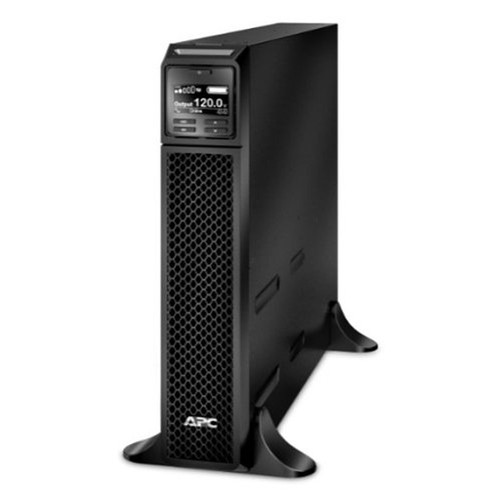
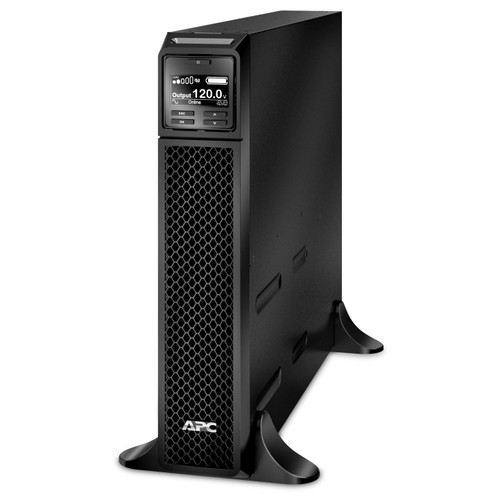
Both the SRT2200XLA and SRT2200RMXLA-NC are APC Smart-UPS On-Line double-conversion units rated at 2200VA / 1800W operating on 120V input and output, with identical output receptacle configurations — six NEMA 5-20R plus one NEMA L5-20R. The sole architectural divergence is form factor: the SRT2200XLA is a tower unit for floor or shelf deployment, while the SRT2200RMXLA-NC is a 2U rackmount intended for equipment cabinets. Buyers choosing between them are selecting a deployment posture, not a different power tier.
In This Guide
- How do the form factor and physical mounting requirements differ between these two units?
- Do these units differ in power output, efficiency parameters, or environmental operating tolerances?
- How do the battery configurations and runtime expansion options compare between the two models?
- Which should you choose: the SRT2200XLA or the SRT2200RMXLA-NC?
- Side-by-Side Specs
- FAQ
How do the form factor and physical mounting requirements differ between these two units?
The SRT2200XLA is explicitly spec'd as Not rack-mountable, mounting vertically in tower orientation — suited for installation on a floor, shelf, or in a dedicated tower enclosure. Its published height dimension is 17.01 in (43.2 cm), consistent with a tower chassis.
The SRT2200RMXLA-NC occupies 2U of rack space (3.35 in / 8.5 cm height), mounts horizontally, and is designed for standard 19-inch equipment racks. The -NC suffix denotes network card not included; no network management card slot status is listed in the provided specs for this model, whereas the tower (SRT2200XLA) explicitly notes an optional Network Management Card (2 or 3) with environmental monitoring slot.
Weight is nearly identical — 55.12 lb (25 kg) for the tower versus 55.01 lb (24.95 kg) for the rackmount — indicating the same core power and battery assembly in different enclosures. Neither unit supports two-post mounting per spec.
Do these units differ in power output, efficiency parameters, or environmental operating tolerances?
Both units share the same core power specifications: 2200VA / 1800W rated capacity, 120V in/120V out, NEMA 5-20P input connector, less than 2% harmonic distortion, 3:1 crest factor, sine wave output, and 50/60 Hz output frequency synchronized to mains within ±3 Hz. Heat dissipation is identical at 535 Btu/h, and both carry an IP20 protection rating.
The rackmount SRT2200RMXLA-NC specifies an acoustic noise level of 55 dBA; the tower SRT2200XLA does not include an acoustic level figure in the provided specs.
Storage temperature ranges diverge: the tower SRT2200XLA is rated for 5–113°F (−15 to 45°C) storage, while the rackmount SRT2200RMXLA-NC is rated for −4 to 122°F (−20 to 50°C) storage — a wider range by 5°C on each end. Operating humidity (0–95% non-condensing), operating altitude (0–10,000 ft), and storage altitude (0–50,000 ft) are identical across both models.
How do the battery configurations and runtime expansion options compare between the two models?
Core battery specs are matched: both include one battery module, 72V battery voltage, 306 VAh internal runtime capacity, 102W charge power, 3-hour typical recharge time, 3–5 year battery life, and the same replacement batteries (APCRBC141, SRT72RMBPUS).
Runtime expansion paths diverge at the accessory level. The tower SRT2200XLA references external battery packs designated SRT72BP, expandable up to 10 packs (6,426 VAh maximum). The rackmount SRT2200RMXLA-NC references rack-format packs designated SRT72RMBP with identical expansion increments (up to 10 packs, 6,426 VAh maximum) — reflecting the same energy tiers in rack-compatible enclosures.
The tower lists 1 free slot (for an additional battery module or network card); the rackmount lists 0 free slots. The tower also explicitly confirms extendable run time = 1 (yes); the rackmount spec also lists extendable run time = 1.
Which should you choose: the SRT2200XLA or the SRT2200RMXLA-NC?
Our take: The SRT2200XLA is the stronger choice when the installation site lacks a standard equipment rack and requires a floor-standing or shelf-mounted UPS, or when integration of an optional APC Network Management Card (NMC2 or NMC3) with environmental monitoring is a near-term requirement — the tower explicitly documents that slot as available, while the rackmount's NMC provisions are not addressed in the provided specs. The rackmount SRT2200RMXLA-NC is the correct selection for any 19-inch rack environment, consuming only 2U of vertical space at a nearly identical 55.01 lb. The rackmount also carries a wider storage temperature range (−20 to 50°C vs. −15 to 45°C) and is the only unit with a specified acoustic level (55 dBA). All power, battery, output receptacle, and runtime expansion specifications are functionally identical between the two. Platform qualifier: neither unit is two-post mountable per spec.
Side-by-Side Comparison
Spec-for-spec, from manufacturer data.
| Specification | APC by Schneider Electric SRT2200XLA | APC by Schneider Electric SRT2200RMXLA-NC |
|---|---|---|
| Form Factor | Tower (vertical) | Rackmount (horizontal) |
| Rack Units | — | 2U |
| Rack-Mountable | No | Yes |
| Rated Power (VA) | 2200VA | 2200VA |
| Rated Power (W) | 1800W | 1800W |
| Input Voltage | 120V | 120V |
| Output Voltage | 120V | 120V |
| Input Connector | NEMA 5-20P | NEMA 5-20P |
| Output Receptacles | (6) NEMA 5-20R + (1) NEMA L5-20R | (6) NEMA 5-20R + (1) NEMA L5-20R |
| UPS Topology | Double Conversion Online | Double Conversion Online |
| Waveform | Sine wave | Sine wave |
| Bypass Type | Internal Bypass (Auto & Manual) | Built-in Bypass |
| Battery Voltage | 72V | 72V |
| Internal Runtime Capacity | 306 VAh | 306 VAh |
| Typical Recharge Time | 3 hours | 3 hours |
| Battery Life | 3–5 years | 3–5 years |
| Replacement Battery | APCRBC141 / SRT72RMBPUS | APCRBC141 / SRT72RMBPUS |
| Max Extended Runtime (10 packs) | 6,426 VAh (SRT72BP) | 6,426 VAh (SRT72RMBP) |
| Free Slots | 1 | 0 |
| Network Management Card | Optional (NMC2 or NMC3) | Not specified in provided specs |
| Heat Dissipation | 535 Btu/h | 535 Btu/h |
| Harmonic Distortion | < 2% | < 2% |
| Crest Factor | 3:1 | 3:1 |
| Acoustic Level | — | 55 dBA |
| Weight | 55.12 lb (25 kg) | 55.01 lb (24.95 kg) |
| Storage Temp Range | 5–113°F (−15 to 45°C) | −4 to 122°F (−20 to 50°C) |
| Operating Altitude | 0–10,000 ft | 0–10,000 ft |
| IP Rating | IP20 | IP20 |
| Color | Black | Black |
Frequently Asked Questions
Which should you choose: the SRT2200XLA or the SRT2200RMXLA-NC?
The SRT2200XLA is the stronger choice when the installation site lacks a standard equipment rack and requires a floor-standing or shelf-mounted UPS, or when integration of an optional APC Network Management Card (NMC2 or NMC3) with environmental monitoring is a near-term requirement — the tower explicitly documents that slot as available, while the rackmount's NMC provisions are not addressed in the provided specs. The rackmount SRT2200RMXLA-NC is the correct selection for any 19-inch rack environment, consuming only 2U of vertical space at a nearly identical 55.01 lb. The rackmount also carries a wider storage temperature range (−20 to 50°C vs. −15 to 45°C) and is the only unit with a specified acoustic level (55 dBA). All power, battery, output receptacle, and runtime expansion specifications are functionally identical between the two. Platform qualifier: neither unit is two-post mountable per spec.
Can I rack-mount the SRT2200XLA if I run out of floor space later?
No. The SRT2200XLA spec explicitly states Mounting Mode: Not rack-mountable. If rack installation is a possibility now or in the future, the SRT2200RMXLA-NC (2U rackmount) is the appropriate selection.
Is the runtime expansion the same on both models?
The maximum extended capacity is identical — up to 10 external battery packs reaching 6,426 VAh — but the battery pack part numbers differ by form factor. The tower uses SRT72BP packs; the rackmount uses SRT72RMBP rack-format packs. Internal base runtime (306 VAh) and recharge time (3 hours) are the same on both.
Does the SRT2200RMXLA-NC include a network management card?
The -NC suffix in the model number indicates the network card is not included. The provided specs for the SRT2200RMXLA-NC do not document an NMC slot or optional NMC accessory. The tower SRT2200XLA spec explicitly lists an optional Network Management Card (2 or 3) with environmental monitoring. Buyers requiring remote UPS management should confirm NMC compatibility with APC directly for the rackmount model.
More UPS Comparisons
- CyberPower PR2200RTXL2UC vs APC by Schneider Electric SRT2200RMXLA
- CyberPower PR2200RTXL2UC vs APC by Schneider Electric SRT2200XLA
- CyberPower PR2200RTXL2UC vs APC by Schneider Electric SRT2200RMXLA-NC
- CyberPower PR2200RTXL2UC vs APC by Schneider Electric SMT2200I
- CyberPower PR2200RTXL2UC vs CyberPower OL2K2RTHD
- CyberPower PR2200RTXL2UC vs CyberPower OL2200RTXL2U
UPS Buying Guides
Get a Second Opinion on Your Camera Choice
Share your site layout, coverage goals, and budget. Our team will validate the camera selection, flag anything we would change, and recommend products that match the use case.