
APC by Schneider Electric SRT2200RMXLA vs CyberPower OL2200RTXL2U: Specification Comparison
Both units are 2200VA / 1800W double-conversion online UPS systems in a 2U rack form factor designed for 120V North American installations. The APC Smart-UPS On-Line SRT2200RMXLA and the CyberPower OL2200RTXL2U target the same mid-range critical-power segment: IT closets, edge racks, and small data-center rows where zero-transfer-time protection, sine-wave output, and runtime expandability are required. This comparison examines runtime and battery architecture, physical and environmental fit, and connectivity and manageability.
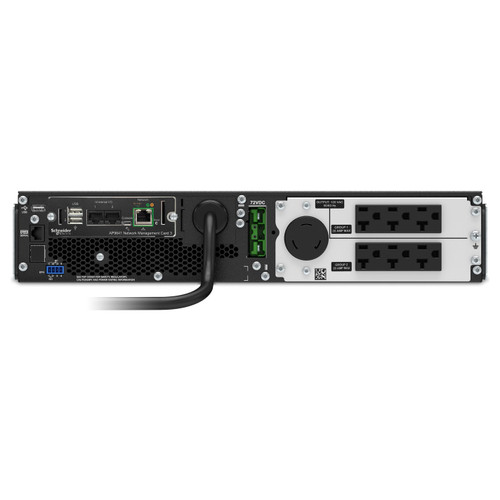
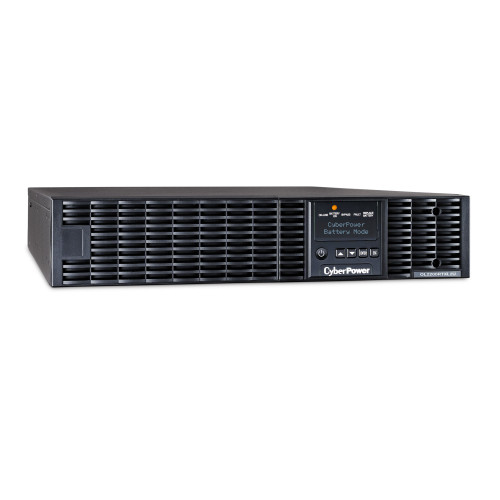
In This Guide
- Which UPS delivers more runtime and how flexible is battery expansion?
- How do the two units compare on physical footprint, weight, and operating environment?
- Which unit offers more connectivity and remote management options?
- Which should you choose: the SRT2200RMXLA or the OL2200RTXL2U?
- Side-by-Side Specs
- FAQ
Which UPS delivers more runtime and how flexible is battery expansion?
CyberPower provides explicit runtime figures: 8 minutes at full load (1800W) and 21 minutes at half load (900W), backed by an internal pack of 6 × 12V/9Ah sealed lead-acid cells. The battery is hot-swappable and user-replaceable, and the unit supports up to 10 external battery modules for extended runtime. APC does not publish discrete full-load or half-load runtime minutes in the provided specifications; runtime data is therefore not directly comparable on that axis.
APC lists an internal battery voltage of 72V with 306VAh runtime capacity and a 102W charge power rating. The SRT battery ecosystem supports up to 8 external SRT72RMBP packs, scaling from 916VAh (1 pack) to 6,426VAh (10 packs), providing a well-documented expansion ladder. Typical recharge time is 3 hours. CyberPower states support for up to 10 external battery modules but does not specify the capacity (VAh) added per module in the provided specs.
For buyers who need documented runtime at a specific load before purchase, the CyberPower spec sheet provides that data directly. For buyers planning large runtime extensions, APC's published per-pack VAh figures allow more precise runtime modeling.
How do the two units compare on physical footprint, weight, and operating environment?
Both units occupy 2U of rack space. The CyberPower OL2200RTXL2U is significantly heavier at 68.2 lb (30.93 kg) versus the APC SRT2200RMXLA at 55.01 lb (24.95 kg)—a 13.2 lb delta that matters in dense or weight-limited racks and during single-person installation.
CyberPower provides full three-dimensional depth: 17 × 3.5 × 23.62 in (432 × 89 × 600 mm). APC lists only a single dimension of 3.35 in (8.5 cm), which corresponds to height; depth and width are not present in the provided specifications, making rack-depth planning less straightforward from spec alone.
APC specifies a wider operating altitude ceiling of 10,000 ft and a storage altitude of up to 50,000 ft, with a storage temperature range of -4 to 122°F (-20 to 50°C). CyberPower's operating temperature range is 32–104°F (0–40°C); storage temperature and altitude are not specified in the provided data. APC's acoustic level is documented at 55 dBA and heat dissipation at 535 Btu/h; neither figure is provided for CyberPower.
Which unit offers more connectivity and remote management options?
CyberPower ships with both USB (HID) and RS-232 serial ports onboard and lists compliance with UL1778, CSA C22.2 No.107.3, FCC Part 15 Class A, and RoHS. An optional RMCARD205 network management card adds SNMP/web remote monitoring. CyberPower also provides a 3-year limited warranty and a $400,000 lifetime connected-equipment guarantee.
APC's provided specifications list an optional network management card (NMC2 or NMC3 with environmental monitoring) but do not indicate built-in USB or serial ports in the specification fields supplied. APC lists an IP20 ingress-protection rating and includes audible and visible alarms prioritized by severity. Warranty terms and a connected-equipment guarantee are not stated in the provided APC specifications.
For organizations already standardized on APC's EcoStruxure / NMC3 ecosystem, the APC card slot is the natural path. CyberPower's inclusion of USB and serial out of the box reduces dependency on add-on cards for basic UPS monitoring software integration.
Which should you choose: the SRT2200RMXLA or the OL2200RTXL2U?
Our take: The SRT2200RMXLA is the stronger choice when rack weight budget, altitude tolerance, and deep integration with APC's NMC/EcoStruxure management ecosystem are primary concerns—it is 13.2 lb lighter (55.01 vs 68.2 lb), rated to 10,000 ft operating altitude (CyberPower altitude not specified), and supports a documented battery-expansion ladder up to 6,426VAh across 8 external packs. The OL2200RTXL2U is the stronger choice when out-of-the-box runtime transparency and standard port availability matter most: it publishes 8-minute full-load and 21-minute half-load runtimes, ships with USB and RS-232 onboard without add-on cards, and backs the unit with a 3-year warranty plus a $400,000 connected-equipment guarantee—neither of which appears in the APC provided specifications. Buyers in weight-sensitive or high-altitude environments lean APC; buyers needing documented runtime figures and included serial connectivity at purchase lean CyberPower.
Side-by-Side Comparison
Spec-for-spec, from manufacturer data.
| Specification | APC by Schneider Electric SRT2200RMXLA | CyberPower OL2200RTXL2U |
|---|---|---|
| UPS Topology | Double Conversion Online | Double-Conversion Online |
| Capacity (VA) | 2200 VA | 2200 VA |
| Capacity (Watts) | 1800 W | 1800 W |
| Form Factor | 2U Rack-mount | 2U Rack / Tower |
| Input Voltage | 120V (NEMA 5-20P) | 100–125 VAC nominal (60–150 VAC range) |
| Output Voltage | 120V | 100/110/115/120/125 VAC ±2% (configurable) |
| Output Waveform | Sine wave | Pure sine wave |
| Total Outlets | 7 (6× NEMA 5-20R, 1× L5-20R) | 7 (6× NEMA 5-20R, 1× L5-20R) |
| Weight | 55.01 lb (24.95 kg) | 68.2 lb (30.93 kg) |
| Dimensions (H×W×D) | 3.35 in H (others not specified) | 3.5 × 17 × 23.62 in (89 × 432 × 600 mm) |
| Battery Type | Lead-Acid, 72V internal | Sealed Lead-Acid, 6× 12V/9Ah, hot-swappable |
| Runtime at Full Load | — | 8 minutes |
| Runtime at Half Load | — | 21 minutes |
| Battery Recharge Time | 3 hours | — |
| External Battery Expansion | Up to 8 SRT72RMBP packs (up to 6,426 VAh) | Up to 10 external battery modules |
| Built-in Connectivity | — | USB (HID), RS-232 Serial |
| Network Management | Optional NMC2 / NMC3 | Optional RMCARD205 |
| Operating Altitude | 0–10,000 ft | — |
| Acoustic Level | 55 dBA | — |
| Heat Dissipation | 535 Btu/h | — |
| Harmonic Distortion (Output) | Less than 2% | — |
| Bypass Type | Built-in bypass | — |
| Standards / Certifications | IP20 | UL1778, CSA C22.2 No.107.3, FCC Part 15 Class A, RoHS |
| Warranty | — | 3-year limited |
| Connected Equipment Guarantee | — | $400,000 (lifetime) |
Frequently Asked Questions
Which should you choose: the SRT2200RMXLA or the OL2200RTXL2U?
The SRT2200RMXLA is the stronger choice when rack weight budget, altitude tolerance, and deep integration with APC's NMC/EcoStruxure management ecosystem are primary concerns—it is 13.2 lb lighter (55.01 vs 68.2 lb), rated to 10,000 ft operating altitude (CyberPower altitude not specified), and supports a documented battery-expansion ladder up to 6,426VAh across 8 external packs. The OL2200RTXL2U is the stronger choice when out-of-the-box runtime transparency and standard port availability matter most: it publishes 8-minute full-load and 21-minute half-load runtimes, ships with USB and RS-232 onboard without add-on cards, and backs the unit with a 3-year warranty plus a $400,000 connected-equipment guarantee—neither of which appears in the APC provided specifications. Buyers in weight-sensitive or high-altitude environments lean APC; buyers needing documented runtime figures and included serial connectivity at purchase lean CyberPower.
Which unit is easier to install in a dense or weight-limited rack?
The APC SRT2200RMXLA is lighter at 55.01 lb (24.95 kg) versus the CyberPower OL2200RTXL2U at 68.2 lb (30.93 kg). For racks with per-shelf weight limits or where a single technician must slide the unit in, the APC's roughly 13-pound advantage is meaningful. Note that APC's full chassis depth is not provided in the available specifications, so rack-depth clearance should be verified against the full datasheet before ordering.
Can I confirm how long either UPS will run my 1800W load before buying?
Yes for CyberPower: the OL2200RTXL2U specification explicitly states 8 minutes at full load (1800W) and 21 minutes at half load (900W). For the APC SRT2200RMXLA, the provided specifications list a 306VAh internal battery and a 72V bus but do not include discrete runtime-at-load figures; buyers should consult APC's online runtime calculator or the full product datasheet to confirm runtime at their specific load.
Is the APC SRT2200RMXLA or OL2200RTXL2U better for larger deployments requiring network monitoring?
Both units support optional network management cards for SNMP/web-based monitoring. CyberPower references the RMCARD205 add-on, while APC lists an optional NMC2 or NMC3 with environmental monitoring. APC's NMC3 integrates with EcoStruxure, which is an advantage in large APC-standardized environments. CyberPower includes USB (HID) and RS-232 serial onboard as standard, reducing card spend for smaller deployments that only need local or PowerPanel software monitoring.
More UPS Comparisons
- CyberPower PR2200RTXL2UC vs APC by Schneider Electric SRT2200RMXLA
- CyberPower PR2200RTXL2UC vs APC by Schneider Electric SRT2200XLA
- CyberPower PR2200RTXL2UC vs APC by Schneider Electric SRT2200RMXLA-NC
- CyberPower PR2200RTXL2UC vs APC by Schneider Electric SMT2200I
- CyberPower PR2200RTXL2UC vs CyberPower OL2K2RTHD
- CyberPower PR2200RTXL2UC vs CyberPower OL2200RTXL2U
UPS Buying Guides
Get a Second Opinion on Your Camera Choice
Share your site layout, coverage goals, and budget. Our team will validate the camera selection, flag anything we would change, and recommend products that match the use case.