
APC by Schneider Electric SRT2200RMXLA-NC vs CyberPower OL2K2RTHD: Specification Comparison
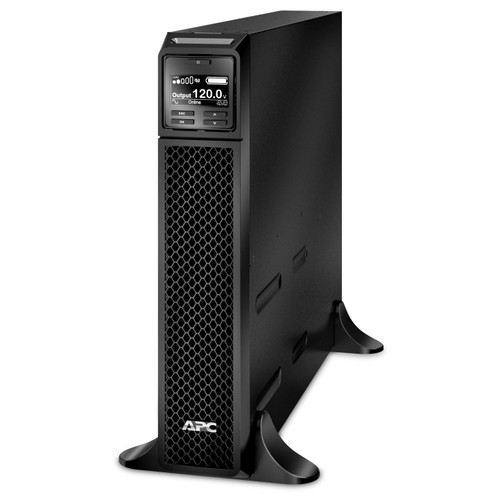
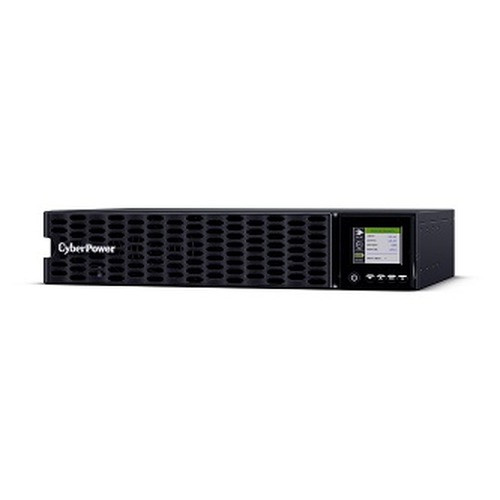
Both the APC Smart-UPS On-Line SRT2200RMXLA-NC and the CyberPower OL2K2RTHD are 2U rack-mount, double-conversion online UPS units rated at 2200VA/1800W with NEMA 5-20P input and mixed NEMA 5-20R/L5-20R output — a product class squarely aimed at IT infrastructure protection in network closets, server rooms, and physical-security head-end racks. This comparison evaluates runtime and battery architecture, power quality and efficiency, and management integration across both units.
In This Guide
- Which UPS delivers more usable runtime and how extensible is its battery architecture?
- How do these units compare on output power quality, efficiency, and operating environment tolerances?
- What management interfaces, communication ports, and software ecosystems does each unit provide?
- Which should you choose: the SRT2200RMXLA-NC or the OL2K2RTHD?
- Side-by-Side Specs
- FAQ
Which UPS delivers more usable runtime and how extensible is its battery architecture?
The CyberPower OL2K2RTHD publishes explicit rated runtimes: 3.1 minutes at full load (1800W) and 10.3 minutes at half load (900W), using 3 internal sealed lead-acid batteries. The APC SRT2200RMXLA-NC does not state runtime in minutes in its provided specs; instead it documents a 306 VAh internal battery bank at 72V with a 102W charge rating and a 3–5 year battery life estimate. What the APC does specify — and the CyberPower does not — is a comprehensive external battery extension ecosystem: up to 10 SRT72RMBP packs scalable from 918 VAh to 6,426 VAh of additional capacity, enabling substantially longer runtimes for critical loads. The APC's single included battery module occupies 0 empty slots, and replacement batteries are APCRBC141 and SRT72RMBPUS. The CyberPower lists no external battery extension option in its provided specifications.
How do these units compare on output power quality, efficiency, and operating environment tolerances?
Both units share double-conversion online topology with true sine-wave output and zero-millisecond transfer time (inherent to online double-conversion). On harmonic distortion, the APC specifies less than 2% THD versus the CyberPower's less than 5% THD — a meaningful difference for sensitive loads such as medical equipment or high-precision instrumentation. The APC rates its acoustic output at a fixed 55 dBA; the CyberPower specifies a range of 24.2 to 57.1 dBA, reflecting its ECO mode operation. In ECO mode the CyberPower achieves greater than 96% efficiency and dissipates only 176 BTU/hr versus 497 BTU/hr in full online mode. The APC lists heat dissipation at 535 BTU/hr with no ECO mode mentioned in the provided specs. On operating environment, the APC tolerates operation up to 10,000 ft elevation versus the CyberPower's 9,843 ft ceiling. Both support 0–95% non-condensing humidity. The APC specifies an IP20 ingress-protection rating; no equivalent rating is provided for the CyberPower.
What management interfaces, communication ports, and software ecosystems does each unit provide?
The CyberPower OL2K2RTHD specifies USB, Serial, SNMP, and EPO (Emergency Power Off) communication ports, bundles PowerPanel Business Edition management software, and supports an optional RMCARD205 remote management card. The APC SRT2200RMXLA-NC's provided specifications do not enumerate communication ports, bundled software, or remote management card options — those details are absent from the spec set provided. The CyberPower also lists surge suppression at 710 joules, a 20A circuit breaker, and both automatic and manual bypass. The APC specifies a built-in bypass type but does not quantify joule rating or circuit breaker amperage in the provided specs. Safety certifications are listed for the CyberPower (UL1778, CSA C22.2 No.107.3, FCC Part 15 Class A); the APC's provided specs do not include safety certification listings. Buyers integrating into managed IT environments will find the CyberPower's port and software inventory more explicitly documented from available specifications.
Which should you choose: the SRT2200RMXLA-NC or the OL2K2RTHD?
Our take: The SRT2200RMXLA-NC is the stronger choice when runtime extensibility and output power quality are the primary selection criteria. Its scalable external battery architecture supports up to 6,426 VAh of additional capacity via up to 10 SRT72RMBP packs — a capability entirely absent from the OL2K2RTHD's provided specifications. Its specified harmonic distortion of less than 2% is meaningfully tighter than the CyberPower's less than 5%, benefiting sensitive electronic loads. However, the OL2K2RTHD has documented advantages: explicitly stated runtimes (3.1 min full / 10.3 min half load), a richer management port inventory (USB, Serial, SNMP, EPO), bundled PowerPanel Business Edition software, and an ECO mode exceeding 96% efficiency at 176 BTU/hr — versus the APC's 535 BTU/hr continuous dissipation. Choose the APC for deployments requiring runtime scalability or sensitive loads; choose the CyberPower for cost-conscious IT environments prioritizing energy efficiency and documented management integration.
Side-by-Side Comparison
Spec-for-spec, from manufacturer data.
| Specification | APC by Schneider Electric SRT2200RMXLA-NC | CyberPower OL2K2RTHD |
|---|---|---|
| UPS Topology | Double Conversion Online | Online Double-Conversion |
| Capacity (VA) | 2200 VA | 2200 VA |
| Capacity (Watts) | 1800 W | 1800 W |
| Input Connection | NEMA 5-20P | NEMA 5-20P |
| Output Connections | 6x NEMA 5-20R, 1x NEMA L5-20R | 7x NEMA 5-20R, 1x NEMA L5-20R |
| Rack Height | 2U | 2U |
| Waveform | Sine Wave | Sine Wave |
| Transfer Time | — | 0 ms |
| Harmonic Distortion (THD) | < 2% | < 5% |
| Runtime at Full Load | — | 3.1 minutes |
| Runtime at Half Load | — | 10.3 minutes |
| Battery Type | Lead-Acid, 72V / 306 VAh | Sealed Lead Acid (3 units) |
| External Battery Extension | Up to 10 SRT72RMBP packs (to 6,426 VAh) | — |
| Heat Dissipation | 535 BTU/hr | 497 BTU/hr (online) / 176 BTU/hr (ECO) |
| Acoustic Noise | 55 dBA | 24.2–57.1 dBA |
| Weight | 55.01 lb (24.95 kg) | 38.58 lb (17.5 kg) |
| Cord Length | 6 ft (1.83 m) | 10 ft (3.0 m) |
| Communication Ports | — | USB, Serial, SNMP, EPO |
| Management Software | — | PowerPanel Business Edition |
| Surge Suppression | — | 710 J |
| Safety Certifications | — | UL1778, CSA C22.2 No.107.3, FCC Part 15 Class A |
| Warranty | — | Three-Year Limited |
| Operating Altitude | 0–10,000 ft | 0–9,843 ft |
| Battery Life | 3–5 years | — |
Frequently Asked Questions
Which should you choose: the SRT2200RMXLA-NC or the OL2K2RTHD?
The SRT2200RMXLA-NC is the stronger choice when runtime extensibility and output power quality are the primary selection criteria. Its scalable external battery architecture supports up to 6,426 VAh of additional capacity via up to 10 SRT72RMBP packs — a capability entirely absent from the OL2K2RTHD's provided specifications. Its specified harmonic distortion of less than 2% is meaningfully tighter than the CyberPower's less than 5%, benefiting sensitive electronic loads. However, the OL2K2RTHD has documented advantages: explicitly stated runtimes (3.1 min full / 10.3 min half load), a richer management port inventory (USB, Serial, SNMP, EPO), bundled PowerPanel Business Edition software, and an ECO mode exceeding 96% efficiency at 176 BTU/hr — versus the APC's 535 BTU/hr continuous dissipation. Choose the APC for deployments requiring runtime scalability or sensitive loads; choose the CyberPower for cost-conscious IT environments prioritizing energy efficiency and documented management integration.
Can either the SRT2200RMXLA-NC or OL2K2RTHD support longer runtimes with add-on battery packs?
Based on provided specifications, only the APC SRT2200RMXLA-NC supports external battery extension — up to 10 SRT72RMBP packs increasing runtime capacity from 918 VAh up to 6,426 VAh. The CyberPower OL2K2RTHD's provided specs list no external battery extension option.
Which unit is better suited for managed IT environments with SNMP monitoring?
The CyberPower OL2K2RTHD explicitly lists USB, Serial, SNMP, and EPO ports plus an optional RMCARD205 remote management card and bundled PowerPanel Business Edition software. The APC SRT2200RMXLA-NC's provided specifications do not enumerate communication ports or management software, so a direct comparison cannot be made from available spec data alone.
Is the SRT2200RMXLA-NC or OL2K2RTHD more energy-efficient in day-to-day operation?
The CyberPower OL2K2RTHD specifies an ECO mode efficiency exceeding 96% with thermal dissipation of 176 BTU/hr in that mode. The APC SRT2200RMXLA-NC's provided specs list no ECO mode and rate heat dissipation at 535 BTU/hr. In continuous full online operation, the CyberPower also rates lower at 497 BTU/hr versus the APC's 535 BTU/hr.
More UPS Comparisons
- CyberPower PR2200RTXL2UC vs APC by Schneider Electric SRT2200RMXLA
- CyberPower PR2200RTXL2UC vs APC by Schneider Electric SRT2200XLA
- CyberPower PR2200RTXL2UC vs APC by Schneider Electric SRT2200RMXLA-NC
- CyberPower PR2200RTXL2UC vs APC by Schneider Electric SMT2200I
- CyberPower PR2200RTXL2UC vs CyberPower OL2K2RTHD
- CyberPower PR2200RTXL2UC vs CyberPower OL2200RTXL2U
UPS Buying Guides
Get a Second Opinion on Your Camera Choice
Share your site layout, coverage goals, and budget. Our team will validate the camera selection, flag anything we would change, and recommend products that match the use case.