
APC by Schneider Electric SRT10KXLT vs Panduit U10N32V: Specification Comparison
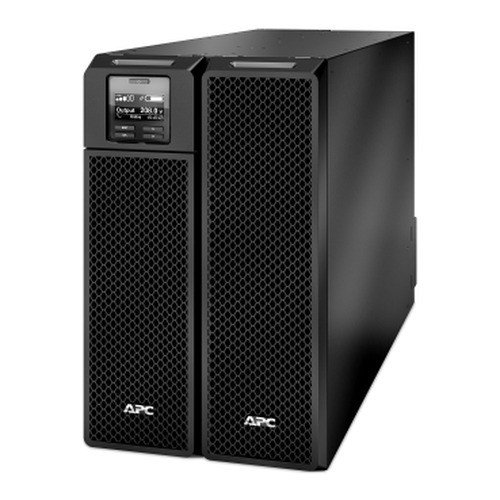
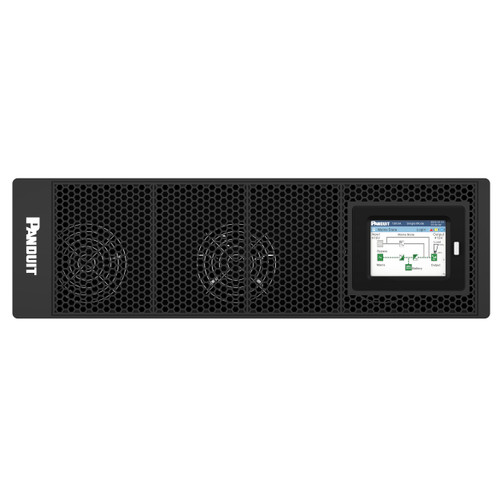
Both the APC Smart-UPS On-Line SRT10KXLT and the Panduit SteadySine U10N32V are 10 kVA rack-mount UPS units aimed at protecting critical IT loads in data center, edge, and enterprise environments. Where they fundamentally diverge is topology: the APC uses double-conversion (online) architecture, while the Panduit is line-interactive with AVR. This comparison examines how that architectural difference, along with power protection depth, physical integration, and management capabilities, should drive a buyer's decision between these two products.
In This Guide
Which UPS topology delivers deeper power protection for sensitive loads?
The SRT10KXLT uses double-conversion (online) topology, meaning output power is continuously regenerated from a regulated inverter regardless of input quality. Input voltage is accepted across a wide 100–275 V window at 40–70 Hz, and the output is held between 208–240 V with a crest factor of 3:1 and 55 dB of EMI/RFI noise filtering. Because the load never draws directly from raw utility power, transfer time to battery is effectively zero.
The U10N32V uses line-interactive topology with AVR (Automatic Voltage Regulation), accepting 160–280 V AC input. In normal operation the load runs off utility power with the inverter only correcting voltage sags/swells; a transfer to full battery occurs only when input falls outside the AVR range. Panduit specifies a transfer time of less than 4 ms. No crest factor or EMI/RFI filtering rating is provided in the supplied specifications.
For environments with highly sensitive equipment or sustained poor power quality, double-conversion offers zero transfer time and continuous output conditioning. Line-interactive with AVR is well-suited to sites with mostly stable utility power where the occasional sag or swell is the primary concern.
How do efficiency, battery design, and runtime management compare?
Panduit rates the U10N32V at up to 98% efficiency in ECO mode and specifies hot-swappable battery modules, allowing battery replacement without powering down the load. The U10N32V also carries Energy Star and California Title 20 compliance certifications, which matter for facilities with energy-efficiency mandates. No runtime figures or battery capacity specifications are provided in the supplied specs for either unit.
The SRT10KXLT provides a 480 J surge energy rating, which is a concrete protection metric. No efficiency percentage is stated in the provided specifications for the SRT10KXLT. The SRT10KXLT's battery replaceability configuration is not specified in the supplied data.
Buyers who prioritize operating cost and energy compliance should note that only the U10N32V carries a documented efficiency rating (up to 98% ECO) and regulatory certifications. The SRT10KXLT's 480 J surge rating is a quantified protection metric absent from the Panduit data set.
Which unit offers broader connectivity and remote management options?
The SRT10KXLT provides two Ethernet LAN (RJ-45) ports running 10/100Base-T, a USB port, and audible alarms. The dual-Ethernet configuration supports network-based monitoring in redundant or segmented network architectures. Output receptacles are six outlets: NEMA L6-20R and NEMA L6-30R, suitable for standard North American 208 V branch circuits.
The U10N32V specifies LCD display, SNMP, Modbus, and web interface management — four distinct management interfaces without requiring a separate network management card. Modbus support is particularly relevant for building management systems (BMS) and industrial control integration. The number and type of output receptacles are not specified in the supplied data for the U10N32V.
The SRT10KXLT's dual-Ethernet ports are a concrete hardware differentiator for networked monitoring. The U10N32V's native Modbus support broadens integration to BMS and SCADA platforms without add-on cards. Buyers integrating into existing network management or building automation infrastructure should weigh which protocol set aligns with their stack.
Which should you choose: the SRT10KXLT or the U10N32V?
Our take: The SRT10KXLT is the stronger choice when continuous output conditioning and zero transfer time are non-negotiable for sensitive loads. Its double-conversion topology regenerates output power constantly — a capability the line-interactive U10N32V cannot match — while its 100–275 V wide input window exceeds the U10N32V's 160–280 V range on the low end, providing protection in more severe brownout conditions. Its 55 dB EMI/RFI filtering and 480 J surge rating are quantified protection metrics absent from Panduit's supplied specs. Conversely, the U10N32V's up to 98% ECO-mode efficiency, hot-swappable batteries, Energy Star/California Title 20 compliance, and native Modbus plus SNMP management make it the better fit for energy-conscious data center operators running stable utility power who need BMS integration and serviceability without load downtime. Neither unit's runtime, weight, or output receptacle count for the U10N32V are available in the supplied specifications.
Side-by-Side Comparison
Spec-for-spec, from manufacturer data.
| Specification | APC by Schneider Electric SRT10KXLT | Panduit U10N32V |
|---|---|---|
| UPS Topology | Double-Conversion (Online) | Line-Interactive with AVR |
| Output Capacity | 10 kVA / 10,000 W | 10 kVA / 10 kW |
| Output Waveform | Sine Wave | Pure Sine Wave (SteadySine) |
| Input Voltage Range | 100–275 V | 160–280 V AC |
| Input Frequency Range | 40–70 Hz | — |
| Transfer Time to Battery | Zero (continuous conversion) | <4 ms |
| Output Voltage Range | 208–240 V | — |
| Surge Energy Rating | 480 J | — |
| EMI/RFI Filtering | 55 dB | — |
| Crest Factor | 3:1 | — |
| Efficiency | — | Up to 98% (ECO Mode) |
| Battery Design | — | Hot-Swappable Modules |
| Form Factor | — | 3U Rack-Mount (12" H × 17.3" W) |
| AC Outlets | 6 (NEMA L6-20R, NEMA L6-30R) | — |
| Network Ports | 2 × RJ-45 (10/100Base-T) | SNMP, Modbus, Web Interface, LCD |
| Energy Compliance | — | Energy Star, California Title 20 |
Frequently Asked Questions
Which should you choose: the SRT10KXLT or the U10N32V?
The SRT10KXLT is the stronger choice when continuous output conditioning and zero transfer time are non-negotiable for sensitive loads. Its double-conversion topology regenerates output power constantly — a capability the line-interactive U10N32V cannot match — while its 100–275 V wide input window exceeds the U10N32V's 160–280 V range on the low end, providing protection in more severe brownout conditions. Its 55 dB EMI/RFI filtering and 480 J surge rating are quantified protection metrics absent from Panduit's supplied specs. Conversely, the U10N32V's up to 98% ECO-mode efficiency, hot-swappable batteries, Energy Star/California Title 20 compliance, and native Modbus plus SNMP management make it the better fit for energy-conscious data center operators running stable utility power who need BMS integration and serviceability without load downtime. Neither unit's runtime, weight, or output receptacle count for the U10N32V are available in the supplied specifications.
Does the SRT10KXLT or U10N32V offer better protection during sustained poor power quality?
The SRT10KXLT offers better protection in sustained poor-power-quality conditions. Its double-conversion topology continuously regenerates output from a regulated inverter — the load never draws directly from raw utility — and its input range extends down to 100 V, well below the U10N32V's 160 V minimum. The U10N32V uses line-interactive with AVR, which corrects voltage sags within its 160–280 V window but transfers to battery only outside that range, with a specified transfer time of less than 4 ms.
Which unit is easier to service without shutting down the load?
Based on the supplied specifications, the U10N32V specifies hot-swappable battery modules, meaning batteries can be replaced while the unit remains online and the load stays powered. The SRT10KXLT's battery serviceability configuration is not described in the provided specifications, so a direct comparison cannot be made on that point.
Which UPS integrates better with building management systems (BMS) or SCADA platforms?
The U10N32V includes native Modbus support alongside SNMP, LCD, and web interface management — Modbus is the standard protocol used by most BMS and SCADA platforms, making it the better fit for those integration scenarios without requiring additional hardware. The SRT10KXLT provides dual 10/100Base-T Ethernet ports and USB, with SNMP-based monitoring implied by the network ports, but Modbus is not listed in its supplied specifications.
More UPS Comparisons
- APC by Schneider Electric SRTL10KRM4UT-5KTF2 vs Panduit U10N32V
- APC by Schneider Electric SRTL10KRM4UT-5KTF2 vs Panduit U10N11V
- APC by Schneider Electric SRTL10KRM4UT-5KTF2 vs Panduit U10N12V
- APC by Schneider Electric SRTL10KRM4UT-5KTF2 vs Vertiv GXT5-10KHVRT5UXLN
- APC by Schneider Electric SRTL10KRM4UT-5KTF2 vs APC by Schneider Electric E3SUPS10KFBS
- APC by Schneider Electric SRTL10KRM4UT-5KTF2 vs APC by Schneider Electric SRT10KRMXLT-10KTF
UPS Buying Guides
Get a Second Opinion on Your Camera Choice
Share your site layout, coverage goals, and budget. Our team will validate the camera selection, flag anything we would change, and recommend products that match the use case.