
APC by Schneider Electric SRT10KXLT-5KTF2 vs Panduit U10N32V: Specification Comparison
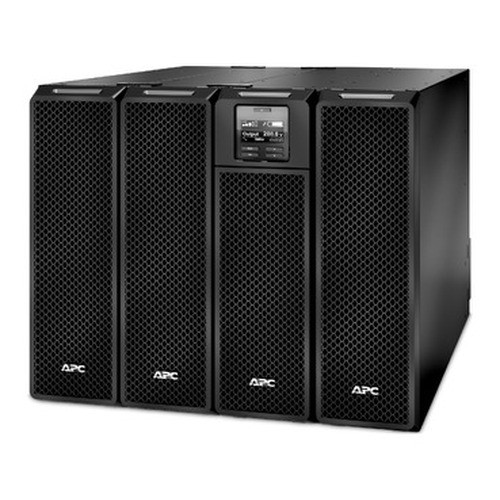
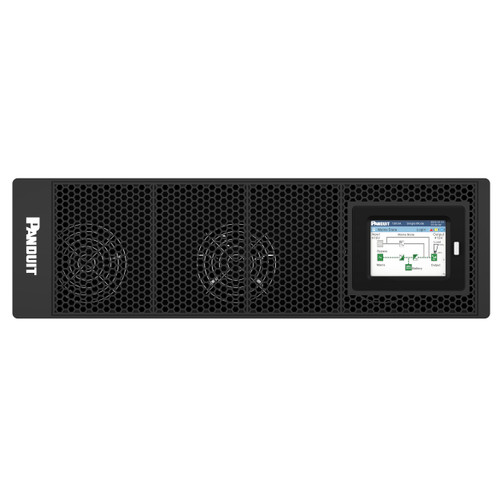
Both the APC SRT10KXLT-5KTF2 and the Panduit U10N32V are rack-mount 10 kVA UPS units targeting data center, enterprise, and edge deployments. The APC is a double-conversion online unit bundled with two 208/240V-to-120V 5 kVA step-down transformers, while the Panduit SteadySine is a line-interactive unit with AVR in a 3U rack chassis. Buyers selecting a 10 kVA UPS for mixed-voltage server rooms or edge racks will likely evaluate both; the topology difference is the central trade-off.
In This Guide
- Which UPS topology and output power quality best protects sensitive loads?
- How do input voltage range, output voltage flexibility, and physical form factor compare?
- What management interfaces, battery serviceability, and ecosystem support does each unit offer?
- Which should you choose: the SRT10KXLT-5KTF2 or the U10N32V?
- Side-by-Side Specs
- FAQ
Which UPS topology and output power quality best protects sensitive loads?
The APC SRT10KXLT-5KTF2 uses double-conversion (online) topology, meaning the load runs entirely off the inverter at all times. This eliminates any transfer gap on a utility failure and delivers output voltage THD of 2% with a 3:1 crest factor and a pure sine waveform—numbers specified explicitly in the product data. Surge energy rating is stated at 480 J.
The Panduit U10N32V uses line-interactive topology with AVR and a <4 ms transfer time. It outputs a pure sine wave (branded SteadySine) and claims up to 98% efficiency in ECO Mode. Output voltage THD and crest factor are not provided in the available Panduit specifications. The <4 ms transfer is fast for line-interactive but is not zero, unlike a true online design.
For loads that cannot tolerate any switchover gap—medical, broadcast, or high-frequency switching power supplies—double-conversion is the more protective topology. Line-interactive with AVR is well-proven for standard IT loads and its efficiency advantage (98% ECO Mode; APC efficiency is not specified in the provided data) reduces operating cost.
How do input voltage range, output voltage flexibility, and physical form factor compare?
The APC SRT10KXLT-5KTF2 accepts 100–275 V AC input and delivers outputs selectable between 120 V and 240 V, supported by the two bundled 5 kVA step-down transformers. Input frequency is 40–70 Hz. Form factor dimensions are not stated in the provided specifications. The unit is specifically designed to bridge 208/240 V feeds down to 120 V loads, making it valuable in mixed-voltage legacy environments.
The Panduit U10N32V operates on a 160–280 V AC input range (with AVR) and is housed in a 3U rack enclosure measuring 12 inches high by 17.3 inches wide (306 mm × 440 mm). Depth is not provided. Output voltage options beyond the 10 kVA / 10 kW capacity figure are not specified in the available data. The narrower low-end input floor (160 V vs. APC's 100 V) means the Panduit offers less headroom on severely sagging utility feeds.
The APC's bundled step-down transformers add installation value where 120 V outlets are needed off a 208 V feed—a common data-center need. The Panduit's 3U rack dimensions are explicitly stated, aiding rack-space planning; equivalent APC dimensions are absent from the provided specifications.
What management interfaces, battery serviceability, and ecosystem support does each unit offer?
The APC SRT10KXLT-5KTF2 supports web-based management, audible alarms, and auto-restart; specific protocols (SNMP, Modbus, etc.) are not enumerated in the provided specifications. APC's SmartConnect and EcoStruxure ecosystems are not mentioned in the supplied data and cannot be cited.
The Panduit U10N32V specifies LCD display, SNMP, Modbus, and web interface management—four distinct channels explicitly listed. It also carries Energy Star and California Title 20 compliance certifications and uses hot-swappable battery modules, allowing battery replacement without a maintenance window. None of these certifications or the hot-swap feature are specified for the APC unit in the provided data.
Battery hot-swap is a meaningful operational differentiator for 24/7 environments where a planned shutdown for battery service is costly. Modbus support on the Panduit opens integration with building-management and DCIM systems beyond standard SNMP. The APC's auto-restart is explicitly specified; auto-restart capability for the Panduit is not stated in the available data.
Which should you choose: the SRT10KXLT-5KTF2 or the U10N32V?
Our take: The SRT10KXLT-5KTF2 is the stronger choice when absolute zero-transfer-time protection and mixed-voltage flexibility are required. Its double-conversion topology delivers continuous inverter-driven output with no switchover gap, versus the Panduit's specified <4 ms line-interactive transfer. Its 100–275 V input range is 60 V wider on the low end than the Panduit's 160–280 V, providing more resilience on weak utility feeds. The two bundled 5 kVA step-down transformers directly address 208 V-to-120 V mixed loads at no extra SKU cost. However, the U10N32V counters with explicitly specified hot-swappable batteries (no maintenance downtime), four named management protocols (LCD, SNMP, Modbus, web), and Energy Star / California Title 20 compliance—none of which are confirmed in the APC's provided specs. Buyers in always-on, single-voltage (160–280 V) data centers prioritizing serviceability and protocol breadth should weigh the Panduit seriously.
Side-by-Side Comparison
Spec-for-spec, from manufacturer data.
| Specification | APC by Schneider Electric SRT10KXLT-5KTF2 | Panduit U10N32V |
|---|---|---|
| UPS Topology | Double-Conversion (Online) | Line-Interactive with AVR |
| Output Capacity | 10 kVA / 10,000 W | 10 kVA / 10 kW |
| Output Waveform | Sine Wave | Pure Sine Wave (SteadySine) |
| Transfer Time | 0 ms (online — no transfer) | <4 ms |
| Input Voltage Range | 100–275 V AC | 160–280 V AC |
| Input Frequency | 40–70 Hz | — |
| Output Voltage Range | 120–240 V | — |
| Output Voltage THD | 2% | — |
| Crest Factor | 3:1 | — |
| Surge Energy Rating | 480 J | — |
| Efficiency | — | Up to 98% (ECO Mode) |
| Battery Serviceability | — | Hot-Swappable Modules |
| Management Interfaces | Web-based | LCD, SNMP, Modbus, Web Interface |
| Form Factor / Height | — | 3U Rack-Mount / 12" (306 mm) H × 17.3" (440 mm) W |
| Compliance Certifications | — | Energy Star, California Title 20 |
| Bundled Step-Down Transformers | 2 × 5 kVA (208/240 V → 120 V) | — |
Frequently Asked Questions
Which should you choose: the SRT10KXLT-5KTF2 or the U10N32V?
The SRT10KXLT-5KTF2 is the stronger choice when absolute zero-transfer-time protection and mixed-voltage flexibility are required. Its double-conversion topology delivers continuous inverter-driven output with no switchover gap, versus the Panduit's specified <4 ms line-interactive transfer. Its 100–275 V input range is 60 V wider on the low end than the Panduit's 160–280 V, providing more resilience on weak utility feeds. The two bundled 5 kVA step-down transformers directly address 208 V-to-120 V mixed loads at no extra SKU cost. However, the U10N32V counters with explicitly specified hot-swappable batteries (no maintenance downtime), four named management protocols (LCD, SNMP, Modbus, web), and Energy Star / California Title 20 compliance—none of which are confirmed in the APC's provided specs. Buyers in always-on, single-voltage (160–280 V) data centers prioritizing serviceability and protocol breadth should weigh the Panduit seriously.
Does the topology difference between these two units actually matter for a standard server room?
Yes, in a practical sense. The APC SRT10KXLT-5KTF2 uses double-conversion (online) topology, so the load never sees raw utility power and there is no transfer delay on a fault. The Panduit U10N32V is line-interactive with a specified transfer time of <4 ms. For most modern server power supplies with hold-up times of 16–20 ms, <4 ms is adequate. For loads with very tight power-quality requirements—or facilities on weak utility feeds where the APC's 100 V low-end input tolerance matters—the double-conversion design offers a measurable safety margin.
Can I replace the batteries on either unit without taking it offline?
The Panduit U10N32V explicitly specifies hot-swappable battery modules, meaning batteries can be replaced under load without a shutdown. The APC SRT10KXLT-5KTF2 specifications provided do not state whether its batteries are hot-swappable. Buyers for whom battery serviceability without downtime is a hard requirement should confirm APC's hot-swap capability directly with the manufacturer before selecting the SRT10KXLT-5KTF2.
Which unit is better if my data center uses 208 V distribution but I have legacy 120 V equipment?
The APC SRT10KXLT-5KTF2 is purpose-built for this scenario. It ships with two 208/240 V-to-120 V 5 kVA step-down transformers included in the SKU, allowing 120 V loads to be served directly from a 208 V feed without purchasing separate transformer hardware. The Panduit U10N32V specifications do not mention bundled step-down transformers or 120 V output capability; its output configuration details beyond 10 kVA / 10 kW are not provided in the available data.
More UPS Comparisons
- APC by Schneider Electric SRTL10KRM4UT-5KTF2 vs Panduit U10N32V
- APC by Schneider Electric SRTL10KRM4UT-5KTF2 vs Panduit U10N11V
- APC by Schneider Electric SRTL10KRM4UT-5KTF2 vs Panduit U10N12V
- APC by Schneider Electric SRTL10KRM4UT-5KTF2 vs Vertiv GXT5-10KHVRT5UXLN
- APC by Schneider Electric SRTL10KRM4UT-5KTF2 vs APC by Schneider Electric E3SUPS10KFBS
- APC by Schneider Electric SRTL10KRM4UT-5KTF2 vs APC by Schneider Electric SRT10KRMXLT-10KTF
UPS Buying Guides
Get a Second Opinion on Your Camera Choice
Share your site layout, coverage goals, and budget. Our team will validate the camera selection, flag anything we would change, and recommend products that match the use case.