
APC by Schneider Electric SRT10KXLT-5KTF2 vs Panduit U10N12V: Specification Comparison
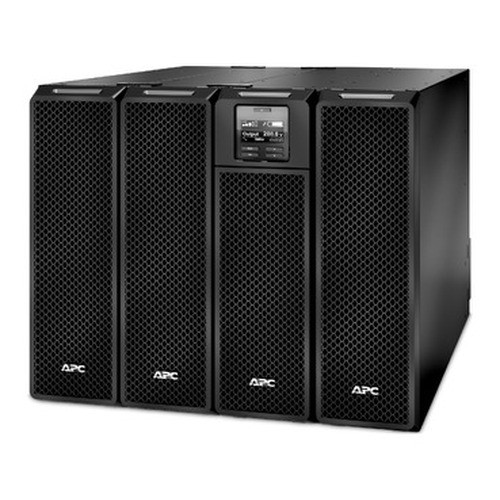
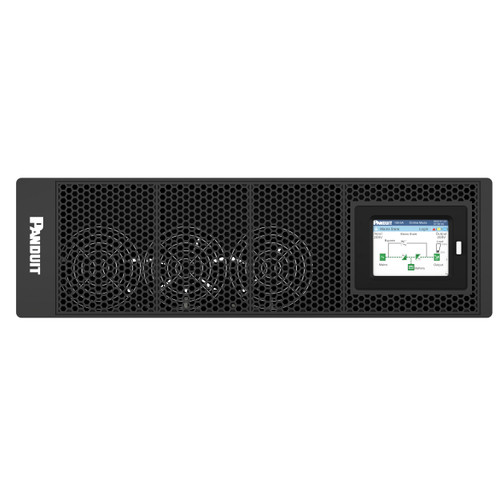
Both the APC SRT10KXLT-5KTF2 and the Panduit U10N12V are 10 kVA true online double-conversion UPS units aimed at data center, edge, and enterprise rack environments. The APC is a tower/rack hybrid with dual integrated 208/240V-to-120V step-down transformers, while the Panduit is a 2U rack-mount with hot-swappable battery modules. Buyers comparing these are typically weighing transformer-integrated input flexibility and APC's deep ecosystem against Panduit's compact 2U footprint, front-serviceability, and broad SNMP management stack.
In This Guide
- How do the power architecture and input/output voltage capabilities differ between these two 10 kVA UPS units?
- What runtime, battery serviceability, and physical deployment options does each unit provide?
- How do the management interfaces, monitoring capabilities, and ecosystem integration compare?
- Which should you choose: the SRT10KXLT-5KTF2 or the U10N12V?
- Side-by-Side Specs
- FAQ
How do the power architecture and input/output voltage capabilities differ between these two 10 kVA UPS units?
The SRT10KXLT-5KTF2 operates on a double-conversion online topology with a specified input range of 100–275 V and accepts input frequencies of 40–70 Hz, offering unusually wide tolerance for international or generator-backed installations. Its distinguishing feature is the inclusion of two integrated 208/240V-to-120V 5 kVA step-down transformers, meaning the unit can receive higher-voltage facility power and simultaneously deliver 120 V output — eliminating the need for separate transformer hardware. Output THD is specified at 2% with a 3:1 crest factor and a true sine waveform.
The U10N12V is likewise a true online double-conversion unit. Its input range is 160–280 V AC, which is narrower at the low end (160 V vs. 100 V) but slightly wider at the high end (280 V vs. 275 V). Output voltage is 120 V AC ±2%. Panduit does not specify output THD, crest factor, waveform type, or input frequency tolerance in the provided specs. The U10N12V does not include integrated step-down transformers; it is designed for direct rack installation in environments already supplying the correct input voltage range.
What runtime, battery serviceability, and physical deployment options does each unit provide?
The SRT10KXLT-5KTF2 specs do not include a rated runtime figure at full or partial load. Physical form factor is not specified in the provided data — the model name and transformer bundle suggest a tower or combined tower/rack configuration, but rack unit height is not stated. Noise level is specified at 55 dB. Surge energy rating is 480 J.
The U10N12V is a 2U rack-mount unit (17.3 in wide × 10.3 in tall / 440 mm × 262 mm), a meaningful footprint advantage in dense rack environments. Panduit specifies a runtime of 5–8 minutes typical at full 10 kVA load. Battery modules are hot-swappable sealed lead-acid, front-accessible, enabling maintenance without pulling the unit from the rack or powering down. No surge energy rating or noise level is provided for the U10N12V.
How do the management interfaces, monitoring capabilities, and ecosystem integration compare?
The SRT10KXLT-5KTF2 includes web-based management, audible alarms, and auto-restart — all confirmed in the spec sheet. APC's Smart-UPS SRT line broadly supports SNMP and integration with APC's EcoStruxure/PowerChute ecosystem, though specific SNMP version support and LCD/display features are not enumerated in the provided specs for this SKU.
The U10N12V provides SNMP v1/v2c/v3 and HTTP management interfaces plus an LCD front-panel status monitor — all explicitly stated in the provided specs. SNMP v3 support indicates encrypted, authenticated network management, which is relevant for security-conscious enterprise and MTDC deployments. Panduit positions the U10N12V against APC's SRT10KRMXLI, Eaton GXT5-10KIRT2UXL, and Tripp Lite SU10000RT3UG per the provided competitor cross-reference. Auto-restart and audible alarm capabilities are not specified for the U10N12V.
Which should you choose: the SRT10KXLT-5KTF2 or the U10N12V?
Our take: The SRT10KXLT-5KTF2 is the stronger choice when the facility supplies 208/240 V and equipment loads require 120 V, because its two integrated 5 kVA step-down transformers eliminate separate transformer procurement and wiring. Key spec deltas: the APC accepts input as low as 100 V versus the Panduit's 160 V floor — a 60 V advantage in low-voltage or generator-backed scenarios; APC specifies 2% output THD versus no stated figure for the Panduit, which matters for sensitive lab or broadcast loads; and APC provides a 480 J surge energy rating versus none stated for the U10N12V. Conversely, the U10N12V wins on rack density (2U with defined dimensions) and serviceability (hot-swap front-access batteries with a stated 5–8 minute full-load runtime), plus explicit SNMP v3 management. Choose the APC where transformer integration and wide input tolerance are priorities; choose the Panduit for tight rack budgets requiring front-serviceable batteries and verified SNMP v3 oversight.
Side-by-Side Comparison
Spec-for-spec, from manufacturer data.
| Specification | APC by Schneider Electric SRT10KXLT-5KTF2 | Panduit U10N12V |
|---|---|---|
| Topology | Double-Conversion (Online) | True Online Double-Conversion |
| Capacity (VA) | 10,000 VA | 10,000 VA |
| Capacity (Watts) | 10,000 W | Not specified |
| Input Voltage Range | 100–275 V | 160–280 V AC |
| Input Frequency | 40–70 Hz | Not specified |
| Output Voltage | 120–240 V | 120 V AC ±2% |
| Output Waveform | Sine | Not specified |
| Output THD | 2% | — |
| Crest Factor | 3:1 | — |
| Surge Energy Rating | 480 J | — |
| Integrated Step-Down Transformers | Yes — two 208/240V→120V 5 kVA | No |
| Form Factor | Not specified in provided specs | 2U Rack-Mount |
| Dimensions (W × H) | Not specified | 17.3 in × 10.3 in (440 × 262 mm) |
| Battery Serviceability | Not specified | Hot-swappable, front-accessible |
| Runtime at Full Load | Not specified | 5–8 min typical at 10 kVA |
| Management Interface | Web-based | SNMP v1/v2c/v3, HTTP, LCD display |
| Noise Level | 55 dB | — |
| Auto-Restart | Yes | Not specified |
| Audible Alarm | Yes | Not specified |
Frequently Asked Questions
Which should you choose: the SRT10KXLT-5KTF2 or the U10N12V?
The SRT10KXLT-5KTF2 is the stronger choice when the facility supplies 208/240 V and equipment loads require 120 V, because its two integrated 5 kVA step-down transformers eliminate separate transformer procurement and wiring. Key spec deltas: the APC accepts input as low as 100 V versus the Panduit's 160 V floor — a 60 V advantage in low-voltage or generator-backed scenarios; APC specifies 2% output THD versus no stated figure for the Panduit, which matters for sensitive lab or broadcast loads; and APC provides a 480 J surge energy rating versus none stated for the U10N12V. Conversely, the U10N12V wins on rack density (2U with defined dimensions) and serviceability (hot-swap front-access batteries with a stated 5–8 minute full-load runtime), plus explicit SNMP v3 management. Choose the APC where transformer integration and wide input tolerance are priorities; choose the Panduit for tight rack budgets requiring front-serviceable batteries and verified SNMP v3 oversight.
Does either UPS include integrated step-down transformers, or do I need to buy them separately?
Only the APC SRT10KXLT-5KTF2 includes integrated step-down transformers — specifically two 208/240V-to-120V 5 kVA units bundled with the UPS. The Panduit U10N12V does not include or specify integrated step-down transformers; buyers supplying 120 V loads from a higher-voltage source would need external transformer hardware with the Panduit.
Which unit is better suited for a high-density rack installation where minimizing rack space matters?
The Panduit U10N12V is specified as a 2U rack-mount unit (17.3 in × 10.3 in), making it a defined, compact rack footprint. The APC SRT10KXLT-5KTF2 does not have a rack unit height specified in the provided specs — its model designation and dual-transformer bundle suggest a tower or hybrid form factor, which typically requires more space or a separate rack-mount kit. If rack-unit density is a primary constraint, the U10N12V has the advantage based on available data.
Which UPS offers more robust remote management for enterprise or data center monitoring?
The Panduit U10N12V explicitly specifies SNMP v1/v2c/v3 and HTTP management plus an LCD front-panel display. The APC SRT10KXLT-5KTF2 specifies web-based management but does not enumerate SNMP version support in the provided specs. For environments requiring verified SNMP v3 encrypted management, the Panduit's spec sheet provides that confirmation; the APC's SNMP capabilities would need to be confirmed against APC's separate datasheet or network management card documentation.
More UPS Comparisons
- APC by Schneider Electric SRTL10KRM4UT-5KTF2 vs Panduit U10N32V
- APC by Schneider Electric SRTL10KRM4UT-5KTF2 vs Panduit U10N11V
- APC by Schneider Electric SRTL10KRM4UT-5KTF2 vs Panduit U10N12V
- APC by Schneider Electric SRTL10KRM4UT-5KTF2 vs Vertiv GXT5-10KHVRT5UXLN
- APC by Schneider Electric SRTL10KRM4UT-5KTF2 vs APC by Schneider Electric E3SUPS10KFBS
- APC by Schneider Electric SRTL10KRM4UT-5KTF2 vs APC by Schneider Electric SRT10KRMXLT-10KTF
UPS Buying Guides
Get a Second Opinion on Your Camera Choice
Share your site layout, coverage goals, and budget. Our team will validate the camera selection, flag anything we would change, and recommend products that match the use case.