
APC by Schneider Electric SMX2000RMLV2U vs CyberPower PR2000RT2UCN: Specification Comparison
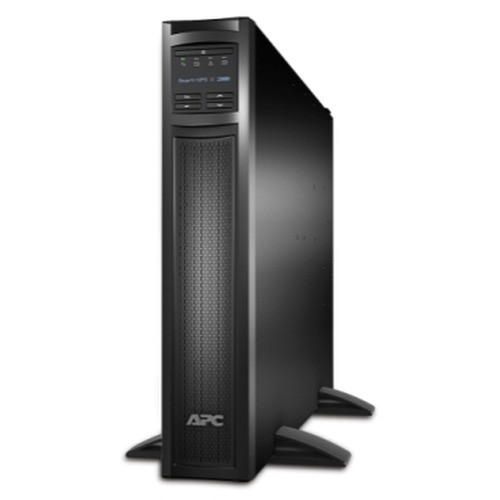
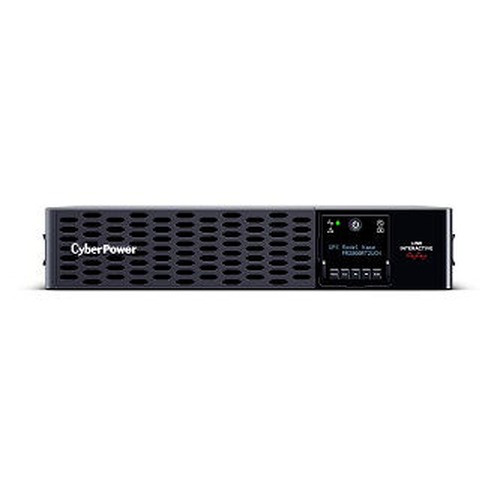
Both the APC SMX2000RMLV2U and CyberPower PR2000RT2UCN are 2000VA-class line-interactive rack/tower UPS units designed for server rooms, IT closets, and critical equipment protection at 120 V AC. They target the same buyer segment — IT managers and integrators needing runtime buffer, power conditioning, and remote management for mid-density loads. The comparison covers power capacity and protection, runtime and battery characteristics, and management and integration capabilities.
In This Guide
- Which unit delivers better power capacity and surge protection?
- What are the runtime and battery recharge characteristics of each unit?
- How do the two units compare on management interfaces, software, and certifications?
- Which should you choose: the SMX2000RMLV2U or the PR2000RT2UCN?
- Side-by-Side Specs
- FAQ
Which unit delivers better power capacity and surge protection?
The CyberPower PR2000RT2UCN holds a measurable advantage in rated output power: it is specified at 2000 VA / 2000 W, yielding a unity power factor. The APC SMX2000RMLV2U is rated at 1.92 kVA / 1800 W, producing a 0.9375 power factor. For loads that draw close to the full nameplate wattage, the PR2000RT2UCN provides 200 W more headroom.
Surge suppression is substantially higher on the PR2000RT2UCN at 2430 J versus 540 J on the SMX2000RMLV2U — a 4.5× difference. Buyers protecting equipment from utility transients or in regions with unstable power should weight this heavily. The SMX2000RMLV2U specifies output voltage THD at 5% and efficiency at 98%; the PR2000RT2UCN does not provide equivalent THD or efficiency figures in the supplied specs.
Input voltage window differs slightly: the SMX2000RMLV2U accepts 75–154 V; the PR2000RT2UCN accepts 75–149 V standard range with an adjustable range of 70–155 V. Both units accept 50/60 Hz input (APC: 50/60 Hz stated; CyberPower: 47–63 Hz). The PR2000RT2UCN includes a 20 A circuit breaker; no equivalent is specified for the SMX2000RMLV2U.
What are the runtime and battery recharge characteristics of each unit?
The CyberPower PR2000RT2UCN is the only unit that specifies runtime figures: 13.5 minutes at half load and 4.5 minutes at full load. The APC SMX2000RMLV2U does not include runtime data in the provided specifications; buyers requiring a runtime estimate for the APC unit must consult APC's published runtime curves separately.
Both units use sealed lead-acid (VRLA) battery technology and share an identical typical recharge time of 3 hours. The PR2000RT2UCN specifies 4 batteries; the SMX2000RMLV2U does not state battery quantity in the provided specs.
The SMX2000RMLV2U supports external battery packs (the 'X' series platform is known for this), but no external battery expansion spec is provided in the data supplied here, so no claim can be made on that basis. No battery hot-swap specification is stated for either unit in the provided data.
How do the two units compare on management interfaces, software, and certifications?
The PR2000RT2UCN offers a broader native management stack: USB, Serial, SNMP, Cloud monitoring, Relay, and EPO are all listed. It ships with PowerPanel® Business software and supports the optional RMCARD205 for remote management. It also carries a $400,000 connected equipment guarantee and a 3-year limited warranty. Safety certifications are stated as UL1778 / CSA C22.2 No 107.3 and FCC Class B / VCCI.
The SMX2000RMLV2U specifies Serial and EPO interfaces. It also confirms an audible alarm. No SNMP, cloud, or management software is listed in the provided specifications, and no connected equipment guarantee or warranty term is provided in the supplied data. Noise is specified at 55 dB versus the PR2000RT2UCN's 52.5 dBA.
Outlet configurations differ: the SMX2000RMLV2U provides 7 outlets in a mix of NEMA 5-15R and NEMA 5-20R types. The PR2000RT2UCN provides 8 outlets, all NEMA 5-20R, on a 10 ft. cord with a NEMA 5-20P plug. Buyers needing mixed outlet types may prefer the APC; those standardizing on 5-20R benefit from CyberPower's uniformity and the additional outlet.
Which should you choose: the SMX2000RMLV2U or the PR2000RT2UCN?
Our take: The PR2000RT2UCN is the stronger choice when watt-dense loads, high surge exposure, richer out-of-box management, and a documented warranty matter most. It delivers 200 W more output capacity (2000 W vs 1800 W), provides 4.5× greater surge suppression (2430 J vs 540 J), and publishes runtime figures (13.5 min at half load) while the SMX2000RMLV2U's runtime is absent from the provided specs. Its native SNMP, cloud, and PowerPanel® Business support require no add-on card for basic network visibility. The SMX2000RMLV2U's documented 98% efficiency and 5% output THD are concrete power-quality metrics the PR2000RT2UCN does not match in the supplied specs, making it the more defensible choice for environments where clean sine-wave conditioning quality must be verified on paper. Buyers in APC-standardized environments or those needing mixed NEMA 5-15R/5-20R outlets should also factor in platform compatibility.
Side-by-Side Comparison
Spec-for-spec, from manufacturer data.
| Specification | APC by Schneider Electric SMX2000RMLV2U | CyberPower PR2000RT2UCN |
|---|---|---|
| Output Capacity (VA) | 1920 VA | 2000 VA |
| Output Power (W) | 1800 W | 2000 W |
| Power Factor | 0.94 | 1.00 |
| Topology | Line Interactive | Line Interactive |
| Input Voltage Range | 75 – 154 V | 75 – 149 V (adj. 70 – 155 V) |
| Input Frequency | 50 / 60 Hz | 47 – 63 Hz |
| Surge Suppression | 540 J | 2430 J |
| Output THD | 5% | — |
| Efficiency | 98% | — |
| Battery Type | Sealed Lead-Acid (VRLA) | Sealed Lead-Acid |
| Battery Recharge Time | 3 hours | 3 hours |
| Runtime at Half Load | — | 13.5 min |
| Runtime at Full Load | — | 4.5 min |
| Total AC Outlets | 7 (NEMA 5-15R + 5-20R mix) | 8 (all NEMA 5-20R) |
| EPO Support | Yes | Yes |
| Management Interfaces | Serial | USB, Serial, SNMP, Cloud, Relay |
| Noise Level | 55 dB | 52.5 dBA |
| Form Factor | Rackmount / Tower | Rack / Tower (2U) |
| Connected Equipment Guarantee | — | $400,000 |
| Warranty | — | 3-Year Limited |
Frequently Asked Questions
Which should you choose: the SMX2000RMLV2U or the PR2000RT2UCN?
The PR2000RT2UCN is the stronger choice when watt-dense loads, high surge exposure, richer out-of-box management, and a documented warranty matter most. It delivers 200 W more output capacity (2000 W vs 1800 W), provides 4.5× greater surge suppression (2430 J vs 540 J), and publishes runtime figures (13.5 min at half load) while the SMX2000RMLV2U's runtime is absent from the provided specs. Its native SNMP, cloud, and PowerPanel® Business support require no add-on card for basic network visibility. The SMX2000RMLV2U's documented 98% efficiency and 5% output THD are concrete power-quality metrics the PR2000RT2UCN does not match in the supplied specs, making it the more defensible choice for environments where clean sine-wave conditioning quality must be verified on paper. Buyers in APC-standardized environments or those needing mixed NEMA 5-15R/5-20R outlets should also factor in platform compatibility.
Which UPS has more runtime — the SMX2000RMLV2U or the PR2000RT2UCN?
Only the PR2000RT2UCN provides runtime data in the supplied specifications: 13.5 minutes at half load and 4.5 minutes at full load. The SMX2000RMLV2U does not include runtime figures in the provided specs; consult APC's published runtime curves for that model before making a runtime-based decision.
Is the SMX2000RMLV2U or PR2000RT2UCN better for network-managed deployments?
Based on the provided specifications, the PR2000RT2UCN has a clear advantage: it natively lists USB, Serial, SNMP, Cloud, Relay, and EPO interfaces, includes PowerPanel® Business software, and supports the RMCARD205 remote management card. The SMX2000RMLV2U lists only Serial and EPO in its provided specs; no SNMP or management software is documented in the supplied data.
Does the higher surge rating on the PR2000RT2UCN make a practical difference for protecting servers?
The PR2000RT2UCN is rated at 2430 J of surge suppression versus 540 J on the SMX2000RMLV2U — a 4.5× difference based on the provided specifications. For equipment in areas with frequent utility transients or lightning exposure, the higher joule rating provides a larger energy-absorption buffer before the suppressor is consumed. Both units are line-interactive, so both regulate voltage continuously, but the surge clamp capacity differs substantially.
More UPS Comparisons
- APC by Schneider Electric SMX2000LV vs CyberPower PR2000RTXL2UC
- APC by Schneider Electric SMX2000LV vs CyberPower CP2000PFCRM2U
- APC by Schneider Electric SMX2000LV vs CyberPower PR2000RT2UCN
- APC by Schneider Electric SMX2000LV vs Middle Atlantic UPX-EXPANRUN-OL20
- APC by Schneider Electric SMX2000LV vs APC by Schneider Electric SMX2000LVNCUS
- APC by Schneider Electric SMX2000LV vs APC by Schneider Electric SMX2000RMLV2U
UPS Buying Guides
Get a Second Opinion on Your Camera Choice
Share your site layout, coverage goals, and budget. Our team will validate the camera selection, flag anything we would change, and recommend products that match the use case.