
APC by Schneider Electric SMTL1500RM3UCUS vs CyberPower BRG1500AVRLCD2: Specification Comparison
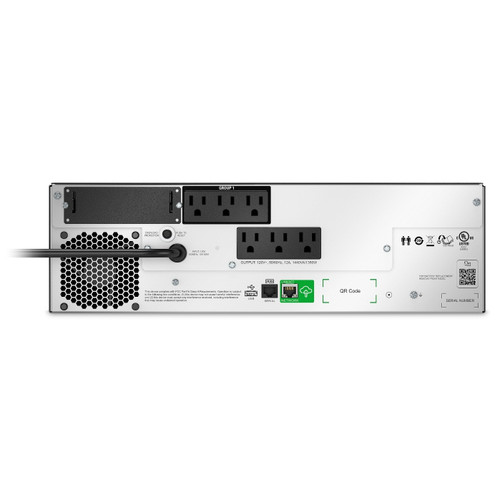
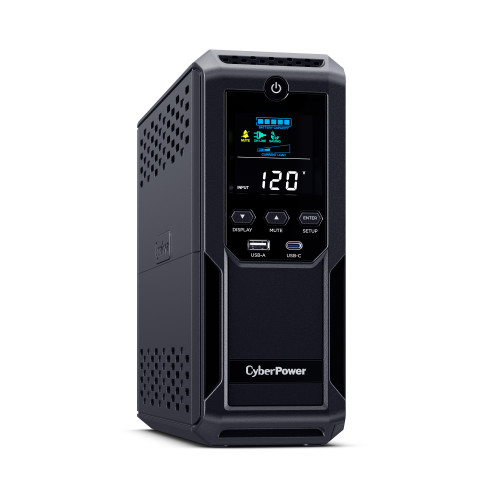
Both the APC SMTL1500RM3UCUS and the CyberPower BRG1500AVRLCD2 are 1500VA line-interactive UPS units rated for 120V AC environments, making them legitimate cross-shop candidates for IT buyers protecting network gear, security appliances, or edge servers. The APC is a rack-mount (3U) unit with a Lithium-Ion battery and TAA compliance targeting data-center and government deployments, while the CyberPower is a mini-tower with Sealed Lead-Acid batteries targeting office or light-IT environments. The comparison centers on power capacity, battery technology and runtime, and management depth.
In This Guide
- Which UPS delivers more usable power and cleaner output to protected equipment?
- How do battery technology, runtime, and replacement lifecycle compare between the two units?
- Which unit provides deeper monitoring, management, and enterprise integration capabilities?
- Which should you choose: the SMTL1500RM3UCUS or the BRG1500AVRLCD2?
- Side-by-Side Specs
- FAQ
Which UPS delivers more usable power and cleaner output to protected equipment?
The APC SMTL1500RM3UCUS is rated at 1,350W / 1,440VA of configurable output power, while the CyberPower BRG1500AVRLCD2 is rated at 900W / 1,500VA. Despite the CyberPower carrying a higher VA nameplate, the APC delivers 450W more real (watt) capacity — a critical gap when protecting high-draw servers or PoE switches near their rated load.
Output waveform is a significant differentiator: the APC produces a true sine wave, while the CyberPower produces a simulated sine wave. True sine wave output is required by active PFC power supplies common in modern servers, NVRs, and managed switches; simulated sine wave can cause instability or damage with such loads. The APC also specifies output voltage distortion of less than 5%, whereas the CyberPower specifies output voltage of 120VAC ±5% but does not publish a distortion figure.
The CyberPower's Automatic Voltage Regulation provides ±10% boost/buck correction without switching to battery. The APC spec does not publish an explicit AVR boost/buck percentage range. The APC input frequency tolerance is ±3Hz on 50/60Hz; the CyberPower specifies an input voltage range of 57–120VAC but does not publish an input frequency tolerance. The CyberPower lists 12 NEMA 5-15R outlets (6 battery-backed, 6 surge-only); the APC outlet count is not provided in the supplied specifications.
How do battery technology, runtime, and replacement lifecycle compare between the two units?
The APC SMTL1500RM3UCUS uses a Lithium-Ion battery with a published expected life of 5–10 years and a typical recharge time of 2 hours. Battery Volt-Amp-Hour capacity is stated as 310VAh and charge power as 154W. No runtime table (minutes at a given load) is included in the provided APC specifications.
The CyberPower BRG1500AVRLCD2 uses two 12V/9Ah Sealed Lead-Acid batteries. Published runtime is 12 minutes at 450W (half load) and 2 minutes at 900W (full load). Typical SLA battery replacement cycles are 3–5 years, though the CyberPower specification does not state an expected battery life figure.
The Lithium-Ion chemistry in the APC unit offers a materially longer service life (5–10 years vs. the industry-typical 3–5 years for SLA), lower weight contribution, and better performance across temperature cycles, but comes at a higher unit cost. The CyberPower's SLA batteries are field-replaceable commodity cells. Neither specification publishes a replacement battery part number or cost. For deployments where battery replacement logistics and total cost of ownership over a 5+ year period matter, the APC's chemistry advantage is concrete; for buyers prioritizing known short-term runtime data, only the CyberPower provides published figures.
Which unit provides deeper monitoring, management, and enterprise integration capabilities?
The APC SMTL1500RM3UCUS provides an RJ-45 Serial port, a Smart-Slot expansion bay (supports APC network management cards), and USB connectivity. The Smart-Slot enables optional SNMP/web card insertion for network-based monitoring, shutdown orchestration, and integration with APC's EcoStruxure / PowerChute ecosystem. The unit carries a multi-function LCD control console and configurable audible alarms.
The CyberPower BRG1500AVRLCD2 provides USB and DB9 Serial interfaces and supports optional SNMP/HTTP management via CyberPower's RMCARD series add-in cards. Included software is PowerPanel Personal for Windows, Mac, and Linux. The unit includes a multifunction LCD displaying load, runtime, voltage, battery status, and faults. Additionally, the CyberPower includes 2 USB charging ports (1× USB-A 2.4A, 1× USB-C 18W PD) and RJ-45 Ethernet data-line surge protection — neither of which is present in the APC specification.
TAA compliance is stated for the APC unit, making it eligible for U.S. federal procurement under the Trade Agreements Act. The APC also carries UL 1973 (battery systems) and UL 1778, plus CSA C22.2 No. 107.3, NOM, and FCC Part 15 Class A. The CyberPower holds UL 1778, cUL 107 5th, FCC DOC Class B, RoHS, and ENERGY STAR certification. The CyberPower's ENERGY STAR listing and 5-year warranty (with a $500,000 connected equipment guarantee) are explicitly stated; the APC warranty period and connected equipment guarantee are not provided in the supplied specifications.
Which should you choose: the SMTL1500RM3UCUS or the BRG1500AVRLCD2?
Our take: The SMTL1500RM3UCUS is the stronger choice when protecting rack-mounted, PFC-equipped equipment in data-center, government, or security-operations environments. First, its true sine wave output versus the BRG1500AVRLCD2's simulated sine wave is a hard requirement for modern active-PFC server and NVR power supplies. Second, its 1,350W real power capacity is 450W higher than the CyberPower's 900W, providing meaningful headroom under load. Third, its Lithium-Ion battery carries a 5–10 year expected life versus SLA's typical 3–5 years, reducing lifecycle replacement cost. The CyberPower BRG1500AVRLCD2 is more appropriate for desktop or light-office deployments where a mini-tower form factor, 12 NEMA 5-15R outlets, built-in USB-C 18W charging, RJ-45 data-line protection, ENERGY STAR certification, and an explicitly stated 5-year warranty with $500,000 connected equipment guarantee are priorities and loads do not require sine wave output.
Side-by-Side Comparison
Spec-for-spec, from manufacturer data.
| Specification | APC by Schneider Electric SMTL1500RM3UCUS | CyberPower BRG1500AVRLCD2 |
|---|---|---|
| Form Factor | 3U Rack-Mount | Mini-Tower |
| Capacity (VA) | 1,440 VA | 1,500 VA |
| Capacity (Watts) | 1,350 W | 900 W |
| Topology | Line-Interactive | Line-Interactive |
| Output Waveform | Sine Wave | Simulated Sine Wave |
| Output Voltage Distortion | Less than 5% | — |
| Transfer Time | 6ms typical / 10ms max | — |
| Battery Type | Lithium-Ion | Sealed Lead-Acid (2× 12V/9Ah) |
| Expected Battery Life | 5–10 years | — |
| Typical Recharge Time | 2 hours | — |
| Published Runtime (Half Load) | — | 12 min at 450W |
| Published Runtime (Full Load) | — | 2 min at 900W |
| Surge Energy Rating | 680 Joules | 1,500 Joules |
| Management Interfaces | RJ-45 Serial, Smart-Slot, USB | USB, DB9 Serial, Optional SNMP/HTTP |
| TAA Compliance | Yes | — |
| Warranty | — | 5 Years / $500,000 Equipment Guarantee |
| Weight | 43 lb (19.5 kg) | 23.8 lb |
| Operating Temperature | 32–104°F (0–40°C) | 32–104°F (0–40°C) |
| Certifications | UL 1778, UL 1973, CSA C22.2 No. 107.3, FCC Class A, NOM, RoHS | UL 1778, cUL 107 5th, FCC Class B, RoHS, ENERGY STAR |
Frequently Asked Questions
Which should you choose: the SMTL1500RM3UCUS or the BRG1500AVRLCD2?
The SMTL1500RM3UCUS is the stronger choice when protecting rack-mounted, PFC-equipped equipment in data-center, government, or security-operations environments. First, its true sine wave output versus the BRG1500AVRLCD2's simulated sine wave is a hard requirement for modern active-PFC server and NVR power supplies. Second, its 1,350W real power capacity is 450W higher than the CyberPower's 900W, providing meaningful headroom under load. Third, its Lithium-Ion battery carries a 5–10 year expected life versus SLA's typical 3–5 years, reducing lifecycle replacement cost. The CyberPower BRG1500AVRLCD2 is more appropriate for desktop or light-office deployments where a mini-tower form factor, 12 NEMA 5-15R outlets, built-in USB-C 18W charging, RJ-45 data-line protection, ENERGY STAR certification, and an explicitly stated 5-year warranty with $500,000 connected equipment guarantee are priorities and loads do not require sine wave output.
Is the SMTL1500RM3UCUS or BRG1500AVRLCD2 better for protecting a network video recorder or server with an active PFC power supply?
The SMTL1500RM3UCUS is the correct choice for active PFC loads. It produces a true sine wave output, which active PFC power supplies require for stable operation. The BRG1500AVRLCD2 produces a simulated sine wave, which can cause instability, overheating, or damage with active PFC equipment.
How long will each UPS run my equipment during a power outage?
The CyberPower BRG1500AVRLCD2 publishes runtime figures of 12 minutes at 450W and 2 minutes at 900W. The APC SMTL1500RM3UCUS does not include a runtime table in the provided specifications; its Battery Volt-Amp-Hour capacity is stated as 310VAh. Buyers requiring a guaranteed runtime figure should consult APC's published runtime curves for the SMTL1500RM3UCUS before purchasing.
Which unit is eligible for U.S. federal government purchasing contracts?
The APC SMTL1500RM3UCUS is explicitly listed as TAA-compliant, making it eligible for U.S. federal procurement under the Trade Agreements Act. The CyberPower BRG1500AVRLCD2 specification does not include a TAA compliance statement.
More UPS Comparisons
- APC by Schneider Electric SMX1500RMI2U vs CyberPower PRL1500RT2UC
- APC by Schneider Electric SMX1500RMI2U vs CyberPower BRG1500AVRLCD2
- APC by Schneider Electric SMX1500RMI2U vs CyberPower PR1500LCD
- APC by Schneider Electric SMX1500RMI2U vs APC by Schneider Electric BR1500MS2
- APC by Schneider Electric SMX1500RMI2U vs APC by Schneider Electric SMTL1500RM3UCUS
- CyberPower PRL1500RT2UC vs APC by Schneider Electric BR1500MS2
UPS Buying Guides
Get a Second Opinion on Your Camera Choice
Share your site layout, coverage goals, and budget. Our team will validate the camera selection, flag anything we would change, and recommend products that match the use case.