
APC by Schneider Electric SMTL1500RM3UC vs CyberPower PRL1500RT2UC: Specification Comparison
Both the APC SMTL1500RM3UC and CyberPower PRL1500RT2UC are 1500VA-class lithium-ion line-interactive rack-mount UPS units targeting server rooms, network closets, and edge deployments requiring battery runtime, pure sine-wave output, and rackmount form factors. This comparison evaluates them across the three axes most critical to installers and IT buyers: power capacity and output quality, battery and runtime characteristics, and communications plus management capabilities. All findings are drawn strictly from the specifications provided.
In This Guide
How do the two units compare on rated power capacity and output quality?
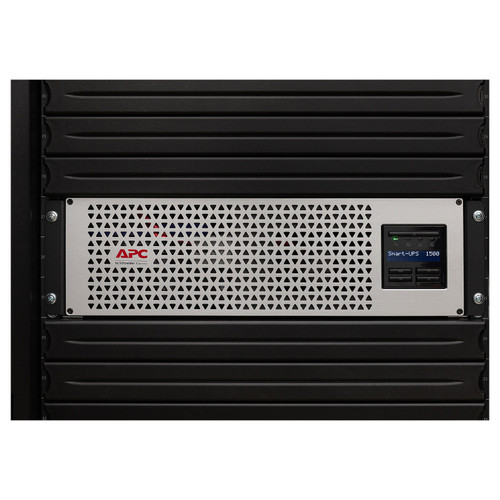
The APC SMTL1500RM3UC is rated at 1,350 W (1.35 kW) / 1,440 VA with a power factor of approximately 0.94, and its output voltage distortion is specified at less than 5%. Its waveform is a sine wave, and transfer time is listed as 6 ms typical, 10 ms maximum. The unit occupies 3U of rack space.
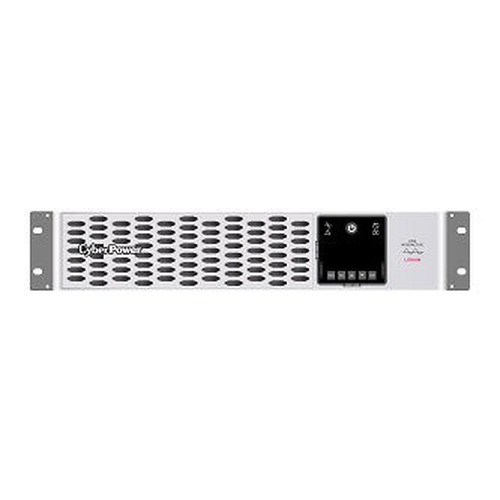
The CyberPower PRL1500RT2UC is rated at 1,500 W / 1,500 VA with an output power factor of 1.0 — meaning its watt and VA ratings are identical, a meaningful advantage for loads that draw close to rated capacity. Output voltage on battery is 100/110/120/125 VAC ±5%, and its on-battery waveform is also a sine wave. Transfer time is 6 ms typical, 11 ms maximum. The CyberPower occupies 2U. Surge suppression is rated at 2,430 J for the CyberPower versus 680 J for the APC. The APC spec lists output frequency sync to mains at 50/60 Hz ±3 Hz; the CyberPower lists on-battery frequency at 50–60 Hz ±1%. The CyberPower includes an internal 15 A circuit breaker and specifies an input voltage range of 70–155 VAC with AVR featuring double boost and single buck, giving it a wider input tolerance window. The APC spec does not enumerate the input voltage range or AVR step count.
What are the battery and runtime characteristics of each unit?
Both units use lithium-ion chemistry and share a 2-hour typical recharge time. The APC SMTL1500RM3UC specifies a battery volt-amp-hour capacity of 310 Wh and a battery charge power of 154 W. Expected battery life is stated as 5–10 years. The APC spec does not provide discrete half-load or full-load runtime figures.
The CyberPower PRL1500RT2UC provides explicit runtime data: 18.7 minutes at half load (750 W) and 8.7 minutes at full load (1,500 W). It uses four 12.8 V / 6 Ah lithium-ion cells (replacement cartridge RB1260x4 identified). The CyberPower spec does not state an expected battery life in years. The APC's 310 Wh capacity figure can be compared against the CyberPower's 4 × 12.8 V × 6 Ah = approximately 307 Wh, putting the two units at roughly equivalent stored energy — but only the CyberPower translates this into published runtime minutes, giving procurement teams a direct sizing reference.
The APC weighs 43 lbs (19.5 kg) at 3U; the CyberPower weighs 54.2 lbs at 2U. The CyberPower's additional weight in a smaller rack footprint is consistent with its four-cell configuration.
Which unit offers stronger communications, management, and ecosystem integration?
The APC SMTL1500RM3UC provides an RJ-45 serial port, a Smart-Slot expansion bay (APC's proprietary network management card slot), and USB. The included accessories cover RS-232 signaling cable and USB cable. Management is handled through APC's ecosystem; the Smart-Slot enables add-on SNMP/network management cards. The control panel is a multi-function LCD. No software title is named in the provided spec; no connected-equipment guarantee figure is listed.
The CyberPower PRL1500RT2UC ships with USB and RS-232 serial as standard interfaces, and adds dry-contact relay, EPO (Emergency Power Off), and cloud connectivity as listed communication options. SNMP/HTTP management is available via the optional RMCARD205 card. The unit bundles PowerPanel® Business Edition management software and carries a $400,000 connected-equipment guarantee. Its FCC classification is Class B (APC is Class A — Class B meets the stricter residential/light-commercial emissions standard). Both units feature multifunction LCD displays.
For environments requiring EPO integration — common in data centers with fire-suppression tie-ins — only the CyberPower lists EPO as a built-in feature in the provided specifications. Both units support optional SNMP expansion, though through different proprietary card ecosystems (APC Smart-Slot vs. CyberPower RMCARD205). Buyers already standardized on APC infrastructure management tools will benefit from Smart-Slot compatibility; buyers seeking a bundled software and cloud-management path gain more out of the box with the CyberPower.
Which should you choose: the SMTL1500RM3UC or the PRL1500RT2UC?
Our take: The PRL1500RT2UC is the stronger choice when rated watt capacity, outlet count, surge suppression headroom, and bundled management features are the primary decision drivers. Concretely: the CyberPower delivers 1,500 W versus the APC's 1,350 W — an 11% capacity advantage on a power-factor-1.0 output — and its surge suppression rating of 2,430 J is 3.6× the APC's 680 J. It also provides eight protected outlets versus an unspecified outlet count in the APC spec, includes EPO capability, ships with PowerPanel® Business Edition software, and carries a $400,000 connected-equipment guarantee with no equivalent stated for the APC. The SMTL1500RM3UC is preferable in APC-standardized environments where Smart-Slot ecosystem compatibility, a published 5–10 year battery life expectation, and a smaller 3U depth (302 mm vs. 500 mm) matter — or where the 3U chassis height is less of a constraint and existing APC management infrastructure is already deployed.
Side-by-Side Comparison
Spec-for-spec, from manufacturer data.
| Specification | APC by Schneider Electric SMTL1500RM3UC | CyberPower PRL1500RT2UC |
|---|---|---|
| Rated Capacity (VA) | 1,440 VA | 1,500 VA |
| Rated Capacity (Watts) | 1,350 W | 1,500 W |
| Output Power Factor | ~0.94 (derived) | 1.0 |
| Topology | Line Interactive | Line Interactive |
| Waveform | Sine Wave | Sine Wave |
| Transfer Time (Typical / Max) | 6 ms / 10 ms | 6 ms / 11 ms |
| Battery Chemistry | Lithium Ion | Lithium Ion |
| Battery Capacity | 310 Wh | ~307 Wh (4 × 12.8 V × 6 Ah) |
| Runtime at Half Load | — | 18.7 min |
| Runtime at Full Load | — | 8.7 min |
| Typical Recharge Time | 2 hours | 2 hours |
| Expected Battery Life | 5–10 years | — |
| Rack Height | 3U | 2U |
| Unit Depth | 11.89 in. (302 mm) | 19.7 in. (500 mm) |
| Unit Weight | 43 lbs (19.5 kg) | 54.2 lbs |
| Outlets (Total / Battery+Surge) | — / — | 8 / 8 |
| Surge Suppression | 680 J | 2,430 J |
| Communications (Standard) | RJ-45 Serial, USB, Smart-Slot | USB, Serial, Cloud, Relay, EPO; SNMP via optional RMCARD205 |
| EPO Support | — | Yes |
| Bundled Software | — | PowerPanel® Business Edition |
| Connected-Equipment Guarantee | — | $400,000 |
| Input Voltage Range | — | 70–155 VAC |
| AVR | — | Double Boost, Single Buck |
| FCC Class | Class A | Class B |
| Approvals | CSA C22.2 No.107.3, UL 1778, UL 1973, FCC Part 15 Class A, NOM | UL 1778, CSA C22.2 No.107.3, FCC Class B |
| Operating Temperature | 32–104 °F (0–40 °C) | 32–104 °F |
| Operating Elevation | 0–10,000 ft (0–3,000 m) | 0–9,843 ft |
| Storage Elevation | 0–25,000 ft (0–7,500 m) | 0–49,213 ft |
Frequently Asked Questions
Which should you choose: the SMTL1500RM3UC or the PRL1500RT2UC?
The PRL1500RT2UC is the stronger choice when rated watt capacity, outlet count, surge suppression headroom, and bundled management features are the primary decision drivers. Concretely: the CyberPower delivers 1,500 W versus the APC's 1,350 W — an 11% capacity advantage on a power-factor-1.0 output — and its surge suppression rating of 2,430 J is 3.6× the APC's 680 J. It also provides eight protected outlets versus an unspecified outlet count in the APC spec, includes EPO capability, ships with PowerPanel® Business Edition software, and carries a $400,000 connected-equipment guarantee with no equivalent stated for the APC. The SMTL1500RM3UC is preferable in APC-standardized environments where Smart-Slot ecosystem compatibility, a published 5–10 year battery life expectation, and a smaller 3U depth (302 mm vs. 500 mm) matter — or where the 3U chassis height is less of a constraint and existing APC management infrastructure is already deployed.
Is the SMTL1500RM3UC or PRL1500RT2UC better for larger deployments where I need to know how long the UPS will run under load?
The PRL1500RT2UC is the clearer choice here. CyberPower publishes explicit runtime figures — 18.7 minutes at half load (750 W) and 8.7 minutes at full load (1,500 W) — which let you size deployments and calculate shutdown windows directly. The SMTL1500RM3UC spec provides a 310 Wh battery capacity figure but does not list half-load or full-load runtime minutes, making comparative sizing harder without external calculation.
Which unit is better if my data center requires Emergency Power Off (EPO) integration with fire-suppression or building management systems?
Based on the provided specifications, only the CyberPower PRL1500RT2UC lists EPO as a built-in communication/control feature. The APC SMTL1500RM3UC spec does not mention EPO capability. Buyers with EPO requirements should verify APC EPO support independently before selecting the SMTL1500RM3UC.
Which UPS fits better in a space-constrained rack — the SMTL1500RM3UC or the PRL1500RT2UC?
The CyberPower PRL1500RT2UC occupies 2U (3.4 in. height) versus the APC SMTL1500RM3UC's 3U (5.14 in. height), saving one rack unit — meaningful in dense environments. However, the CyberPower is deeper at 19.7 in. versus the APC's 11.89 in., and heavier at 54.2 lbs versus 43 lbs. The right answer depends on whether rack-unit count or rack depth is the binding constraint in your installation.
More UPS Comparisons
- APC by Schneider Electric SMX1500RMI2U vs CyberPower PRL1500RT2UC
- APC by Schneider Electric SMX1500RMI2U vs CyberPower BRG1500AVRLCD2
- APC by Schneider Electric SMX1500RMI2U vs CyberPower PR1500LCD
- APC by Schneider Electric SMX1500RMI2U vs APC by Schneider Electric BR1500MS2
- APC by Schneider Electric SMX1500RMI2U vs APC by Schneider Electric SMTL1500RM3UCUS
- CyberPower PRL1500RT2UC vs APC by Schneider Electric BR1500MS2
UPS Buying Guides
Get a Second Opinion on Your Camera Choice
Share your site layout, coverage goals, and budget. Our team will validate the camera selection, flag anything we would change, and recommend products that match the use case.