
APC by Schneider Electric SMTL1500RM3UC vs CyberPower PR1500LCD: Specification Comparison
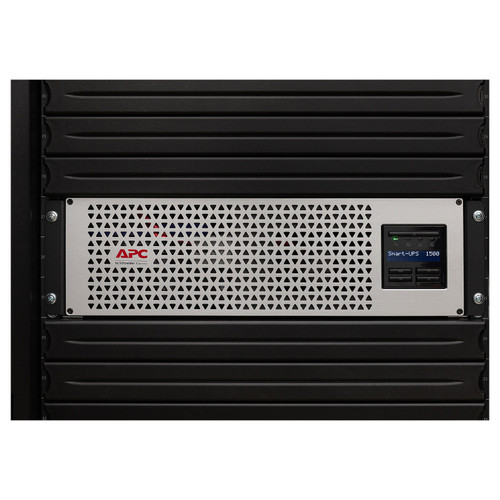
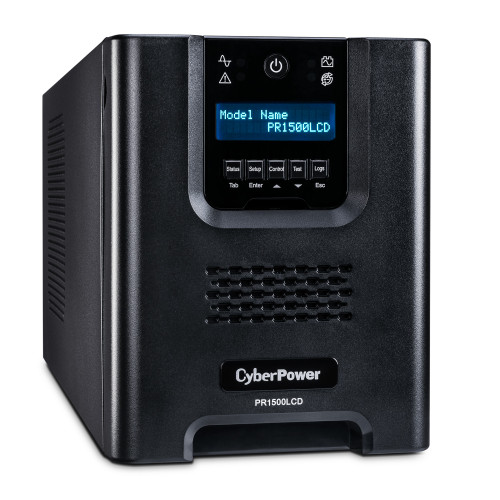
Both the APC SMTL1500RM3UC and the CyberPower PR1500LCD are 1500VA line-interactive sine-wave UPS units rated for 120V North American installations, making them direct cross-shop candidates for IT closets, security head-ends, and light server rooms. The APC is a 3U rackmount with Lithium-Ion chemistry and a 1350W real-power ceiling; the CyberPower is a mini-tower with Sealed Lead-Acid batteries and a full 1500W real-power rating. This comparison evaluates power capacity and output quality, battery technology and runtime, and management interfaces across both models.
In This Guide
Which UPS delivers more usable power and cleaner output?
The CyberPower PR1500LCD is rated at 1500VA / 1500W, giving it a unity power factor (1.0) and the full 1500W available to connected equipment. The APC SMTL1500RM3UC is rated at 1440VA / 1350W, yielding a power factor of approximately 0.94 and leaving 150W less real power on the table compared to the CyberPower.
Both units deliver true sine-wave output, which is required for Active PFC power supplies common in modern servers and network equipment. APC specifies output voltage distortion of less than 5% and a transfer time of 6ms typical / 10ms maximum. CyberPower specifies output voltage regulation of 120VAC ±5% and a transfer time of less than 4ms — a meaningfully faster switchover that reduces the risk of equipment brownout during a utility event.
The CyberPower also explicitly lists Active PFC compatibility and Automatic Voltage Regulation (AVR) as named features. APC's line-interactive topology implies AVR, though the specification sheet does not call it out by name. APC specifies a surge energy rating of 680 joules with full-time multi-pole noise filtering meeting UL 1449; CyberPower lists EMI/RFI filtration but does not publish a joule rating in the provided specs.
How do battery technology, runtime, and replacement costs compare?
The APC SMTL1500RM3UC uses Lithium-Ion (Li-Ion) chemistry. APC specifies an expected battery life of 5–10 years and a recharge time of 2 hours. No runtime figures at full or half load are provided in the supplied specifications for the APC model.
The CyberPower PR1500LCD uses Sealed Lead-Acid (SLA) batteries — two 12V/17Ah units. CyberPower provides explicit runtime figures: 4.7 minutes at full 1500W load and 15.1 minutes at half load (750W). SLA battery life is typically 3–5 years, though CyberPower does not state a figure in the provided specs. CyberPower does specify the batteries are hot-swappable, meaning replacement can occur without a maintenance window or powering down connected equipment.
Li-Ion batteries, as used in the APC, are lighter, charge faster, and typically last longer than SLA, but replacement units carry a higher unit cost and must be sourced through APC's supply chain. SLA packs in the CyberPower are a commodity item available from multiple suppliers. Neither manufacturer's replacement battery cost is included in the provided specifications.
Which unit fits the installation environment and offers better remote management?
The APC SMTL1500RM3UC is a 3U rackmount (131mm H × 438mm W × 302mm D, 19.5kg / 43 lb) designed for standard 19-inch equipment racks and ships with rack mounting support rails. It is the correct choice for any deployment where space is managed in rack units. The CyberPower PR1500LCD is a mini-tower (6.7" W × 8.7" H × 17" D, 54 lb / 24.5kg) intended for floor or shelf placement; it is 11 lb heavier despite its SLA chemistry and offers no rack-mount form factor per the provided specifications.
For management interfaces, the APC provides RJ-45 Serial, USB, and a Smart-Slot expansion bay — the Smart-Slot accepts optional network management cards (e.g., AP9641/AP9643) enabling full SNMP/web/cloud management. The CyberPower lists USB, Serial, and SNMP connectivity; it is unclear from the provided specs whether SNMP is built-in or requires an add-on card. Both units include a multifunction LCD display for local status monitoring.
Certifications differ slightly: APC holds CSA C22.2 No. 107.3, FCC Part 15 Class A, NOM, UL 1778, and UL 1973 (the lithium-ion battery standard), and is RoHS and Battery Directive compliant. CyberPower holds UL1778, cUL 107.3, FCC DOC Class A, Energy Star, and RoHS. The CyberPower's Energy Star certification is absent from APC's listed approvals. APC's UL 1973 listing is relevant to sites with battery-chemistry compliance requirements.
Which should you choose: the SMTL1500RM3UC or the PR1500LCD?
Our take: The SMTL1500RM3UC is the stronger choice when the deployment is rack-based, battery longevity is a priority, and the site can tolerate a 150W reduction in usable real power. Its 3U rackmount form factor, Lithium-Ion chemistry with a 5–10 year expected life, 2-hour recharge time, Smart-Slot expansion for optional SNMP/NMC cards, and 680-joule surge rating make it purpose-built for IT rack environments. The PR1500LCD is the stronger choice when maximum real-power headroom matters — it delivers 1500W versus the APC's 1350W — and when documented runtime figures, a faster sub-4ms transfer time, hot-swappable SLA batteries, and a mini-tower form factor align with the installation. Buyers without a rack who need a verified runtime guarantee (4.7 min full / 15.1 min half load) and a $375,000 connected-equipment guarantee should favor the CyberPower; rack-room integrators prioritizing battery life and expansion should favor the APC.
Side-by-Side Comparison
Spec-for-spec, from manufacturer data.
| Specification | APC by Schneider Electric SMTL1500RM3UC | CyberPower PR1500LCD |
|---|---|---|
| Rated Capacity (VA) | 1440 VA | 1500 VA |
| Rated Capacity (Watts) | 1350 W | 1500 W |
| Power Factor | 0.94 (derived) | 1.0 (derived) |
| Topology | Line Interactive | Line Interactive |
| Output Waveform | Sine wave | True Sine Wave |
| Transfer Time | 6 ms typical / 10 ms max | < 4 ms |
| Output Voltage Distortion | < 5% | 120VAC ± 5% |
| Battery Chemistry | Lithium-Ion | Sealed Lead-Acid (2 × 12V/17Ah) |
| Expected Battery Life | 5–10 years | Not stated |
| Recharge Time | 2 hours | Not stated |
| Runtime at Full Load | Not stated | 4.7 min at 1500W |
| Runtime at Half Load | Not stated | 15.1 min at 750W |
| Hot-Swap Battery | Not stated | Yes |
| Form Factor | 3U Rackmount | Mini-Tower |
| Dimensions (H×W×D) | 5.14" × 17.25" × 11.89" | 8.7" × 6.7" × 17" |
| Weight | 43 lb (19.5 kg) | 54 lb |
| Management Interfaces | RJ-45 Serial, USB, Smart-Slot | USB, Serial, SNMP |
| Surge Energy Rating | 680 joules | Not stated |
| Input Voltage Range | Not stated | 78–149 VAC |
| Outlets | Not stated in provided specs | 8 × NEMA 5-15R |
| Connected Equipment Guarantee | Not stated | $375,000 |
| Certifications | UL 1778, UL 1973, CSA C22.2 No.107.3, FCC Part 15 Class A, NOM, RoHS | UL1778, cUL 107.3, FCC DOC Class A, Energy Star, RoHS |
| Warranty | Not stated in provided specs | 3 Year Limited |
Frequently Asked Questions
Which should you choose: the SMTL1500RM3UC or the PR1500LCD?
The SMTL1500RM3UC is the stronger choice when the deployment is rack-based, battery longevity is a priority, and the site can tolerate a 150W reduction in usable real power. Its 3U rackmount form factor, Lithium-Ion chemistry with a 5–10 year expected life, 2-hour recharge time, Smart-Slot expansion for optional SNMP/NMC cards, and 680-joule surge rating make it purpose-built for IT rack environments. The PR1500LCD is the stronger choice when maximum real-power headroom matters — it delivers 1500W versus the APC's 1350W — and when documented runtime figures, a faster sub-4ms transfer time, hot-swappable SLA batteries, and a mini-tower form factor align with the installation. Buyers without a rack who need a verified runtime guarantee (4.7 min full / 15.1 min half load) and a $375,000 connected-equipment guarantee should favor the CyberPower; rack-room integrators prioritizing battery life and expansion should favor the APC.
Which UPS is better for a standard 19-inch equipment rack?
The APC SMTL1500RM3UC is the rack-specific choice — it ships as a 3U rackmount unit with support rails included. The CyberPower PR1500LCD is a mini-tower only; no rack-mount option is listed in the provided specifications.
Does either UPS publish a guaranteed runtime, and how long will the batteries last?
CyberPower provides documented runtime figures for the PR1500LCD: 4.7 minutes at full 1500W load and 15.1 minutes at 750W (half load). No runtime figures are provided in the APC SMTL1500RM3UC specifications. For battery life, APC specifies 5–10 years for its Lithium-Ion pack; CyberPower does not state a battery life figure, but Sealed Lead-Acid chemistry typically yields 3–5 years.
Which unit offers better remote monitoring and network management?
The APC SMTL1500RM3UC includes a Smart-Slot expansion bay that accepts optional APC network management cards for full SNMP, web GUI, and cloud monitoring — but that card is not included. The CyberPower PR1500LCD lists USB, Serial, and SNMP connectivity in the provided specs, though the provided specifications do not clarify whether SNMP is built-in or add-on. Both include an LCD panel for local monitoring.
More UPS Comparisons
- APC by Schneider Electric SMX1500RMI2U vs CyberPower PRL1500RT2UC
- APC by Schneider Electric SMX1500RMI2U vs CyberPower BRG1500AVRLCD2
- APC by Schneider Electric SMX1500RMI2U vs CyberPower PR1500LCD
- APC by Schneider Electric SMX1500RMI2U vs APC by Schneider Electric BR1500MS2
- APC by Schneider Electric SMX1500RMI2U vs APC by Schneider Electric SMTL1500RM3UCUS
- CyberPower PRL1500RT2UC vs APC by Schneider Electric BR1500MS2
UPS Buying Guides
Get a Second Opinion on Your Camera Choice
Share your site layout, coverage goals, and budget. Our team will validate the camera selection, flag anything we would change, and recommend products that match the use case.