
APC by Schneider Electric SMT750X93 vs CyberPower AVRG750U: Specification Comparison
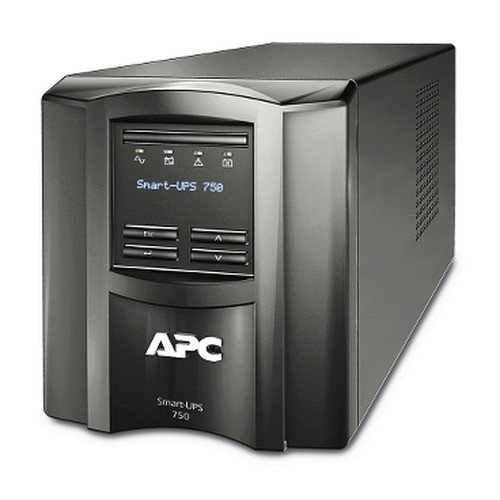
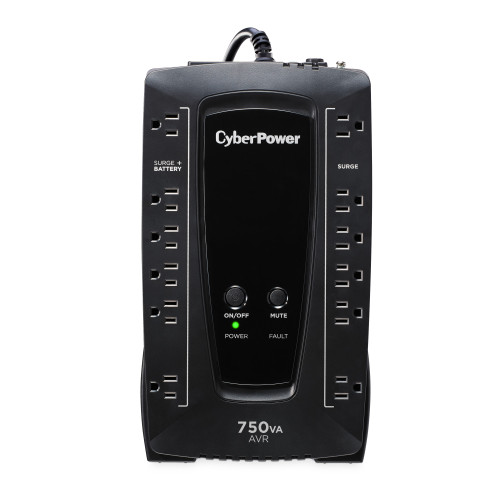
Both the APC by Schneider Electric SMT750X93 and the CyberPower AVRG750U are 750 VA line-interactive uninterruptible power supplies rated for 120 V environments. They occupy the same VA class and topology, making them direct cross-shop candidates for small office, data-closet, and edge-network deployments. The comparison below is built strictly from the specifications provided for each unit, noting where data is absent for one model rather than inferring or interpolating values.
In This Guide
- How much real-world load can each UPS actually support?
- What are the physical footprint, mounting options, and environmental operating limits?
- What certifications, warranty terms, and connected-equipment protection does each carry?
- Which should you choose: the SMT750X93 or the AVRG750U?
- Side-by-Side Specs
- FAQ
How much real-world load can each UPS actually support?
The SMT750X93 carries a rated output of 500 W (750 VA), giving it a power factor of approximately 0.67. The AVRG750U is rated at 450 W (750 VA), yielding a power factor of approximately 0.60. In practical terms, the SMT750X93 can sustain 50 W more of resistive or mixed load before reaching its watt ceiling—a meaningful difference when powering devices with high active-power draws such as workstations, PoE switches, or NVRs.
Both units share the same 750 VA nameplate, so buyers sizing purely on VA will see them as equivalent. However, the watt rating is the binding constraint for most real equipment loads. The 500 W ceiling of the SMT750X93 provides approximately 11 % more headroom than the AVRG750U's 450 W ceiling before the unit begins to clip or shut down under load.
What are the physical footprint, mounting options, and environmental operating limits?
The AVRG750U provides full dimensional data: 12.2 × 7 × 3.5 in (310 × 178 × 89 mm), weighing 13.44 lb (6.1 kg), with a compact form factor and keyhole mounting slots for wall or surface mounting. Its specified operating temperature range is 32–104 °F (0–40 °C). The battery is a sealed lead-acid 12 V / 7 Ah cell.
The SMT750X93 specifications provided do not include dimensions, weight, form factor designation, mounting options, or an operating temperature range. The input connector is specified as NEMA 5-15P. Buyers who need to verify rack compatibility, wall-mount capability, or environmental suitability for the SMT750X93 must consult APC's published datasheet directly, as those values are absent from the data on hand.
What certifications, warranty terms, and connected-equipment protection does each carry?
The AVRG750U is certified to UL 1778 (the North American UPS safety standard), is Energy Star certified, and is RoHS compliant. It carries a 3-year limited warranty and a $150,000 Connected Equipment Guarantee (CEG), which covers damage to equipment connected to the UPS under qualifying conditions.
The SMT750X93 specification data provided does not include safety certifications, an Energy Star designation, a warranty duration, or a connected-equipment guarantee value. APC UPS products typically carry warranty and CEG terms, but those values are not present in the supplied specifications and therefore cannot be cited in this comparison. Buyers requiring verified compliance documentation for the SMT750X93 should obtain APC's official datasheet.
Which should you choose: the SMT750X93 or the AVRG750U?
Our take: The SMT750X93 is the stronger choice when watt-capacity headroom is the primary selection criterion, offering 500 W versus the AVRG750U's 450 W—an 11 % advantage at identical 750 VA ratings that matters for mixed or high-power-factor loads such as workstations or PoE network closets. Conversely, the AVRG750U provides substantially more verifiable specification data in the materials supplied: confirmed dimensions of 12.2 × 7 × 3.5 in, weight of 13.44 lb, a sealed lead-acid 12 V/7 Ah battery, keyhole mounting slots, an operating range of 32–104 °F, UL 1778 / Energy Star / RoHS certifications, a 3-year warranty, and a $150,000 Connected Equipment Guarantee. The SMT750X93 specs on hand are largely marketing copy; buyers must retrieve APC's official datasheet before specifying it for any compliance-sensitive or space-constrained installation. For deployments where installation geometry, safety certifications, or warranty terms must be verified pre-purchase, the AVRG750U's published specs reduce procurement risk.
Side-by-Side Comparison
Spec-for-spec, from manufacturer data.
| Specification | APC by Schneider Electric SMT750X93 | CyberPower AVRG750U |
|---|---|---|
| Device Type | UPS – Line-Interactive | UPS – Line-Interactive |
| VA Rating | 750 VA | 750 VA |
| Watt Rating | 500 W | 450 W |
| Power Factor | ~0.67 | ~0.60 |
| Input Voltage | 120 V | 120 VAC Nominal |
| Output Voltage | 120 V | 120 VAC ± 5% |
| Input Connector | NEMA 5-15P | NEMA 5 |
| Battery Type | — | Sealed Lead-Acid 12 V / 7 Ah |
| Form Factor | — | Compact |
| Dimensions (L × W × H) | — | 12.2 × 7 × 3.5 in (310 × 178 × 89 mm) |
| Weight | — | 13.44 lb (6.1 kg) |
| Mounting | — | Keyhole mounting slots |
| Operating Temperature | — | 32–104 °F (0–40 °C) |
| Safety Certifications | — | UL 1778, Energy Star, RoHS |
| Warranty | — | 3-Year Limited |
| Connected Equipment Guarantee | — | $150,000 |
Frequently Asked Questions
Which should you choose: the SMT750X93 or the AVRG750U?
The SMT750X93 is the stronger choice when watt-capacity headroom is the primary selection criterion, offering 500 W versus the AVRG750U's 450 W—an 11 % advantage at identical 750 VA ratings that matters for mixed or high-power-factor loads such as workstations or PoE network closets. Conversely, the AVRG750U provides substantially more verifiable specification data in the materials supplied: confirmed dimensions of 12.2 × 7 × 3.5 in, weight of 13.44 lb, a sealed lead-acid 12 V/7 Ah battery, keyhole mounting slots, an operating range of 32–104 °F, UL 1778 / Energy Star / RoHS certifications, a 3-year warranty, and a $150,000 Connected Equipment Guarantee. The SMT750X93 specs on hand are largely marketing copy; buyers must retrieve APC's official datasheet before specifying it for any compliance-sensitive or space-constrained installation. For deployments where installation geometry, safety certifications, or warranty terms must be verified pre-purchase, the AVRG750U's published specs reduce procurement risk.
Which UPS can power more equipment — the SMT750X93 or the AVRG750U?
At the same 750 VA rating, the SMT750X93 is rated for 500 W of output while the AVRG750U is rated for 450 W. The SMT750X93 can therefore sustain 50 W more of active load, which is the binding limit for most real-world equipment. If your connected devices total close to 450 W, the AVRG750U may hit its ceiling while the SMT750X93 still has headroom.
Does the AVRG750U include a connected-equipment warranty if my gear is damaged during a power event?
Yes. The AVRG750U specification includes a $150,000 Connected Equipment Guarantee (CEG) alongside a 3-year limited warranty. The SMT750X93 specifications provided do not state a CEG value or warranty duration; buyers should verify those terms directly from APC's official documentation before relying on them.
Can the AVRG750U be wall-mounted, and what is the SMT750X93's mounting story?
The AVRG750U specifications confirm keyhole mounting slots and a compact form factor (12.2 × 7 × 3.5 in / 13.44 lb), supporting wall or surface installation. The SMT750X93 specifications provided do not include mounting information, dimensions, or a form-factor designation. Its installation flexibility cannot be confirmed from the available data.
More UPS Comparisons
- APC by Schneider Electric SMT750C vs CyberPower PR750RTXL2UC
- APC by Schneider Electric SMT750C vs Vertiv GXT5-750LVRT2UXL
- APC by Schneider Electric SMT750C vs CyberPower PR750LCDRT1U
- APC by Schneider Electric SMT750C vs CyberPower AVRG750U
- APC by Schneider Electric SMT750C vs APC by Schneider Electric SMT750CUS
- APC by Schneider Electric SMT750CUS vs CyberPower PR750RTXL2UC
UPS Buying Guides
Get a Second Opinion on Your Camera Choice
Share your site layout, coverage goals, and budget. Our team will validate the camera selection, flag anything we would change, and recommend products that match the use case.