
APC by Schneider Electric SMT750IC vs Vertiv GXT5-750LVRT2UXL: Specification Comparison
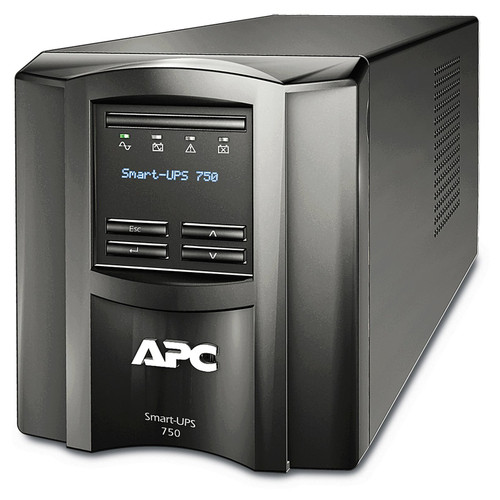
Both units are 750VA uninterruptible power supplies, but they serve distinct electrical environments and protection philosophies. The APC SMT750IC is a 230V line-interactive UPS targeting European and international single-phase installations, while the Vertiv GXT5-750LVRT2UXL is a 120V true online double-conversion unit designed for North American rack or tower deployments. A buyer cross-shopping these would be choosing between topologies, voltage regions, and form factors—all critical factors for physical-security infrastructure such as NVRs, access control panels, and PoE switches.
In This Guide
- How does each UPS topology affect the quality and continuity of power delivered to connected equipment?
- What load capacity and electrical infrastructure does each unit require, and how do the output specs align with real deployments?
- What monitoring, management, and physical installation options does each unit offer for a networked security environment?
- Which should you choose: the SMT750IC or the GXT5-750LVRT2UXL?
- Side-by-Side Specs
- FAQ
How does each UPS topology affect the quality and continuity of power delivered to connected equipment?
The SMT750IC uses line-interactive topology with automatic voltage regulation (AVR). Under normal conditions, utility power passes through the UPS and is conditioned by the AVR, which corrects voltage within the 151–302 V input window without switching to battery. Transfer to battery occurs only when utility falls outside that range. The spec does not list a transfer time for the SMT750IC.
The GXT5-750LVRT2UXL uses true online double-conversion topology. Utility AC is continuously rectified to DC and then inverted back to AC, meaning connected loads always run from the inverter—never directly from utility. Transfer time to battery is zero (continuous online), as stated in the spec. This eliminates any transfer gap and isolates loads from all utility anomalies including frequency variation. The GXT5 also specifies a pure sine wave output and an Active ECO mode that raises efficiency up to 98% by temporarily bypassing the inverter under stable grid conditions.
What load capacity and electrical infrastructure does each unit require, and how do the output specs align with real deployments?
Both units are rated at 750VA. The SMT750IC delivers 500W (power factor ≈ 0.67), while the GXT5-750LVRT2UXL delivers 750W at a power factor of 0.9–1.0. For the same VA rating, the Vertiv unit supports substantially higher real-power loads—a meaningful difference when sizing for equipment with active PFC power supplies common in modern servers and NVRs.
The SMT750IC is rated for 230V input (151–302V range) with a C14 coupler input plug, producing 220–240V output via six IEC C13 outlets. It is suited to 230V regions (Europe, Middle East, parts of Asia-Pacific). The GXT5-750LVRT2UXL is rated for 120V nominal input (60–150V range) with a NEMA 5-15P plug, producing 110/115/120/125VAC (user-configurable) via six NEMA 5-15R receptacles. These are incompatible voltage regions; a buyer must match the unit to their facility's mains voltage.
The GXT5 supports external battery cabinet expansion and features hot-swappable internal batteries, both of which the SMT750IC spec does not mention. Four of the GXT5's six outlets are individually programmable (load shedding), whereas the SMT750IC spec does not specify programmable outlet control.
What monitoring, management, and physical installation options does each unit offer for a networked security environment?
The SMT750IC mentions SmartConnect in its product name, which implies cloud-connected UPS management, but the spec provided does not list specific connectivity interfaces, management software titles, or network card options. Audible alarms and auto-restart are confirmed. Noise level is specified at 40 dB. Form factor is not stated in the provided spec.
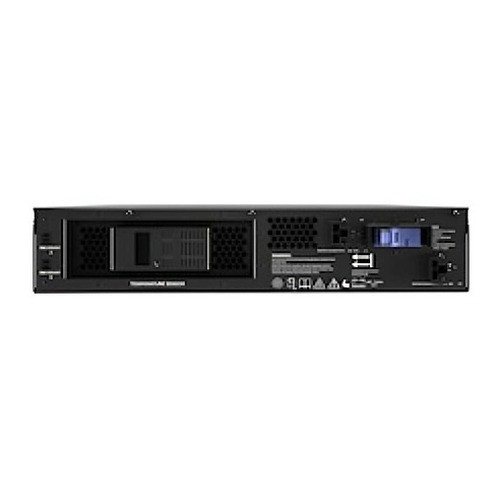
The GXT5-750LVRT2UXL specifies USB, RS232, RS485, and a dry-contact terminal block as on-board interfaces. An optional IntelliSlot SNMP/web card (RDU120) enables network management. The unit includes a gravity-sensing color LCD for local status. It ships in a rack/tower convertible 2U form factor (430 × 400 × 85 mm, 37 lb / 16.8 kg), allowing installation in a standard 19-inch rack or as a tower unit. Certifications include ENERGY STAR 2.0, UL 1778 4th edition, CSA 22.2 No. 107.1, RoHS2, REACH, and WEEE. The SMT750IC spec does not list certifications.
Which should you choose: the SMT750IC or the GXT5-750LVRT2UXL?
Our take: The GXT5-750LVRT2UXL is the stronger choice when the deployment is a 120V North American rack environment requiring zero transfer time and high real-power capacity. Three concrete spec deltas drive this: (1) topology—true online double-conversion with zero transfer time versus line-interactive with an unspecified transfer gap; (2) real-power output—750W versus 500W from the same 750VA rating, a 50% difference that directly affects how much equipment can be safely supported; (3) outlets—four of six NEMA 5-15R outlets are individually programmable versus no programmable outlet control listed for the SMT750IC. Conversely, the SMT750IC is the correct selection for 230V international installations where IEC C13 outlet compatibility is required and line-interactive protection is sufficient. Buyers should match the unit to their mains voltage before evaluating any other feature, as the two units are not electrically interchangeable.
Side-by-Side Comparison
Spec-for-spec, from manufacturer data.
| Specification | APC by Schneider Electric SMT750IC | Vertiv GXT5-750LVRT2UXL |
|---|---|---|
| Topology | Line-Interactive | True Online Double-Conversion |
| Capacity (VA) | 750 VA | 750 VA |
| Capacity (Watts) | 500 W | 750 W |
| Power Factor | — | 0.9 – 1.0 |
| Transfer Time | — | Zero (continuous online) |
| Waveform | Sine | Pure Sine Wave |
| Input Voltage (Nominal) | 230 V | 120 V |
| Input Voltage Range | 151 – 302 V | 60 – 150 V |
| Input Plug | IEC C14 | NEMA 5-15P |
| Output Voltage | 220 – 240 V | 110/115/120/125 VAC (user-configurable) |
| Output Outlets | 6 × IEC C13 | 6 × NEMA 5-15R (4 programmable) |
| Efficiency | 98% | Up to 98% (Active ECO mode) |
| AVR | Yes | — |
| Surge Energy Rating | 540 J | — |
| Battery Hot-Swap | — | Yes |
| External Battery Expansion | — | Yes |
| Connectivity | — | USB, RS232, RS485, dry-contact, optional SNMP |
| Form Factor | — | Rack/Tower Convertible, 2U |
| Noise Level | 40 dB | — |
| Certifications | — | ENERGY STAR 2.0, UL 1778, CSA 22.2 No. 107.1, RoHS2, REACH, WEEE |
Frequently Asked Questions
Which should you choose: the SMT750IC or the GXT5-750LVRT2UXL?
The GXT5-750LVRT2UXL is the stronger choice when the deployment is a 120V North American rack environment requiring zero transfer time and high real-power capacity. Three concrete spec deltas drive this: (1) topology—true online double-conversion with zero transfer time versus line-interactive with an unspecified transfer gap; (2) real-power output—750W versus 500W from the same 750VA rating, a 50% difference that directly affects how much equipment can be safely supported; (3) outlets—four of six NEMA 5-15R outlets are individually programmable versus no programmable outlet control listed for the SMT750IC. Conversely, the SMT750IC is the correct selection for 230V international installations where IEC C13 outlet compatibility is required and line-interactive protection is sufficient. Buyers should match the unit to their mains voltage before evaluating any other feature, as the two units are not electrically interchangeable.
Can I use the GXT5-750LVRT2UXL in a European 230V installation?
No. The GXT5-750LVRT2UXL spec states a 120V nominal input voltage with a 60–150V operating range and a NEMA 5-15P input plug. It is designed for North American 120V infrastructure. The SMT750IC operates on 230V input (151–302V range) with a C14 coupler and is the appropriate choice for 230V regions.
Which UPS is better for protecting a rack-mounted NVR or server where even a momentary power gap is unacceptable?
The GXT5-750LVRT2UXL specifies zero transfer time because its true online double-conversion topology keeps connected loads continuously powered from the inverter—utility power never feeds the load directly. The SMT750IC is line-interactive, meaning it transfers to battery when utility falls out of range; the spec does not state a transfer time for this switchover. For zero-tolerance applications, the Vertiv's topology provides a stronger guarantee based on the provided specs.
Which unit supports runtime extension with external battery cabinets?
The GXT5-750LVRT2UXL spec explicitly states support for external battery cabinet expansion and hot-swappable internal batteries. The SMT750IC spec does not mention external battery expansion or hot-swap capability.
More UPS Comparisons
- APC by Schneider Electric SMT750C vs CyberPower PR750RTXL2UC
- APC by Schneider Electric SMT750C vs Vertiv GXT5-750LVRT2UXL
- APC by Schneider Electric SMT750C vs CyberPower PR750LCDRT1U
- APC by Schneider Electric SMT750C vs CyberPower AVRG750U
- APC by Schneider Electric SMT750C vs APC by Schneider Electric SMT750CUS
- APC by Schneider Electric SMT750CUS vs CyberPower PR750RTXL2UC
UPS Buying Guides
Get a Second Opinion on Your Camera Choice
Share your site layout, coverage goals, and budget. Our team will validate the camera selection, flag anything we would change, and recommend products that match the use case.