APC by Schneider Electric SMT750IC 750VA Line-Interactive UPS with SmartConnect
Overview
The SMT750IC is APC's 750VA / 500W line-interactive uninterruptible power supply designed for business-class servers, network equipment, and PoE network switches in environments where a clean sine wave and active voltage regulation are non-negotiable. It sits in the Smart-UPS family — APC's commercial-grade line — and adds SmartConnect cloud monitoring to the proven Smart-UPS platform, giving IT and security teams remote visibility into battery health and runtime without deploying additional on-premises software.
Where a basic standby UPS simply switches to battery on failure, the SMT750IC's line-interactive topology continuously conditions incoming voltage through its AVR stage, correcting sags and surges between 151 V and 302 V before they ever reach connected equipment. That matters in warehouses, server closets, and surveillance head-end rooms where utility power quality varies throughout the day.
Key Features
- Line-Interactive Topology with True Sine Wave Output: The SMT750IC produces a true sine wave at 220–240 V on battery — not a stepped approximation. This is the spec that matters when protecting active power factor-corrected (PFC) server power supplies and enterprise NVR systems; simulated sine wave UPS units can cause PFC PSUs to shut down or behave erratically during outages.
- Automatic Voltage Regulation (AVR), 151–302 V Input Range: AVR corrects voltage continuously without switching to battery, extending battery life and protecting equipment from the brownouts and overvoltages that are common in commercial facilities. The 151–302 V window is wide enough to handle most North American and European utility variance without battery intervention.
- 500 W / 750 VA Output Capacity: Sized for a single rack-mount server with peripherals, a small network closet switch stack, or a surveillance recorder with attached storage. Budget runtime carefully — 500 W at full load gives a shorter ride-through than a lightly loaded system; running at 50–60% of capacity is the practical sweet spot for meaningful bridge time during outages.
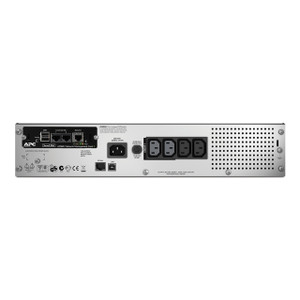
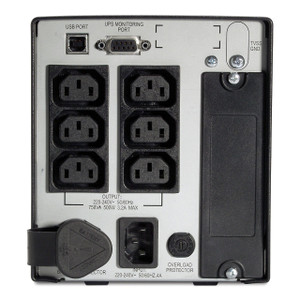
- Six C13 Output Outlets: All six outlets are C13 format, matching the standard IEC power cords used by rack servers, managed switches, IP cameras on injectors, and most 1U/2U network appliances. The C14 inlet matches standard rack PDU whips — no adapter needed in a properly cabled rack environment.
- 540 J Surge Energy Rating: Downstream equipment is protected from transient spikes up to 540 joules — adequate for typical line surges, though not a substitute for a dedicated transient voltage surge suppressor (TVSS) on a building's main service entrance.
- 98% Efficiency at High Load: A 98% efficiency figure in line-interactive mode means minimal heat output and very low operating cost. On a 24/7 deployment, that translates to lower facility energy bills and cooler rack temperatures compared to older ferro-resonant or double-conversion designs.
- 40 dB Noise Level: Quiet enough for office-adjacent installations or security operations centers where background noise matters. The fan profile is low at normal load; audible alarm activates on events (low battery, overload, on-battery conditions) to alert personnel without requiring software monitoring.
- SmartConnect Cloud Monitoring: The SmartConnect feature enables remote UPS monitoring via APC's cloud portal — battery status, load percentage, runtime estimate, and event logs accessible without local SNMP card installation. Useful for distributed deployments where a technician cannot be on-site for every battery check.
- Auto-Restart After Power Restoration: Configured loads restart automatically when utility power returns, reducing hands-on intervention in remote or unmanned equipment rooms — critical for surveillance systems that must return to recording without a site visit.
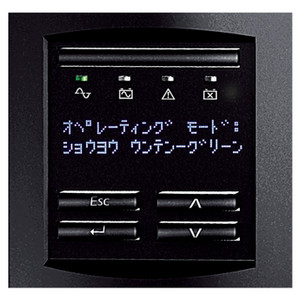
- LCD Status Display: Local status is visible on the front panel LCD — input/output voltage, load percentage, battery charge, and estimated runtime. No laptop or network connection required for a quick health check during a site walkthrough.
Integration and Compatibility
The SMT750IC fits naturally into UPS and power protection deployments alongside rack-mounted network video recorders, managed PoE switches, and edge servers. The C13/C14 form factor is universally compatible with standard rack power cabling. SmartConnect integrates with APC's EcoStruxure IT platform for organizations already using that infrastructure management stack. For deployments requiring local SNMP or Modbus monitoring rather than cloud connectivity, confirm network management card compatibility against APC's published accessory list before ordering — the SMT750IC's SmartConnect is the primary remote management path on this model.
Input frequency compatibility at 50/60 Hz covers both European and dual-frequency deployments. Output voltage at 220–240 V is matched to the standard for most international markets outside North America's 120 V grid; confirm load equipment voltage requirements before deployment in mixed-voltage facilities.
Frequently Asked Questions
Q: What is the difference between the SMT750IC's line-interactive topology and a double-conversion UPS?
A: Line-interactive UPS units like the SMT750IC condition voltage through AVR and switch to battery only during actual outages or extreme voltage events. Double-conversion units run all power through the inverter continuously, providing tighter output regulation but at lower efficiency and higher cost. For most server and network equipment, line-interactive with true sine wave output is the right balance of protection and operating cost.
Q: Will the SMT750IC protect servers with active PFC power supplies?
A: Yes. The SMT750IC produces a true sine wave on battery output, which is required for compatibility with active PFC power supplies common in modern servers and enterprise NVR units. Simulated sine wave UPS units can cause active PFC PSUs to fault or shut down during an outage.
Q: How many devices can the SMT750IC support?
A: The SMT750IC provides six C13 outlets at a combined 500 W / 750 VA capacity. The number of connected devices depends on their individual power draw. Running at 50–60% of rated capacity (roughly 250–300 W total load) provides the best balance of runtime and equipment longevity.
Q: Does the SMT750IC require a network card for remote monitoring?
A: No. SmartConnect enables cloud-based remote monitoring — battery health, load, runtime estimates — without an additional network management card. An Ethernet connection to the UPS is required to activate SmartConnect functionality.
Q: What is the input voltage operating range of the SMT750IC?
A: The SMT750IC operates on input voltages between 151 V and 302 V without switching to battery, thanks to its automatic voltage regulation (AVR) stage. This wide window handles most utility sags and surges in commercial facilities without depleting battery capacity.
Q: What output voltage does the SMT750IC deliver?
A: The SMT750IC outputs 220–240 V, making it suited for deployments in regions using the international standard voltage range. It is not designed for 120 V North American grid environments — confirm load equipment and facility voltage before ordering.
The SMT750IC is the model I recommend when a client asks for a UPS that will actually work with their server's active PFC power supply — the true sine wave output at 220–240 V is the spec that separates it from cheaper standby units that produce a stepped waveform and risk nuisance shutdowns on modern PSUs. I've specified this unit for small security head-end rooms where the recorder, a managed switch, and one or two auxiliary devices need clean, regulated power without the cost and complexity of a full double-conversion system.
Technical Highlights:
- AVR Input Range 151–302 V: Corrects brownouts and overvoltages without touching the battery, which directly extends battery service life in facilities with variable utility quality — a meaningful factor in reducing maintenance calls on remote or unstaffed sites.
- 98% Efficiency: Running at 98% efficiency in line-interactive mode generates minimal heat — in a dense rack, that's measurable on ambient temperature and can reduce cooling load compared to older ferro-resonant designs that run at 80–85%.
- SmartConnect Cloud Monitoring: No SNMP card purchase required for remote visibility. Battery state, load percentage, and runtime estimates are accessible via APC's cloud portal over a standard Ethernet connection — practical for distributed multi-site deployments where on-site visits for battery checks are expensive.
Deployment Considerations:
- The C14 inlet and C13 outlets are universally compatible with standard rack power cabling, but this unit is rated for 220–240 V output only — validate that all connected equipment operates at that voltage range before deployment. This is not a dual-voltage unit.
- At full 500 W load, runtime will be short; plan your load budget at 50–60% of rated capacity if you need meaningful bridge time. A lightly loaded SMT750IC protecting a single NVR and switch will outperform a fully loaded unit protecting an over-built rack.
For a small surveillance head-end — one NVR, a managed PoE switch, and a modem or router — the SMT750IC hits the right capacity and cost point without over-engineering the power protection layer. It's also a solid fit for international deployments on 230 V grids where the wide AVR window and SmartConnect remote monitoring reduce ongoing operational overhead.