
APC by Schneider Electric SMT750CUS vs CyberPower AVRG750U: Specification Comparison
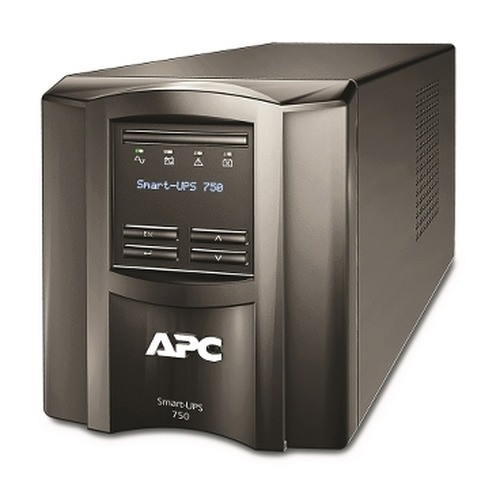
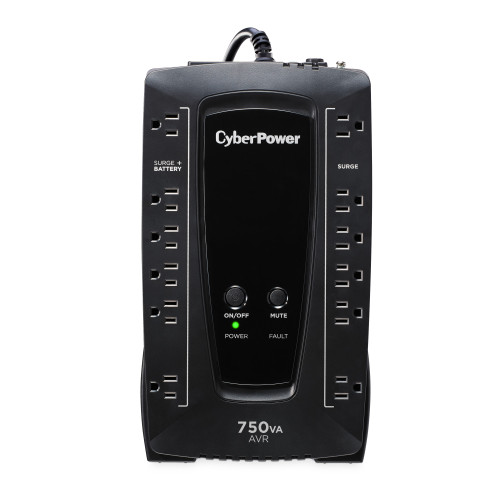
Both products are 750VA line-interactive UPS units rated for 120V single-phase power, designed to protect desktop workstations, networking gear, and small servers from outages and power anomalies. The APC SMT750CUS is a tower-form Smart-UPS with LCD display, SmartSlot expansion, and network management capability. The CyberPower AVRG750U is a compact, keyhole-mountable unit targeting lighter loads. This comparison evaluates runtime and power capacity, connectivity and manageability, and physical/environmental fit—the three axes that most determine which unit suits a given installation.
In This Guide
- Which UPS delivers more usable power and longer runtime under load?
- Which unit offers better remote monitoring and management integration?
- How do the two units compare in form factor, output protection, and environmental ratings?
- Which should you choose: the SMT750CUS or the AVRG750U?
- Side-by-Side Specs
- FAQ
Which UPS delivers more usable power and longer runtime under load?
The SMT750CUS is rated at 500W / 750VA, while the AVRG750U is rated at 450W / 750VA—a 50W difference in real watt capacity that matters when sizing against actual load. APC publishes explicit runtime figures: 4.5 minutes at full load (500W) and 16 minutes at half load (250W). CyberPower does not publish runtime figures in the provided specifications, so a direct minute-for-minute comparison cannot be made from spec data alone.
The AVRG750U discloses its battery as a sealed lead-acid 12V/7Ah cell. APC describes its battery as maintenance-free, sealed, and leak-proof but does not state Ah capacity in the provided specs. APC specifies a 3-hour recharge time; CyberPower does not state recharge time. For installations where recovery speed after an outage matters, the APC's documented 3-hour recharge is a concrete planning number; the CyberPower's equivalent is unspecified here.
Which unit offers better remote monitoring and management integration?
The SMT750CUS provides two management interfaces: USB and Ethernet (SmartConnect), plus one SmartSlot expansion bay that can accept optional network management cards. This means the unit supports out-of-band remote monitoring, SNMP, and integration with APC's PowerChute software ecosystem without additional hardware beyond an Ethernet cable. The single free SmartSlot allows future expansion for additional management protocols.
The AVRG750U specifications list no remote management interface, no network port, and no expansion slot. USB connectivity for the AVRG750U is not mentioned in the provided specs. For IT environments requiring centralized UPS monitoring, automated graceful shutdown, or integration into a DCIM or BMS platform, the SMT750CUS is the only unit here with documented capability. Buyers evaluating the AVRG750U for managed environments should verify management options against CyberPower's full datasheet, as this spec set does not address them.
How do the two units compare in form factor, output protection, and environmental ratings?
The SMT750CUS weighs 30.91 lbs and has a stated depth/height/width shipping envelope of 19.6 × 11.9 × 10.9 inches; its operating depth is listed as 5.4 inches (likely the unit depth at the front panel). It offers 6 × NEMA 5-15R output receptacles, a 540-joule surge energy rating, sine-wave output waveform, and a circuit breaker for overload protection. Sound emission is rated at 41 dBA. Input voltage window is 82–144V (adjustable 75–154V), with a 6ms transfer time.
The AVRG750U weighs 13.44 lbs and measures 12.2 × 7 × 3.5 inches, making it significantly lighter and more compact—roughly half the weight. It includes keyhole mounting slots for wall or surface mounting. Output waveform, surge joule rating, transfer time, number of output receptacles, and sound emission are not stated in the provided specs. Both units share an operating temperature range of 32–104°F and are RoHS compliant. The SMT750CUS additionally holds CSA, ICES-003, UL 1449, UL 1778, FCC Part 15 B, CSA C22.2 No. 107.1, and REACH certifications; the AVRG750U holds UL1778 and Energy Star.
Which should you choose: the SMT750CUS or the AVRG750U?
Our take: The SMT750CUS is the stronger choice when network manageability, higher watt capacity, documented runtime, and a broader certification footprint are priorities. It delivers 500W versus the AVRG750U's 450W—a 50W advantage—and is the only unit with a published runtime (16 min at half load), a 3-hour recharge time, and a documented 6ms transfer time. Critically, it adds Ethernet/SmartConnect management, a SmartSlot expansion bay, and sine-wave output; none of these are present or specified for the AVRG750U. The AVRG750U's case is its compact 3.5-inch profile at 13.44 lbs versus 30.91 lbs, keyhole mounting, and Energy Star certification—advantages for space-constrained or energy-compliance-sensitive deployments where remote management is not required. Buyers protecting managed network closets or servers should select the SMT750CUS; those needing a lightweight, wall-mountable unit for a single workstation or AV node may find the AVRG750U sufficient, provided they verify runtime and output specs directly with CyberPower.
Side-by-Side Comparison
Spec-for-spec, from manufacturer data.
| Specification | APC by Schneider Electric SMT750CUS | CyberPower AVRG750U |
|---|---|---|
| VA Rating | 750 VA | 750 VA |
| Watt Rating | 500 W | 450 W |
| UPS Technology | Line interactive | Line interactive |
| Output Waveform | Sine wave | — |
| Runtime at Full Load | 4.5 min | — |
| Runtime at Half Load | 16 min | — |
| Recharge Time | 3 hours | — |
| Transfer Time | 6 ms | — |
| Output Receptacles | 6 × NEMA 5-15R | — |
| Input Voltage Range | AC 82–144 V (adj. 75–154 V) | 120 VAC Nominal |
| Remote Management | USB + Ethernet (SmartConnect) | — |
| Expansion Slot | 1 × SmartSlot | — |
| Surge Energy Rating | 540 Joules | — |
| Weight | 30.91 lbs | 13.44 lbs |
| Dimensions | 5.4 in (unit depth stated) | 12.2 × 7 × 3.5 in |
| Certifications | CSA, UL 1449, UL 1778, FCC Part 15 B, ICES-003, RoHS, REACH | UL1778, Energy Star, RoHS |
| Warranty — Unit | 3-year limited | 3-year limited |
| Connected Equipment Guarantee | USD 150,000 | USD 150,000 |
| Sound Emission | 41 dBA | — |
| Mounting | Tower / desktop | Keyhole slots (wall/surface) |
Frequently Asked Questions
Which should you choose: the SMT750CUS or the AVRG750U?
The SMT750CUS is the stronger choice when network manageability, higher watt capacity, documented runtime, and a broader certification footprint are priorities. It delivers 500W versus the AVRG750U's 450W—a 50W advantage—and is the only unit with a published runtime (16 min at half load), a 3-hour recharge time, and a documented 6ms transfer time. Critically, it adds Ethernet/SmartConnect management, a SmartSlot expansion bay, and sine-wave output; none of these are present or specified for the AVRG750U. The AVRG750U's case is its compact 3.5-inch profile at 13.44 lbs versus 30.91 lbs, keyhole mounting, and Energy Star certification—advantages for space-constrained or energy-compliance-sensitive deployments where remote management is not required. Buyers protecting managed network closets or servers should select the SMT750CUS; those needing a lightweight, wall-mountable unit for a single workstation or AV node may find the AVRG750U sufficient, provided they verify runtime and output specs directly with CyberPower.
Can either UPS be monitored remotely over the network?
Yes, but only the SMT750CUS. It includes a built-in Ethernet SmartConnect port and a free SmartSlot for optional network management cards, enabling SNMP and remote shutdown integration. The AVRG750U's provided specifications list no network interface or expansion slot; remote management capability is not documented for that model in the available spec data.
Which unit is easier to fit in a small or wall-mounted installation?
The AVRG750U is significantly more compact—12.2 × 7 × 3.5 inches and 13.44 lbs—and includes keyhole mounting slots for surface or wall mounting. The SMT750CUS is a heavier tower unit at 30.91 lbs with a larger footprint, intended for placement on a desk or shelf rather than wall mounting.
Does the SMT750CUS or AVRG750U provide a true sine-wave output?
The SMT750CUS explicitly specifies a sine-wave output waveform, which is important for active-PFC power supplies found in modern servers and workstations. The AVRG750U's output waveform is not stated in the provided specifications; buyers with active-PFC equipment should confirm this detail with CyberPower before purchasing.
More UPS Comparisons
- APC by Schneider Electric SMT750C vs CyberPower PR750RTXL2UC
- APC by Schneider Electric SMT750C vs Vertiv GXT5-750LVRT2UXL
- APC by Schneider Electric SMT750C vs CyberPower PR750LCDRT1U
- APC by Schneider Electric SMT750C vs CyberPower AVRG750U
- APC by Schneider Electric SMT750C vs APC by Schneider Electric SMT750CUS
- APC by Schneider Electric SMT750CUS vs CyberPower PR750RTXL2UC
UPS Buying Guides
Get a Second Opinion on Your Camera Choice
Share your site layout, coverage goals, and budget. Our team will validate the camera selection, flag anything we would change, and recommend products that match the use case.