
APC by Schneider Electric SMT1000CUS vs CyberPower BRG1000AVRLCD: Specification Comparison
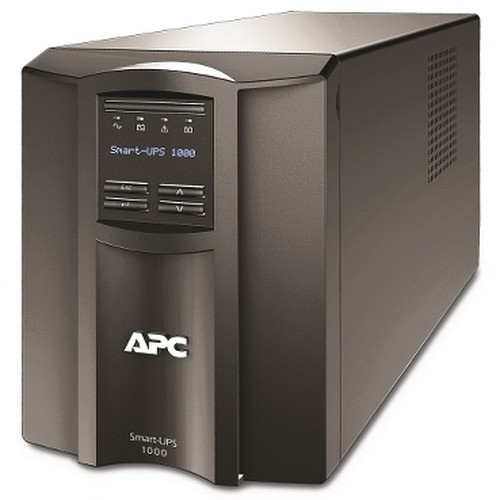
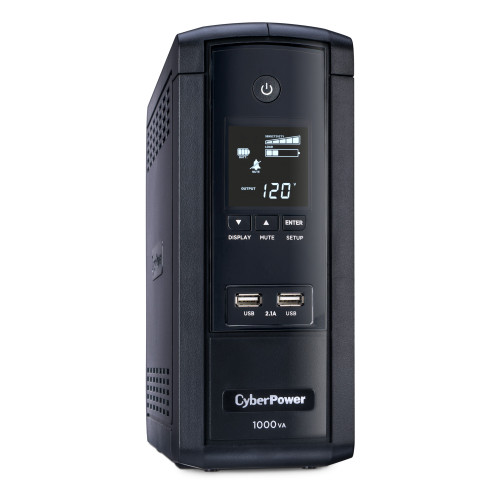
Both the APC Smart-UPS SMT1000CUS and the CyberPower BRG1000AVRLCD are 1000 VA line-interactive tower UPS units designed to protect networked equipment, workstations, and small servers from power disruptions. Operating at 120 VAC nominal input and sharing the same topology class, these two units occupy the same general market segment and would routinely appear on the same shortlist for small office or edge-network deployments. Key differentiators span power capacity, waveform output, outlet configuration, and warranty coverage.
In This Guide
Which UPS delivers more usable power and a cleaner output waveform?
The SMT1000CUS is rated at 700 W (1000 VA), giving it a 0.70 power factor, while the BRG1000AVRLCD is rated at 600 W (1000 VA), yielding a 0.60 power factor. For the same VA rating, APC delivers 100 W more usable real power—a meaningful difference when protecting devices with higher wattage demands such as workstations or small servers.
On waveform quality, the gap is significant. The SMT1000CUS produces a true sine wave output, which is required by active PFC power supplies found in most modern servers and high-end workstations. The BRG1000AVRLCD produces a simulated sine wave (stepped approximation), which is adequate for basic IT gear and consumer electronics but may cause compatibility issues or audible noise with active PFC loads. Buyers protecting server-grade hardware should weight this distinction heavily.
How do runtime, outlet count, and connectivity options compare?
CyberPower specifies runtime explicitly: 1 minute at full load (600 W) and 9 minutes at half load (300 W). APC does not provide a discrete runtime figure in the supplied specifications, referencing only a runtime graph. Buyers requiring a confirmed runtime guarantee before purchase have a clearer data point from the BRG1000AVRLCD.
The BRG1000AVRLCD offers 10 NEMA 5-15R outlets—5 with battery backup plus surge protection and 5 with surge protection only—along with 2 USB Type-A charging ports (2.1 A shared) and data-line protection for Ethernet/Coaxial (RJ45/RG6). Surge suppression is rated at 1,080 joules, and a connected equipment guarantee of $350,000 is specified. The SMT1000CUS provides 8 NEMA 5-15R outlets with no outlet-level differentiation stated, no USB charging ports, and no data-line protection stated in the provided specs. Both offer USB and DB9 serial management interfaces. The SMT1000CUS additionally lists a SmartConnect port and an available expansion slot, which support remote cloud monitoring and optional relay cards—features not present on the BRG1000AVRLCD.
What are the certification, warranty, and physical deployment differences?
The SMT1000CUS carries cULus, ENERGY STAR V2.0, and TAA compliance certifications. TAA compliance is critical for federal government and GSA schedule purchases. The BRG1000AVRLCD is certified to UL1778, cUL 107.5, FCC Class B, RoHS, and ENERGY STAR. The BRG1000AVRLCD explicitly carries FCC Class B and RoHS certifications not stated for the APC unit in the provided specs; the APC unit carries TAA compliance not stated for the CyberPower unit.
Physically, the units differ substantially. The SMT1000CUS weighs 44.3 lb (20.1 kg) and measures 8.6 in on the stated dimension axis—consistent with a full-depth tower chassis typical of Smart-UPS hardware. The BRG1000AVRLCD is a mini-tower at 3.9 × 9.7 × 10.2 in and weighs only 15 lb (6.8 kg), making it far easier to reposition or deploy on a desk. APC does not specify a warranty period in the provided specs; CyberPower specifies a 5-year limited warranty. Operating temperature is specified for the BRG1000AVRLCD (32–104°F / 0–40°C); the SMT1000CUS specification does not state an operating temperature range in the provided data.
Which should you choose: the SMT1000CUS or the BRG1000AVRLCD?
Our take: The SMT1000CUS is the stronger choice when protecting active PFC server hardware, pursuing TAA-compliant procurement, or requiring a manufacturer expansion slot for relay or network management cards—its true sine wave output at 700 W real power and SmartConnect cloud monitoring capability set it apart for infrastructure-grade use. By contrast, the BRG1000AVRLCD offers three concrete advantages for budget-conscious or space-constrained deployments: it provides 10 outlets versus 8 (with explicit 5/5 battery-backup and surge-only zoning), carries a stated 5-year limited warranty versus no warranty period specified for the APC unit, and weighs only 15 lb versus 44.3 lb, making it far easier to deploy on a desk or relocate. The 100 W lower real-power rating (600 W vs. 700 W) and simulated sine wave output limit the CyberPower unit to non-PFC loads. Choose the SMT1000CUS for server rooms and government contracts; choose the BRG1000AVRLCD for workstations, network closets, and deployments where outlet count, physical footprint, and warranty length are primary criteria.
Side-by-Side Comparison
Spec-for-spec, from manufacturer data.
| Specification | APC by Schneider Electric SMT1000CUS | CyberPower BRG1000AVRLCD |
|---|---|---|
| VA Rating | 1000 VA | 1000 VA |
| Watt Rating (Real Power) | 700 W | 600 W |
| Power Factor | 0.70 | 0.60 |
| Topology | Line Interactive | Line Interactive |
| Output Waveform | Sine wave | Simulated sine wave |
| Total Outlets | 8 x NEMA 5-15R | 10 x NEMA 5-15R |
| Battery Backup Outlets | — | 5 |
| Surge-Only Outlets | — | 5 |
| USB Charging Ports | — | 2 x USB Type-A (2.1A shared) |
| Data Line Protection | — | Ethernet/Coaxial (RJ45/RG6) |
| Surge Suppression | — | 1,080 joules |
| Runtime at Full Load | — | 1 minute |
| Runtime at Half Load | — | 9 minutes |
| Management Interface | USB, DB9 Serial, SmartConnect port, expansion slot | USB (HID), DB9 Serial |
| Input Voltage Range | 75–154 V (adjustable) | 90–148 VAC |
| Battery | Lead-Acid (RBC6) | Sealed Lead-Acid 12V/9Ah, user replaceable |
| Form Factor | Tower | Mini-Tower |
| Weight | 44.3 lb (20.1 kg) | 15 lb (6.8 kg) |
| Certifications | cULus, ENERGY STAR V2.0, TAA Compliant | UL1778, cUL 107.5, FCC Class B, RoHS, ENERGY STAR |
| Connected Equipment Guarantee | — | $350,000 |
| Warranty | — | 5 Year Limited |
| Operating Temperature | — | 32–104°F (0–40°C) |
Frequently Asked Questions
Which should you choose: the SMT1000CUS or the BRG1000AVRLCD?
The SMT1000CUS is the stronger choice when protecting active PFC server hardware, pursuing TAA-compliant procurement, or requiring a manufacturer expansion slot for relay or network management cards—its true sine wave output at 700 W real power and SmartConnect cloud monitoring capability set it apart for infrastructure-grade use. By contrast, the BRG1000AVRLCD offers three concrete advantages for budget-conscious or space-constrained deployments: it provides 10 outlets versus 8 (with explicit 5/5 battery-backup and surge-only zoning), carries a stated 5-year limited warranty versus no warranty period specified for the APC unit, and weighs only 15 lb versus 44.3 lb, making it far easier to deploy on a desk or relocate. The 100 W lower real-power rating (600 W vs. 700 W) and simulated sine wave output limit the CyberPower unit to non-PFC loads. Choose the SMT1000CUS for server rooms and government contracts; choose the BRG1000AVRLCD for workstations, network closets, and deployments where outlet count, physical footprint, and warranty length are primary criteria.
Is the SMT1000CUS or BRG1000AVRLCD compatible with servers that have active PFC power supplies?
The SMT1000CUS produces a true sine wave output, which is the waveform required for compatibility with active PFC power supplies found in most modern servers. The BRG1000AVRLCD produces a simulated sine wave, which may cause incompatibility, audible buzzing, or premature shutdown on active PFC loads. For server protection, the SMT1000CUS is the specified-compatible choice based on the provided specs.
Which unit is better if I need to protect more devices or want outlet zoning?
The BRG1000AVRLCD provides 10 NEMA 5-15R outlets, with 5 on battery backup plus surge and 5 on surge protection only, plus 2 USB Type-A charging ports. The SMT1000CUS provides 8 NEMA 5-15R outlets with no outlet-level zoning stated in the provided specs and no USB charging ports. If outlet count and the ability to segment battery-backed versus surge-only devices matters, the BRG1000AVRLCD has the specified advantage.
Does either UPS qualify for federal or government purchasing programs?
The SMT1000CUS specifies TAA (Trade Agreements Act) compliance, which is a standard requirement for federal government purchases under GSA schedules and many agency contracts. The BRG1000AVRLCD does not list TAA compliance in the provided specifications. Buyers with federal procurement requirements should select the SMT1000CUS based on the available spec data.
More UPS Comparisons
- CyberPower PR1000RTXL2UC vs APC by Schneider Electric SURT1000RMXLI
- CyberPower PR1000RTXL2UC vs APC by Schneider Electric SMT1000CUS
- CyberPower PR1000RTXL2UC vs Vertiv GXT5-1000LVRT2UXL
- CyberPower PR1000RTXL2UC vs APC by Schneider Electric SMT1000J
- CyberPower PR1000RTXL2UC vs CyberPower CP1000PFCLCD
- CyberPower PR1000RTXL2UC vs CyberPower PR1000LCD
UPS Buying Guides
Get a Second Opinion on Your Camera Choice
Share your site layout, coverage goals, and budget. Our team will validate the camera selection, flag anything we would change, and recommend products that match the use case.