
APC by Schneider Electric SMC1000I-2U vs CyberPower BRG1000AVRLCD: Specification Comparison
Both the APC SMC1000I-2U and CyberPower BRG1000AVRLCD are 1000VA/600W line-interactive UPS units sharing identical VA and watt ratings, making them a legitimate cross-shop for buyers needing battery backup at this capacity tier. Key divergences emerge immediately in form factor (2U rackmount vs. mini-tower), mains voltage (230V vs. 120V), and output waveform (pure sine wave vs. simulated sine wave), each of which carries meaningful implications for the load types, physical environments, and geographic markets each unit is suited to serve.
In This Guide
- Which unit delivers cleaner power output and better input voltage tolerance for sensitive loads?
- How do form factor, physical footprint, and outlet configuration affect deployment decisions?
- What are the real-world runtime expectations, warranty terms, and regulatory certifications for each unit?
- Which should you choose: the SMC1000I-2U or the BRG1000AVRLCD?
- Side-by-Side Specs
- FAQ
Which unit delivers cleaner power output and better input voltage tolerance for sensitive loads?
The SMC1000I-2U outputs a true sine wave at 230V nominal with less than 5% total harmonic distortion, and its input accepts a wide 170–300V range (mains: 180–287V), making it suitable for regions with significant voltage instability. This waveform is compatible with active PFC power supplies found in modern servers, medical equipment, and enterprise networking gear, which can malfunction or sustain damage when fed a simulated sine wave.
The BRG1000AVRLCD outputs a simulated sine wave at 120V nominal. Its input range is 90–148VAC, which is appropriate for North American infrastructure but offers no utility outside 120V grid regions. Simulated sine wave output is acceptable for most resistive and basic switching-mode loads—standard desktops, NAS units, basic networking—but is explicitly not recommended for active PFC or motor-driven loads. Its AVR uses single boost and single buck stages to regulate voltage before switching to battery, which extends battery life under line fluctuations.
Surge suppression also diverges: the BRG1000AVRLCD rates 1,080 Joules vs. the SMC1000I-2U's 459 Joules, a notable 2.35× difference for transient protection. Buyers with sensitive or high-value loads on the 230V APC unit should assess whether supplementary surge protection is warranted.
How do form factor, physical footprint, and outlet configuration affect deployment decisions?
The SMC1000I-2U is a rack-mount unit occupying 2U of rack space (86mm H × 432mm W × 406mm D) and weighs 20.52 kg. It carries no outlet count specification in the provided data, and its management interfaces are RJ-45 Serial and USB, targeting IT rack environments where structured cable management and network-managed UPS monitoring are standard practice. Its LCD display is noted in the product name but no display specification detail is provided.
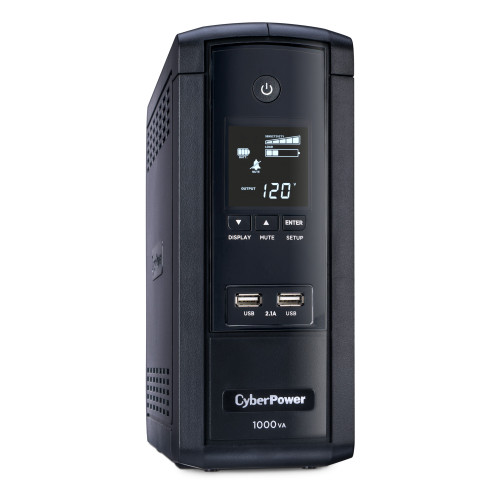
The BRG1000AVRLCD is a mini-tower unit (99mm H × 246mm W × 259mm D) weighing 6.8 kg—approximately one-third the weight of the APC. It provides 10 NEMA 5-15R outlets (5 with battery backup + surge, 5 surge-only), 2 USB-A charging ports (2.1A shared), and coaxial/Ethernet data line protection (RJ45/RG6). Its multifunction LCD display provides at-a-glance load and battery status. The DB9 serial and USB HID management interfaces make it compatible with standard UPS monitoring software on desktop and small-office platforms.
For deployments requiring rack integration, the SMC1000I-2U is the only option of the two. For desk-side or small-office environments without rack infrastructure, the BRG1000AVRLCD's tower form, lower weight, and built-in outlet strip are practical advantages.
What are the real-world runtime expectations, warranty terms, and regulatory certifications for each unit?
Runtime data is provided only for the BRG1000AVRLCD: 1 minute at full load (600W) and 9 minutes at half load (300W), on its included 12V/9Ah sealed lead-acid battery, which is user-replaceable. No runtime figures are supplied in the SMC1000I-2U specifications; buyers requiring runtime projections for that unit must consult APC's online runtime calculator with the specific load profile. The SMC1000I-2U's typical recharge time is stated as 3 hours; no recharge time is given for the BRG1000AVRLCD.
Warranty terms differ significantly: CyberPower offers a 5-year limited warranty on the BRG1000AVRLCD along with a $350,000 connected equipment guarantee. APC provides a 2-year warranty on the SMC1000I-2U with no connected equipment guarantee stated in the provided specifications.
Certifications reflect regional market targets. The SMC1000I-2U carries C-tick, CE, GOST, and VDE—European and CIS-market approvals consistent with its 230V design. The BRG1000AVRLCD holds UL1778, cUL 107.5, FCC Class B, RoHS, and ENERGY STAR, all North American or global sustainability certifications aligned with its 120V design. Neither unit's certifications are interchangeable for the other's target market.
Which should you choose: the SMC1000I-2U or the BRG1000AVRLCD?
Our take: The SMC1000I-2U is the stronger choice when deploying into 230V rack environments with active PFC server loads, where pure sine wave output and wide input voltage tolerance (170–300V) are non-negotiable. The BRG1000AVRLCD is the stronger choice for 120V small-office or desk-side deployments where mini-tower form, higher surge suppression (1,080 J vs. 459 J), a longer 5-year warranty (vs. 2 years), user-replaceable battery, and a $350,000 connected equipment guarantee represent meaningful operational and financial risk reduction. The two units serve entirely different voltage ecosystems—230V vs. 120V—and cannot substitute for each other across that divide. Within their respective markets, load type is the decisive split: pure sine wave is required for active PFC power supplies, making the SMC1000I-2U the only viable option there; simulated sine wave is sufficient for standard office IT and peripheral loads the BRG1000AVRLCD targets.
Side-by-Side Comparison
Spec-for-spec, from manufacturer data.
| Specification | APC by Schneider Electric SMC1000I-2U | CyberPower BRG1000AVRLCD |
|---|---|---|
| Capacity (VA / W) | 1000 VA / 600 W | 1000 VA / 600 W |
| Topology | Line Interactive | Line Interactive |
| Output Waveform | Sine wave | Simulated sine wave |
| Nominal Input Voltage | 230V | 120 VAC |
| Input Voltage Range | 170–300V | 90–148 VAC |
| Nominal Output Voltage | 230V | 120 VAC ± 5% |
| Output Voltage Distortion | Less than 5% | — |
| AVR Technology | — | Single Boost, Single Buck |
| Surge Energy Rating | 459 Joules | 1,080 Joules |
| Form Factor | 2U Rackmount | Mini-Tower |
| Dimensions (H × W × D) | 86 × 432 × 406 mm | 99 × 246 × 259 mm |
| Weight | 20.52 kg | 6.8 kg (15 lb) |
| Outlet Count | — | 10 × NEMA 5-15R |
| Battery Backup Outlets | — | 5 |
| Surge-Only Outlets | — | 5 |
| Battery Type | Sealed Lead-Acid | Sealed Lead-Acid (12V/9Ah) |
| User-Replaceable Battery | — | Yes |
| Recharge Time | 3 hours | — |
| Runtime at Full Load | — | 1 minute |
| Runtime at Half Load | — | 9 minutes |
| Management Interface | RJ-45 Serial, USB | USB (HID), DB9 Serial |
| Display | LCD (stated in name; no detail spec provided) | Multifunction LCD |
| USB Charge Ports | — | 2 × USB Type-A (2.1A shared) |
| Data Line Protection | — | RJ45 / RG6 |
| Audible Noise | 42 dB | — |
| Operating Temperature | 0–40°C | 0–40°C |
| Operating Humidity | 0–95% | — |
| Certifications | C-tick, CE, GOST, VDE | UL1778, cUL 107.5, FCC Class B, RoHS, ENERGY STAR |
| Warranty | 2 years | 5 years limited |
| Connected Equipment Guarantee | — | $350,000 |
Frequently Asked Questions
Which should you choose: the SMC1000I-2U or the BRG1000AVRLCD?
The SMC1000I-2U is the stronger choice when deploying into 230V rack environments with active PFC server loads, where pure sine wave output and wide input voltage tolerance (170–300V) are non-negotiable. The BRG1000AVRLCD is the stronger choice for 120V small-office or desk-side deployments where mini-tower form, higher surge suppression (1,080 J vs. 459 J), a longer 5-year warranty (vs. 2 years), user-replaceable battery, and a $350,000 connected equipment guarantee represent meaningful operational and financial risk reduction. The two units serve entirely different voltage ecosystems—230V vs. 120V—and cannot substitute for each other across that divide. Within their respective markets, load type is the decisive split: pure sine wave is required for active PFC power supplies, making the SMC1000I-2U the only viable option there; simulated sine wave is sufficient for standard office IT and peripheral loads the BRG1000AVRLCD targets.
Can I use the BRG1000AVRLCD with server-grade equipment that has an active PFC power supply?
Not reliably. The BRG1000AVRLCD outputs a simulated sine wave. Active PFC power supplies—common in rack servers, workstations, and some network appliances—can behave erratically or shut down on a simulated sine wave under battery mode. The SMC1000I-2U outputs a true sine wave and is the appropriate choice for active PFC loads. Verify your equipment's PSU specification before selecting either unit.
Is the SMC1000I-2U or BRG1000AVRLCD better for a North American small-business office without a server rack?
The BRG1000AVRLCD is designed for 120VAC North American infrastructure, which the SMC1000I-2U is not—it operates at 230V nominal and carries European/CIS certifications only. For a North American office environment, the BRG1000AVRLCD is the applicable unit, offering 10 NEMA 5-15R outlets, USB charging ports, data line protection, a 5-year warranty, and a $350,000 connected equipment guarantee. The SMC1000I-2U cannot be used on a 120V grid.
Which unit has the longer warranty and what financial protection does each offer for connected equipment?
The BRG1000AVRLCD carries a 5-year limited warranty and a stated $350,000 connected equipment guarantee. The SMC1000I-2U carries a 2-year warranty; no connected equipment guarantee is specified in the provided data. Buyers for whom long-term warranty coverage or equipment damage liability protection is a procurement criterion should factor this 3-year warranty gap and the absence of a documented APC connected equipment guarantee into the decision.
More UPS Comparisons
- CyberPower PR1000RTXL2UC vs APC by Schneider Electric SURT1000RMXLI
- CyberPower PR1000RTXL2UC vs APC by Schneider Electric SMT1000CUS
- CyberPower PR1000RTXL2UC vs Vertiv GXT5-1000LVRT2UXL
- CyberPower PR1000RTXL2UC vs APC by Schneider Electric SMT1000J
- CyberPower PR1000RTXL2UC vs CyberPower CP1000PFCLCD
- CyberPower PR1000RTXL2UC vs CyberPower PR1000LCD
UPS Buying Guides
Get a Second Opinion on Your Camera Choice
Share your site layout, coverage goals, and budget. Our team will validate the camera selection, flag anything we would change, and recommend products that match the use case.