
APC by Schneider Electric E3SUPS20KFBS vs Vertiv GXT5-20KMVRT11UXLN: Specification Comparison
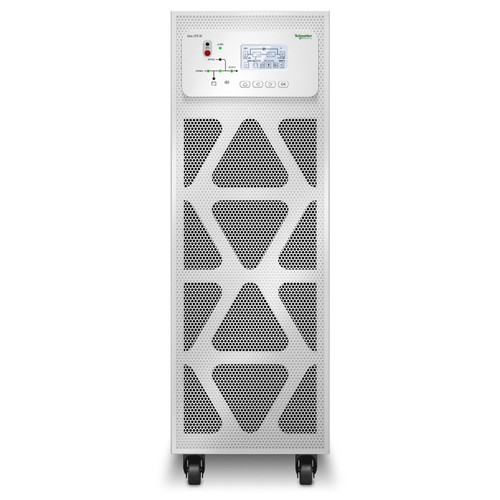
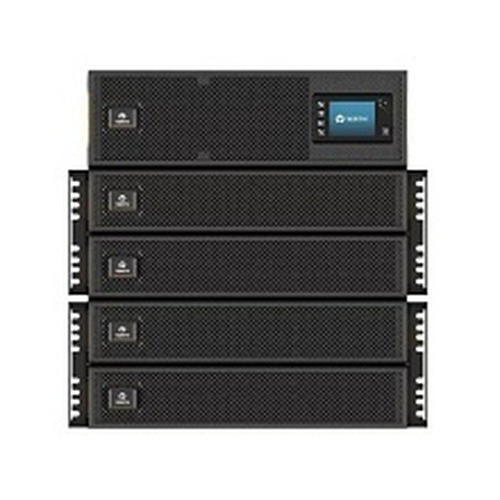
Both the APC by Schneider Electric E3SUPS20KFBS and the Vertiv Liebert GXT5-20KMVRT11UXLN are 20 kVA online double-conversion UPS units targeting critical infrastructure in data centers, server rooms, and industrial facilities. Operating at 208 V input and supporting rack or tower deployments, they compete directly for the same enterprise buyer segment. This comparison evaluates their power and efficiency specifications, physical and environmental characteristics, and management and integration capabilities based solely on the provided specification data.
In This Guide
- How do the E3SUPS20KFBS and GXT5-20KMVRT11UXLN compare on power capacity and efficiency?
- What are the physical footprint, weight, and environmental operating limits of each unit?
- Which unit offers stronger management, communications, and integration capabilities?
- Which should you choose: the E3SUPS20KFBS or the GXT5-20KMVRT11UXLN?
- Side-by-Side Specs
- FAQ
How do the E3SUPS20KFBS and GXT5-20KMVRT11UXLN compare on power capacity and efficiency?
Both units deliver an identical rated output of 20,000 VA / 20,000 W at unity power factor, confirming a true online double-conversion topology in each case. This means neither unit carries a derating penalty at full resistive load—an important distinction from UPS products with sub-unity power factors.
Where the two diverge significantly is efficiency. The GXT5-20KMVRT11UXLN publishes up to 98% efficiency in Active ECO Mode and up to 95% in standard on-line mode. The E3SUPS20KFBS provides no efficiency figure in the supplied specification data. For a 20 kW load running continuously, even a 2–3% efficiency gap can represent meaningful annual energy cost differences, so buyers with PUE-sensitive facilities should weigh this delta carefully.
Input frequency acceptance is 40–70 Hz for the E3SUPS20KFBS, giving it wider tolerance for generator or non-standard grid inputs. The GXT5-20KMVRT11UXLN does not specify its input frequency range in the provided data. Input voltage range is also broader on the GXT5-20KMVRT11UXLN (176–280 VAC) versus 208–220 V on the E3SUPS20KFBS, indicating greater ride-through headroom during brownouts or utility swings.
What are the physical footprint, weight, and environmental operating limits of each unit?
The GXT5-20KMVRT11UXLN provides full dimensional data: 19.0 in (H) × 16.9 in (W) × 26.7 in (D) at 396.6 lbs. Its operating temperature range is +32 to +104 °F (0 to +40 °C). The E3SUPS20KFBS supplies none of these figures—weight, height, width, depth, and operating temperature are absent from the provided specification set.
The E3SUPS20KFBS does specify an IP20 ingress protection rating and a heat dissipation of 1,400 BTU/h. The GXT5-20KMVRT11UXLN lists neither an IP code nor a heat dissipation figure in the provided data. IP20 indicates protection against solid objects larger than 12 mm but no water resistance—relevant for open data center floors.
Noise is rated at 68 dB for the E3SUPS20KFBS; no acoustic figure is provided for the GXT5-20KMVRT11UXLN. For installers planning close-proximity deployments in office-adjacent spaces, the 68 dB figure is a tangible planning input, though comparable data for the GXT5 is unavailable for contrast.
Which unit offers stronger management, communications, and integration capabilities?
The GXT5-20KMVRT11UXLN ships with a factory pre-installed Vertiv RDU101 SNMP/Webcard, enabling SNMP and web-based management out of the box with no additional card purchase required. It also provides USB, RS485, RS232, a terminal block, and an external battery connector EPO port. Protocol support includes SNMP and web management natively, plus serial for out-of-band access.
The E3SUPS20KFBS specifies a touch-type control interface with an LCD display. Beyond that, no communications ports, network management card, SNMP capability, or protocol information is documented in the provided specification data. Buyers integrating into a monitored infrastructure environment cannot assume any specific remote management capability for the E3SUPS20KFBS without consulting the full product documentation.
The GXT5-20KMVRT11UXLN also carries ENERGY STAR 2.0 certification, UL1778 listing, c-UL listing, RoHS2, and REACH compliance. The E3SUPS20KFBS lists overload as its sole documented power protection feature; no certifications appear in the provided data. For regulated or government procurement environments, documented compliance listings are often mandatory evaluation criteria.
The GXT5-20KMVRT11UXLN supports 208/120 VAC output (user-configurable) and hardwired input/output with optional PODs, providing flexibility for mixed-voltage loads. The E3SUPS20KFBS output voltage is stated as 208–220 V with no configurable secondary voltage option documented.
Which should you choose: the E3SUPS20KFBS or the GXT5-20KMVRT11UXLN?
Our take: The GXT5-20KMVRT11UXLN is the stronger choice when management integration, input voltage ride-through, and documented efficiency are primary decision factors. It ships with a factory-installed SNMP/Webcard (no add-on cost), accepts a wider input range of 176–280 VAC versus the E3SUPS20KFBS's 208–220 V, and publishes an on-line efficiency of up to 95%—a figure entirely absent from the E3SUPS20KFBS spec sheet. The GXT5 also carries UL1778, ENERGY STAR 2.0, RoHS2, and REACH listings not documented for the APC unit. The E3SUPS20KFBS offers the only acoustic specification (68 dB), an IP20 rating, and a broader input frequency tolerance (40–70 Hz), which may favor generator-backed or international grid environments. However, because the APC unit is missing weight, dimensions, efficiency, and management data in the provided specifications, a complete apples-to-apples evaluation is not possible; installers should obtain the full APC datasheet before finalizing a selection for physically constrained or tightly monitored deployments.
Side-by-Side Comparison
Spec-for-spec, from manufacturer data.
| Specification | APC by Schneider Electric E3SUPS20KFBS | Vertiv GXT5-20KMVRT11UXLN |
|---|---|---|
| Topology | Double-conversion (Online) | On-line double conversion |
| Power Rating (VA) | 20,000 VA | 20,000 VA |
| Power Rating (W) | 20,000 W | 20,000 W |
| Input Voltage Range | 208–220 V | Typical 208 VAC / Range 176–280 VAC |
| Input Frequency | 40–70 Hz | — |
| Output Voltage | 208–220 V | 208/120 VAC (user-configurable) |
| Output Frequency | 50/60 Hz | — |
| Efficiency | — | Up to 98% ECO Mode; up to 95% on-line |
| Heat Dissipation | 1,400 BTU/h | — |
| Noise Level | 68 dB | — |
| IP Rating | IP20 | — |
| Weight | — | 396.6 lbs |
| Dimensions (H × W × D) | — | 19.0 in × 16.9 in × 26.7 in |
| Operating Temperature | — | +32 to +104 °F (0 to +40 °C) |
| Management / Comms | Touch LCD; no ports specified | Factory SNMP/Webcard (RDU101), USB, RS485, RS232, terminal block, EPO |
| Certifications / Listings | — | ENERGY STAR 2.0, UL1778, c-UL, RoHS2, REACH |
Frequently Asked Questions
Which should you choose: the E3SUPS20KFBS or the GXT5-20KMVRT11UXLN?
The GXT5-20KMVRT11UXLN is the stronger choice when management integration, input voltage ride-through, and documented efficiency are primary decision factors. It ships with a factory-installed SNMP/Webcard (no add-on cost), accepts a wider input range of 176–280 VAC versus the E3SUPS20KFBS's 208–220 V, and publishes an on-line efficiency of up to 95%—a figure entirely absent from the E3SUPS20KFBS spec sheet. The GXT5 also carries UL1778, ENERGY STAR 2.0, RoHS2, and REACH listings not documented for the APC unit. The E3SUPS20KFBS offers the only acoustic specification (68 dB), an IP20 rating, and a broader input frequency tolerance (40–70 Hz), which may favor generator-backed or international grid environments. However, because the APC unit is missing weight, dimensions, efficiency, and management data in the provided specifications, a complete apples-to-apples evaluation is not possible; installers should obtain the full APC datasheet before finalizing a selection for physically constrained or tightly monitored deployments.
Is the E3SUPS20KFBS or GXT5-20KMVRT11UXLN better for a monitored data center that needs SNMP integration?
Based on the provided specifications, the GXT5-20KMVRT11UXLN is the documented choice: it ships with a factory pre-installed Vertiv RDU101 SNMP/Webcard supporting SNMP and web management out of the box, plus USB, RS485, and RS232 ports. The E3SUPS20KFBS provides no SNMP, network card, or communications port information in the supplied spec data.
Which unit handles wider input voltage swings—useful for unstable utility power or generator-fed sites?
The GXT5-20KMVRT11UXLN specifies an input voltage range of 176–280 VAC, giving it substantial brownout and overvoltage tolerance. The E3SUPS20KFBS lists a narrower operating input range of 208–220 V. The E3SUPS20KFBS does specify a wider input frequency acceptance of 40–70 Hz, which can be relevant on generator power, but no equivalent figure is provided for the GXT5.
Do both units support the same output power at unity power factor, or does one derate under real-world loads?
Yes—both are rated at 20,000 VA and 20,000 W, reflecting a unity (1.0) power factor in each case. Neither unit carries a derating penalty for resistive or near-unity loads based on the provided specifications. Output voltage on the GXT5-20KMVRT11UXLN is user-configurable between 208 VAC and 120 VAC; the E3SUPS20KFBS outputs 208–220 V with no secondary configurable voltage documented.
More UPS Comparisons
- Panduit U20N32V vs APC by Schneider Electric SURT20KRMXLT-1TF10K
- Panduit U20N32V vs APC by Schneider Electric E3SUPS20KFBS
- Panduit U20N32V vs APC by Schneider Electric SUVTP20KH2B4S
- Panduit U20N32V vs Vertiv GXT5-20KMVRT11UXLN
- APC by Schneider Electric SURT20KRMXLT-1TF10K vs Vertiv GXT5-20KMVRT11UXLN
- APC by Schneider Electric SURT20KRMXLT-1TF10K vs APC by Schneider Electric E3SUPS20KFBS
UPS Buying Guides
Get a Second Opinion on Your Camera Choice
Share your site layout, coverage goals, and budget. Our team will validate the camera selection, flag anything we would change, and recommend products that match the use case.