
APC by Schneider Electric BX1350M vs APC by Schneider Electric BN1350M2: Specification Comparison
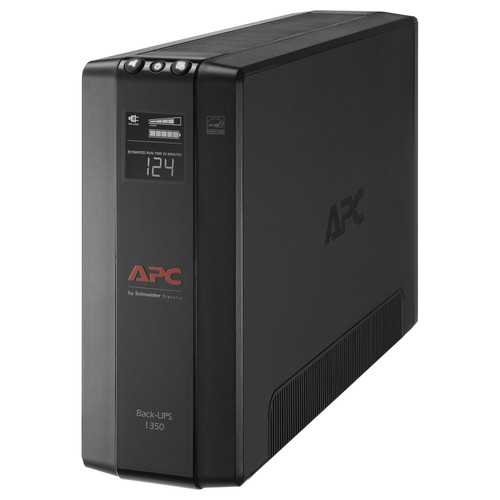
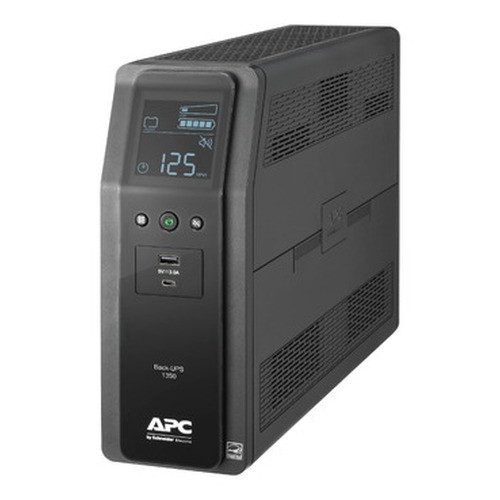
Both the APC BX1350M and BN1350M2 are 1350VA line-interactive tower UPS units designed for desktop and small-office use at 120V AC. They share the same VA rating, wattage output, input voltage window, and lead-acid battery chemistry, making them direct cross-shop candidates. The comparison turns on waveform quality, outlet count and configuration, communications interfaces, runtime data availability, and physical footprint—factors that separate a basic backup unit from a more feature-rich pro-grade model in the same power class.
In This Guide
- Which unit delivers better runtime and cleaner output power for connected equipment?
- How do the outlet count, surge rating, and communication interfaces compare?
- What are the physical, acoustic, and certification differences relevant to deployment?
- Which should you choose: the BX1350M or the BN1350M2?
- Side-by-Side Specs
- FAQ
Which unit delivers better runtime and cleaner output power for connected equipment?
Both units are rated at 810 W / 1350 VA output and share the same 88–139 V input range, so their ability to absorb voltage sag is identical on paper. However, the waveforms differ critically. The BX1350M specifies a Sine waveform, while the BN1350M2 specifies a Simulated Sine Wave. For equipment with active PFC power supplies—common in modern servers, workstations, and medical devices—a simulated (stepped approximation) waveform can cause instability or rejection; a true sine output is the safer choice for those loads.
Runtime figures are only published for the BN1350M2: 10.4 minutes at half load and 2.6 minutes at full load. No equivalent runtime data is provided in the BX1350M specs. Buyers requiring a verified runtime guarantee at a known load point have a published number only for the BN1350M2. Recharge time is identical at 16 hours for both models.
How do the outlet count, surge rating, and communication interfaces compare?
The BN1350M2 provides 10 NEMA 5-15R outlets total—6 battery-backed plus surge, 4 surge-only, with 2 transformer-sized spaces—and adds coaxial (1-in/1-out) and RJ-45 data-line protection, plus dual USB charging ports and serial communication via RJ-45. Its surge energy rating is 1,080 J. The BX1350M lists 5 NEMA 5-15R outlets (all type; battery-backed vs. surge-only split not specified), a surge rating of 789 J, and one RJ-45 Ethernet port rated for 10/100/1000Base-T(X) network communication. No USB charging ports or coaxial protection are listed for the BX1350M.
On network management, the BX1350M lists a dedicated Ethernet LAN (RJ-45) port with Gigabit cabling support—suggesting possible network-card or UPS management capability over LAN. The BN1350M2 lists USB and serial via RJ-45 for host communication, but no Ethernet LAN port is specified. Buyers needing network-addressable UPS management should note this distinction and verify controller compatibility before purchase, as the BX1350M spec implies a network management interface not listed on the BN1350M2.
What are the physical, acoustic, and certification differences relevant to deployment?
Physical dimensions and weight are only published for the BN1350M2: 3.94 × 10.24 × 14.49 inches (W×H×D), package weight 29 lb, with a 6-foot power cord. No dimensions or weight are provided in the BX1350M specs, making rack-space or shelf-space planning impossible from the supplied data alone.
Acoustic noise is only specified for the BN1350M2 at 45 dBA; no noise level is listed for the BX1350M. The BN1350M2 carries ENERGY STAR, FCC, NOM, and cTUVus certifications; no certifications are listed in the BX1350M specs. The BN1350M2 also publishes its replacement battery part number (APCRBC162) and a noise filtering rating of 5%; neither is provided for the BX1350M. The BX1350M specifies three distinct audible alarm modes (on-battery, low battery, overload); the BN1350M2 confirms an alarm exists but does not enumerate modes in the provided specs.
Which should you choose: the BX1350M or the BN1350M2?
Our take: The BN1350M2 is the stronger choice when outlet count, certified runtime figures, acoustic specs, and regulatory certifications are the primary selection criteria. It offers 10 outlets versus 5, a higher surge rating (1,080 J vs. 789 J), published half- and full-load runtimes (10.4 min / 2.6 min), ENERGY STAR and cTUVus certifications, coaxial and data-line protection, and USB charging ports—none of which appear in the BX1350M specs. However, the BX1350M specifies a true Sine waveform versus the BN1350M2's Simulated Sine Wave, which is a decisive advantage for loads with active PFC supplies such as modern servers or sensitive AV equipment. The BX1350M also lists a Gigabit Ethernet LAN port not found on the BN1350M2, suggesting network-addressable management capability. Choose the BX1350M for PFC-sensitive or network-managed environments; choose the BN1350M2 for desktop and small-office deployments requiring more outlets, verified runtimes, and broader certifications.
Side-by-Side Comparison
Spec-for-spec, from manufacturer data.
| Specification | APC by Schneider Electric BX1350M | APC by Schneider Electric BN1350M2 |
|---|---|---|
| UPS Topology | Line-Interactive | Line-Interactive |
| Load Capacity | 1350 VA | 1350 VA |
| Output Power | 810 W | 810 W |
| Waveform | Sine | Simulated Sine Wave |
| Input Voltage Range | 88–139 V | 88–139 V AC |
| Input Frequency | 60 Hz | 50/60 Hz ± 3 Hz |
| Output Voltage | 120 V AC | 120 V AC |
| Total Outlets | 5x NEMA 5-15R | 10x NEMA 5-15R |
| Battery-Backed Outlets | — | 6x NEMA 5-15R |
| Surge-Only Outlets | — | 4x NEMA 5-15R |
| Surge Energy Rating | 789 J | 1,080 J |
| Battery Recharge Time | 16 h | 16 h |
| Half-Load Runtime | — | 10.4 min |
| Full-Load Runtime | — | 2.6 min |
| Ethernet LAN Port | 1x RJ-45 (10/100/1000Base-T) | — |
| Communications | Ethernet LAN (RJ-45) | USB, Serial via RJ-45 |
| Coaxial Protection | — | 1-In / 1-Out |
| USB Charging Ports | — | 2 |
| Battery Chemistry | Sealed Lead Acid (VRLA) | Lead-Acid |
| Replacement Battery | — | APCRBC162 |
| Noise Level | — | 45 dBA |
| Certifications | — | ENERGY STAR, FCC, NOM, cTUVus |
| Dimensions (W×H×D) | — | 3.94 x 10.24 x 14.49 in |
| Package Weight | — | 29 lb |
Frequently Asked Questions
Which should you choose: the BX1350M or the BN1350M2?
The BN1350M2 is the stronger choice when outlet count, certified runtime figures, acoustic specs, and regulatory certifications are the primary selection criteria. It offers 10 outlets versus 5, a higher surge rating (1,080 J vs. 789 J), published half- and full-load runtimes (10.4 min / 2.6 min), ENERGY STAR and cTUVus certifications, coaxial and data-line protection, and USB charging ports—none of which appear in the BX1350M specs. However, the BX1350M specifies a true Sine waveform versus the BN1350M2's Simulated Sine Wave, which is a decisive advantage for loads with active PFC supplies such as modern servers or sensitive AV equipment. The BX1350M also lists a Gigabit Ethernet LAN port not found on the BN1350M2, suggesting network-addressable management capability. Choose the BX1350M for PFC-sensitive or network-managed environments; choose the BN1350M2 for desktop and small-office deployments requiring more outlets, verified runtimes, and broader certifications.
Is the BX1350M or BN1350M2 safer to use with a modern server or workstation that has an active PFC power supply?
The BX1350M is the safer choice for active PFC loads. Its spec lists a true Sine waveform, whereas the BN1350M2 specifies a Simulated Sine Wave. Many active PFC power supplies require a sine-wave output and can behave erratically or shut down when fed a stepped approximation waveform.
Which model gives me more outlets and better surge protection for a multi-device desktop setup?
The BN1350M2 provides 10 NEMA 5-15R outlets (6 battery-backed + surge, 4 surge-only) with a 1,080 J surge rating, plus coaxial and RJ-45 data-line protection. The BX1350M lists 5 NEMA 5-15R outlets and a 789 J surge rating. For a multi-device desktop or home-office environment, the BN1350M2 offers meaningfully more connectivity and higher surge protection.
Can I manage either of these UPS units over the network?
Based on the provided specs, only the BX1350M lists an Ethernet LAN (RJ-45) port with 10/100/1000Base-T(X) cabling support, which suggests network management capability. The BN1350M2 lists USB and serial (via RJ-45) host communication but no Ethernet LAN port. Buyers requiring network-addressable UPS monitoring or management should verify controller and software compatibility for the BX1350M before purchase, as the spec does not name a management card or protocol.
More UPS Comparisons
- APC by Schneider Electric BN1350M2-CA vs CyberPower CP1350PFCLCD
- APC by Schneider Electric BN1350M2-CA vs Vertiv PSA6-1350LVT
- APC by Schneider Electric BN1350M2-CA vs APC by Schneider Electric BN1350M2
- APC by Schneider Electric BN1350M2-CA vs APC by Schneider Electric BR1350MS
- CyberPower CP1350PFCLCD vs APC by Schneider Electric BN1350M2
- CyberPower CP1350PFCLCD vs APC by Schneider Electric BR1350MS
UPS Buying Guides
Get a Second Opinion on Your Camera Choice
Share your site layout, coverage goals, and budget. Our team will validate the camera selection, flag anything we would change, and recommend products that match the use case.