
APC by Schneider Electric BX1350M vs APC by Schneider Electric BN1350M2-CA: Specification Comparison
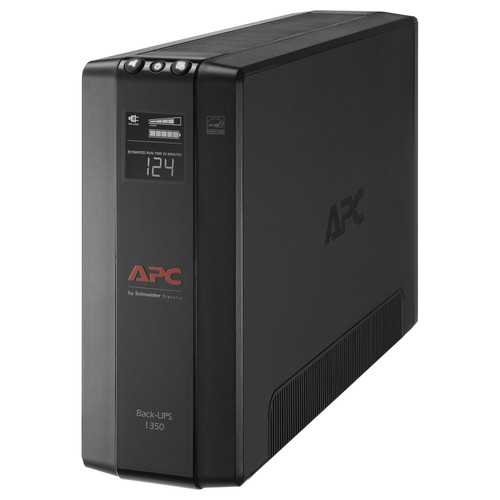
Both units are 1350VA / 810W line-interactive tower UPS devices from APC by Schneider Electric, aimed at small-office and workstation protection at 120V / 60Hz. The BX1350M (Back-UPS BX series) and the BN1350M2-CA (Back-UPS Pro BN series) share the same VA and watt ratings, the same input voltage window, and similar battery chemistry, making them a natural cross-shop for buyers deciding between the entry BX tier and the mid-range BN Pro tier. Key differentiators cluster around output waveform quality, outlet count, protection depth, and certifications.
In This Guide
- Which unit delivers cleaner output power and more outlet flexibility?
- How do surge protection, line conditioning, and connectivity compare?
- What do the physical, environmental, and compliance specs reveal for deployment planning?
- Which should you choose: the BX1350M or the BN1350M2-CA?
- Side-by-Side Specs
- FAQ
Which unit delivers cleaner output power and more outlet flexibility?
The BX1350M is specified as a true sine-wave output at 120V, which is the preferred waveform for active PFC power supplies found in modern workstations, NAS devices, and medical-grade equipment. The BN1350M2-CA is rated for a stepped approximation to a sinewave — a simulated (modified) sine wave — which can cause compatibility issues or excess heat in active-PFC loads.
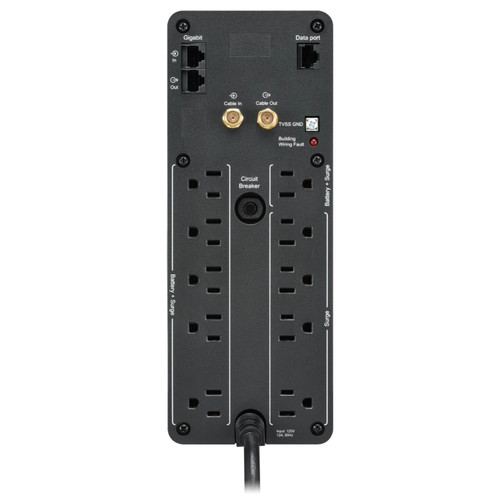
On outlets, the BX1350M provides 5 NEMA 5-15R receptacles; the exact split between battery-backed and surge-only positions is not stated in the provided specs. The BN1350M2-CA offers 10 NEMA 5-15R outlets explicitly broken down as 6 battery-backed and 4 surge-only, doubling the total protected device count. Buyers with multiple peripherals will find the BN1350M2-CA's outlet count a concrete advantage, provided their loads tolerate a simulated sine wave.
How do surge protection, line conditioning, and connectivity compare?
Surge energy absorption differs significantly: the BX1350M is rated at 789 J, while the BN1350M2-CA is rated at 1080 J — a 37% higher clamping energy that offers measurably greater resilience against large transients. The BN1350M2-CA also specifies full-time multi-pole noise filtering and coaxial/CATV/modem data-line protection as explicit features; neither of these is listed in the BX1350M spec sheet provided.
For network connectivity, the BX1350M includes a single RJ-45 Ethernet port (10/100/1000Base-T) — implying network management or network-attached UPS capability. The BN1350M2-CA does not list any Ethernet or network management port in the provided specs. The BN1350M2-CA does specify two USB charging ports; the BX1350M does not mention USB charging ports in its provided specs. Transfer time is specified only for the BN1350M2-CA: 8 ms typical, 10 ms maximum; no transfer time figure is provided for the BX1350M.
What do the physical, environmental, and compliance specs reveal for deployment planning?
Physical and environmental data is exclusively available for the BN1350M2-CA: dimensions 26 cm H × 10 cm W × 36.8 cm D, net weight 10.4 kg, operating range 0–40 °C, 0–95% non-condensing humidity, up to 10,000 ft altitude, and an acoustic noise level of 45 dBA. None of these figures are provided in the BX1350M spec sheet, making side-by-side rack-space or weight planning impossible from specs alone.
Battery service life is stated only for the BN1350M2-CA at 3–5 years, with a charger rated at 10 W; the BX1350M lists battery recharge time (16 h, matching the BN1350M2-CA) but no service-life figure. Certifications are also one-sided: the BN1350M2-CA carries ENERGY STAR V2.0, NOM, and TUV C-US marks; no certification data is provided for the BX1350M. The BN1350M2-CA includes a stated 3-year repair-or-replace warranty; no warranty term is listed in the BX1350M specs provided. The BN1350M2-CA also specifies a 1.8 m input cord length; the BX1350M does not.
Which should you choose: the BX1350M or the BN1350M2-CA?
Our take: The BX1350M is the stronger choice when load compatibility with active-PFC power supplies is the priority, because it delivers a true sine-wave output versus the BN1350M2-CA's stepped approximation — a critical distinction for servers, modern workstations, and any device whose PSU requires a clean sine wave. However, the BN1350M2-CA counters with a 37% higher surge energy rating (1080 J vs 789 J), twice as many outlets (10 vs 5), explicit full-time noise filtering and coaxial data-line protection, and a fully documented environmental and compliance profile including ENERGY STAR V2.0 and TUV C-US certifications with a stated 3-year warranty — none of which appear in the BX1350M specs provided. Buyers protecting multiple surge-only peripherals in a mixed-load environment where waveform tolerance is acceptable should favor the BN1350M2-CA; buyers with a single active-PFC-sensitive load requiring a clean sine wave should favor the BX1350M.
Side-by-Side Comparison
Spec-for-spec, from manufacturer data.
| Specification | APC by Schneider Electric BX1350M | APC by Schneider Electric BN1350M2-CA |
|---|---|---|
| UPS Topology | Line-Interactive | Line-Interactive |
| Output Power Capacity | 1350 VA | 1350 VA |
| Output Power (Watts) | 810 W | 810 W |
| Output Waveform | Sine wave | Stepped approximation to sinewave |
| Input Voltage Range | 88–139 V | 88–139 V |
| Input / Output Voltage | 120 V | 120 V |
| Frequency (In / Out) | 60 Hz | 60 Hz ± 3 Hz |
| Transfer Time | — | 8 ms typical / 10 ms max |
| Surge Energy Rating | 789 J | 1080 J |
| Outlet Count & Type | 5 × NEMA 5-15R | 6 × NEMA 5-15R (battery) + 4 × NEMA 5-15R (surge) |
| Network Port | 1 × RJ-45 (10/100/1000Base-T) | — |
| USB Charging Ports | — | 2 |
| Data Line Protection | — | Coaxial / CATV / modem |
| Battery Technology | Sealed Lead Acid (VRLA) | Lead-acid |
| Battery Recharge Time | 16 h | 16 h |
| Battery Service Life | — | 3–5 years |
| Noise Level | — | 45 dBA |
| Certifications | — | ENERGY STAR V2.0, NOM, TUV C-US |
| Warranty | — | 3 years repair or replace |
| Net Weight | — | 10.4 kg |
| Dimensions (H × W × D) | — | 26 × 10 × 36.8 cm |
Frequently Asked Questions
Which should you choose: the BX1350M or the BN1350M2-CA?
The BX1350M is the stronger choice when load compatibility with active-PFC power supplies is the priority, because it delivers a true sine-wave output versus the BN1350M2-CA's stepped approximation — a critical distinction for servers, modern workstations, and any device whose PSU requires a clean sine wave. However, the BN1350M2-CA counters with a 37% higher surge energy rating (1080 J vs 789 J), twice as many outlets (10 vs 5), explicit full-time noise filtering and coaxial data-line protection, and a fully documented environmental and compliance profile including ENERGY STAR V2.0 and TUV C-US certifications with a stated 3-year warranty — none of which appear in the BX1350M specs provided. Buyers protecting multiple surge-only peripherals in a mixed-load environment where waveform tolerance is acceptable should favor the BN1350M2-CA; buyers with a single active-PFC-sensitive load requiring a clean sine wave should favor the BX1350M.
Is the BX1350M or BN1350M2-CA better for a workstation with a modern power supply?
The BX1350M is the better fit if your workstation's PSU uses active power factor correction (active PFC), because it is specified with a true sine-wave output. The BN1350M2-CA produces a stepped approximation to a sinewave (simulated sine wave), which can cause instability or overheating in active-PFC supplies. If your equipment tolerates a simulated sine wave, the BN1350M2-CA offers more outlets and stronger surge protection.
Which unit protects against surges more effectively?
Based on the provided specs, the BN1350M2-CA has the higher surge energy rating at 1080 J versus 789 J for the BX1350M — a difference of about 37%. The BN1350M2-CA also explicitly lists full-time multi-pole noise filtering and coaxial/data-line surge protection; the BX1350M spec sheet does not include those features.
Does either UPS support remote monitoring or network management?
The BX1350M spec lists a single RJ-45 Ethernet port with 10/100/1000Base-T connectivity, suggesting network-attached or management capability. The BN1350M2-CA does not list any Ethernet or network management port in the provided specifications. If remote UPS monitoring over a network is a requirement, the BX1350M has the relevant hardware interface listed; the BN1350M2-CA does not, based on available specs.
More UPS Comparisons
- APC by Schneider Electric BN1350M2-CA vs CyberPower CP1350PFCLCD
- APC by Schneider Electric BN1350M2-CA vs Vertiv PSA6-1350LVT
- APC by Schneider Electric BN1350M2-CA vs APC by Schneider Electric BN1350M2
- APC by Schneider Electric BN1350M2-CA vs APC by Schneider Electric BR1350MS
- CyberPower CP1350PFCLCD vs APC by Schneider Electric BN1350M2
- CyberPower CP1350PFCLCD vs APC by Schneider Electric BR1350MS
UPS Buying Guides
Get a Second Opinion on Your Camera Choice
Share your site layout, coverage goals, and budget. Our team will validate the camera selection, flag anything we would change, and recommend products that match the use case.