
APC by Schneider Electric BR1500MS vs CyberPower PRL1500RT2UC: Specification Comparison
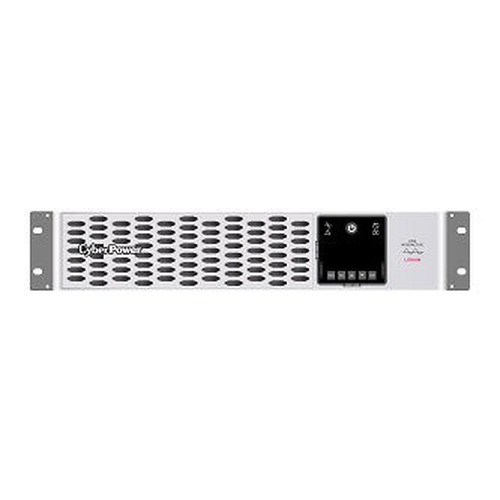
Both the APC BR1500MS and CyberPower PRL1500RT2UC are 1500VA line-interactive sine-wave UPS units targeting small-to-medium business and IT infrastructure protection. The APC is a tower-form consumer/prosumer unit with lead-acid chemistry, while the CyberPower is a 2U rack/tower unit with lithium-ion chemistry and enterprise communication options. Buyers cross-shopping these will weigh battery technology, runtime, form factor, outlet count, and management depth against price and warranty terms.
In This Guide
- How do the two units compare on power capacity, runtime, and battery technology?
- Which unit offers stronger surge protection, and how do their outlet configurations differ?
- How do the units differ in physical form factor, management capabilities, and warranty?
- Which should you choose: the BR1500MS or the PRL1500RT2UC?
- Side-by-Side Specs
- FAQ
How do the two units compare on power capacity, runtime, and battery technology?
Both units are rated at 1500VA, but their watt ratings diverge significantly. The APC BR1500MS delivers a maximum of 900W output (a 0.60 power factor), while the CyberPower PRL1500RT2UC is rated at 1500W with a stated output power factor of 1.0. This means the CyberPower can support a substantially heavier watt load before clipping.
Battery chemistry is the sharpest differentiator in this category. The BR1500MS uses a sealed lead-acid battery with a design life of 3–5 years and a recharge time of 16 hours from a 16W charger. The PRL1500RT2UC uses lithium-ion cells (four 12.8V/6Ah units, replaceable as RB1260x4) with a recharge time of only 2 hours. The CyberPower provides explicit runtime figures: 18.7 minutes at half load and 8.7 minutes at full load. The APC specification does not publish runtime figures.
The APC specifies a battery energy rating of 257VAh. The CyberPower's four 12.8V/6Ah cells yield a calculated 307.2Wh of total battery capacity. Direct runtime comparison is limited because the APC omits runtime data in the provided specifications.
Which unit offers stronger surge protection, and how do their outlet configurations differ?
Surge energy absorption is meaningfully different: the BR1500MS is rated at 1080 joules, while the PRL1500RT2UC is rated at 2430 joules—more than double. The CyberPower also specifies a wider input voltage range (70–155VAC vs. the APC's 88–147V), giving it a broader tolerance window before switching to battery.
The APC BR1500MS provides 10 total outlets: 6 NEMA 5-15R battery-backed outputs and the remaining 4 are not broken out in the provided specifications (the spec lists '10 outlets total' and '6 NEMA 5-15R output sockets'). It also includes 2 USB charging ports and RJ45 10/100/1000 Base-T Ethernet data-line protection. The CyberPower PRL1500RT2UC provides 8 total NEMA 5-15R outlets, of which 4 are designated critical-load battery-backed and 8 total are surge-protected. No USB charging ports are listed for the CyberPower in the provided specifications.
Transfer time is close: the APC specifies 8ms typical / 10ms maximum; the CyberPower specifies 6ms typical / 11ms maximum. Both are within the tolerance of most IT equipment.
How do the units differ in physical form factor, management capabilities, and warranty?
Form factor is a clear dividing line. The BR1500MS is a tower-only unit (10cm W × 26cm H × 36.8cm D, 12.5kg), suited to under-desk or shelf placement. The PRL1500RT2UC is a 2U rack/tower convertible unit (17.1 in. W × 3.4 in. H × 19.7 in. D, 54.2 lbs / ~24.6kg), designed for data-center or network-closet rack mounting.
Management depth strongly favors the CyberPower. The PRL1500RT2UC includes USB, RS232 serial, dry-contact relay, EPO (Emergency Power Off), and optional SNMP/HTTP via the RMCARD205 card. It ships with PowerPanel® Business Edition software and supports cloud management. The BR1500MS is not specified with any serial, SNMP, EPO, or management software capability in the provided specifications beyond a USB port (listed as a charging port, not a management interface) and data-line protection.
Warranty terms differ: the APC offers a 3-year repair-or-replace warranty. The CyberPower offers a five-year limited warranty. The CyberPower also specifies a $400,000 connected-equipment guarantee; no equivalent figure is provided for the APC in the supplied specifications. The APC carries ENERGY STAR V2.0 certification; no equivalent energy certification is listed for the CyberPower in the provided specifications.
Which should you choose: the BR1500MS or the PRL1500RT2UC?
Our take: The PRL1500RT2UC is the stronger choice when the installation requires rack mounting, enterprise management, higher watt capacity, or faster battery recharge. Its 1500W true-watt output vs. the BR1500MS's 900W ceiling is decisive for fully loaded servers or network equipment. Its lithium-ion battery recharges in 2 hours versus 16 hours for the APC's lead-acid pack—critical in high-availability environments. Its 2430J surge rating is more than double the BR1500MS's 1080J. The BR1500MS is the better fit for a tower deployment where rack space is unavailable, USB charging ports are needed, data-line (Ethernet) protection matters, an ENERGY STAR-certified unit is required, or total cost of ownership is constrained—the APC is lighter (12.5kg vs. ~24.6kg) and simpler to deploy. Neither unit's runtime under specific loads can be directly compared because the APC omits runtime data in the provided specifications.
Side-by-Side Comparison
Spec-for-spec, from manufacturer data.
| Specification | APC by Schneider Electric BR1500MS | CyberPower PRL1500RT2UC |
|---|---|---|
| Capacity (VA) | 1500 VA | 1500 VA |
| Capacity (Watts) | 900 W | 1500 W |
| Output Power Factor | 0.60 (derived) | 1.0 |
| Topology | Line Interactive | Line Interactive |
| Output Waveform | Sine Wave | Sine Wave |
| Battery Chemistry | Lead-Acid | Lithium-Ion |
| Battery Recharge Time | 16 hours | 2 hours |
| Surge Energy Rating | 1080 J | 2430 J |
| Input Voltage Range | 88–147 VAC | 70–155 VAC |
| Transfer Time | 8 ms typical / 10 ms max | 6 ms typical / 11 ms max |
| Total Outlets | 10 | 8 |
| Battery-Backed Outlets | 6 NEMA 5-15R | 4 NEMA 5-15R (critical load) |
| USB Charging Ports | 2 | — |
| Data-Line Protection | RJ45 10/100/1000 Base-T | — |
| Form Factor | Tower | 2U Rack/Tower |
| Management Interfaces | — | USB, RS232, SNMP (opt.), EPO, Cloud |
| Runtime at Half Load | — (not specified) | 18.7 minutes |
| Warranty | 3-year repair or replace | Five-year limited |
| Connected Equipment Guarantee | — | $400,000 |
| Weight | 12.5 kg (27.6 lbs) | 54.2 lbs (24.6 kg) |
Frequently Asked Questions
Which should you choose: the BR1500MS or the PRL1500RT2UC?
The PRL1500RT2UC is the stronger choice when the installation requires rack mounting, enterprise management, higher watt capacity, or faster battery recharge. Its 1500W true-watt output vs. the BR1500MS's 900W ceiling is decisive for fully loaded servers or network equipment. Its lithium-ion battery recharges in 2 hours versus 16 hours for the APC's lead-acid pack—critical in high-availability environments. Its 2430J surge rating is more than double the BR1500MS's 1080J. The BR1500MS is the better fit for a tower deployment where rack space is unavailable, USB charging ports are needed, data-line (Ethernet) protection matters, an ENERGY STAR-certified unit is required, or total cost of ownership is constrained—the APC is lighter (12.5kg vs. ~24.6kg) and simpler to deploy. Neither unit's runtime under specific loads can be directly compared because the APC omits runtime data in the provided specifications.
Can either UPS support a fully loaded 1500W server or network appliance?
Based on the provided specifications, only the CyberPower PRL1500RT2UC is rated for 1500W output with a power factor of 1.0. The APC BR1500MS is rated at 900W maximum output despite its 1500VA nameplate, so it would not be suitable for a load approaching 1500W.
How long will the CyberPower PRL1500RT2UC keep equipment running on battery, and is the same data available for the APC BR1500MS?
The CyberPower PRL1500RT2UC specifies 18.7 minutes at half load (750W) and 8.7 minutes at full load (1500W) per the provided specifications. The APC BR1500MS specifications provided do not include runtime figures at any load, so a direct runtime comparison cannot be made from the available data.
Is either unit manageable remotely via SNMP or network card for a data-center environment?
The CyberPower PRL1500RT2UC supports SNMP and HTTP management with the optional RMCARD205 card, plus RS232, USB, dry-contact, EPO, and PowerPanel® Business Edition software, all per the provided specifications. The APC BR1500MS specifications provided do not list any SNMP, serial management interface, network card slot, or management software capability.
More UPS Comparisons
- APC by Schneider Electric SMX1500RMI2U vs CyberPower PRL1500RT2UC
- APC by Schneider Electric SMX1500RMI2U vs CyberPower BRG1500AVRLCD2
- APC by Schneider Electric SMX1500RMI2U vs CyberPower PR1500LCD
- APC by Schneider Electric SMX1500RMI2U vs APC by Schneider Electric BR1500MS2
- APC by Schneider Electric SMX1500RMI2U vs APC by Schneider Electric SMTL1500RM3UCUS
- CyberPower PRL1500RT2UC vs APC by Schneider Electric BR1500MS2
UPS Buying Guides
Get a Second Opinion on Your Camera Choice
Share your site layout, coverage goals, and budget. Our team will validate the camera selection, flag anything we would change, and recommend products that match the use case.