
APC by Schneider Electric BE700G3 vs APC by Schneider Electric SMT700X167: Specification Comparison
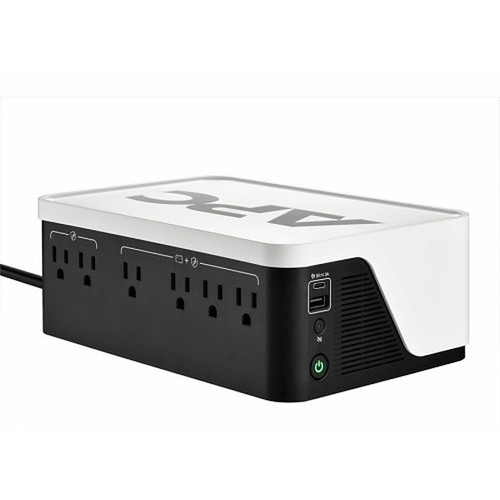
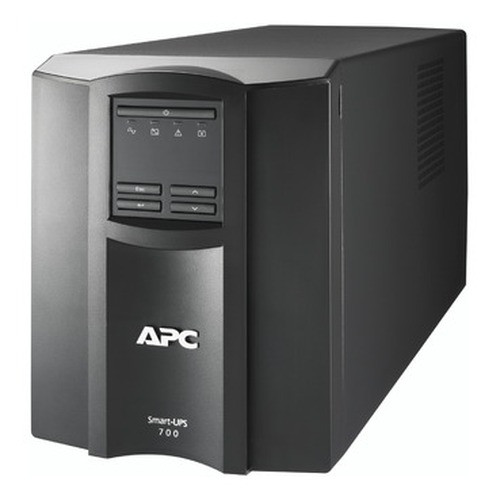
Both the BE700G3 and SMT700X167 are 700VA tower UPS units from APC by Schneider Electric, designed for protecting desktop workstations, network equipment, and light IT infrastructure running on 120V North American circuits. Despite sharing the same VA rating and outlet type, they represent two distinct UPS topologies — standby (offline) versus line-interactive — which drives meaningful differences in power conditioning capability, output wattage, input voltage tolerance, and transfer speed. Buyers cross-shopping these two are typically weighing cost and simplicity against enhanced protection.
In This Guide
- How do the UPS topology and power conditioning capabilities differ between the BE700G3 and SMT700X167?
- Which unit delivers more usable output power and how do their surge protection ratings compare?
- Which UPS handles a wider range of input power conditions, and what do the outlet configurations look like?
- Which should you choose: the BE700G3 or the SMT700X167?
- Side-by-Side Specs
- FAQ
How do the UPS topology and power conditioning capabilities differ between the BE700G3 and SMT700X167?
The BE700G3 uses a Standby (Offline) topology: under normal conditions, connected equipment runs directly from utility power, and the UPS switches to battery only when an outage is detected. This results in a 10 ms transfer time to battery. The output waveform on battery is pseudo sine wave, which is adequate for most switching power supplies but may not be compatible with all active PFC power supplies.
The SMT700X167 uses a Line-Interactive topology, which includes Automatic Voltage Regulation (AVR). This means the unit actively corrects under-voltage and over-voltage conditions — accepting an input range of 100 V to 290 V — without switching to battery, extending battery life and providing cleaner power during brownouts. Its transfer time to battery is 6 ms versus 10 ms for the BE700G3, and its output waveform is true sine wave, making it compatible with a wider range of sensitive electronics including active PFC power supplies.
Which unit delivers more usable output power and how do their surge protection ratings compare?
Both units share a 700VA output power capacity. However, the SMT700X167 is rated for 450 W of real power output, compared to 420 W for the BE700G3 — a 30 W (approximately 7%) advantage. This means the SMT700X167 can support a slightly heavier load before reaching its power limit, which matters when calculating runtime and headroom for connected equipment.
On surge protection, the SMT700X167 also edges ahead with a 540 J surge energy rating versus 490 J for the BE700G3. Both units share the same noise level specification of 45 dB and both offer audible alarms. The BE700G3 spec explicitly lists two alarm modes — 'Alarm when on battery' and 'Low battery alarm' — while the SMT700X167 confirms audible alarms are present but does not enumerate specific modes in the provided specifications.
The SMT700X167 also lists a USB port, which enables communication with a host system for graceful shutdown management. This feature is not listed in the BE700G3 specifications.
Which UPS handles a wider range of input power conditions, and what do the outlet configurations look like?
The BE700G3 is designed for a fixed 120 V input environment with no stated tolerance range beyond that nominal voltage. It accepts 50/60 Hz input frequency and uses a NEMA 5-15P plug. No input voltage range beyond 120 V is specified, meaning any voltage deviation triggers a battery switch-over.
The SMT700X167 accepts a wide input voltage range of 100 V to 290 V thanks to its AVR circuitry. This is particularly relevant in environments with unstable utility power, where voltage sags and surges are common, as the unit handles these conditions without consuming battery capacity. Both units share the NEMA 5-15P input plug and NEMA 5-15R output outlets. The SMT700X167 specifies 8 AC outlets. The BE700G3 specifications do not state a total outlet count. Both units support 50/60 Hz output frequency.
Which should you choose: the BE700G3 or the SMT700X167?
Our take: The SMT700X167 is the stronger choice when power quality consistency, wider input voltage tolerance, and compatibility with sensitive or active PFC equipment are priorities. Its line-interactive topology with AVR corrects voltage irregularities without switching to battery — accepting inputs from 100 V to 290 V versus the BE700G3's fixed 120 V nominal. It delivers 450 W versus 420 W of real power output, carries a higher surge energy rating (540 J vs 490 J), and transfers to battery 4 ms faster (6 ms vs 10 ms). Its true sine wave output also makes it suitable for a broader range of loads. The BE700G3, as a standby unit, is the simpler and typically lower-cost option appropriate for basic desktop or peripheral protection in stable utility environments where voltage regulation and active PFC compatibility are not required. Buyers protecting network closet equipment, workstations with active PFC PSUs, or installations in areas with inconsistent utility power should favor the SMT700X167.
Side-by-Side Comparison
Spec-for-spec, from manufacturer data.
| Specification | APC by Schneider Electric BE700G3 | APC by Schneider Electric SMT700X167 |
|---|---|---|
| UPS Topology | Standby (Offline) | Line-Interactive |
| Output Power Capacity | 0.7 kVA | 0.7 kVA |
| Output Power (Watts) | 420 W | 450 W |
| Output Waveform | Pseudo sine | Sine |
| Automatic Voltage Regulation (AVR) | — | Yes |
| Input Voltage Range | 120 V (nominal only) | 100 V – 290 V |
| Input Frequency | 50/60 Hz | 50/60 Hz |
| Output Voltage | 120 V | 120 V |
| Output Frequency | 50/60 Hz | 50/60 Hz |
| Transfer Time to Battery | 10 ms | 6 ms |
| Surge Energy Rating | 490 J | 540 J |
| Noise Level | 45 dB | 45 dB |
| AC Outlet Type | NEMA 5-15R | NEMA 5-15R |
| AC Outlet Quantity | — | 8 |
| Input Plug | NEMA 5-15P | NEMA 5-15P |
| USB Port | — | Yes |
Frequently Asked Questions
Which should you choose: the BE700G3 or the SMT700X167?
The SMT700X167 is the stronger choice when power quality consistency, wider input voltage tolerance, and compatibility with sensitive or active PFC equipment are priorities. Its line-interactive topology with AVR corrects voltage irregularities without switching to battery — accepting inputs from 100 V to 290 V versus the BE700G3's fixed 120 V nominal. It delivers 450 W versus 420 W of real power output, carries a higher surge energy rating (540 J vs 490 J), and transfers to battery 4 ms faster (6 ms vs 10 ms). Its true sine wave output also makes it suitable for a broader range of loads. The BE700G3, as a standby unit, is the simpler and typically lower-cost option appropriate for basic desktop or peripheral protection in stable utility environments where voltage regulation and active PFC compatibility are not required. Buyers protecting network closet equipment, workstations with active PFC PSUs, or installations in areas with inconsistent utility power should favor the SMT700X167.
Is the BE700G3 or SMT700X167 better for protecting a workstation with a modern power supply?
The SMT700X167 is the more compatible choice for modern workstations. Many current desktop power supplies use active Power Factor Correction (active PFC), which requires a true sine wave UPS output. The SMT700X167 provides a true sine wave on battery, while the BE700G3 produces a pseudo sine wave, which can cause compatibility issues or tripped overload protection on active PFC power supplies.
Which unit is better suited for environments with frequent voltage fluctuations or brownouts?
The SMT700X167 is designed for exactly this scenario. Its line-interactive topology with Automatic Voltage Regulation (AVR) accepts input voltages from 100 V to 290 V and corrects under- and over-voltage conditions without switching to battery. The BE700G3 has no stated input voltage tolerance range and will switch to battery on any deviation, consuming battery capacity during every sag or surge event.
Does either the BE700G3 or SMT700X167 support graceful system shutdown during a power outage?
The SMT700X167 specifications list a USB port, which is typically used to connect to a host system for software-controlled graceful shutdown during extended outages. The BE700G3 specifications do not list a USB port. Buyers who require automated shutdown management should confirm USB connectivity and compatible software support with the SMT700X167 before purchase.
More UPS Comparisons
- APC by Schneider Electric BR700G vs CyberPower OR700LCDRM1U
- APC by Schneider Electric BR700G vs CyberPower SL700U
- APC by Schneider Electric BR700G vs APC by Schneider Electric BE700G3
- APC by Schneider Electric BR700G vs APC by Schneider Electric SMT700X167
- CyberPower OR700LCDRM1U vs APC by Schneider Electric BE700G3
- CyberPower OR700LCDRM1U vs APC by Schneider Electric SMT700X167
UPS Buying Guides
Get a Second Opinion on Your Camera Choice
Share your site layout, coverage goals, and budget. Our team will validate the camera selection, flag anything we would change, and recommend products that match the use case.