
Altronix NETWAY5PQ vs TP-Link ES205GP: Specification Comparison
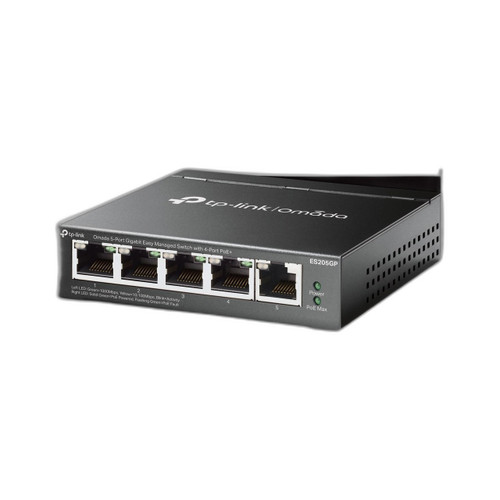
Both the Altronix NETWAY5PQ and the TP-Link ES205GP are 5-port PoE+ managed switches targeting edge deployments in security and network infrastructure. Each delivers IEEE 802.3at PoE+ across five ports with managed switching capabilities, making them legitimate cross-shop candidates for installers sizing a small closet, cabinet, or field enclosure switch. The comparison centers on three axes most critical to this product class: port density and throughput; power budget and operating environment; and management ecosystem and integration.

In This Guide
- How do port count, speed, and switching throughput compare between the NETWAY5PQ and ES205GP?
- Which switch delivers more PoE power and is better suited to harsh or outdoor operating environments?
- What management capabilities and ecosystem integrations does each switch offer?
- Which should you choose: the NETWAY5PQ or the ES205GP?
- Side-by-Side Specs
- FAQ
How do port count, speed, and switching throughput compare between the NETWAY5PQ and ES205GP?
Both switches provide 5 ports with PoE+ (802.3at) support. However, the TP-Link ES205GP specifies all five ports as 10/100/1000 Mbps Gigabit RJ45 interfaces, a 10 Gbps non-blocking switching capacity, and a packet forwarding rate of 7.4 Mpps. It also includes 64 Mbit Flash, 4 Mbit packet buffer, and an 8K MAC address table.
The Altronix NETWAY5PQ's datasheet describes 5 PoE+ ports with intelligent per-port power management and managed switching with device discovery, but does not specify per-port speed (10/100 vs. Gigabit), switching capacity in Gbps, forwarding rate, or memory specifications. Buyers who require confirmed Gigabit throughput have documented evidence only for the ES205GP.
Which switch delivers more PoE power and is better suited to harsh or outdoor operating environments?
The TP-Link ES205GP specifies a total PoE budget of 65W with a maximum of 30W per port, powered via a 53.5 VDC / 1.31A input. Its operating temperature is documented as 0°C to 40°C (32°F to 104°F), placing it squarely in standard indoor conditions. Maximum PoE range is listed at 250m.
The Altronix NETWAY5PQ lists intelligent per-port power management but does not state a total PoE watt budget or a per-port watt ceiling in the provided specs. Critically, the NETWAY5PQ is described as having an extended operating temperature range and is rated for outdoor and harsh environments — claims the ES205GP cannot match given its 0–40°C indoor rating. For enclosure-based, pole-mount, or outdoor cabinet deployments, the NETWAY5PQ's hardened board design and extended temperature tolerance are the differentiating factor, though the precise watt budget remains unspecified in the supplied data.
What management capabilities and ecosystem integrations does each switch offer?
The TP-Link ES205GP operates within TP-Link's Omada SDN platform, providing centralized cloud or controller-based management, DHCP client support, and Easy Managed functionality. Switching capacity and MAC table specs (8K entries) confirm enterprise-grade VLAN and traffic management potential within the Omada ecosystem, suited to small-to-medium deployments already running Omada infrastructure.
The Altronix NETWAY5PQ offers managed switching with device discovery and native integration into the LINQ networked security device platform — Altronix's proprietary remote management ecosystem designed specifically for physical security deployments. This is meaningful for security integrators already using Altronix power and control hardware. However, specific management features (VLAN support, SNMP version, CLI/web UI details) are not enumerated in the provided specifications for either product.
Which should you choose: the NETWAY5PQ or the ES205GP?
Our take: The NETWAY5PQ is the stronger choice when the deployment environment is harsh, outdoor, or temperature-extreme and the infrastructure runs on the Altronix LINQ security ecosystem. The ES205GP holds the advantage in three documented spec areas: confirmed Gigabit port speed (10/100/1000 Mbps vs. unspecified for the NETWAY5PQ), a precisely stated 65W total PoE budget with 30W per-port maximum (vs. no watt figure published for the NETWAY5PQ), and a defined switching capacity of 10 Gbps at 7.4 Mpps. The NETWAY5PQ counters with an extended operating temperature range and outdoor-rated hardened board form factor that the ES205GP — limited to 0–40°C — cannot match. Choose the ES205GP for standard indoor, Omada SDN, or bandwidth-sensitive installs; choose the NETWAY5PQ for pole-mount, outdoor enclosure, or Altronix LINQ-integrated physical security deployments where environmental hardening outweighs a documented power budget.
Side-by-Side Comparison
Spec-for-spec, from manufacturer data.
| Specification | Altronix NETWAY5PQ | TP-Link ES205GP |
|---|---|---|
| Total Ports | 5 | 5 |
| PoE Standard | 802.3at (PoE+) | 802.3af/at (PoE+) |
| Port Speed | Not specified in provided specs | 10/100/1000 Mbps Gigabit |
| Total PoE Budget | Not specified in provided specs | 65W |
| Max PoE Per Port | Not specified in provided specs | 30W |
| Switching Capacity | Not specified in provided specs | 10 Gbps |
| Packet Forwarding Rate | — | 7.4 Mpps |
| MAC Address Table | — | 8K entries |
| Flash / Buffer Memory | — | 64 Mbit Flash / 4 Mbit buffer |
| Operating Temperature | Extended range, outdoor-rated (exact range not specified) | 0°C to 40°C (32°F to 104°F) |
| Form Factor | Compact hardened board | Bracket (wall/rack) |
| Mount Type | Pole | Wall; Rack |
| Management Platform | Altronix LINQ | TP-Link Omada SDN |
| Management Type | Managed (device discovery) | Managed (Easy Managed / Omada SDN, DHCP Client) |
| Max PoE Range | — | 250m |
| Warranty | Lifetime | Not specified in provided specs |
Frequently Asked Questions
Which should you choose: the NETWAY5PQ or the ES205GP?
The NETWAY5PQ is the stronger choice when the deployment environment is harsh, outdoor, or temperature-extreme and the infrastructure runs on the Altronix LINQ security ecosystem. The ES205GP holds the advantage in three documented spec areas: confirmed Gigabit port speed (10/100/1000 Mbps vs. unspecified for the NETWAY5PQ), a precisely stated 65W total PoE budget with 30W per-port maximum (vs. no watt figure published for the NETWAY5PQ), and a defined switching capacity of 10 Gbps at 7.4 Mpps. The NETWAY5PQ counters with an extended operating temperature range and outdoor-rated hardened board form factor that the ES205GP — limited to 0–40°C — cannot match. Choose the ES205GP for standard indoor, Omada SDN, or bandwidth-sensitive installs; choose the NETWAY5PQ for pole-mount, outdoor enclosure, or Altronix LINQ-integrated physical security deployments where environmental hardening outweighs a documented power budget.
Which switch handles more PoE watts — the NETWAY5PQ or the ES205GP?
Only the ES205GP has a documented PoE budget in the provided specifications: 65W total with a 30W per-port maximum. The NETWAY5PQ lists intelligent per-port power management but does not state a total watt budget or per-port ceiling in the supplied spec data. Buyers requiring a confirmed power budget should consult the Altronix NETWAY5PQ datasheet directly before specifying.
Can either switch be installed outdoors or in an uncontrolled temperature environment?
The NETWAY5PQ is described as having an extended operating temperature range and is rated for outdoor and harsh environments, making it the appropriate choice for pole-mount, exterior enclosure, or industrial cabinet installs. The ES205GP is rated only for 0°C to 40°C (32°F to 104°F), which reflects standard indoor conditions and disqualifies it from most uncontrolled outdoor applications.
Is the NETWAY5PQ or ES205GP a better fit for a TP-Link Omada network?
The ES205GP is purpose-built for the TP-Link Omada SDN ecosystem and is managed natively through the Omada controller or cloud platform. The NETWAY5PQ integrates with Altronix's LINQ platform instead. If the site already runs Omada infrastructure, the ES205GP is the compatible choice; the NETWAY5PQ is designed for Altronix LINQ-based physical security environments.
More Network Switch Comparisons
- TP-Link ES205GP vs Ubiquiti USW-FLEX
- TP-Link ES205GP vs Ubiquiti USW-FLEX-MINI
- TP-Link ES205GP vs Ubiquiti USW-FLEX-3
- TP-Link ES205GP vs Ubiquiti USW-FLEX-MINI-3
- TP-Link ES205GP vs TP-Link SG105PP-M2
- TP-Link SG105PP-M2 vs Ubiquiti USW-FLEX
Network Switch Buying Guides
Get a Second Opinion on Your Camera Choice
Share your site layout, coverage goals, and budget. Our team will validate the camera selection, flag anything we would change, and recommend products that match the use case.