
Altronix NETWAY4EWPX vs Vivotek GET-083A-120: Specification Comparison
Both the Altronix NETWAY4EWPX and the Vivotek AW-GET-083A-120 are outdoor-rated, 4-port PoE+ managed switches with a shared 120W total PoE budget, designed for edge surveillance deployments where physical hardening and power delivery to IP cameras are the primary requirements. This comparison evaluates the three dimensions most critical to an installer or IT buyer selecting between them: port architecture and switching capacity, physical protection and environmental ratings, and management capabilities plus integration ecosystem.

In This Guide
- How do port count, uplink architecture, and switching throughput differ between the NETWAY4EWPX and AW-GET-083A-120?
- Which unit offers stronger physical protection and a broader operating environment for outdoor and harsh-site installations?
- What management features, software integration, and ecosystem support does each switch provide?
- Which should you choose: the NETWAY4EWPX or the GET-083A-120?
- Side-by-Side Specs
- FAQ
How do port count, uplink architecture, and switching throughput differ between the NETWAY4EWPX and AW-GET-083A-120?
The NETWAY4EWPX provides 4 Gigabit PoE/PoE+ RJ45 ports plus one Gigabit SFP fiber uplink, for a total of 5 active ports. The single SFP slot accepts a field-supplied transceiver and is intended primarily as the network uplink, offering electrical isolation and extended reach over fiber. Per-port PoE capability reaches 60W Hi-PoE on two designated ports, with an aggregate 120W budget. Switching throughput is not explicitly stated in the provided specifications.
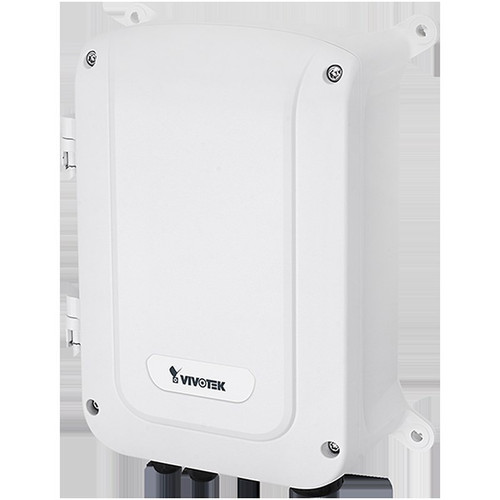
The AW-GET-083A-120 offers a broader port mix: 4 PoE+ RJ45 ports, 2 additional standard GbE RJ45 ports, and 2 SFP slots, totaling 8 ports. Each PoE port is rated at a maximum of 30W, with the same 120W aggregate budget. The switching fabric is specified at 16 Gbps with a forwarding capacity of 11.904 Mpps and an 8K MAC table with 9,216-byte jumbo frame support — all figures absent from the Altronix specification set. The two non-PoE GbE ports and dual SFP slots give the Vivotek unit more flexibility for daisy-chaining, fiber ring topologies, or connecting non-PoE uplink devices without consuming PoE budget.
Which unit offers stronger physical protection and a broader operating environment for outdoor and harsh-site installations?
The NETWAY4EWPX is rated NEMA 4/4X and IP66, meaning it is protected against windblown dust and hosedown-level water ingress but is not rated for temporary submersion. Its operating temperature is not explicitly listed in the provided specs; storage temperature is stated as -40°C to 85°C. The enclosure supports wall, pole, and rack mounting. The unit also integrates a battery charger compatible with Altronix backup modules, providing a path to locally backed-up PoE power without an external UPS — a meaningful differentiator for sites without reliable AC.
The AW-GET-083A-120 carries an IP67 rating (protected against temporary submersion to 1 m) and an IK10 vandal-resistance rating, the latter of which is absent from the Altronix spec set entirely. Its operating temperature is specified as -40°C to 65°C, and it is tested to IEC 60068-2-6 vibration, IEC 60068-2-27 shock, and IEC 60068-2-32 free-fall standards — none of which appear in the Altronix specifications. Per-port surge protection is 6 kV on the PoE ports and 40 kV on the AC power input, referenced to ITU-T K.21 and IEC-61643-11. The Vivotek unit accepts 100–240VAC input directly; AC input voltage range for the Altronix is not stated. Connectors are sealed M16 and M25 cable gland types, reinforcing the submersion-grade build.
What management features, software integration, and ecosystem support does each switch provide?
The NETWAY4EWPX is described as a Layer 2+ managed switch supporting VLAN, QoS, and Spanning Tree Protocol. It integrates with Altronix's LINQ supervision platform, which allows centralized monitoring of Altronix PoE and power products. The integrated battery charger ties natively into the Altronix backup module ecosystem. Management protocol specifics (SNMP version, web GUI, CLI access, LLDP, PoE scheduling) are not provided in the available specification data.
The AW-GET-083A-120 specification does not enumerate specific Layer 2 management features such as VLAN, QoS, or Spanning Tree in the provided data, nor does it reference a proprietary management platform. EMC certifications listed include CE, FCC, VCCI, and C-Tick Class A; safety certifications include EN60950-1 and IEC60950-1. An alarm relay output at 24VDC is specified, enabling dry-contact notification to an access control or alarm panel — a feature not present in the Altronix specification set. The Vivotek unit is positioned within the Vivotek surveillance ecosystem but no NMS or VLAN management detail is provided in the supplied specs.
Which should you choose: the NETWAY4EWPX or the GET-083A-120?
Our take: The NETWAY4EWPX is the stronger choice when the installation requires locally backed-up PoE power, managed Layer 2+ switching with VLAN/QoS, fiber uplink isolation, or integration into an Altronix supervision ecosystem — particularly on sites where AC reliability is uncertain. The AW-GET-083A-120 is the stronger choice when the deployment demands a higher physical protection tier (IP67 vs. IP66; IK10 vandal resistance absent on Altronix), a broader port matrix (8 total ports including dual SFP vs. 5 total ports with single SFP), documented switching throughput (16 Gbps / 11.904 Mpps, not stated for Altronix), and certified surge protection figures (6 kV per PoE port / 40 kV AC, not stated for Altronix). Choose the NETWAY4EWPX for Altronix-ecosystem sites needing battery backup; choose the AW-GET-083A-120 for high-physical-abuse outdoor locations requiring submersion-grade sealing, IK10 impact resistance, or flexible multi-uplink topology.
Side-by-Side Comparison
Spec-for-spec, from manufacturer data.
| Specification | Altronix NETWAY4EWPX | Vivotek GET-083A-120 |
|---|---|---|
| Product Class | 4-Port Managed PoE+ Switch | 4-Port PoE+ GbE Switch |
| PoE RJ45 Ports | 4x Gigabit PoE/PoE+ | 4x PoE+ (30W ea.) |
| Additional RJ45 Ports | — | 2x GbE (non-PoE) |
| SFP Uplink Slots | 1x Gigabit SFP | 2x GbE SFP |
| Total Active Ports | 5 | 8 |
| Total PoE Budget | 120W | 120W |
| Max PoE Per Port | 60W Hi-PoE (2 ports) | 30W (all ports) |
| PoE Standard | PoE+ (802.3at) | IEEE 802.3af/at |
| Switching Bandwidth | — | 16 Gbps |
| Forwarding Capacity | — | 11.904 Mpps |
| IP Rating | IP66 | IP67 |
| Vandal Resistance | — | IK10 |
| NEMA Rating | NEMA 4/4X | — |
| Operating Temperature | — | -40°C to 65°C |
| Surge Protection (PoE Port) | — | 6 kV |
| Surge Protection (AC Input) | — | 40 kV |
| Battery Backup Support | Yes (integrated charger) | — |
| Management | Layer 2+; VLAN, QoS, STP; LINQ | — |
| Alarm Relay Output | — | 24VDC |
| Power Input | — | 100–240VAC / 50–60Hz |
| Enclosure | NEMA 4/4X, IP66 | IP67 / IK10 |
| Mount Types | Wall; Pole; Rack | Wall; Pole; Corner; Rack |
| Dimensions | 17.53" x 15.3" x 6.67" | 315.4 x 245.8 x 118 mm |
| Weight | — | 4.52 kg |
| Warranty | Lifetime | 24 months |
| EMC Certifications | — | CE, FCC, VCCI, C-Tick Class A |
Frequently Asked Questions
Which should you choose: the NETWAY4EWPX or the GET-083A-120?
The NETWAY4EWPX is the stronger choice when the installation requires locally backed-up PoE power, managed Layer 2+ switching with VLAN/QoS, fiber uplink isolation, or integration into an Altronix supervision ecosystem — particularly on sites where AC reliability is uncertain. The AW-GET-083A-120 is the stronger choice when the deployment demands a higher physical protection tier (IP67 vs. IP66; IK10 vandal resistance absent on Altronix), a broader port matrix (8 total ports including dual SFP vs. 5 total ports with single SFP), documented switching throughput (16 Gbps / 11.904 Mpps, not stated for Altronix), and certified surge protection figures (6 kV per PoE port / 40 kV AC, not stated for Altronix). Choose the NETWAY4EWPX for Altronix-ecosystem sites needing battery backup; choose the AW-GET-083A-120 for high-physical-abuse outdoor locations requiring submersion-grade sealing, IK10 impact resistance, or flexible multi-uplink topology.
Can either switch power high-draw PTZ cameras that require more than 30W?
Yes, but only the NETWAY4EWPX explicitly supports Hi-PoE at up to 60W on two designated ports, which can power most PTZ cameras requiring more than the 30W PoE+ maximum. The AW-GET-083A-120 specifies a maximum of 30W per port (IEEE 802.3at PoE+) with no Hi-PoE provision listed in its specifications, so cameras exceeding 30W would not be supported on that unit.
Which switch is better suited for a pole-mount installation in a coastal or high-moisture environment?
The AW-GET-083A-120 carries an IP67 rating (temporary submersion to 1 m) and an IK10 vandal-resistance rating, along with sealed M16/M25 cable gland connectors, making it more suitable for high-moisture, coastal, or vandalism-prone outdoor pole mounts. The NETWAY4EWPX is rated IP66/NEMA 4/4X (hosedown-resistant but not submersion-rated) and does not list an IK impact rating in its provided specifications.
Does either switch support integration with a VMS or network management platform?
The NETWAY4EWPX integrates with Altronix's proprietary LINQ supervision platform for monitoring Altronix power and PoE products, and its Layer 2+ management supports VLAN, QoS, and Spanning Tree. Specific protocol support (SNMP, LLDP, web GUI) is not documented in the available specifications. The AW-GET-083A-120 does not reference a named management platform in the provided specifications; its management feature set beyond the alarm relay output is not enumerated in the supplied data. Buyers requiring a specific NMS protocol should request the full datasheet from each manufacturer before specifying.
More Network Switch Comparisons
- Vivotek GET-083A-120 vs TP-Link SG1005P
- Vivotek GET-083A-120 vs Axis T8504-E
- Vivotek GET-083A-120 vs Axis D8004
- Vivotek GET-083A-120 vs Ubiquiti N-SW
- TP-Link SG1005P vs Axis T8504-E
- TP-Link SG1005P vs Axis D8004
Network Switch Buying Guides
Get a Second Opinion on Your Camera Choice
Share your site layout, coverage goals, and budget. Our team will validate the camera selection, flag anything we would change, and recommend products that match the use case.