
Aiphone IX-EA vs Aiphone JOS-1FW: Specification Comparison
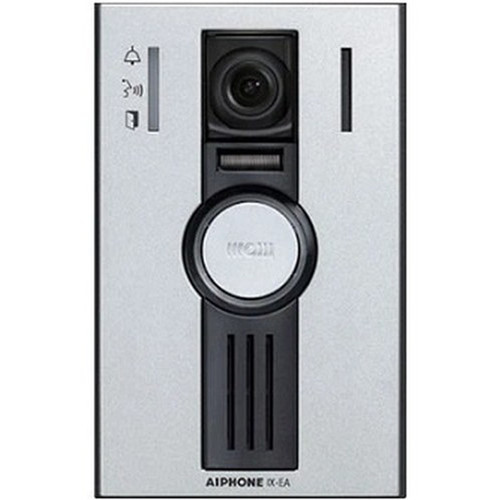
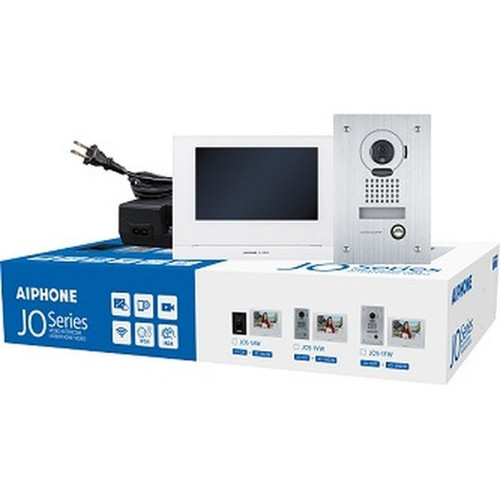
Both the Aiphone IX-EA and the Aiphone JOS-1FW are video door station solutions designed for building entry access and visitor communication, placing them in the same broad Video Intercom / IP Door Station class. However, they represent meaningfully different system architectures: the IX-EA is a standalone IP network door station targeting enterprise/commercial integrations, while the JOS-1FW is a self-contained analog-over-4-wire box set bundled with a 7-inch touchscreen master station and mobile app support. Buyers comparing these are typically choosing between a pure-IP integration path and an all-in-one residential or light-commercial intercom kit.
In This Guide
- What system architecture and integration path does each product support?
- How do imaging performance and environmental protection compare between the two units?
- Which product better fits enterprise IP deployments versus standalone residential or light-commercial installations?
- Which should you choose: the IX-EA or the JOS-1FW?
- Side-by-Side Specs
- FAQ
What system architecture and integration path does each product support?
The IX-EA is a pure-IP video door station powered by PoE (IEEE 802.3af, class 0, 5.18W max) with no bundled master station. It connects directly to an IP network, supports ONVIF Profile S and RTSP streaming, and is designed to integrate with VMS platforms, NVRs, or Aiphone IX Series IP intercoms. It encodes video in H.264/AVC and Motion JPEG, enabling compatibility with third-party IP video management systems. IEEE 802.1X port security is specified, addressing cybersecurity requirements on managed networks.
The JOS-1FW is a box set built around a proprietary 4-wire analog interconnect between its included JO-DVF flush-mount door station and JO-1MDW 7-inch touchscreen master station. It is not an IP network device at the door station level; connectivity is Wi-Fi at the master station for mobile app support (up to 8 iOS/Android devices). There is no ONVIF or RTSP specification listed for the JOS-1FW, meaning it does not natively integrate with VMS or IP video platforms. The system is self-contained and does not require a separate network switch or PoE infrastructure at the door.
How do imaging performance and environmental protection compare between the two units?
The IX-EA uses a 1/3-inch CMOS sensor producing 1.23 megapixels, with a specified minimum illumination of 5 lux. Its operating temperature range is documented at 14°F to 140°F (−10°C to 60°C). No IP ingress rating or IK impact rating is listed in the provided specifications for the IX-EA, which is a notable gap for outdoor deployment planning.
The JOS-1FW door station (JO-DVF) carries an IP54 ingress rating and an IK07 impact rating per the product specs, with one spec field also noting IK08 — buyers should confirm the applicable rating with the datasheet. Its camera is a 1/4-inch color CMOS sensor; no megapixel count or minimum illumination figure is provided in the specifications. No operating temperature range is listed for the JOS-1FW. The JOS-1FW door station is specified as flush-mount stainless steel with flame-resistant PC and resin material, and weighs approximately 570g (JO-DVF) versus the IX-EA's surface-mount form at 6-5/16" H x 3-15/16" W x 1-3/4" D.
Which product better fits enterprise IP deployments versus standalone residential or light-commercial installations?
The IX-EA is purpose-built for IP infrastructure environments. It requires a PoE switch or injector, an Aiphone IX Series master station or compatible VMS, and network configuration including optional 802.1X authentication. It offers no onboard recording and no mobile app capability per the provided specifications. This makes it the correct choice for commercial integrators deploying managed IP intercom systems, access control integrations, or multi-door enterprise environments.
The JOS-1FW is a turnkey single-entry solution. The box set includes the master station, door station, 18V UL/CSA-listed power supply, mounting hardware, and 4-wire interconnect cable — no IP infrastructure is required at installation. Mobile app support for up to 8 devices (iOS/Android) and a microSD card slot supporting 4–32GB (approximately 1,000 calls) are built in. UL and CSA certifications are listed. This positions the JOS-1FW for residential, small office, or light-commercial single-entry deployments where a self-contained system with remote mobile answering is the priority.
Which should you choose: the IX-EA or the JOS-1FW?
Our take: The IX-EA is the stronger choice when the deployment demands IP network integration, VMS compatibility, or multi-door enterprise scalability — while the JOS-1FW is the right fit for single-entry, self-contained installations with mobile answering requirements. On imaging, the IX-EA specifies a 1.23MP 1/3-inch sensor with 5 lux minimum illumination versus the JOS-1FW's unspecified resolution 1/4-inch sensor, giving the IX-EA a documented imaging advantage. On environmental protection, the JOS-1FW door station holds a confirmed IP54/IK07 rating; the IX-EA lists no IP or IK rating in the provided specifications, a gap installers must resolve before committing to exposed outdoor use. On system architecture, the IX-EA requires existing PoE and IP infrastructure but delivers ONVIF Profile S and RTSP interoperability; the JOS-1FW is infrastructure-independent but lacks any documented VMS or IP integration path. Choose the IX-EA for commercial IP intercom projects; choose the JOS-1FW for turnkey single-family or small-office deployments where mobile app answering and an all-in-one kit are priorities.
Side-by-Side Comparison
Spec-for-spec, from manufacturer data.
| Specification | Aiphone IX-EA | Aiphone JOS-1FW |
|---|---|---|
| Product Type | IP Video Door Station (standalone) | Video Intercom Box Set (door station + master) |
| System Architecture | IP network (requires switch/NVR/VMS) | 4-wire analog + Wi-Fi master station |
| Power Source | PoE IEEE 802.3af Class 0, 5.18W max | 18V AC power supply (UL/CSA included) |
| Camera Sensor | 1/3" CMOS, 1.23 megapixel | 1/4" color CMOS, resolution not specified |
| Minimum Illumination | 5 lux | — |
| Video Codec | H.264/AVC, Motion JPEG | — |
| ONVIF / RTSP | ONVIF Profile S; RTSP | — |
| Mobile App Support | — | Up to 8 iOS/Android devices |
| IP Ingress Rating | — | IP54 (door station) |
| Impact Rating | — | IK07 (IK08 also noted — verify datasheet) |
| Onboard Recording | — | microSD 4–32GB (~1,000 calls) |
| Display / Master Station | Not included | 7" TFT touchscreen (JO-1MDW, included) |
| Cybersecurity | IEEE 802.1X port security | — |
| Operating Temperature | 14°F to 140°F (−10°C to 60°C) | — |
| Certifications | IEEE 802.1X | UL; CSA |
| Warranty | 2-Year | 2-Year |
Frequently Asked Questions
Which should you choose: the IX-EA or the JOS-1FW?
The IX-EA is the stronger choice when the deployment demands IP network integration, VMS compatibility, or multi-door enterprise scalability — while the JOS-1FW is the right fit for single-entry, self-contained installations with mobile answering requirements. On imaging, the IX-EA specifies a 1.23MP 1/3-inch sensor with 5 lux minimum illumination versus the JOS-1FW's unspecified resolution 1/4-inch sensor, giving the IX-EA a documented imaging advantage. On environmental protection, the JOS-1FW door station holds a confirmed IP54/IK07 rating; the IX-EA lists no IP or IK rating in the provided specifications, a gap installers must resolve before committing to exposed outdoor use. On system architecture, the IX-EA requires existing PoE and IP infrastructure but delivers ONVIF Profile S and RTSP interoperability; the JOS-1FW is infrastructure-independent but lacks any documented VMS or IP integration path. Choose the IX-EA for commercial IP intercom projects; choose the JOS-1FW for turnkey single-family or small-office deployments where mobile app answering and an all-in-one kit are priorities.
Can I connect the IX-EA or JOS-1FW to a third-party VMS or NVR?
Only the IX-EA supports third-party VMS integration — it is documented as ONVIF Profile S and RTSP compatible, which allows connection to most major IP video management platforms. The JOS-1FW has no ONVIF or RTSP specification listed; it operates as a self-contained intercom system and does not expose a network video stream for VMS integration.
Does either unit support remote answering from a smartphone?
The JOS-1FW explicitly supports mobile app answering on up to 8 iOS and Android devices via its built-in Wi-Fi connectivity. The IX-EA has no mobile app or Wi-Fi capability listed in its specifications; remote answering would depend on the Aiphone IX Series master station or a compatible third-party platform deployed alongside it.
Which unit is rated for outdoor use, and do both carry an IP ingress rating?
Both are intended for outdoor door station use. The JOS-1FW door station (JO-DVF) carries a documented IP54 ingress rating and an IK07 (also noted as IK08 in one spec field — confirm with datasheet) impact rating. The IX-EA is specified as an outdoor-environment product, but no IP ingress or IK impact rating appears in the provided specifications — installers should verify this against the Aiphone IX-EA datasheet before deploying in high-moisture or high-traffic locations.
More Intercom Comparisons
- Hanwha TID-600R vs Aiphone IX-EA
- Hanwha TID-600R vs Axis A8207-VE
- Hanwha TID-600R vs Aiphone IX-DVF-6
- Hanwha TID-600R vs Aiphone JOS-1FW
- Aiphone IX-EA vs Axis A8207-VE
- Aiphone IX-EA vs 2N 01273-001
Intercom Buying Guides
Get a Second Opinion on Your Camera Choice
Share your site layout, coverage goals, and budget. Our team will validate the camera selection, flag anything we would change, and recommend products that match the use case.